Making Lessons Fun: Shark Tank Innovation Challenges
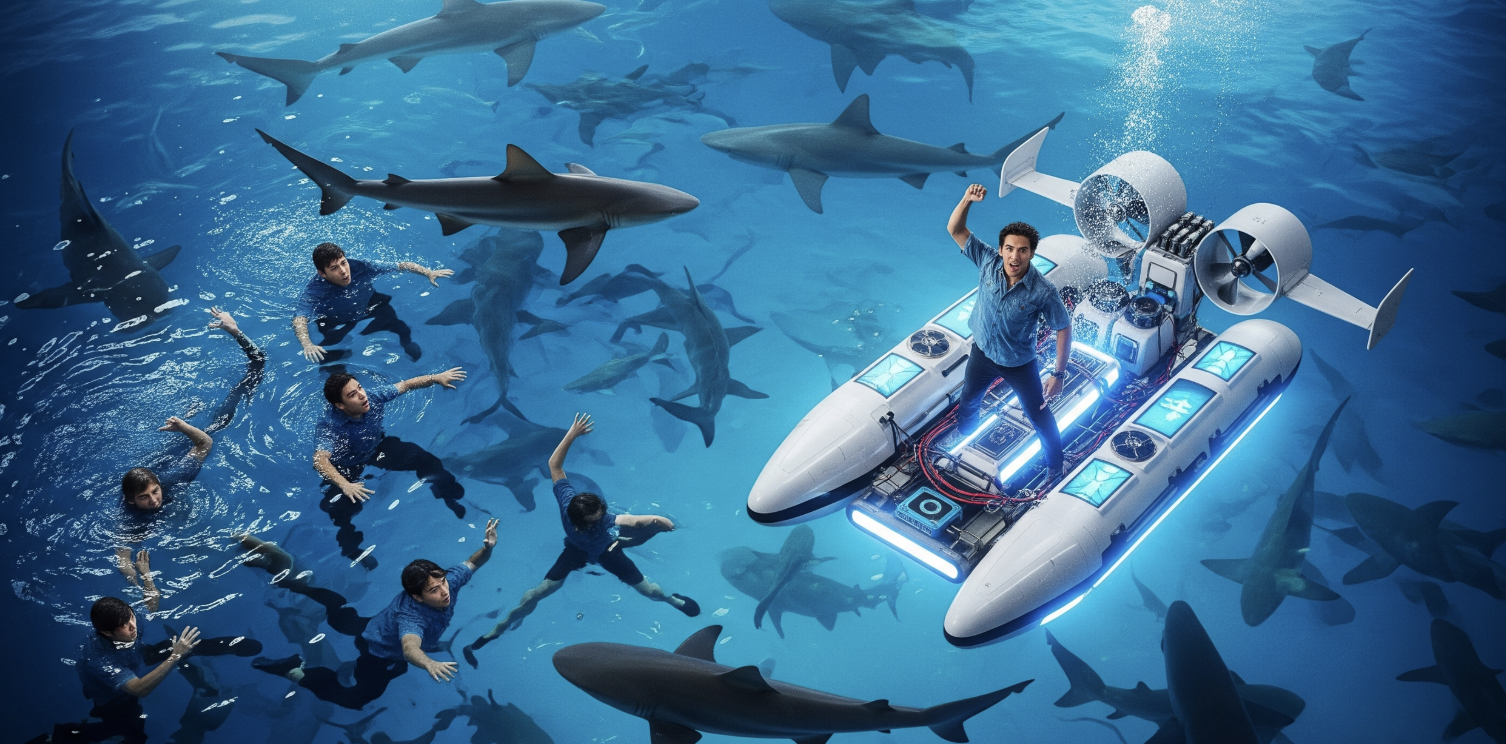
Let's be real, getting my students genuinely excited about research or problem-solving can sometimes feel like trying to convince my cat, Tola to like the vet. Two hours later and two tranquilizers in her, Tola is fully alert ready to rip anyone’s head off should they try to touch any part of her twelve-pound body.
But what if I told you there's a magical potion – okay, a lesson design strategy – that channels the boundless, chaotic teenage energy into productive and competitive brilliance? All you have to do is throw them into a tank full of sharks!
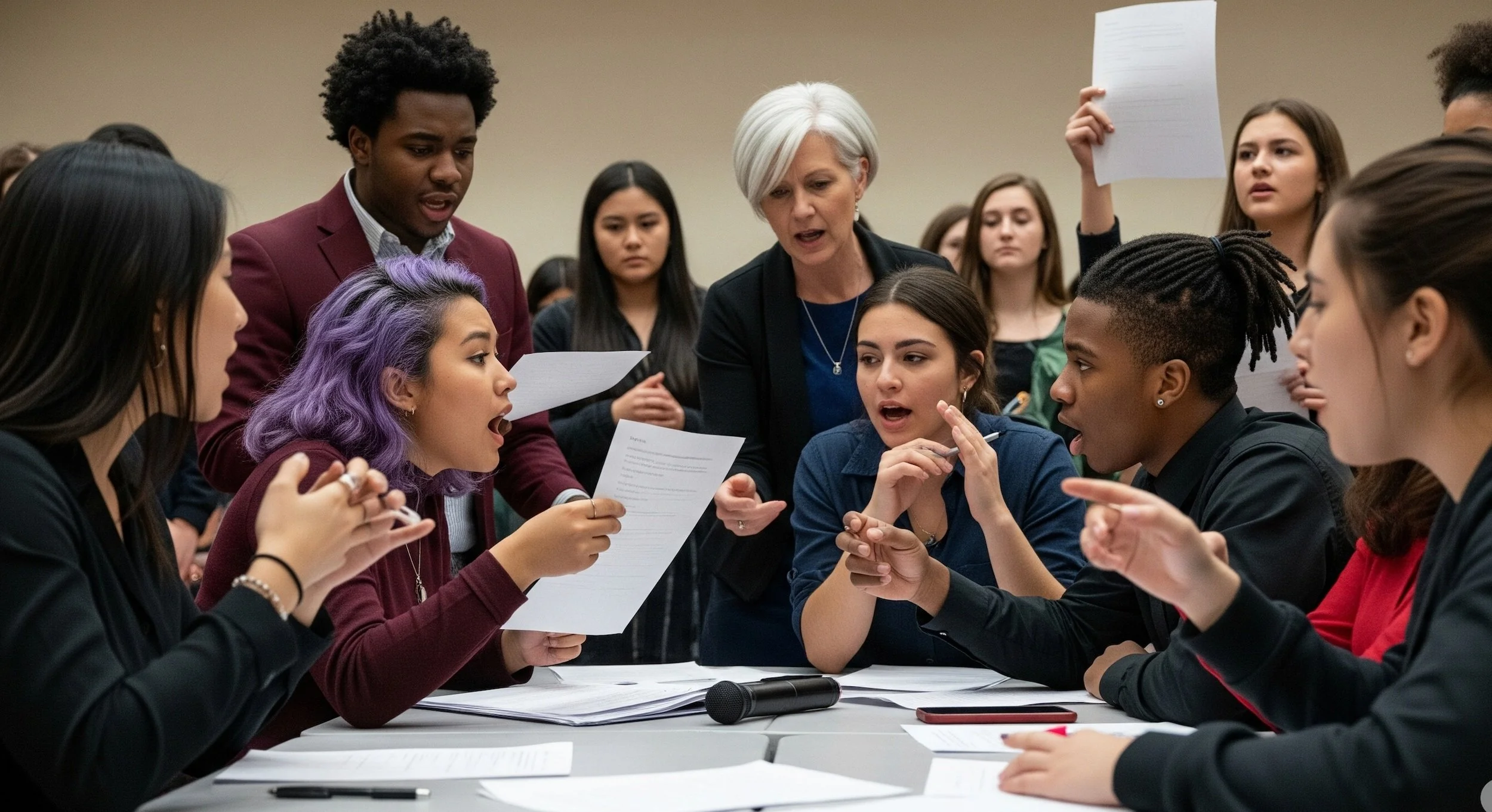
Close your eyes and envision teams of teens frantically designing, debating, and then boldly pitching their groundbreaking ideas to a panel of pretend billionaires. This isn't just a project. It's a high-stakes (ish), low-risk “my thing is better than your thing” battle that leaves students engaged in actual learning.
Here's how to set up the engagement goldmine that is the Shark Tank Innovation Challenge.
Day 1: The Plunge - Identifying the Problem
Day one is all about throwing them into the deep end... of a real-world problem, that is.
The Problem Pitch (10-15 mins): Start with a bang! Present a compelling, relatable, real-world issue that needs a solution. Think local water pollution, designing a truly sustainable community, or inventing a wild new recycling method. Make it feel urgent and important, like the fate of the world (or at least their grade) depends on their ingenuity. "Alright, innovators! Today, we're tackling a problem so big, it makes your Pre-Calc homework look like a chihuahua barking at a grizzly bear.”
Introduce the "Tank" Rules: Explain the "Shark Tank" premise. Students will work in teams, research a problem, design a solution, and then "pitch" it to a panel of "investors" (that's you, maybe a brave colleague, or if you're feeling really adventurous, actual community members). Emphasize that the goal is not just a good idea, but a viable, well-researched, and convincingly pitched one.
Form the Companies (Teams): Divide students into small groups (3-4 per "company"). Give them a few minutes to pick a catchy company name. This tiny act of ownership always boosts engagement. Then, assign or let them choose which specific problem they want to tackle within your broader topic.
Initial Brainstorm & Research Kick-off: Give teams time to brainstorm initial ideas. Crucially, provide a curated list of reputable online resources. "No, TikTok is not a valid research source for global water scarcity. Shocking, I know." This initial research will likely spill into homework, or you could make this a four-day thing.
Day 2: The Deep Dive - Research, Design, and Pitch Prep
This is where the magic aka the organized chaos of genuine innovation happens.
Research Fortification: Students dive deeper into understanding their chosen problem and researching existing solutions (and why they're not good enough). They need data, statistics, and maybe even a few compelling anecdotes. This is where their "Lead Researcher" steps up.
Solution Conception & Design: Teams then brainstorm and design their own unique, innovative solution. Encourage creativity, but stress that it must be grounded in reality (or at least, plausible science). Whether it's a new app, a physical device, or a policy proposal, they need to flesh it out. This is the "Product Development" phase.
Crafting the Killer Pitch: Now comes the salesmanship! Teams need to plan their presentation. Who says what? How will they convey their idea's brilliance in a limited time? They should practice their opening hook, explain the problem, present their solution, justify its viability, and outline its impact. "Remember, investors don't have all day. Get to the point, make it shine, and do not insult the investors' intelligence."
Visual Aids & Prototypes (Conceptual, Usually): Encourage them to think about simple visual aids – a basic diagram, a conceptual drawing, or even a brief flow chart. No need for a working model that sprays glitter, but a clear visual helps!
Day 3: The Feeding Frenzy - Pitch Day!
The moment of truth! Prepare for a flurry of nervous energy, impressive pitches, and surprisingly insightful questions.
Final Touches (5-10 mins): Give teams a brief period for last-minute practice and deep breathing. Remind them of time limits and the "no throwing chairs" rule during the Q&A.
The Pitches Commence: Gather your "investor" panel. Have each team present their solution. Encourage genuine curiosity and critical questioning from the investors and hand them a few starter questions such as “What is the evidence your solution design could work?” or "What makes your solution different or better than what's out there right now?"
Investor Q&A: After each pitch, open it up for questions from the "investors." This is where their research and quick thinking are truly tested. Don't know the answer? Pivot, innovate, or gracefully admit you'll 'get back to them' after more research (a common entrepreneurial strategy).
Debrief & Reflection: After all pitches are done, take a moment to discuss. What made a pitch compelling? What challenges did they face? What did they learn about real-world problem-solving? You can even do a "virtual investment" where students anonymously "invest" imaginary money into the ideas they found most compelling, with extra credit for the "most funded" project. And just like that, the world is (potentially) saved, and you somehow managed the class for three to four straight days with minimal effort. Go you!
The "Shark Tank" Challenge isn't just about designing cool things; it's about making students own their learning, collaborate under pressure, and channel their boundless teenage energy into something genuinely productive. Plus, it's hilarious to watch them try to sell you on something groundbreaking like a self-cleaning grass-powered backyard dog poop scooper.
So take the plunge. Students will dive deep and feast on the required content knowledge without realizing it. Not a bad trick for someone with no formal Jedi training. May the force be with you always.
Thanks for reading my thoughts! I hope they help you in being more you. Check out my shop (see top) if you need thoughtful (not busy work), engaging (fun), project-based and phenomena-based (the whole NGSS thing) Earth and Space Science lessons. I try to keep the prices decent, but if you cannot spare the $, please email me and I’ll give you whatever you need for free.
BOOKS & TOOLS

Equity-Promoting Classroom Poster. What does EQUITY in the classroom look like?
Everyone has a different start and finish line
Quality is more important that quantity
Understanding that diversity makes us stronger
Inclusion despite beliefs, appearances, and circumstances
Thoughtfulness lowers barriers and reduces biases
Yesterday's mistakes are today's learning agenda
You can teach your students about equity and make it a daily classroom practice using this inspirational poster, which also includes images that accompany the equity description. You can discuss each letter characteristic with your students as a way of introducing your inclusive classroom and display it prominently as a reminder that diversity makes the classroom community stronger.

Save 2 - 3 weeks of planning time and start your Earth and Space Science school year off right using NGSS and Phenomenon Based Learning with this “Introduction to Earth and Space Science” Unit that contains 5 relevant and engaging multi-day projects.

8 digital, printable, size 11 x 17 classroom posters:
“Welcome” in multiple languages
“Hi” in multiple languages
Three Equity posters
Classroom Rules: Be Open, Be Kind, Have Fun
“Classroom of Champs”
“Kindness”
ON SALE until August 30th.

Save planning time with this 3 to 4-day Earth and Space Science NGSS-aligned introductory lesson during which students learn about the Systems Approach to studying science and analyzing real world phenomena.
The lesson involves investigating an anthropogenic phenomenon and examining human influence on the four spheres (biosphere, hydrosphere, atmosphere, and geosphere).
During the investigation, students create models and use them to explain how each of the four spheres is affected in a video that educates viewers on the consequences of human actions and the interconnectedness of the Earth’s systems.
Includes 9 detailed slides (PDF and Google Slides link for editing) + detailed teacher directions (2 slides).
The project follows the guidelines set by the Next Generation Science Standards (NGSS) and guides students in using Science and Engineering Practices (SEPs), Crosscutting Concepts (CCCs), and Disciplinary Core Ideas (DCIs).
Student Learning Objectives:
Describe what a Phenomenon is and give examples of Natural and Anthropogenic Phenomena.
Explain how phenomena can be used to study scientific concepts.
Describe the four spheres: atmosphere, hydrosphere, geosphere, and biosphere, and give examples of different matter interactions between them.
Understand, explain, and apply the Systems Approach when investigating Earth and Space Science Phenomena.
Break down how a Specific Anthropogenic Phenomenon affects each of the four spheres.


Save planning time with this introductory, 3-4 day Earth and Space Science engineering challenge in which students create a computer simulation of an Earth Science topic.
Includes 12 detailed slides (PDF and Google Slides link for editing) + detailed teacher directions (last slide) + a BONUS resource: Animation Guide for Google Slides.
The project follows the guidelines set by the Next Generation Science Standards (NGSS) and guides students in using Science and Engineering Practices (SEPs).
Student Performance and Learning Objectives:
Design and create an informative computer simulation.
Use computer animation to simulate a key ESS concept.
Explain the key ideas of an ESS concept of your choice.
- April 2026 4
- March 2026 1
- December 2025 1
- September 2025 2
- August 2025 5
- July 2025 4
- June 2025 2
- August 2024 2
- July 2024 2
- June 2024 1
- October 2023 1
- September 2023 3
- August 2023 6
- July 2023 6
- July 2022 2
- June 2022 1
- November 2020 3
- October 2020 3
- April 2020 1
- March 2020 5
- July 2019 1
- June 2019 1
- April 2019 1
- January 2019 1
- November 2018 3
- October 2018 2
- September 2018 1
- August 2018 8
- July 2018 11
- June 2018 4
- May 2018 5
- April 2018 2
- March 2018 4
- February 2018 5
- January 2018 3
- December 2017 1
- November 2017 5
- October 2017 7
- September 2017 6
- August 2017 5
- July 2017 3
- June 2017 10
- May 2017 7
- April 2017 7
- March 2017 15
- February 2017 12
- January 2017 13
- December 2016 15
- November 2016 8
- October 2016 7
- September 2016 12
- August 2016 14
- July 2016 10
- June 2016 13
- May 2016 10
- April 2016 8
- March 2016 5
- February 2016 7
- January 2016 6
- December 2015 5
- November 2015 8
- October 2015 2
![[Earth Science] Terraforming Mars: The Red Planet](https://images.squarespace-cdn.com/content/v1/5611dbcce4b0b27692201460/cf20dede-a655-4803-9af0-1ef1b49c8747/Terraforming+Mars_+The+Red+Planet+_Shark+Tank_+Innovation+Challenge.png)
Are your students tired of just reading about Earth? Do they gaze longingly at the night sky, dreaming of a future beyond textbook pages? Excellent! Because today, we're not just learning about science; we're making science. We're launching them into the ultimate entrepreneurial challenge: Terraforming Mars: The Red Planet "Shark Tank" Innovation Challenge!
Forget your quaint little recycling programs. We're talking about taking a dusty, desolate rock and turning it into a vacation spot for humanity.
This isn't just a project; it's a desperate plea from the future (and a cunning way to keep them engaged). Your students will become "Terraforming Tech Startups," armed with nothing but their wits, some internet access, and a burgeoning understanding of how Earth actually works. Because, let's be honest, trying to make Mars habitable without understanding our own planet's life support systems is like trying to bake a cake without knowing what flour is.
Prepare for an explosion of creativity (hopefully not literal, on Mars or in your classroom) as they grapple with the fundamental cycles that make life possible. The competitive drive to secure that "virtual investment" (and bragging rights) will channel all their boundless energy into productive, scientific output. Just try to keep the "mad scientist" cackles to a minimum.
Student Learning and Performance Objectives:
Demonstrate understanding of the Carbon, Water, Nitrogen, and Oxygen cycles.
Apply your knowledge of the principles of these cycles to design an ecosystem on a different planet (e.g. Mars).
Illustrate how biogeochemical cycles support life in a closed system (Earth, Mars colony, dome ecosystem etc.).
Pitch your solutions to practice collaboration, critical thinking, and creative problem-solving/design.
What's included:
20 slides that introduce, explain, and guide the teacher and students
Introductory popcorn reading activity
Research Guide (G-doc link): Includes Note-taking space and links to reputable websites for students to use.
Project timeline and detailed tasks for each day
Group Roles explained in detail
Detailed teacher notes on prep, main lesson, and best practices
List of materials
Student Learning and Performance Objectives
Grading Rubric and Peer Evaluation Form

![[Earth & Space Science] Cosmic Scene Investigation: A Case of the Kilonova](https://images.squarespace-cdn.com/content/v1/5611dbcce4b0b27692201460/af009c00-4e48-4f80-a91c-3a7899d66828/Cosmic+Scene+Investigation_+A+Case+of+the+Kilonova.png)