CRUSH SCHOOL

I blog on Brain-Based Learning, Metacognition, EdTech, and Social-Emotional Learning. I am the author of the Crush School Series of Books, which help students understand how their brains process information and learn. I also wrote The Power of Three: How to Simplify Your Life to Amplify Your Personal and Professional Success, but be warned that it's meant for adults who want to thrive and are comfortable with four letter words.

Filtering by Tag: teaching teens

Why Summer Is Super Necessary for Teachers

Simple infographic showing the three benefits of summer for teachers: Rest represented by a relaxing chair and coffee, Rejuvenation represented by nature and reflection, and Reset represented by planning and fresh goals for the future.

Summer gives teachers what the school year rarely can: time to rest, rejuvenate, and reset before another year of helping students learn and grow.

By the time summer arrives, most teachers aren't just ready for a break.

We're ready to run.

The final weeks of the school year are a strange combination of exhaustion and determination—grading final assignments, wrapping up units, managing student behaviors that seem to worsen as summer approaches, attending meetings, completing paperwork, cleaning classrooms, communicating with families, and somehow still showing up every day with patience and positivity.

Teaching is one of the few professions where being mentally exhausted isn't enough to stop the work. You still have to think. You still have to care. You still have to be "with it."

Day after day. Month after month. Most of us spend the school year carrying hundreds of decisions, thousands of interactions, and countless responsibilities. Long after students leave for the day, lesson plans, grading, emails, and tomorrow's problems follow us home.

By June, we’re not looking for professional development (thanks admin).

We're looking for recovery.

That's why summer is super necessary. Not because we are lazy or don't want to work, but because we need Rest, Rejuvenation, and Reset.

Rest

Risking winning the 1st prize for The Understatement of the Year, I’ll say it anyway: Teaching is demanding work mentally and physically.

Every lesson requires planning. Every class requires attention. Every student interaction requires mental, emotional, and physical energy.

But the brain did not evolve to operate in overdrive every day for ten straight months. And summer provides something many teachers desperately need but rarely get enough of during the school year:

Rest.

Real rest. Not grading on the couch. Not answering emails before bed. Not squeezing personal relaxation in-between professional responsibilities.

Just rest.

Sleeping a little longer. Reading for pleasure. Sitting on the patio with a cup of coffee. Taking a walk without thinking about tomorrow's lesson plan.

Rest allows the brain and body to recover from months of continuous and strenuous demands. Thus, teacher recovery is productive.

Rejuvenation

If rest helps us recover, rejuvenation helps us reconnect.

During the school year, teachers spend most of their energy taking care of everyone else.

Summer creates space to remember who we are outside of the classroom. It might be travelers, gardeners, fishers, hikers, or theatre, concert, and sports event goers; maybe most of the above.

We want to spend quality time with our family, maybe learn something new, or simply enjoy a quiet afternoon doing absolutely nothing.

Whatever form it takes, rejuvenation restores the energy, enthusiasm, and creativity that teaching constantly demands of us.

Teachers don't just need time away from school. We need time spent doing things that make us feel alive.

Reset

This one is different. While rest helps us recover and rejuvenation recharge, resetting gets us ready. This doesn't mean spending all of July rewriting curriculum or building elaborate lesson plans. I would not wish that on anyone.

A reset can be much simpler than that. It can be about reflecting on what worked and thinking more deeply about what didn't. It may involve considering small changes that could make our next year better.

Maybe it's figuring out how we can talk less and let students do more.

Maybe it's finding new ways to increase student engagement.

Maybe it's committing to trying a few new classroom strategies.

But no matter what the one, two, three big professional summer goals we task ourselves with are, reset should not be about working all summer, but about returning with renewed purpose that makes coming back to school exciting.

The Summer Teachers Deserve

Teachers spend the school year helping students grow. Summer is the season when teachers get to do some growing of their own.

So if you're feeling exhausted right now, that's normal. If you're counting down the days, that's understandable. If you need a break, you've earned it.

Take that nap. Read that novel. Sit on your patio and stare blankly at whatever. Most importantly, spend quality time with the people you love and the things that remind you there's a whole world beyond the classroom.

Rest. Rejuvenate. Reset.


When you're ready to think about next year, I hope you'll check out my upcoming book High Impact Teaching Strategies: 100 Brain-Based Classroom Activities for Building Better Learners full of practical, classroom-tested HITS (High Impact Teaching Strategies) designed to increase engagement, strengthen learning, improve retention, and make teaching a little easier.

But not yet.

For now, enjoy your summer. You earned it.

BOOKS & TOOLS

 
Memory Palace - 3 Lesson Series (Teach Students a Powerful Memory Technique)
$3.00

Flashcards are okay but there's a better way. The Memory (or Mind) Palace Method is a powerful learning and memorization technique that when mastered allows a student to remember 10, 20, or even 30 vocabulary words or concepts (definitions included) with ease.

And, they actually remember what they learned using memory palaces! This series of lessons (which can be used as classroom handouts) walks students through creating their first memory palace, filling it with information they need to learn, and using it to train their memories. It also contains short readings, a video lesson, memory palace examples, and practice drills.

Fair Use

Feel free to use with your students. Please do not share it with other parties or use for profit. All rights by crushschool.com.

 
EQUITY Poster
$1.50

Equity-Promoting Classroom Poster. What does EQUITY in the classroom look like?

  • Everyone has a different start and finish line

  • Quality is more important that quantity

  • Understanding that diversity makes us stronger

  • Inclusion despite beliefs, appearances, and circumstances

  • Thoughtfulness lowers barriers and reduces biases

  • Yesterday's mistakes are today's learning agenda

You can teach your students about equity and make it a daily classroom practice using this inspirational poster, which also includes images that accompany the equity description. You can discuss each letter characteristic with your students as a way of introducing your inclusive classroom and display it prominently as a reminder that diversity makes the classroom community stronger.

 
Mistakes Are... Poster
$3.00

In this classroom Mistakes are Expected, Respected, Inspected, Corrected!

Learned helplessness is a result of years of conditioning that mistakes are bad for learning. Nothing is further from the truth - some of the most powerful life lessons come from making mistakes, reflecting on them, and growing as a result.

This is a PNG Poster you can print and display in your classroom to encourage a culture of risk-taking and learning from mistakes.
 
Climate Change Debate: The Earth Science Intellectual Thunderdome
$4.00

In this 3- to 4-day lesson, designed for a high school Earth and Space Science classroom, student groups are assigned and investigate 4 leading solutions to the climate change crisis our planet is experiencing. Then, they are called upon to debate against each other to try to convince others that their solution is the most viable and provide counterarguments against other solutions. It’s an intellectual thunderdome in which students are encouraged to use science to attacks each others points of view on climate change but not character.

Why and how does this learning strategy work?

Rote memorization out; seeking answers and deeper learning in.

The debate-style approach to learning is engaging and motivating for learners, because they are challenged to use real evidence and their wits to outmaneuver their opposition.

Not only do they act as investigators, developing communication, collaboration, and argumentation skills but they learn about viable solutions to the climate change conundrum we all find ourselves in. They learn Earth and Space Science content while investigating and debating solutions to a real-world phenomenon, which is what the Next Generation Science Standards (NGSS) call for.

Student Learning and Performance Objectives:

  1. Research multiple, complex climate change solutions to discover that the world is more complicated than a single TikTok trend.

  2. Articulate scientific arguments with actual evidence.

  3. Listen to opposing viewpoints, to hone "social awareness" skills.

  4. Realize that climate change solutions are multi-faceted, messy, and require more than just good vibes.

  5. Describe and support with, not mere belief but actual evidence, the leading climate solutions proposed by, not the coven of online witches but the scientific community.

What's included:

  1. 24 slides that introduce, explain, and guide the teacher and students

  2. Detailed teacher notes on prep, main lesson, and follow up activities

  3. General Lesson flow for teacher to follow to make it all seamless

  4. A short and funny “hook” to increase student buy in

  5. Detailed student directions

  6. A list (research starter pack) of links to legit, scientific websites for students to use.

  7. Group roles (team jobs) with descriptions of what each entails.

  8. 4 climate change solutions to assign to 4 different student groups

  9. Student Learning and Performance Objectives

  10. Detailed Grading Rubric to guide students and make assessment easy

  11. Debate Day introduction and format description

  12. Follow up discussion questions (reflection and debrief)

 
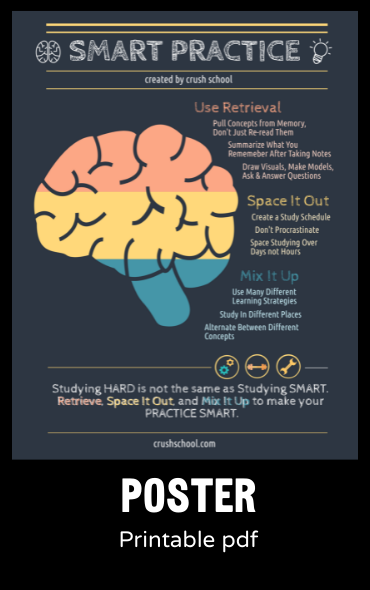
Smart Practice Digital Poster
Sale Price: $2.00 Original Price: $3.00

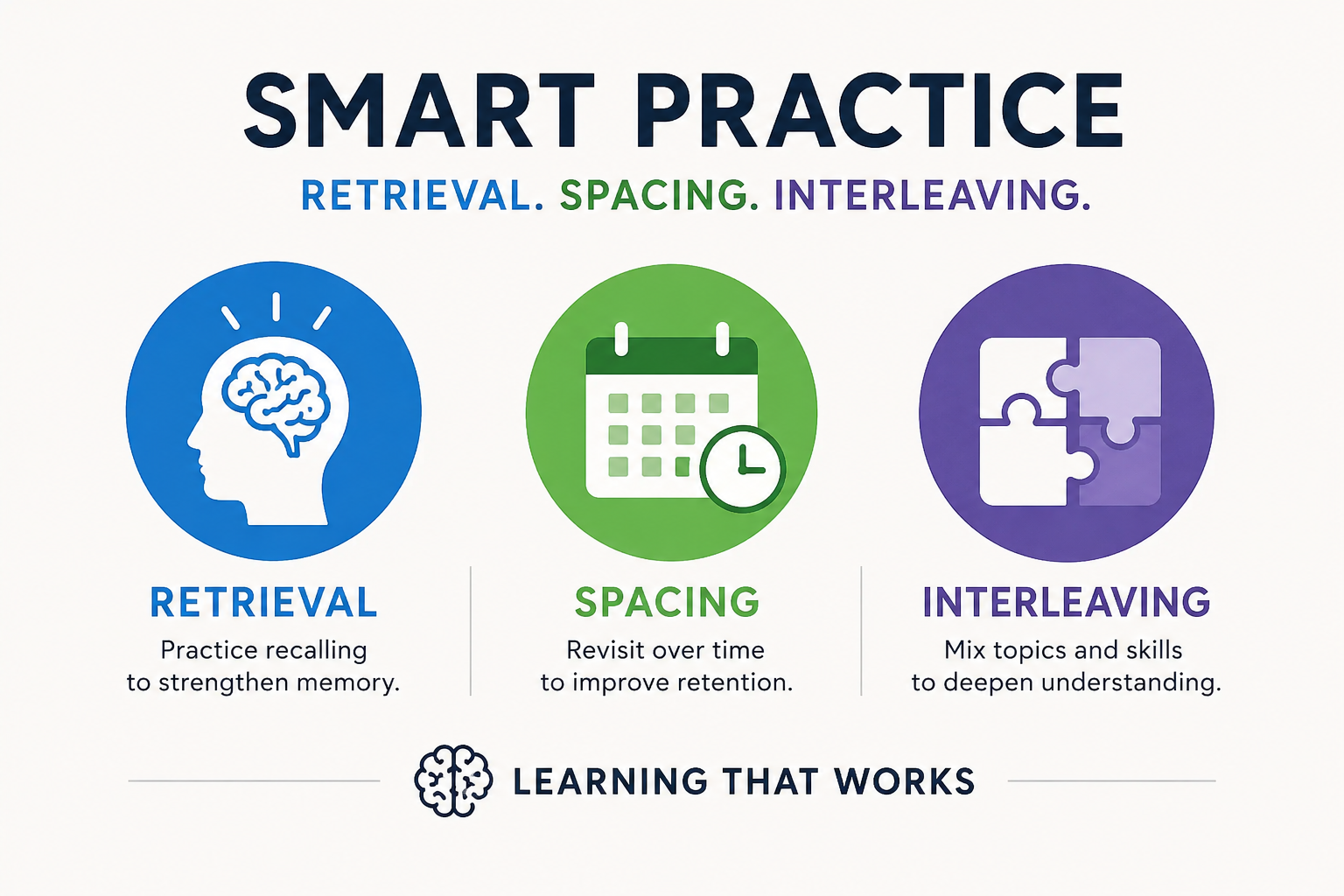
Retrieval Practice, Spaced Practice, and Mixed Practice (Interleaving).

Studying Hard is not the same as Studying Smart. This High Quality printable, digital (PNG) poster is a constant classroom reminder of best practices for teachers and learning the smart way for students.


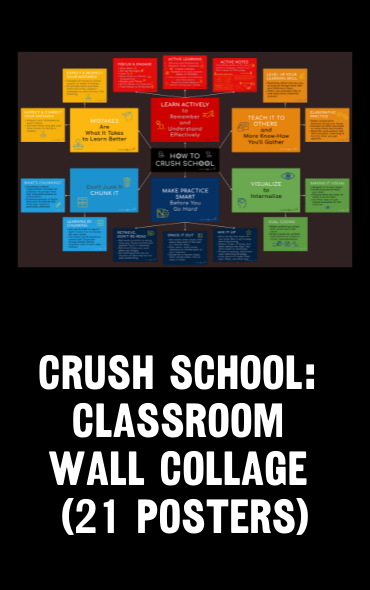
How To Crush School Rhymes (or Success In School) Classroom Wall Collage (21 posters)
$7.00

Classroom Wall Collage designed to promote effective, research-based, active learning strategies. Consists of 6 categories:

Learn Actively (Active Learning Strategies to avoid passive learning)

Mistakes Are What It Takes to Learn (Promoting a classroom culture of making and learning from mistakes and why such learning is effective)

Don’t Junk It, Chunk It (How to use the brain chunking technique)

Make Practice Smart (How to use smart and intentional study strategies instead of regurgitating and cramming information)

Visualize to Internalize (Dual Coding Strategy)

Teach It To Others (How to use what you learn to teach others to in turn learn it on a deeper level)

Each category includes 2 or 3 more specific descriptions of how it should be used. And, it rhymes for extra swag and student retention!

A total of 21 posters. Upon payment, you will be directed to a Google Drive link, which gives you 24 hours to copy the folder containing all 21 images to your Google Drive to use for educational purposes only.

The Last Days of School: 4 Fun Activities Your Students Will Love

Simple classroom infographic featuring four end-of-the-school-year activities: Four Corners Chaos, Real-Life Detective, Future Headline, and Chain Reaction, represented by icons for movement, investigation, prediction, and collaboration.

Four simple HITS—Four Corners Chaos, Real-Life Detective, Future Headline, and Chain Reaction—help keep students thinking, talking, and engaged during the final days of school.

Let's be honest.

The last few days of school are different. It’s a time when another worksheet isn't going to save the day for teachers and giving students “free days” won’t fly with admins.

What if you fight different with different?

What you need are activities that require movement, create curiosity, and a bring a little fun without requiring hours of prep or cleanup.

Here are four HITS (High Impact Teaching Strategies) that are perfect for this (and any, really) time of the year.

1. Four Corners Chaos

Need to wake up a sleepy classroom? Give students something to argue about.

Label the four corners of the room:

  • Strongly Agree

  • Agree

  • Disagree

  • Strongly Disagree

Then read a funny, weird, controversial, or debatable statement:

  • A hot dog is a sandwich.

  • Aliens definitely exist.

  • Math is better than science.

  • Summer should be six months long.

Students move to a corner, defend their position, challenge other groups, and debate their reasoning.

Do not forget to weave in some class content if you want or must—it’ll work.

The movement gets students energized. The discussion gets students engaged. And the occasional questionable argument makes everyone laugh.

And since they’re already up and you need to kill another 10 minutes, go on a Walk and Talk around the school building and ask students to partner up and argue one funny and one class-related statement while they walk.

2. Real-Life Detective

Students love solving mysteries.

Show an image connected to your content and challenge students to become detectives.

Their job is to:

  • Identify the concept being demonstrated

  • Gather evidence from the image

  • Explain how the evidence supports their conclusion

Examples:

  • A science teacher might show a landslide.

  • A social studies teacher might show an overcrowded city.

  • An ELA teacher might show a symbolic image from a novel.

  • A math teacher might show a real-world example of geometry or probability.

The goal is simple: find the clues, make your case, defend your conclusions.

Do you want to make it into a 50+ minute lesson? Ask students to find content-related images online and challenge each other to figure out what they represent. And let them argue about it ‘cause deeper thinking.

3. Future Headline

This activity asks students to think beyond what they've learned and imagine what comes next.

Give students a concept, event, problem, or topic from your course.

Then ask them to write a future newspaper, website, or social media headline.

Examples:

  • Scientists Discover Unlimited Clean Energy

  • Mars Colony Celebrates 25th Anniversary

  • Local River Fully Restored After Decades of Pollution

  • New Technology Eliminates Traffic Accidents

Students then explain why that headline might become reality and support their prediction using evidence from class content.

The activity combines creativity, application, and argumentation in just a few minutes.

And you can turn it into a full day’s lesson by asking students to write the actual article in a small group and create an image to go with it.

4. Chain Reaction

This is one of the simplest review activities you'll ever use.

Choose a concept, process, event, vocabulary term, or big idea.

Students stand.

Teacher starts an explanation or story connected to a class topic.

Moving rapidly and randomly around the room, each student adds:

  • a word

  • a phrase

  • or a sentence

Each contribution must connect to the previous response.

After contributing successfully, students sit down.

The challenge?

If someone hesitates for more than three seconds, repeats an idea, or gives incorrect information, the chain starts over. The pressure creates focus. The teamwork creates engagement. And the retrieval practice helps reinforce learning without students even realizing they're reviewing. Pretty fly for a non-Jedi, don’t you think?

Why These Anytime Activities Work Well At The End

The final days of school are not the time to scream for attention. They're the time to use curiosity, movement, discussion, prediction, and challenge.

These four HITS work because they feel different.

Students move, talk, think, and laugh.

Most importantly, they remain actively involved in learning during a time when many classrooms are in full shutdown mode.

One Last Thought

The final two days of school don't need to be academically perfect.

They should be memorable.

A little movement. A little curiosity. A little fun. That's often enough to finish strong.

And you know what else?

Your students will remember you and these activities long after they've forgotten the worksheet you almost handed out instead. Just sayin’.


Sign Up below to get more High Impact Teaching Strategies (HITS) like the four above.

My new book High Impact Teaching Strategies: 100 Brain-Based Strategies for Building Better Learners is set for release on August 1st and I plan to offer it at 50% off to the first 100 buyers, so sign up to get notified when it drops.

BOOKS & TOOLS

 
Memory Palace - 3 Lesson Series (Teach Students a Powerful Memory Technique)
$3.00

Flashcards are okay but there's a better way. The Memory (or Mind) Palace Method is a powerful learning and memorization technique that when mastered allows a student to remember 10, 20, or even 30 vocabulary words or concepts (definitions included) with ease.

And, they actually remember what they learned using memory palaces! This series of lessons (which can be used as classroom handouts) walks students through creating their first memory palace, filling it with information they need to learn, and using it to train their memories. It also contains short readings, a video lesson, memory palace examples, and practice drills.

Fair Use

Feel free to use with your students. Please do not share it with other parties or use for profit. All rights by crushschool.com.

 
EQUITY Poster
$1.50

Equity-Promoting Classroom Poster. What does EQUITY in the classroom look like?

  • Everyone has a different start and finish line

  • Quality is more important that quantity

  • Understanding that diversity makes us stronger

  • Inclusion despite beliefs, appearances, and circumstances

  • Thoughtfulness lowers barriers and reduces biases

  • Yesterday's mistakes are today's learning agenda

You can teach your students about equity and make it a daily classroom practice using this inspirational poster, which also includes images that accompany the equity description. You can discuss each letter characteristic with your students as a way of introducing your inclusive classroom and display it prominently as a reminder that diversity makes the classroom community stronger.

 
Mistakes Are... Poster
$3.00

In this classroom Mistakes are Expected, Respected, Inspected, Corrected!

Learned helplessness is a result of years of conditioning that mistakes are bad for learning. Nothing is further from the truth - some of the most powerful life lessons come from making mistakes, reflecting on them, and growing as a result.

This is a PNG Poster you can print and display in your classroom to encourage a culture of risk-taking and learning from mistakes.

 
Climate Change Debate: The Earth Science Intellectual Thunderdome
$4.00

In this 3- to 4-day lesson, designed for a high school Earth and Space Science classroom, student groups are assigned and investigate 4 leading solutions to the climate change crisis our planet is experiencing. Then, they are called upon to debate against each other to try to convince others that their solution is the most viable and provide counterarguments against other solutions. It’s an intellectual thunderdome in which students are encouraged to use science to attacks each others points of view on climate change but not character.

Why and how does this learning strategy work?

Rote memorization out; seeking answers and deeper learning in.

The debate-style approach to learning is engaging and motivating for learners, because they are challenged to use real evidence and their wits to outmaneuver their opposition.

Not only do they act as investigators, developing communication, collaboration, and argumentation skills but they learn about viable solutions to the climate change conundrum we all find ourselves in. They learn Earth and Space Science content while investigating and debating solutions to a real-world phenomenon, which is what the Next Generation Science Standards (NGSS) call for.

Student Learning and Performance Objectives:

  1. Research multiple, complex climate change solutions to discover that the world is more complicated than a single TikTok trend.

  2. Articulate scientific arguments with actual evidence.

  3. Listen to opposing viewpoints, to hone "social awareness" skills.

  4. Realize that climate change solutions are multi-faceted, messy, and require more than just good vibes.

  5. Describe and support with, not mere belief but actual evidence, the leading climate solutions proposed by, not the coven of online witches but the scientific community.

What's included:

  1. 24 slides that introduce, explain, and guide the teacher and students

  2. Detailed teacher notes on prep, main lesson, and follow up activities

  3. General Lesson flow for teacher to follow to make it all seamless

  4. A short and funny “hook” to increase student buy in

  5. Detailed student directions

  6. A list (research starter pack) of links to legit, scientific websites for students to use.

  7. Group roles (team jobs) with descriptions of what each entails.

  8. 4 climate change solutions to assign to 4 different student groups

  9. Student Learning and Performance Objectives

  10. Detailed Grading Rubric to guide students and make assessment easy

  11. Debate Day introduction and format description

  12. Follow up discussion questions (reflection and debrief)

 
Earth Science: 7-Day Weather Report Project (NGSS) HS-ESS2
$4.00

Save planning time with this Atmosphere Unit, 5-day Honors Earth and Space Science Project in which students research, design, create, and present a 7-day weather forecast for a specific city in the US or abroad.

Student Performance and Learning Objectives:

  1. Explain how weather data is collected and interpreted.

  2. Explain how weather patterns may be affected by geography (mountains, plains, valleys etc.).

  3. Explain the atmospheric conditions (pressure, moisture etc.) necessary for different weather (sunny, windy, rainy etc.).

What's included:

  1. 16 slides (Google Slides link for easy use and editing to fit your purposes)

  2. Learning Objectives

  3. Group Roles / Jobs (up to 5 with detailed description of jobs)

  4. Detailed Project Directions / Requirements

  5. Materials/Web Resources List

  6. Link to a "Wheel of Names" containing city names - students spin and receive their assigned city.

  7. Link to a grading rubric for student and teacher use (printable doc).

The project follows the guidelines set by the Next Generation Science Standards (NGSS).


Questions?
Email me at oskar@crushschool.com. I’m happy to answer your questions.

Fair Use
Feel free to share and use this resource with your students.

Please do not share it with other parties or use for profit. All rights by crushschool.com.


Smart Practice Digital Poster
Sale Price: $2.00 Original Price: $3.00

Retrieval Practice, Spaced Practice, and Mixed Practice (Interleaving).

Studying Hard is not the same as Studying Smart. This High Quality printable, digital (PNG) poster is a constant classroom reminder of best practices for teachers and learning the smart way for students.

Beating the End-of-the-School-Year Slump with The Mystery Object

Museums have known this secret for years.

People don't walk up to an exhibit and start with reading the information plaque.

First, they look at the artifact, object, painting etc., they wonder about it because it reminds them of something or it is similar to something they encountered not too long ago, and often they ask questions or discuss it with the people they are walking the museum with.

Only after their curiosity bug is satisfied are they ready to invest more time and effort into learning the details about it.

Teachers can leverage the same understanding in their classrooms.

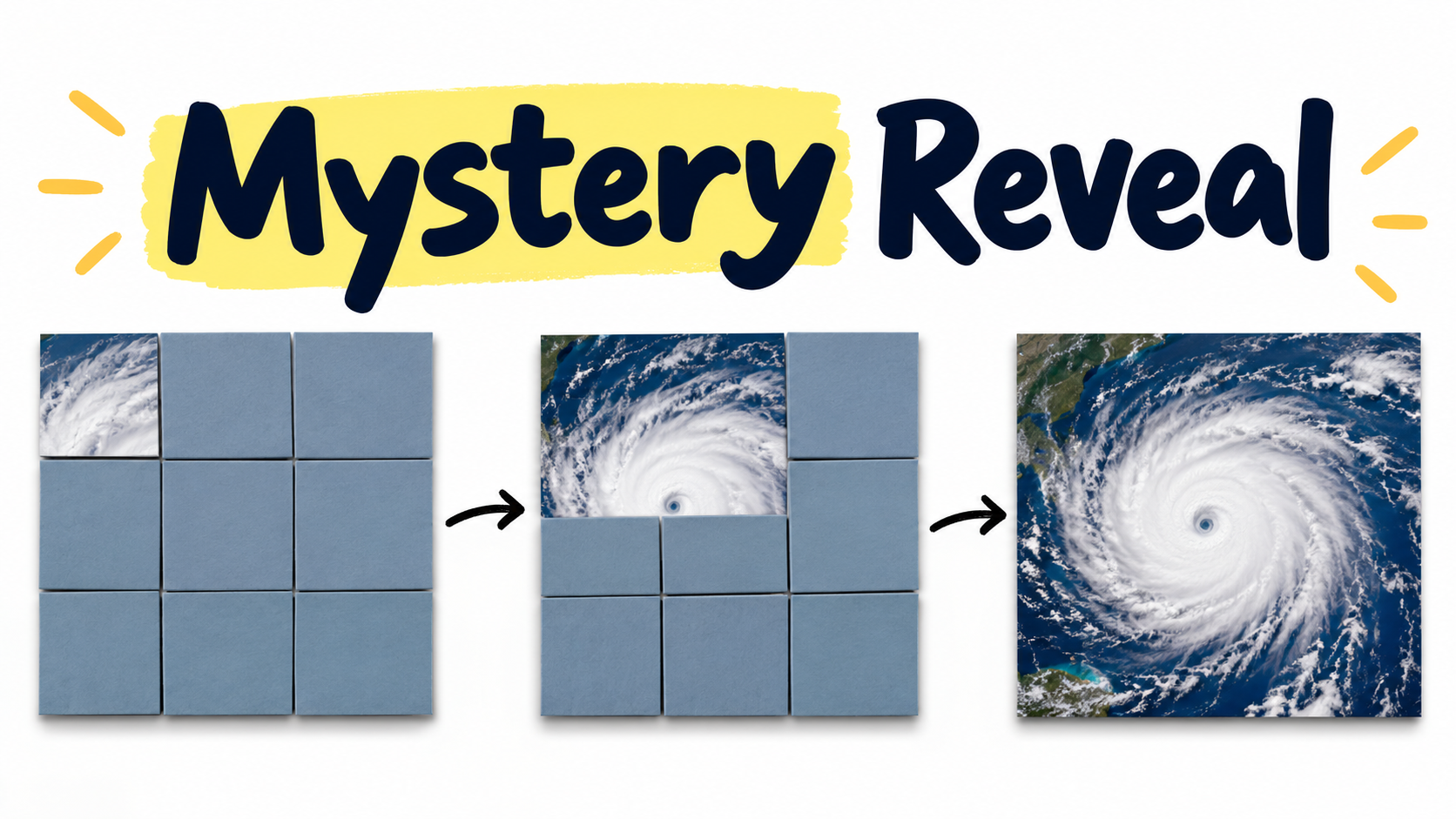
Just place a mysterious object that is in some way related to the day’s learning at the front of the room and watch the transformation—the traditional, passive lesson start immediately turns into an investigation.

There’s more. Instead of beginning with answers to the questions we pose, students begin with questions of their own.

And when summer is only a week or two away, getting students curious is half the battle. The other half—the learning—happens naturally as they seek answers to the questions they’ve conjured.

Check out The Mystery Object, an active learning bell ringer and strategy.

Infographic showing the Mystery Object classroom strategy, where students examine an unusual object, make predictions, discuss ideas, and connect the object to lesson content through curiosity and inquiry.

A simple object can transform the start of a lesson by creating curiosity, activating prior knowledge, and getting students invested in learning before instruction begins.

How The Mystery Object Activity Works

Place an unusual object, image, artifact, sample, or tool where students can see it.

Then ask: What do you think it is? What might it be used for? How might it connect to today's lesson?

Students make predictions individually or in groups and explain their reasoning.

Later in the lesson and through student investigation and participation, the object's connection is revealed.

That's it. Simple setup. Big payoff.

Why It Works As A Great Student Engagement Hook

Curiosity Boosts Engagement

The brain naturally wants answers. When students see something unusual, they immediately start trying to figure it out. No forceful “Quiet down and listen please!”—The Mystery Object creates attention.

Prediction Increases Focus

As soon as students make a prediction, they become invested. Now they want to know: "Was I right?" That question keeps attention focused throughout the lesson.

Priming Prepares the Brain for Learning

Before instruction even begins, students start activating related ideas and prior knowledge. The brain begins building connections and anticipating answers before the lesson starts.

Retrieval Strengthens Learning

Students must pull information from memory to make predictions. Retrieval helps strengthen learning and prepares students for new content.

Discussion Gets Everyone Talking

Students naturally enjoy sharing theories and defending their ideas. Even reluctant learners often participate because there isn't one obvious answer.

Classroom Examples of The Mystery Object

Science: Plate Tectonics

Show a cracked hard-boiled egg.

Students might discuss how the cracks relate to Earth's surface, or earthquakes, or other patterns they might have seen in the past.

Math: Geometry

Show a soccer ball.

Students might identify patterns, shapes, symmetry, or something so off-the-cuff you’ll just choose to ignore because what’s the point?.

ELA: Symbolism

Show a broken chain. Students discuss possible meanings and symbolic connections or maybe a recent passage, book, or play teacher had them read.

Social Studies: Industrialization

Show an old factory tool or a manufactured object. Students might predict how it was made, what it was used for, how it changed society for the worse (or better).

Tips for End-of-Year Success

  1. Use physical objects whenever possible.

  2. Choose objects that are unusual enough to spark curiosity but connected clearly to the lesson.

  3. Avoid revealing the answer too quickly.

  4. Let students debate and discuss before solving the mystery.

  5. At the end of class, revisit the original predictions and see how student thinking changed.

Bottom Line

When students are battling the end-of-the-school-year slump, attention becomes your most valuable resource. The Mystery Object bell ringer stimulates curiosity, leads to discussion, prompts prediction, and engages students in a meaningful way before the lesson even begins.

It's fast. It's fun. And it gives students a reason to pay attention when summer is the one thing on their minds.

Surprise them with a classroom mystery to beat this slump.


Sign Up below to get more High Impact Teaching Strategies (HITS) like The Mystery Object.

My new book High Impact Teaching Strategies: 100 Brain-Based Strategies for Building Better Learners is set for release on August 1st and I plan to offer it at 50% off to the first 100 buyers, so sign up to get notified when it drops.

BOOKS & TOOLS

 
Memory Palace - 3 Lesson Series (Teach Students a Powerful Memory Technique)
$3.00

Flashcards are okay but there's a better way. The Memory (or Mind) Palace Method is a powerful learning and memorization technique that when mastered allows a student to remember 10, 20, or even 30 vocabulary words or concepts (definitions included) with ease.

And, they actually remember what they learned using memory palaces! This series of lessons (which can be used as classroom handouts) walks students through creating their first memory palace, filling it with information they need to learn, and using it to train their memories. It also contains short readings, a video lesson, memory palace examples, and practice drills.

Fair Use

Feel free to use with your students. Please do not share it with other parties or use for profit. All rights by crushschool.com.

 
EQUITY Poster
$1.50

Equity-Promoting Classroom Poster. What does EQUITY in the classroom look like?

  • Everyone has a different start and finish line

  • Quality is more important that quantity

  • Understanding that diversity makes us stronger

  • Inclusion despite beliefs, appearances, and circumstances

  • Thoughtfulness lowers barriers and reduces biases

  • Yesterday's mistakes are today's learning agenda

You can teach your students about equity and make it a daily classroom practice using this inspirational poster, which also includes images that accompany the equity description. You can discuss each letter characteristic with your students as a way of introducing your inclusive classroom and display it prominently as a reminder that diversity makes the classroom community stronger.

 
Mistakes Are... Poster
$3.00

In this classroom Mistakes are Expected, Respected, Inspected, Corrected!

Learned helplessness is a result of years of conditioning that mistakes are bad for learning. Nothing is further from the truth - some of the most powerful life lessons come from making mistakes, reflecting on them, and growing as a result.

This is a PNG Poster you can print and display in your classroom to encourage a culture of risk-taking and learning from mistakes.

 
Climate Change Debate: The Earth Science Intellectual Thunderdome
$4.00

In this 3- to 4-day lesson, designed for a high school Earth and Space Science classroom, student groups are assigned and investigate 4 leading solutions to the climate change crisis our planet is experiencing. Then, they are called upon to debate against each other to try to convince others that their solution is the most viable and provide counterarguments against other solutions. It’s an intellectual thunderdome in which students are encouraged to use science to attacks each others points of view on climate change but not character.

Why and how does this learning strategy work?

Rote memorization out; seeking answers and deeper learning in.

The debate-style approach to learning is engaging and motivating for learners, because they are challenged to use real evidence and their wits to outmaneuver their opposition.

Not only do they act as investigators, developing communication, collaboration, and argumentation skills but they learn about viable solutions to the climate change conundrum we all find ourselves in. They learn Earth and Space Science content while investigating and debating solutions to a real-world phenomenon, which is what the Next Generation Science Standards (NGSS) call for.

Student Learning and Performance Objectives:

  1. Research multiple, complex climate change solutions to discover that the world is more complicated than a single TikTok trend.

  2. Articulate scientific arguments with actual evidence.

  3. Listen to opposing viewpoints, to hone "social awareness" skills.

  4. Realize that climate change solutions are multi-faceted, messy, and require more than just good vibes.

  5. Describe and support with, not mere belief but actual evidence, the leading climate solutions proposed by, not the coven of online witches but the scientific community.

What's included:

  1. 24 slides that introduce, explain, and guide the teacher and students

  2. Detailed teacher notes on prep, main lesson, and follow up activities

  3. General Lesson flow for teacher to follow to make it all seamless

  4. A short and funny “hook” to increase student buy in

  5. Detailed student directions

  6. A list (research starter pack) of links to legit, scientific websites for students to use.

  7. Group roles (team jobs) with descriptions of what each entails.

  8. 4 climate change solutions to assign to 4 different student groups

  9. Student Learning and Performance Objectives

  10. Detailed Grading Rubric to guide students and make assessment easy

  11. Debate Day introduction and format description

  12. Follow up discussion questions (reflection and debrief)

 
Earth Science: 7-Day Weather Report Project (NGSS) HS-ESS2
$4.00

Save planning time with this Atmosphere Unit, 5-day Honors Earth and Space Science Project in which students research, design, create, and present a 7-day weather forecast for a specific city in the US or abroad.

Student Performance and Learning Objectives:

  1. Explain how weather data is collected and interpreted.

  2. Explain how weather patterns may be affected by geography (mountains, plains, valleys etc.).

  3. Explain the atmospheric conditions (pressure, moisture etc.) necessary for different weather (sunny, windy, rainy etc.).

What's included:

  1. 16 slides (Google Slides link for easy use and editing to fit your purposes)

  2. Learning Objectives

  3. Group Roles / Jobs (up to 5 with detailed description of jobs)

  4. Detailed Project Directions / Requirements

  5. Materials/Web Resources List

  6. Link to a "Wheel of Names" containing city names - students spin and receive their assigned city.

  7. Link to a grading rubric for student and teacher use (printable doc).

The project follows the guidelines set by the Next Generation Science Standards (NGSS).


Questions?
Email me at oskar@crushschool.com. I’m happy to answer your questions.

Fair Use
Feel free to share and use this resource with your students.

Please do not share it with other parties or use for profit. All rights by crushschool.com.


Smart Practice Digital Poster
Sale Price: $2.00 Original Price: $3.00

Retrieval Practice, Spaced Practice, and Mixed Practice (Interleaving).

Studying Hard is not the same as Studying Smart. This High Quality printable, digital (PNG) poster is a constant classroom reminder of best practices for teachers and learning the smart way for students.

2026 Crush School