Don’t Start With the App: Start With the Learning
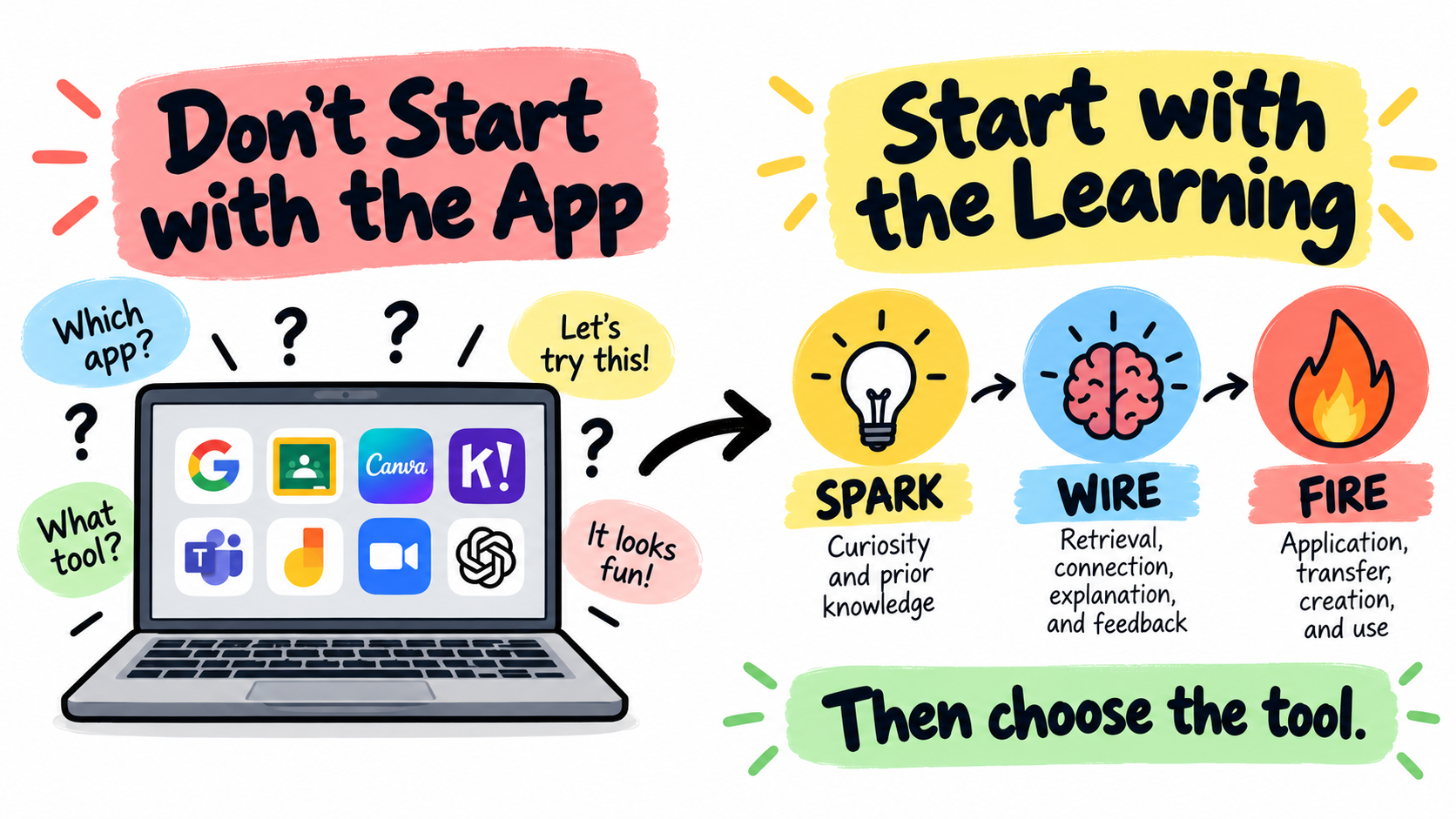
Start with the learning first: spark curiosity, wire learning into memory, fire learning into application, and then choose the tool.
My 7th grader is working on his Language Arts homework at the dinner table as I’m writing my presentation for a workshop I’ll be doing in a couple weeks.
“How’s LA?,” I ask during a brain break.
“Boring,” his standard reply to almost anything school-related.
“Do you feel like you’re learning anything?,” I probe.
“Not really. We just fill out Google Docs on the readings from a book.”
“What book did you guys read?,” I ask because I know he likes reading.
“Not sure. It was a couple of paragraphs on our Chromebooks.”
“Oh. So what are you doing now?”
“We have to answer questions about it on a Google Doc,” he replies; eagerness zero, apathy two hundred.
Later, I catch him watching YouTube shorts in the other tab.
Teachers, Please Don’t Start With The App
Technology can make a lesson look impressive.
Students are clicking, dragging, typing, matching, submitting, designing, posting, reacting, watching, recording, and moving through screens like something very important is happening.
The room looks active. The devices are open.
The platform is working. There may even be a progress bar, which always makes things feel official.
But activity is not the same as learning.
A student can click through a digital lesson and remember almost nothing. She can complete an online escape room and still not understand the concept. She can make a gorgeous slide deck with copied information, weak thinking, and six fonts that should probably be reported to authorities as a crime against humanity’s sanity.
The problem is not technology.
The problem is starting with the app instead of starting with the learning.
Too often, we begin with the tool. We say, “Let’s use Canva,” or “Let’s make a Google Slides presentation,” or “Let’s try this new, cool, interactive platform.”
Sometimes that works. But at those times when the app becomes the lesson and the tool starts making the instructional decisions, the learning gets the shaft.
So instead of wondering: “What app should we use?,” let’s ask “What do students need to do to bring out the learning?”
That is where the Spark-Wire-Fire Framework helps.
Spark-Wire-Fire gives teachers a simple way to design learning before choosing the tool. It asks us to think about what students’ brains need to do before, during, and after instruction.
Spark curiosity, attention, and prior knowledge.
Wire learning into memory through retrieval, connection, explanation, feedback, and correction.
Fire learning into application, transfer, creation, and use.
Technology can support all three.
But only if we plan the learning first.
The Tool Is Not the Strategy
A common mistake with classroom technology is confusing the tool with the strategy.
Google Slides is not a strategy. Canva is not a strategy. Kahoot is not a strategy. Nor is Gimkit, Padlet, or Snorkl.
Even a simulation or a digital breakout are not automatically strategies.
They are tools.
That does not make them bad. A hammer is useful. But if your entire lesson plan is “hammer,” we need to talk.
The strategy is what students are actually doing with their minds. Are they predicting, retrieving, explaining, comparing, sorting, revising, applying, defending, creating, connecting?
A digital task can look engaging while involving very little thinking. Students might search for answers, copy from notes, decorate slides, guess until the screen turns pale grey, or move information from one place to another without really processing it.
This is not a tech problem. It’s a design flaw.
In all fairness, the same weak task can happen on paper as well. Technology just makes it look a little shinier.
Start With Spark: What Will Make Students Want to Think?
A Spark activity prepares students to learn. It grabs attention, activates prior knowledge, reveals a misconception, creates curiosity, or gives students a reason to care about what comes next.
Technology is great for creating Spark activities.
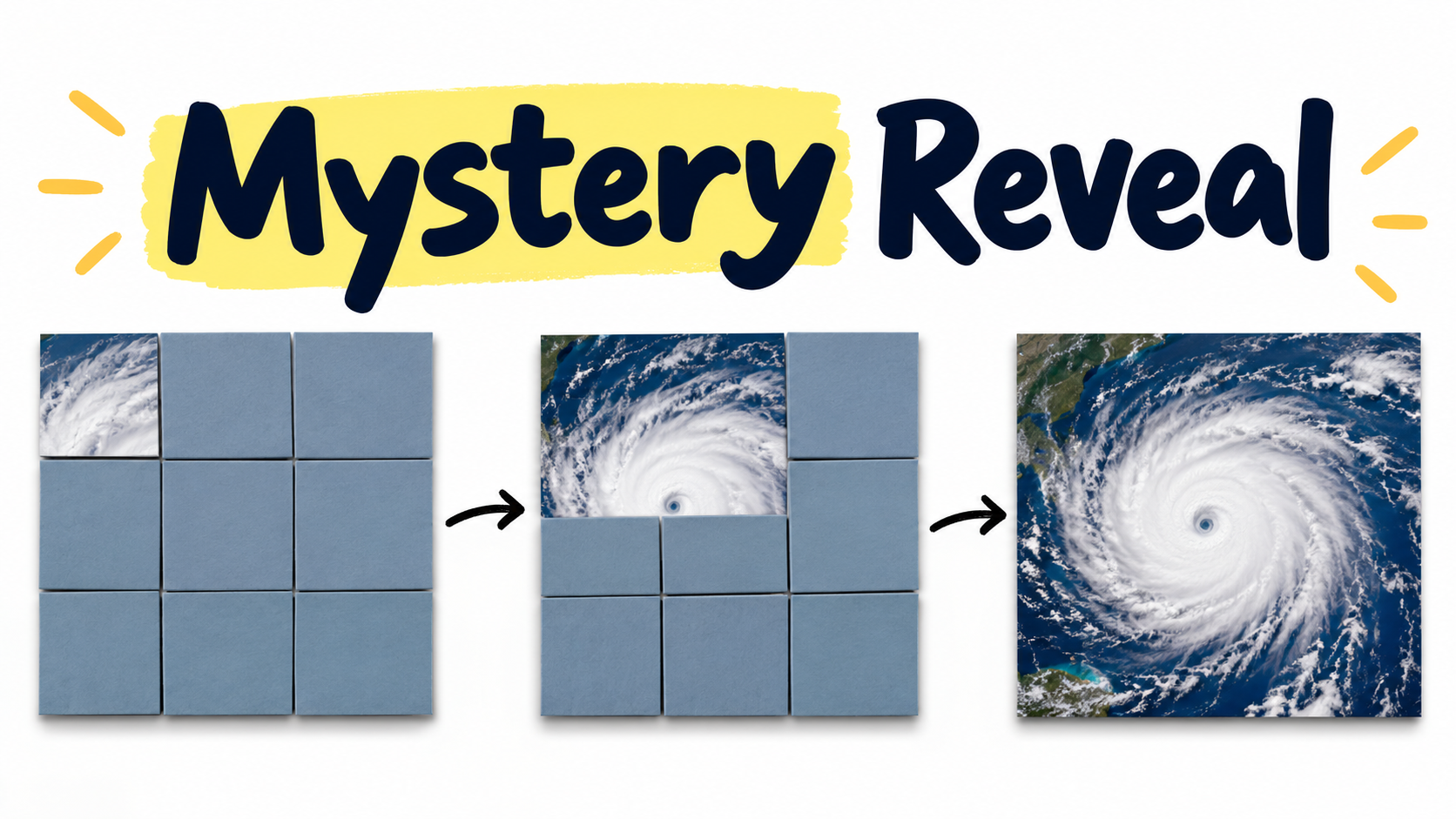
You can show a strange image, pause a short video before the outcome, reveal a graph one piece at a time, run a quick poll, use a simulation to create a prediction, or show a real-world data point that makes students wonder what is going on.
But the key is that students must do something mentally active with it.
A video clip by itself is not a Spark. It becomes a Spark when students predict what will happen, explain what they noticed, identify a pattern, ask a question, or connect the clip to prior knowledge.
A poll by itself is not a Spark. It becomes a Spark when the results reveal disagreement, expose a misconception, or create a reason for students to want the lesson.
An image by itself is not a Spark. It becomes a Spark when students notice clues, make a prediction, and revise their thinking.
The technology provides the stimulus. The thinking makes it learning.
Instead of starting with, “I found a cool video,” start with, “What question will this video create in students’ minds?”
Instead of starting with, “Let’s use a poll,” start with, “What misconception do I want to uncover?”
Instead of starting with, “Let’s do an image reveal,” start with, “What prior knowledge do I want students to activate?”
That is how technology becomes useful. It stops being a decorative enhancement and starts becoming a learning tool.
Wire: What Will Strengthen the Learning?
A Wire activity helps students strengthen learning after they have been introduced to an idea. This is where retrieval practice, explanation, dual coding, elaboration, comparison, feedback, and correction matter.
This is also where technology can either help or quietly ruin things.
Technology often makes information easier to access. That can be useful, but it can also reduce the amount of retrieval students have to do. If students complete a task by searching, copying, clicking answers, or dragging obvious matches into boxes, they often finish the activity quickly without strengthening memory.
Efficiency over processing is exactly the wrong way to go in learning.
True learning requires effort. The brain does not accept shortcuts. If an edtech company claims their product makes learning better, it’s most likely a sales pitch, not a scientific fact.
Speaking of effort… I am not talking impossible effort or “let’s make this miserable because rigor” effort. I mean meaningful cognitive effort.
Students need to pull information from memory, explain ideas in their own words, compare similar concepts, correct mistakes, and organize what they know if memory encoding and later consolidation is to take place.
Technology can support this if we design the learning tasks around how the brain learns.
Instead of: “Watch this video and answer the questions.”
Try: “Watch the video once. Close it. Write everything you remember. Then rewatch and add what you missed.”
Now the technology supports retrieval.
Instead of: “Drag each vocabulary word to the correct definition.”
Try: “Sort the words into groups, name each category, and explain why each word belongs.”
Now the technology supports connection and explanation.
Instead of: “Complete the digital worksheet using your notes.”
Try: “Answer the first section without notes. Mark your confidence. Then use your notes to fix your answer.”
Now the technology supports retrieval, feedback, and correction.
The app did not make the lesson better. You did, and the the thinking you asked for did.
Fire: How Will Students Use the Learning?
A Fire activity asks students to apply learning. This is where students use ideas in a new context, solve a problem, create a product, make an argument, design a model, defend a decision, or explain a real-world connection.
Technology can be incredibly powerful here. Students can create videos, podcasts, infographics, models, maps, data displays, digital exhibits, presentations, animations, or interactive explanations.
They can collaborate and revise. They can share work with an audience. They can use tools that make their thinking more visible.
But Fire is not the same as “make something digital.”
A student can make a beautiful infographic and still not understand the concept. A student can spend 40 minutes choosing icons, colors, fonts, and transitions while the actual learning quietly leaves the room and dies.
A Fire activity requires students to use the learning, not just decorate.
Instead of: “Make a slide deck about renewable energy.”
Try: “Recommend which energy source your city should invest in. Use evidence about cost, reliability, carbon emissions, and environmental impact.”
Instead of: “Make a video about the water cycle.”
Try: “Create a short explainer showing how a disruption to one part of the water cycle affects at least two Earth systems.”
Instead of: “Create a poster about a historical event.”
Try: “Create a digital exhibit that argues which cause had the greatest impact and supports this claim with evidence.”
The product matters less than the thinking behind it.
If the technology helps students communicate, model, argue, analyze, or apply more effectively, use it.
If it mainly helps them make weak thinking look pretty—pause, rethink, and revise.
Pretty is just pretty. True learning is beauty.
A Better Way to Choose Technology
The better approach is simple. Do not start with the app, but with the thinking.
Ask yourself what students need to do cognitively. Do they need to retrieve information? Compare ideas? Explain a process? Analyze data? Correct a misconception? Apply a concept? Defend a claim? Create a model? Revise their thinking?
Once that is clear, choose the tool.
If students need to retrieve, a quick digital quiz, shared document, or no-notes response form might work.
If students need to compare, a digital sorting board, shared chart, or collaborative slide might work.
If students need to model, a drawing tool, simulation, or diagram platform might work.
If students need to apply, a podcast, infographic, video, argument slide, or digital exhibit might work.
The tool should serve the thinking, not the other way around.
The Spark-Wire-Fire Tech Filter
Before using a digital tool, run it through the Spark-Wire-Fire filter.
Spark: “Will this tool help create curiosity, activate prior knowledge, reveal a misconception, or focus attention?”
Wire: “Will this tool help students retrieve, explain, connect, compare, correct, organize, or get feedback?”
Fire: “Will this tool help students apply, transfer, create, argue, model, solve, or use the learning?”
If the answer is yes, the tool may be worth using.
If the answer is no, the tool may still look good, but it may not be doing much for learning.
That does not mean every activity must do all three. A five-minute bell ringer may only Spark. A mid-lesson activity may mostly Wire. A project may mostly Fire. The point is to know what role the activity is playing.
When we know the learning purpose, technology becomes easier to use well.
Examples of Better Tech Use
A digital Spark might be a mystery image reveal where students predict what they are seeing and explain the clues. The app or slide tool simply helps hide and reveal information. The learning comes from prediction, evidence, and revision.
A digital Wire activity might be a shared concept map built from memory. Students first create the map without notes, then compare with a partner, then revise using class materials. The tool helps organize thinking, but retrieval and correction do the heavy lifting.
A digital Fire activity might be a student-created recommendation, model, or explanation for a real-world problem. Students might use Canva, Google Slides, video, or another tool, but the task requires evidence, application, and reasoning. The technology helps students communicate the learning, but does not replace it.
This is the difference between technology as decoration or entertainment and technology as learning design—the difference between “Does it look engaging?” and “What thinking does this require?”
The Green Checkmark Is Not Enough
One of the easiest traps with digital learning is the green checkmark.
Students submit an answer. The screen tells them they are correct. Everyone feels good for three seconds.
But a green checkmark does not always mean learning happened.
It may mean the student guessed correctly. It may mean the student recognized the answer. It may mean the student copied from notes or used AI.
Or, maybe the platform gave enough clues that thinking became optional.
Feedback should help students understand what to keep, change, fix, or try next. That means we may need to add the thinking ourselves. In fact, most of the time you must because app defaults suck.
After a digital quiz, ask students to choose one missed question and explain the mistake. After a matching activity, ask students to write one relationship in their own words. After a simulation, ask students to explain what changed and why. After a slide project, ask students to defend one design choice connected to content, not just aesthetics.
Technology can give fast feedback. Teachers have to make it count.
Final Thoughts
Technology can improve learning. It can bring in powerful visuals, simulations, collaboration, creativity, feedback, accessibility, real-world data, and opportunities students would not have otherwise.
But technology does not improve learning simply by being there.
An app is not a lesson plan, a platform is not pedagogy, and a digital activity is not automatically deeper than a paper one.
The question is not whether students are using devices, but whether students are thinking in ways that help learning stick.
That is why I keep coming back to Spark-Wire-Fire. Spark curiosity and attention. Wire learning into memory. Fire learning into application.
Start there. Then choose the tool.
Because the best technology in the classroom is not the tool that looks the coolest, contains the best features, or has the cleanest dashboard.
It is the tool that makes students think.
If you want an edtech tool designed to help students think the Master Teacher Toolkit app might be worth checking out. The app contains bell ringers, exit tickets, mid-lesson checks, and other Spark-Wire-Fire strategies that help bring out deeper processing of information, which is what learning is all about.
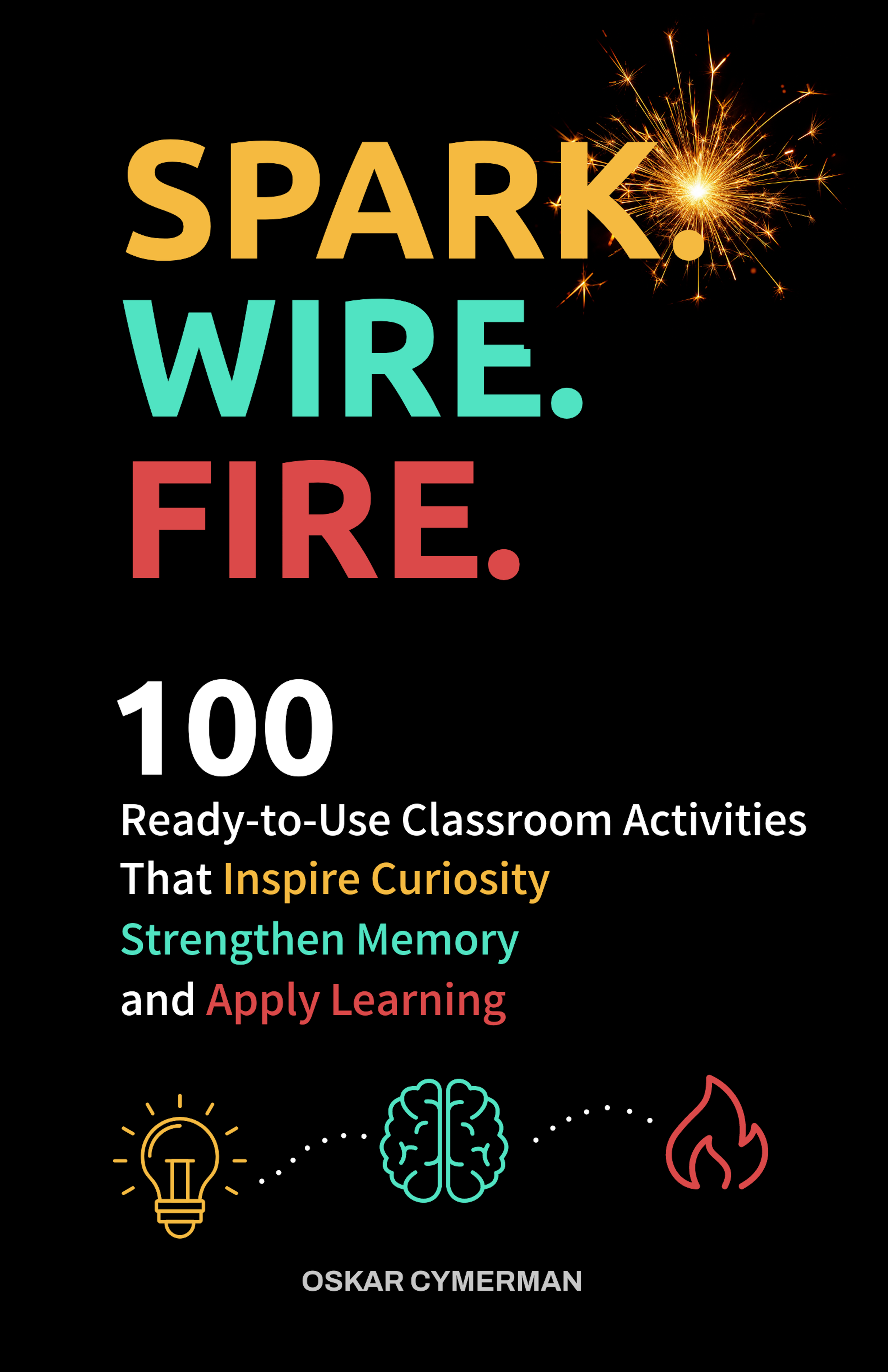
And if you just want the strategies check out my book Spark. Wire. Fire. on Amazon. It will help you design lessons that help students think, retrieve, connect, apply, and a whole lot more with or without the tech.
BOOKS & TOOLS
Flashcards are okay but there's a better way. The Memory (or Mind) Palace Method is a powerful learning and memorization technique that when mastered allows a student to remember 10, 20, or even 30 vocabulary words or concepts (definitions included) with ease.
And, they actually remember what they learned using memory palaces! This series of lessons (which can be used as classroom handouts) walks students through creating their first memory palace, filling it with information they need to learn, and using it to train their memories. It also contains short readings, a video lesson, memory palace examples, and practice drills.
Fair Use
Feel free to use with your students. Please do not share it with other parties or use for profit. All rights by crushschool.com.

Equity-Promoting Classroom Poster. What does EQUITY in the classroom look like?
Everyone has a different start and finish line
Quality is more important that quantity
Understanding that diversity makes us stronger
Inclusion despite beliefs, appearances, and circumstances
Thoughtfulness lowers barriers and reduces biases
Yesterday's mistakes are today's learning agenda
You can teach your students about equity and make it a daily classroom practice using this inspirational poster, which also includes images that accompany the equity description. You can discuss each letter characteristic with your students as a way of introducing your inclusive classroom and display it prominently as a reminder that diversity makes the classroom community stronger.

In this classroom Mistakes are Expected, Respected, Inspected, Corrected!
Learned helplessness is a result of years of conditioning that mistakes are bad for learning. Nothing is further from the truth - some of the most powerful life lessons come from making mistakes, reflecting on them, and growing as a result.
This is a PNG Poster you can print and display in your classroom to encourage a culture of risk-taking and learning from mistakes.
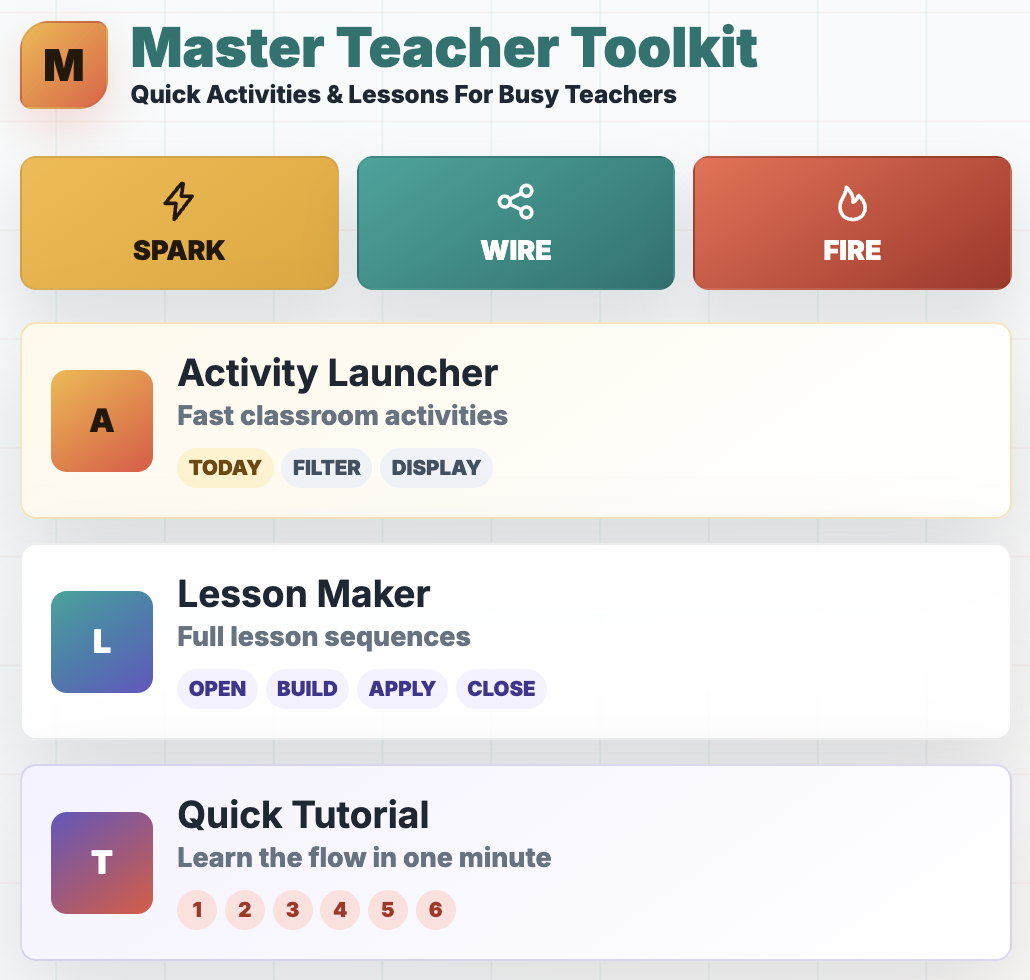
Teaching App
Launch engaging, deeper learning activities and lessons in seconds. Then, launch and display them to students instantly.
NEW BOOK
100+ practical activities teachers can use right away with little or no prep.