
School Isn’t Boring. It’s Predictable.
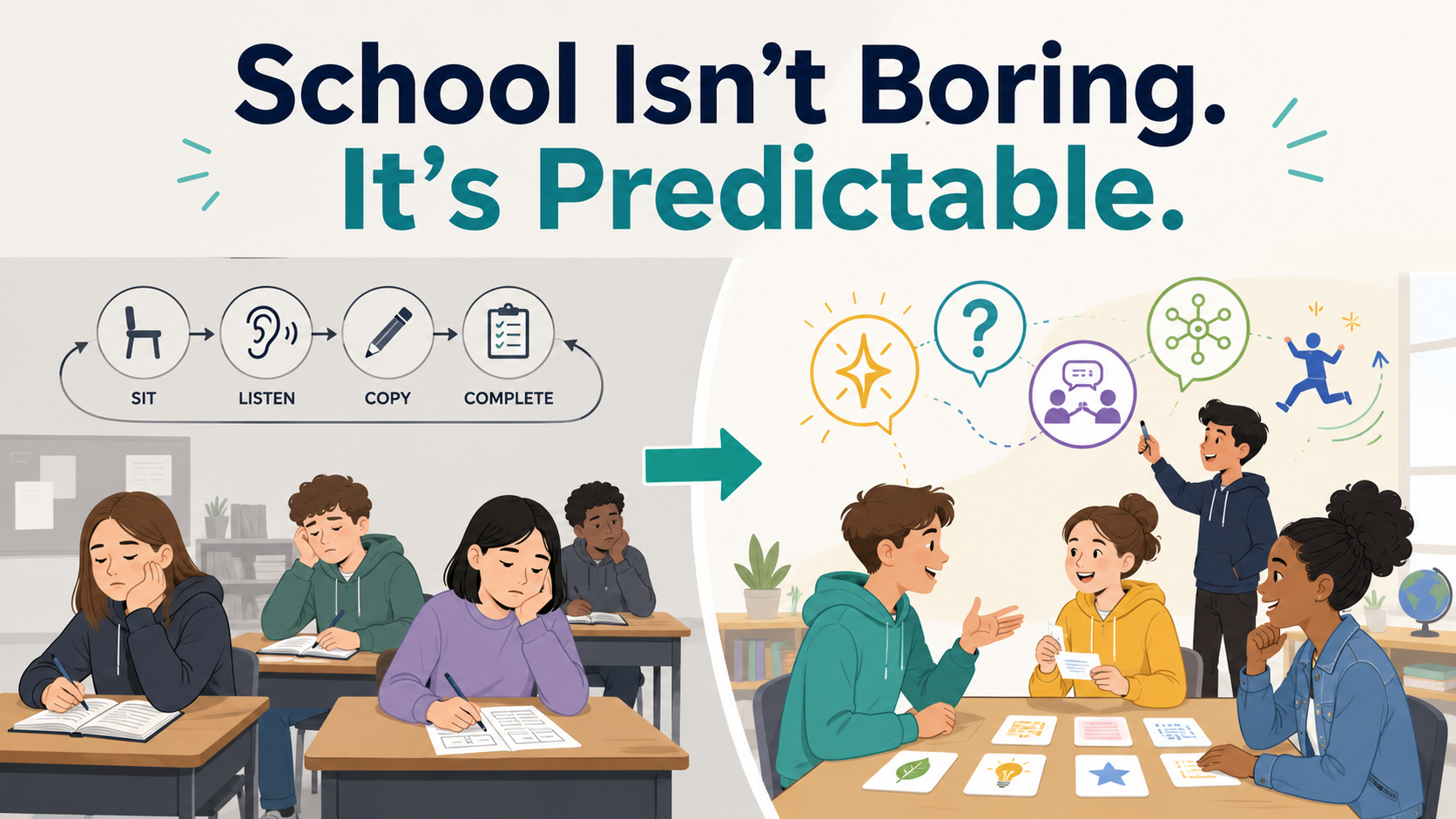
When learning follows the same routine every day, attention fades. Students need structure, but they also need novelty, curiosity, and small shifts that wake up the brain.
Students say school is boring all the time. My 12-year-old son agrees frequently.
But is it?
Sometimes they’re being dramatic. Sometimes they’re avoiding. Sometimes they’re simply testing our emotional fortitude.
But sometimes they’re right.
It’s not necessarily because the content is boring, but because the pattern has become painfully predictable. Boring.
Walk in. Sit down. Copy the objective. Listen. Take notes. Answer questions. Do the worksheet. Turn it in. Repeat tomorrow, Thursday, and next week.
Boring. Boring. Boring. Boring. Boring. Boring. Boring. Boring. Boring.
That pattern feels organized to adults, but to students’ brains, it becomes the background noise. The brain is built to notice change, uncertainty, novelty, and meaning, so when seemingly every class follows the same boring rhythm every day, attention starts to fade before the lesson even has a chance.
And no, I am not suggesting we juggle flaming beakers while rapping about chemical reactions. Most of us are already doing enough emotional juggling as it is.
But we need to realize something.
When students know exactly what’s coming, their brains do not engage. Nothing feels uncertain, creates a question, or makes them wonder “Wait, what is this about?”
Curiosity disappears and attention follows.
Breaking the “School is Boring” Pattern
In learning, novelty is what matters a lot. The brain pays attention to what feels different, unfinished, puzzling, surprising, or unexpected. I wish I could tell you different and that there’s a magic spell that can make all kids alright, but I’d be lying.
The magic lives in a strange prompt, a quick challenge, a new structure, a movement shift, a puzzling image, or a question with no obvious answer—these are things that wake up attention.
It’s not that hard to do, but it’s not something we can autopilot.
We need to intentionally spark our students’ minds.
Routines are important and both students and teachers need structure. Everyone needs to find the pencil sharpener quickly and understand the bathroom pass is not the ultimate “get out of jail” card.
But learning should not always feel like the same mental treadmill we all hop on every day at 8:30 and are freed from at 3:06.
That is why short, brain-based strategies can make such a difference. They break the pattern without breaking the learning or the lesson. They add novelty without adding hours to our prep. They create a reason for students to think before they slip into their mind’s wanderland.
Giving Students a Reason to Care (and Learn)
One example from Spark. Wire. Fire. is Category Sort. Instead of giving students a list of terms and asking them to copy definitions, students sort words, ideas, examples, images, or events into categories. The twist is that the categories can be provided, hidden, debated, or created by students. This works because sorting forces students to look for patterns. They have to decide what belongs together and why. That small act of categorizing turns passive review into active thinking.
Another strategy is Fast Interleave. Students quickly move between different types of problems, questions, examples, or concepts instead of practicing one type over and over. For example, instead of ten identical math problems, students might switch between solving, explaining, identifying the error, and applying the concept to a new situation. This keeps the brain from going into “same old thing again” mode and helps students learn when and how to use ideas, not just how to repeat a procedure they don’t fully understand.
A third strategy is Silent Switch, Add, and Connect. Students begin with an idea, response, drawing, example, or explanation. Then they silently switch papers or spaces with another student, add something meaningful, and make a connection to another concept. It adds movement, novelty, collaboration, and thinking without turning the room into chaos. Students are not just completing their own work; they are responding to someone else’s thinking.
That is the kind of classroom engagement students need more of.
Not entertainment or random fun.
Not “let’s make everything a game because attention spans are cooked,” but just enough novelty to wake up the brain, just enough uncertainty to make students curious, and just enough movement or interaction to interrupt the predictable pattern of sit, listen, copy, complete, repeat.
Because school is not boring by nature.
Science is not boring. Math is not boring. Stories are not boring. History is not boring. Ideas are not boring.
But the way we package learning can become boring when it becomes too predictable.
What Students (and Teachers) Need to Kill Boredom
Students need routines, but they also need surprise. They need structure, but they also need curiosity. They need practice, but they also need variety. They need clear instruction, but they also need many moments where they are doing the mental work.
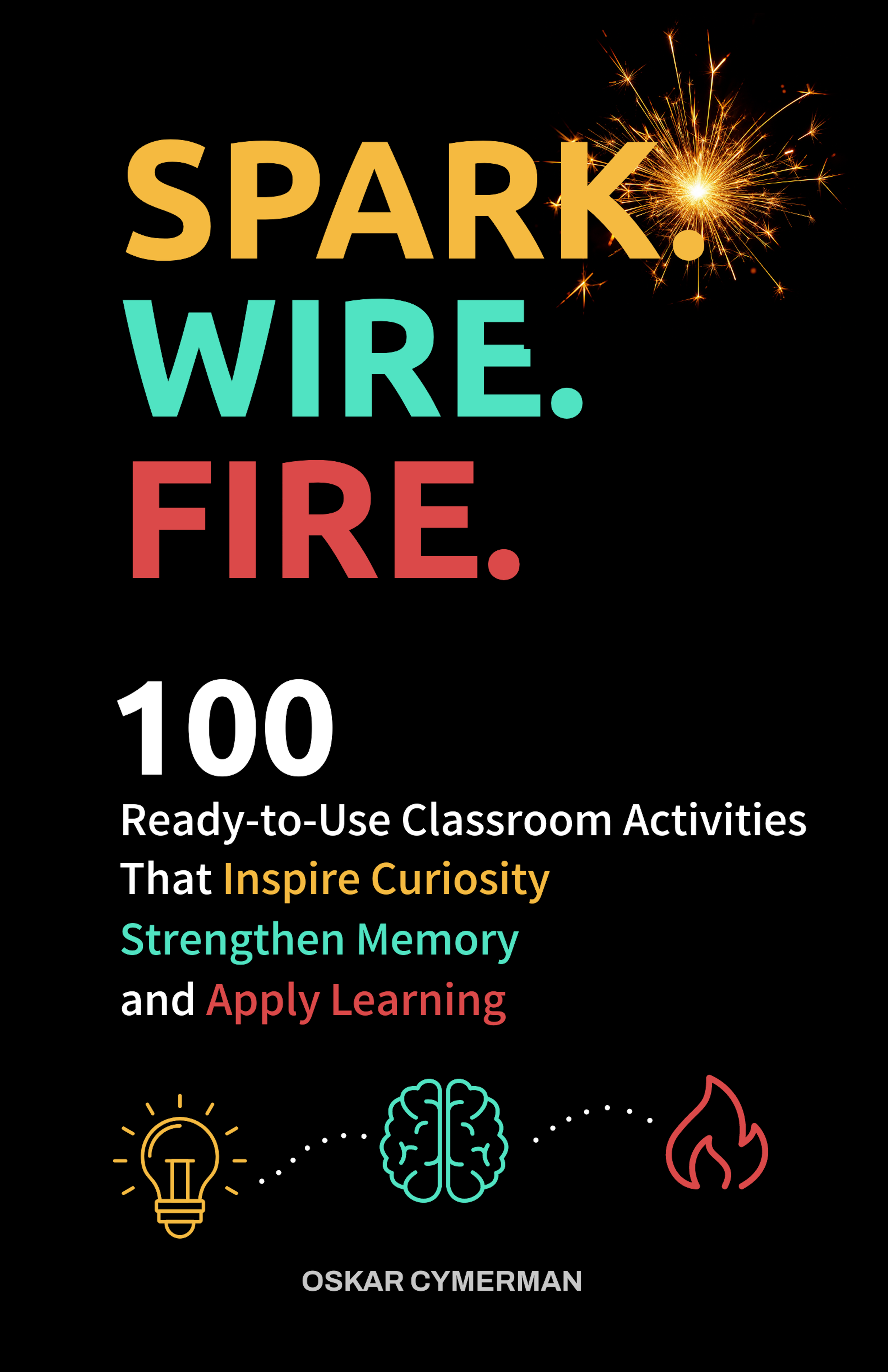
That is why I wrote Spark. Wire. Fire.
The book is built around a simple idea: some activities spark curiosity and attention, some wire learning into memory, and some fire learning into application. The goal is not to make teaching flashy. The goal is to make learning feel more active, meaningful, and memorable.
If students are checking out, the answer is not “try harder.”
Sometimes the better answer is: “try different.”
Change the pattern. Add a spark. Break the predictability.
Give the brain a reason to wake up and it will.
If you want simple ways to turn quiet work into deeper thinking, Spark. Wire. Fire. available on Amazon includes 100+ ready-to-use activities for curiosity, memory, and application. Paperback regular price: $21.95.
The Master Teacher Toolkit app gives you classroom activities you can launch and display instantly when you need something better than “finish this quietly.”
BOOKS & TOOLS
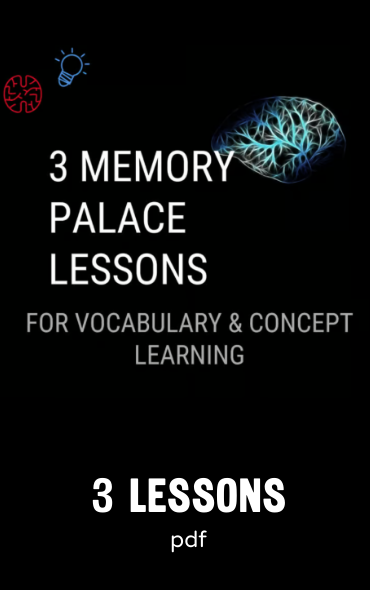
Flashcards are okay but there's a better way. The Memory (or Mind) Palace Method is a powerful learning and memorization technique that when mastered allows a student to remember 10, 20, or even 30 vocabulary words or concepts (definitions included) with ease.
And, they actually remember what they learned using memory palaces! This series of lessons (which can be used as classroom handouts) walks students through creating their first memory palace, filling it with information they need to learn, and using it to train their memories. It also contains short readings, a video lesson, memory palace examples, and practice drills.
Fair Use
Feel free to use with your students. Please do not share it with other parties or use for profit. All rights by crushschool.com.

Equity-Promoting Classroom Poster. What does EQUITY in the classroom look like?
Everyone has a different start and finish line
Quality is more important that quantity
Understanding that diversity makes us stronger
Inclusion despite beliefs, appearances, and circumstances
Thoughtfulness lowers barriers and reduces biases
Yesterday's mistakes are today's learning agenda
You can teach your students about equity and make it a daily classroom practice using this inspirational poster, which also includes images that accompany the equity description. You can discuss each letter characteristic with your students as a way of introducing your inclusive classroom and display it prominently as a reminder that diversity makes the classroom community stronger.
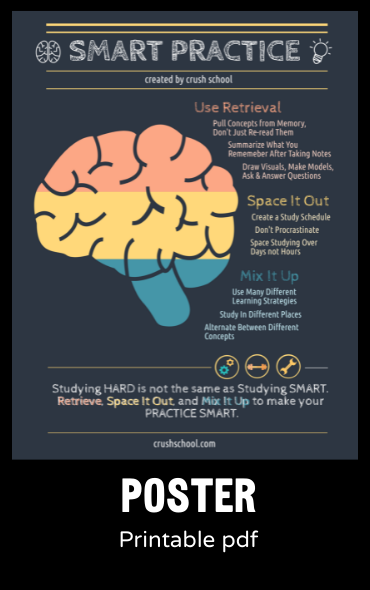
Retrieval Practice, Spaced Practice, and Mixed Practice (Interleaving).
Studying Hard is not the same as Studying Smart. This High Quality printable, digital (PNG) poster is a constant classroom reminder of best practices for teachers and learning the smart way for students.

In this classroom Mistakes are Expected, Respected, Inspected, Corrected!
Learned helplessness is a result of years of conditioning that mistakes are bad for learning. Nothing is further from the truth - some of the most powerful life lessons come from making mistakes, reflecting on them, and growing as a result.
This is a PNG Poster you can print and display in your classroom to encourage a culture of risk-taking and learning from mistakes.
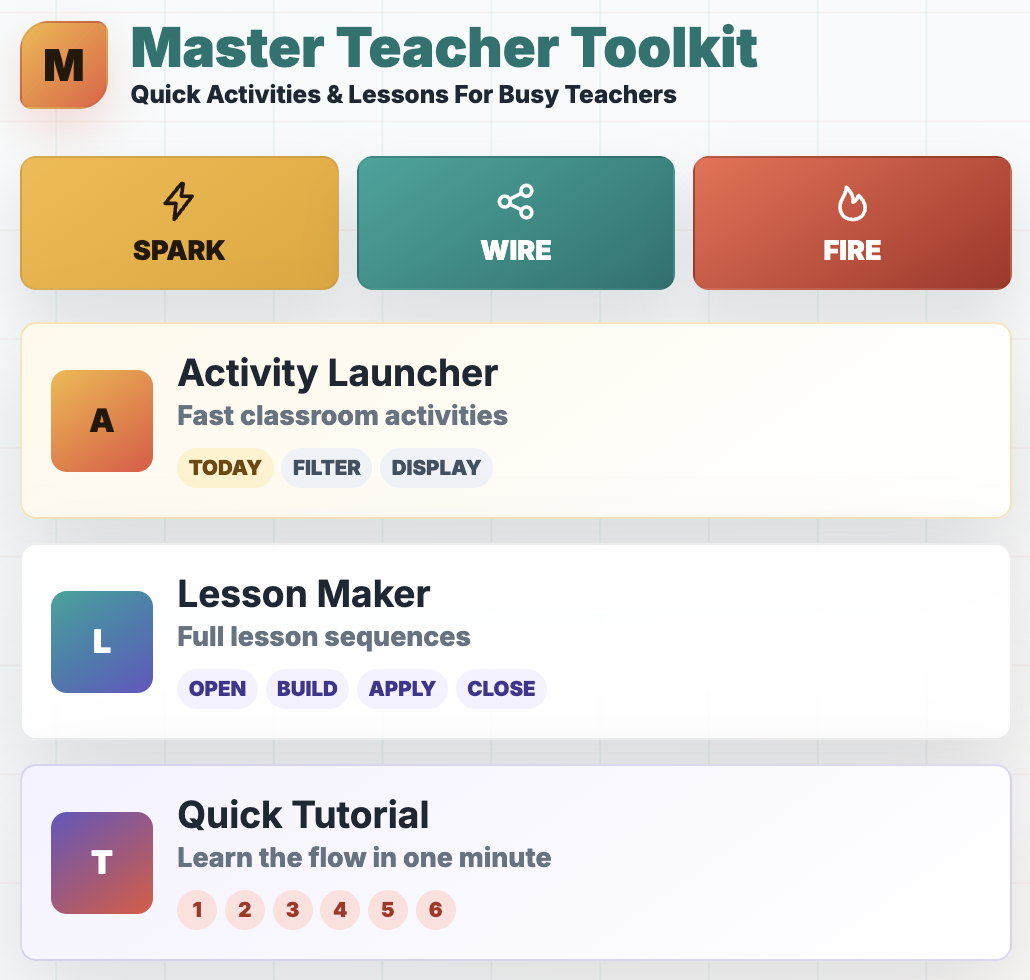
Teaching App
Launch engaging, deeper learning activities and lessons in seconds. Then, launch and display them to students instantly.
NEW BOOK
100+ practical activities teachers can use right away with little or no prep.