
Student-Centered Learning Strategies for Any Subject
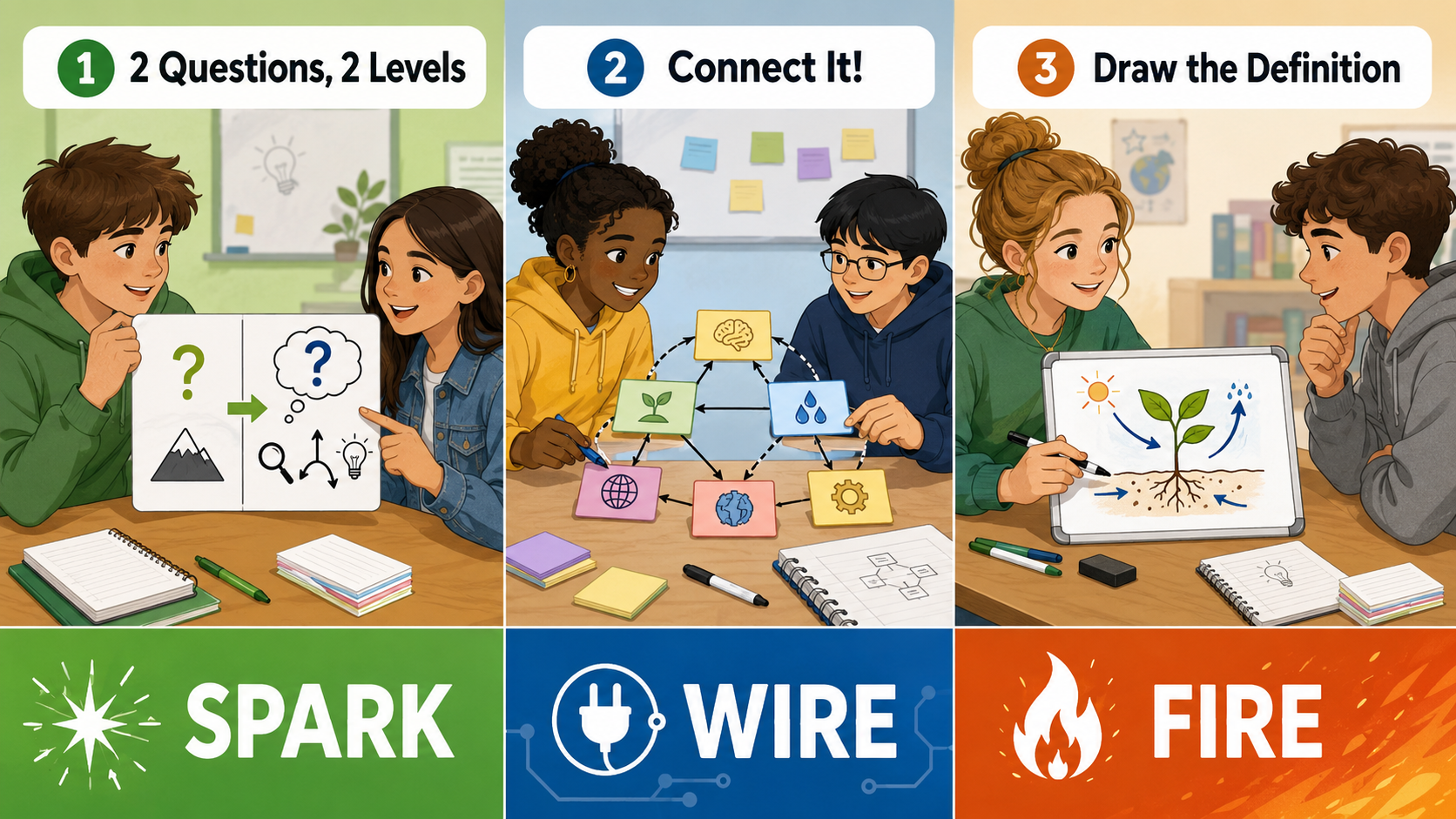
Simple strategies like 2 Questions, 2 Levels; Connect It!; and Draw the Definition help students do more of the thinking in any subject area.
One of the biggest myths about student-centered learning is that it’s hard to do because it’s complicated.
It really isn’t.
Student-centered learning does not require a complete classroom makeover or a pre-planned, six-week inquiry unit with Google folder organization that makes your brain swell up, conceived in your spare evenings while drinking way too much coffee grinding to create the lessons that go in it.
Student-centered learning is much simpler.
Mostly, it’s about creating activities and lessons that promote students doing more of the thinking.
Think retrieving, explaining, connecting, drawing, sorting, modeling, debating, teaching, questioning, moving, and applying ideas. Imagine students actively processing the learning in real time, instead of the traditional watching of the teacher presenting and thinking out loud.
That is the heart of Spark. Wire. Fire.
I wrote the book because teachers need practical strategies they can actually use. Not theory that sounds nice during professional development but collapses by Tuesday at 9:17 a.m. Not activities that require three prep periods, a long list of materials, and a perfectly behaved class. Just clear, ready-to-use classroom moves that help students engage with content in meaningful ways.
The book includes 100+ activities built around how the human brain learns.
Spark activities engage and motivate students. These include bell ringers, lesson hooks, prediction prompts, curiosity starters, and short challenges that activate attention and prior knowledge.
Wire activities strengthen memory. These include retrieval practice activities, drawing tasks, partner explanations, small group collaboration, connecting concepts, sorting routines, and review strategies that help students remember and organize what they know, which in turn helps long-term retention.
Students apply what they’re learning during Fire activities. These include discussion prompts, decision-making tasks, argumentation, problem-solving activities, creative applications, and transfer tasks that require students to use ideas in new ways and contexts.
The goal is to help teachers replace passive classroom activities with active learning.
And the best part is that these strategies work across subjects.
That was important to me when writing the book. I did not want the activities to feel like they only worked in science because I happen to be a science teacher. With this in mind and to show how flexible they are, all of the strategies include examples for Science, Math, Social Studies, and ELA.
For example, a strategy like 2 Questions, 2 Levels works in any subject. The first question checks basic recall or recognition. The second question pushes students into explanation, connection, or reasoning. In science, students might answer, “What is Newton’s Second Law?” and then, “Why does a heavier object require more force to accelerate?” In math, they might identify the slope of a line and then explain what the slope means in a real situation. In social studies, they might define imperialism and then explain how it affected a colonized region. In ELA, they might define theme and then explain how a character’s choices reveal it.
That is student-centered learning because students are not just repeating information. They are making meaning.
Another example is Connect It! Students receive several terms, ideas, events, images, or examples and must explain how they connect. In science, they might connect evaporation, condensation, and precipitation. In math, they might connect slope, rate of change, and graph shape. In social studies, they might connect geography, trade, and cultural diffusion. In ELA, they might connect conflict, character motivation, and theme.
Again, the activity is simple. But the thinking is not shallow.
A third example is Draw the Definition. Students are given a term or concept and must draw what it means without using notes. In science, they might draw convection. In math, they might draw proportional relationships. In social studies, they might draw checks and balances. In ELA, they might draw symbolism. Then students explain their drawing to a partner or the class.
This works because drawing reveals understanding quickly. If students cannot represent the idea visually, they may not understand it as well as they think. It also gives teachers a fast way to see misconceptions without collecting a giant pile of papers.
That’s what I love about these kinds of strategies. They are small, but they shift the thinking from the teacher to the students.
Instead of the teacher explaining connections, students make them.
Instead of the teacher identifying misconceptions, students find and fix them.
Instead of the teacher carrying discussions, students explain and defend ideas.
Instead of students sitting quietly and waiting for learning to happen to them, they do the learning themselves.
That is what makes these strategies student-centered.
Not because the teacher disappears or students do whatever they want or the class structure no longer matters.
Student-centered learning still depends on clear directions, good questions, strong routines, and teacher guidance. But the goal is to shift more of the cognitive work to students because that is what true, lasting learning calls for.
Students learn when they do something meaningful with information—retrieve it from memory, explain it to someone else, connect it to what they know, use it in multiple contexts, apply it in new situations, question its validity, fix the mistakes they make with it, and transfer it to life beyond the classroom.
That is why Spark. Wire. Fire. is designed for any subject. The activities are flexible enough for different grade levels and content areas, but structured enough that teachers can use them without reinventing their teaching wheels.
Because whatever you teach, the goal is the same.
Get students participating, thinking, and doing something with the learning.
That’s student-centered learning in a nutshell.
If you want simple ways to turn quiet work into deeper thinking, Spark. Wire. Fire. available on Amazon includes 100+ ready-to-use activities for curiosity, memory, and application. Paperback regular price: $19.95.
The Master Teacher Toolkit app gives you classroom activities you can launch and display instantly when you need something better than “finish this quietly.”
BOOKS & TOOLS
MTT Next Time New iPhone Teacher Reflections App - FREE
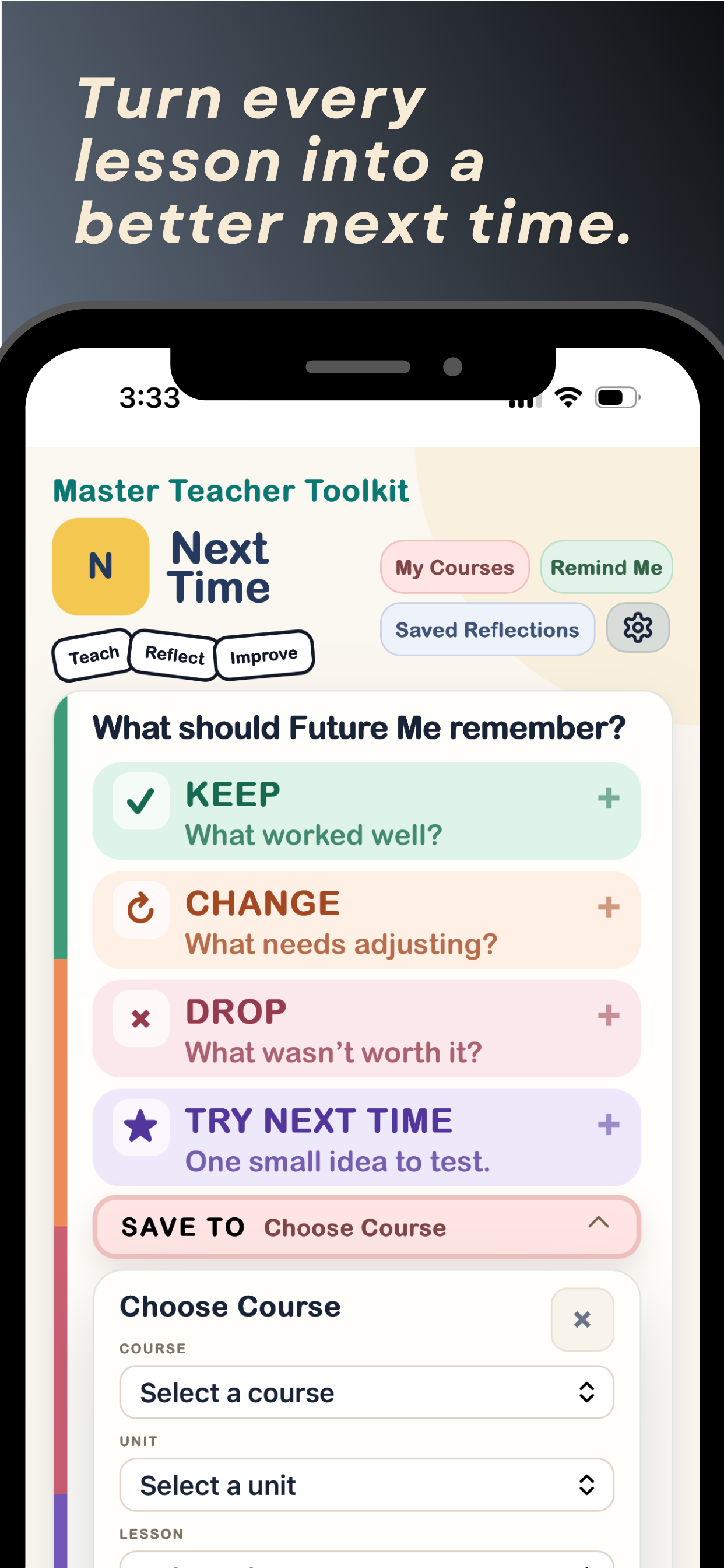
Teach. Reflect. Improve.

Equity-Promoting Classroom Poster. What does EQUITY in the classroom look like?
Everyone has a different start and finish line
Quality is more important that quantity
Understanding that diversity makes us stronger
Inclusion despite beliefs, appearances, and circumstances
Thoughtfulness lowers barriers and reduces biases
Yesterday's mistakes are today's learning agenda
You can teach your students about equity and make it a daily classroom practice using this inspirational poster, which also includes images that accompany the equity description. You can discuss each letter characteristic with your students as a way of introducing your inclusive classroom and display it prominently as a reminder that diversity makes the classroom community stronger.
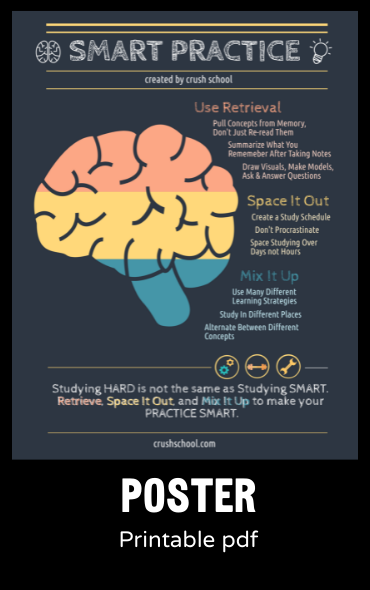
Retrieval Practice, Spaced Practice, and Mixed Practice (Interleaving).
Studying Hard is not the same as Studying Smart. This High Quality printable, digital (PNG) poster is a constant classroom reminder of best practices for teachers and learning the smart way for students.

In this classroom Mistakes are Expected, Respected, Inspected, Corrected!
Learned helplessness is a result of years of conditioning that mistakes are bad for learning. Nothing is further from the truth - some of the most powerful life lessons come from making mistakes, reflecting on them, and growing as a result.
This is a PNG Poster you can print and display in your classroom to encourage a culture of risk-taking and learning from mistakes.
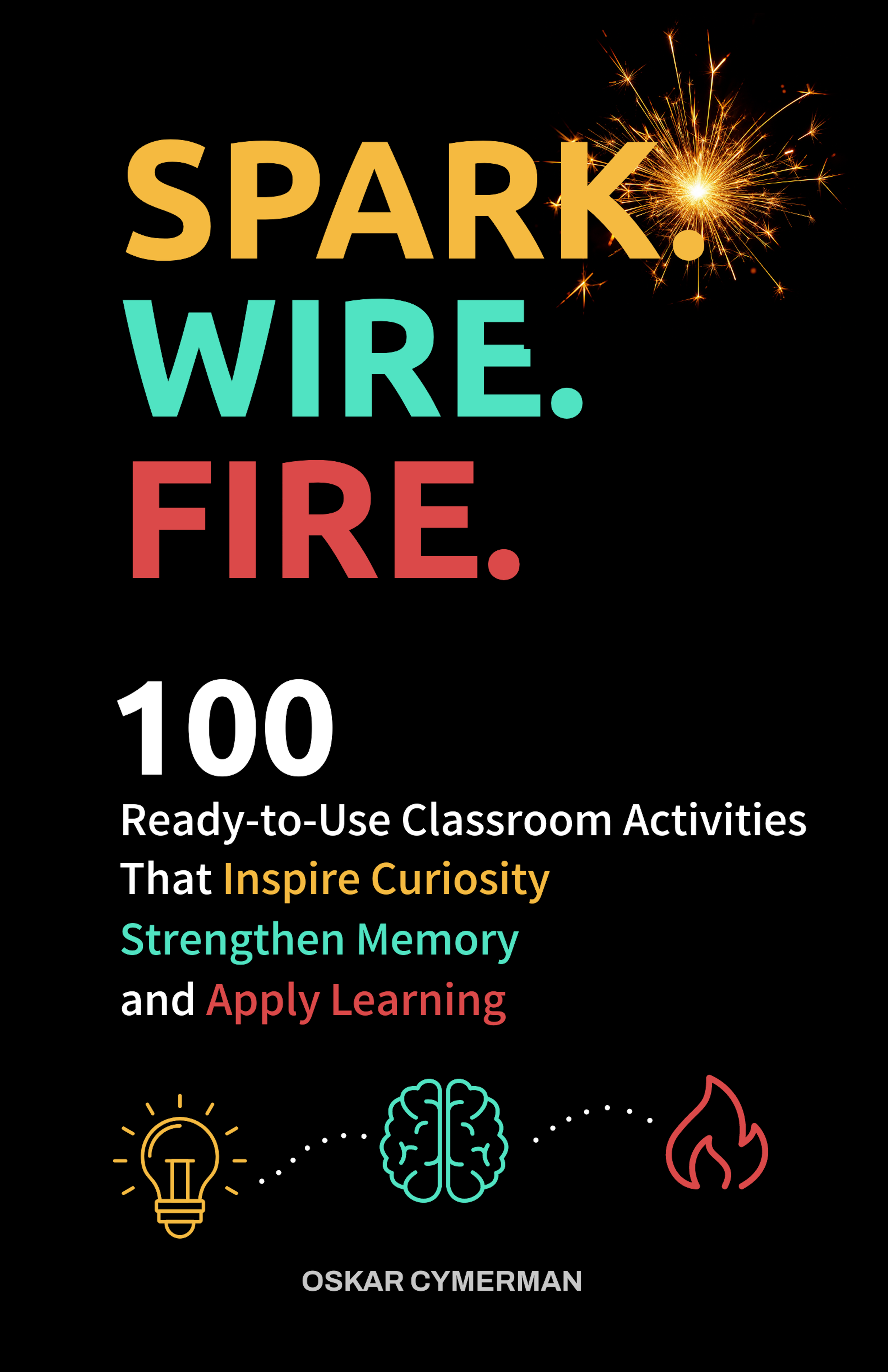
NEW BOOK
100+ practical, student-centered activities teachers can use right away with little or no prep.
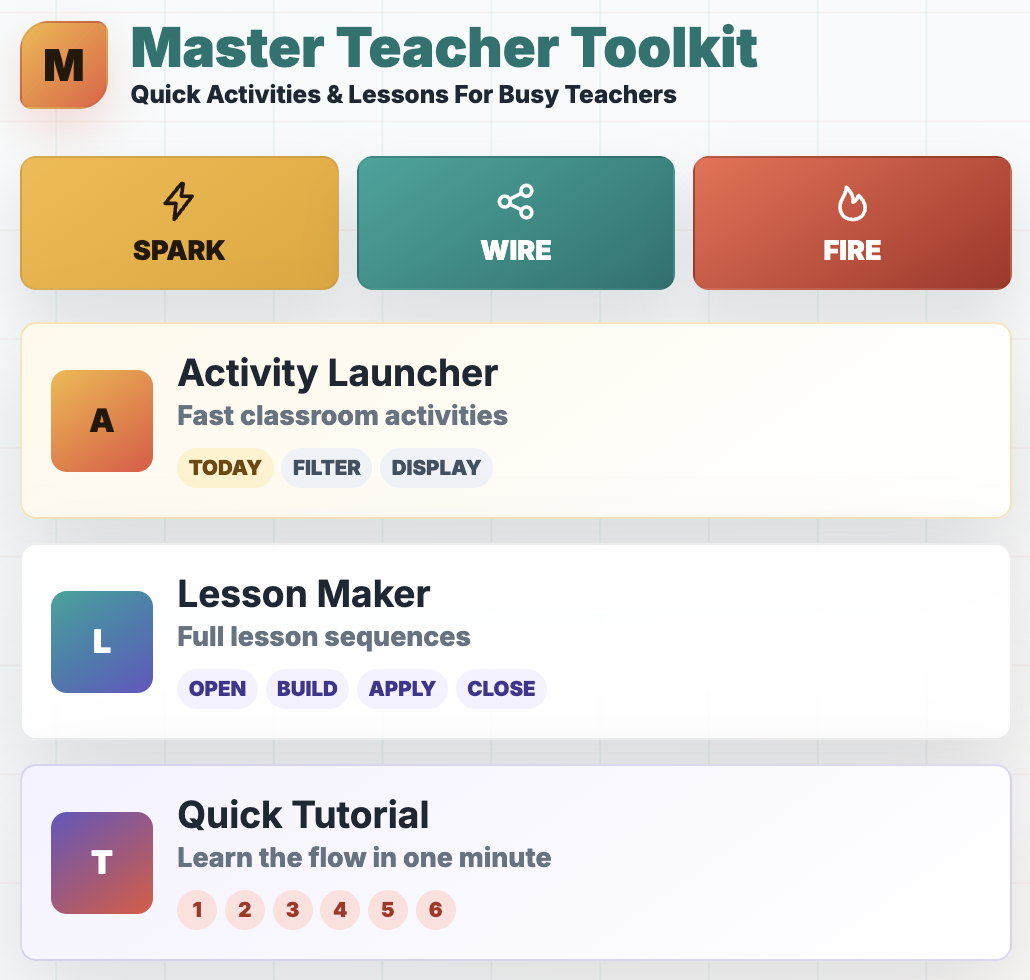
Teaching App
Launch engaging, deeper learning activities and lessons in seconds. Then, launch and display them to students instantly.