
How to Move From Assignment Completion to Real Learning
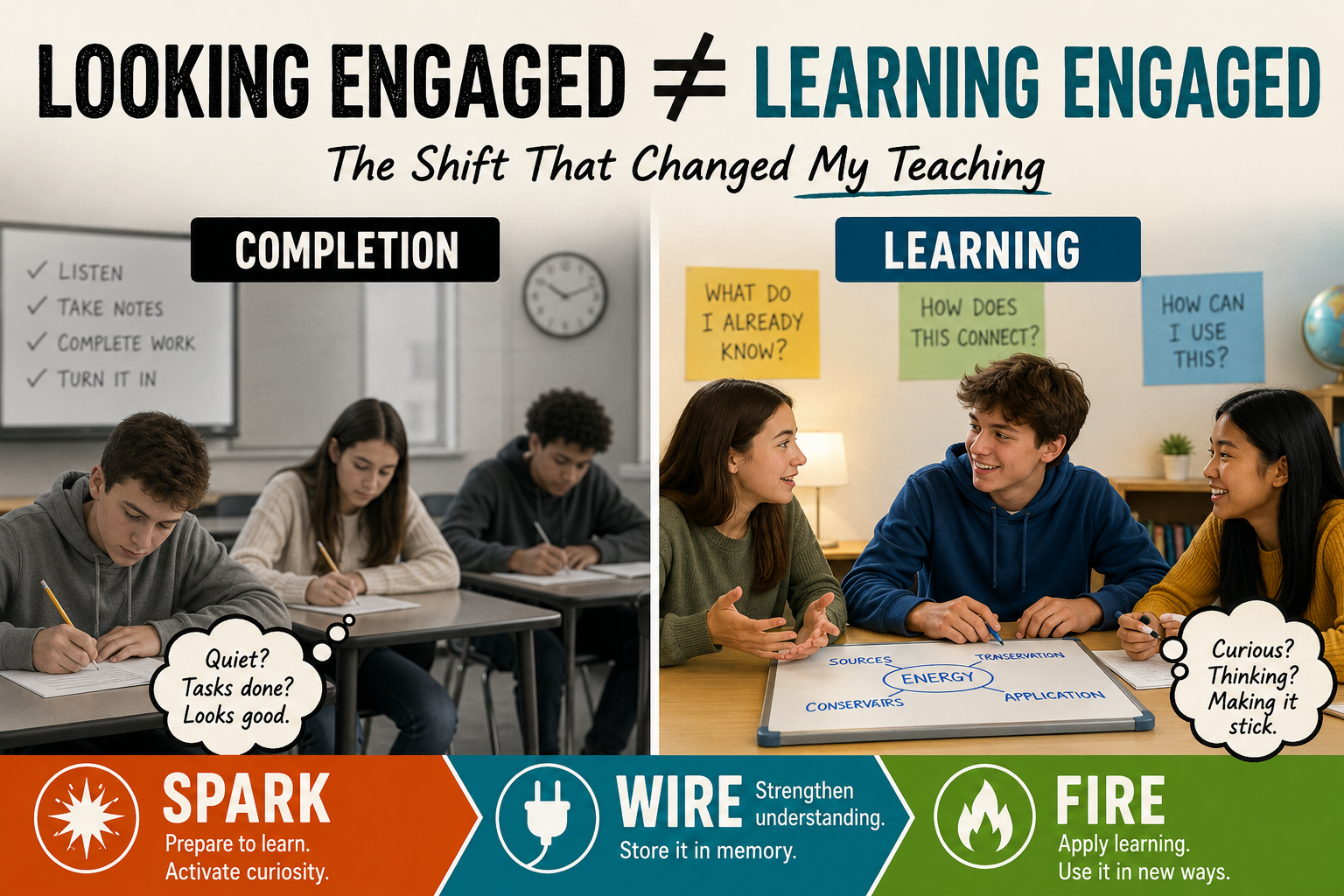
A classroom can look productive from the front of the room, but real learning happens when students are curious, thinking, connecting, and applying ideas.
For a long time, I thought I could tell when a lesson I prepped was effective because everything looked good from the front of the room.
Students? Quiet. Pencils? Moving. Tasks? Done. Assignments? Submitted.
But later, when I’d ask students to explain, recall, or apply it, the learning was not there.
“But they looked engaged and they did what they were asked,” I thought. After all, my high school experience looked more or less the same and I learned, didn’t I?
And then I realized it. Too late for my liking as I wish I saw it earlier, but I didn’t. I couldn’t. Perhaps years of school conditioning prevented me from seeing the one simple truth that made me change the way in which I look at teaching and learning:
For most of my academic career, I was not taught, but rather told what to learn and left to my own devices to learn it, or, at the very least pass the test.
Think about it and your own school experience. We all had good teachers, I’m sure of it. But I also know that much of the time our teachers presented and talked us through the content. A worksheet would follow, perhaps a reading or a problem-solving assignment for homework, and then the next thing and the test.
The classroom was a place for information dissemination, not its processing.
We were engaged in completion, but not the learning—our bodies present, but our minds checked out.
That realization changed how I began thinking about student engagement. I stopped seeing quiet compliance as proof of learning and started paying closer attention to what students were actually doing with the content.
Were they curious enough to tune in? Were they processing and connecting the new information? Could they retrieve it without looking at their notes? Could they use it to solve a problem, defend an idea, or explain something new?
Those questions eventually became the foundation of the Spark–Wire–Fire Framework.
A Spark prepares students to learn by capturing attention, activating prior knowledge, or creating curiosity.
A Wire helps students process, retrieve, organize, and strengthen what they are learning.
A Fire requires students to apply that learning through explanation, problem-solving, decision-making, or transfer.
Over time, I began collecting and creating activities that fit each part of the framework. I wanted practical strategies I could use in my classroom to move the learning needle without the need for elaborate materials, hours of preps, or fake entertainment.
That collection eventually became the Spark. Wire. Fire. book which includes more than 100 flexible, ready-to-use classroom activities designed to help teachers move students beyond simply looking engaged.
Because I realized that engagement and learning is not about how the classroom appears, but about what student minds are actually doing.
Thanks for reading!
If you want simple ways to turn quiet work into real learning, Spark. Wire. Fire. available on Amazon includes 100+ ready-to-use activities for curiosity, memory, and application. Paperback regular price: $19.95.
The Master Teacher Toolkit app gives you classroom activities you can launch and display instantly when you need something better than “finish this quietly.”
BOOKS & TOOLS

Equity-Promoting Classroom Poster. What does EQUITY in the classroom look like?
Everyone has a different start and finish line
Quality is more important that quantity
Understanding that diversity makes us stronger
Inclusion despite beliefs, appearances, and circumstances
Thoughtfulness lowers barriers and reduces biases
Yesterday's mistakes are today's learning agenda
You can teach your students about equity and make it a daily classroom practice using this inspirational poster, which also includes images that accompany the equity description. You can discuss each letter characteristic with your students as a way of introducing your inclusive classroom and display it prominently as a reminder that diversity makes the classroom community stronger.

In this classroom Mistakes are Expected, Respected, Inspected, Corrected!
Learned helplessness is a result of years of conditioning that mistakes are bad for learning. Nothing is further from the truth - some of the most powerful life lessons come from making mistakes, reflecting on them, and growing as a result.
This is a PNG Poster you can print and display in your classroom to encourage a culture of risk-taking and learning from mistakes.
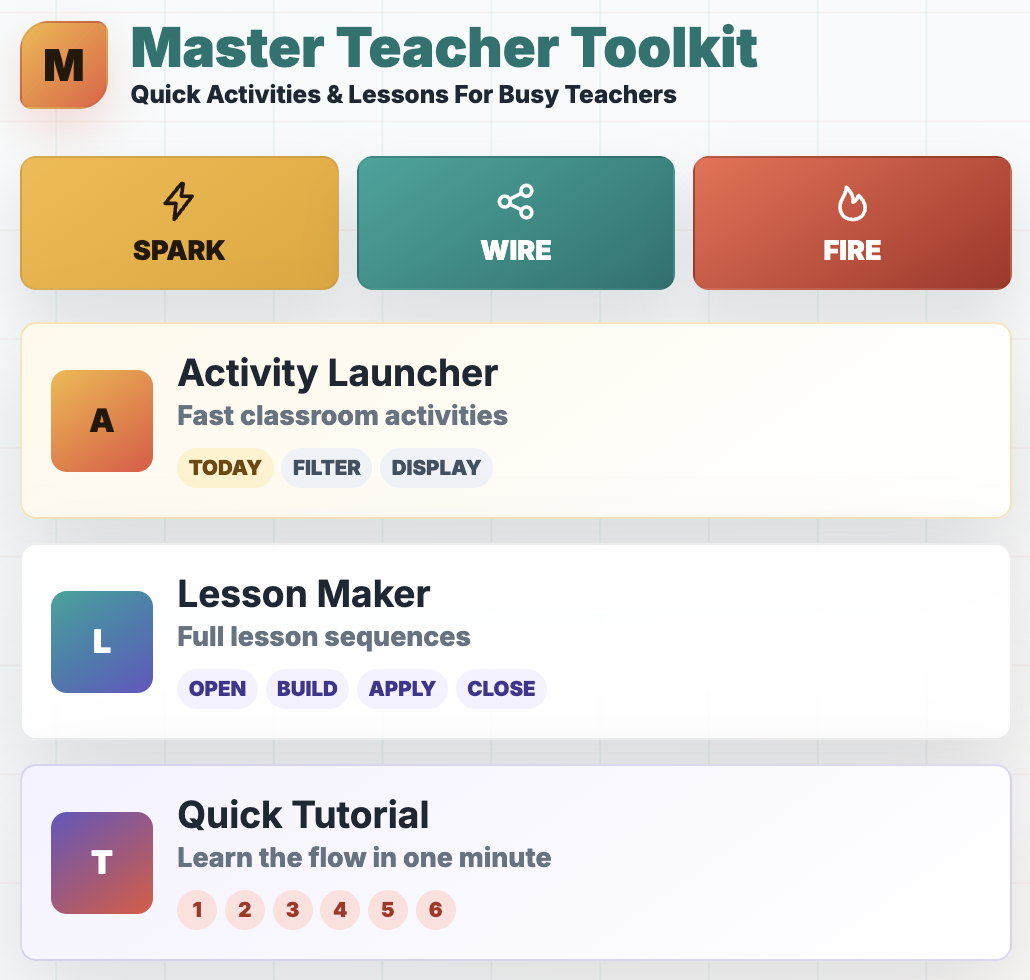
Teaching App
Build engaging lessons in seconds. Then, launch and display them to students instantly.
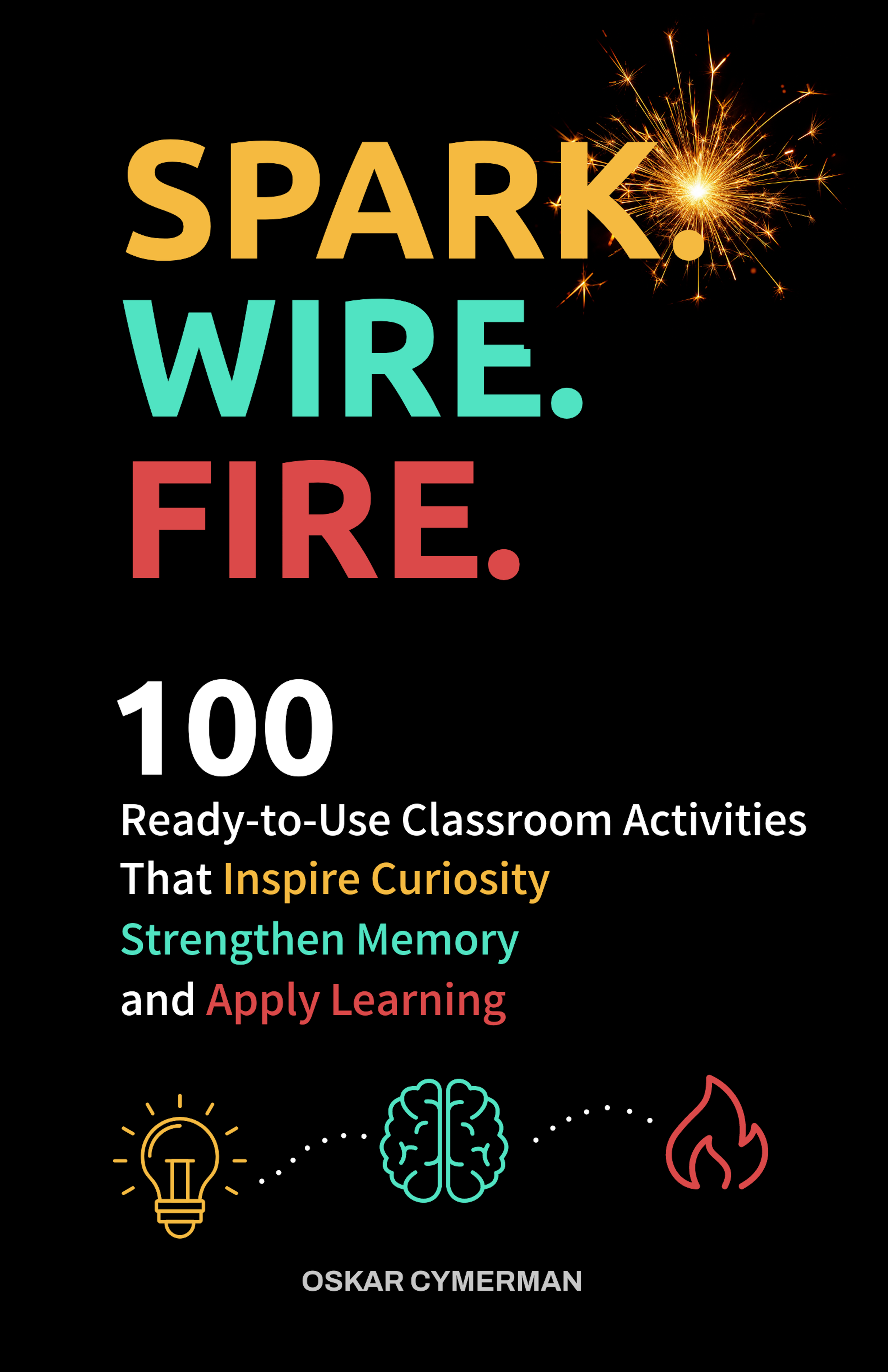
NEW BOOK
100+ practical activities teachers can use right away with little or no prep.