Why the 5E Model Provides the Best Way to Teach Science the NGSS Way

Understanding the Next Generation Science Standards and using NGSS to create engaging and effective science lessons can be a challenge. However, by mentally replacing the NGSS with the 5E model offers a solid and structured approach to teaching that promotes inquiry and discovery the new standards call for. In this blog post, I’ll show you how I use both NGSS and the 5E model to design engaging and effective Earth Science lessons.
Understanding NGSS and the 5E Model
The Next Generation Science Standards (NGSS)
The NGSS three-dimensional learning includes:
Disciplinary Core Ideas (DCIs): Key concepts students should understand in each science discipline.
Science and Engineering Practices (SEPs): Skills students should develop to engage in scientific inquiry and engineering design.
Crosscutting Concepts (CCCs): Concepts that help students connect knowledge across different scientific disciplines.
The 5E Instructional Model
The 5E model is a five-part teaching framework:
Engage: Capture students' interest and stimulate their curiosity.
Explore: Provide hands-on experiences to form understanding.
Explain: Allow students to show understanding and provide clarification.
Elaborate: Deepen students’ learning through application.
Evaluate: Assess students’ understanding and skills.
Engaging with Phenomena
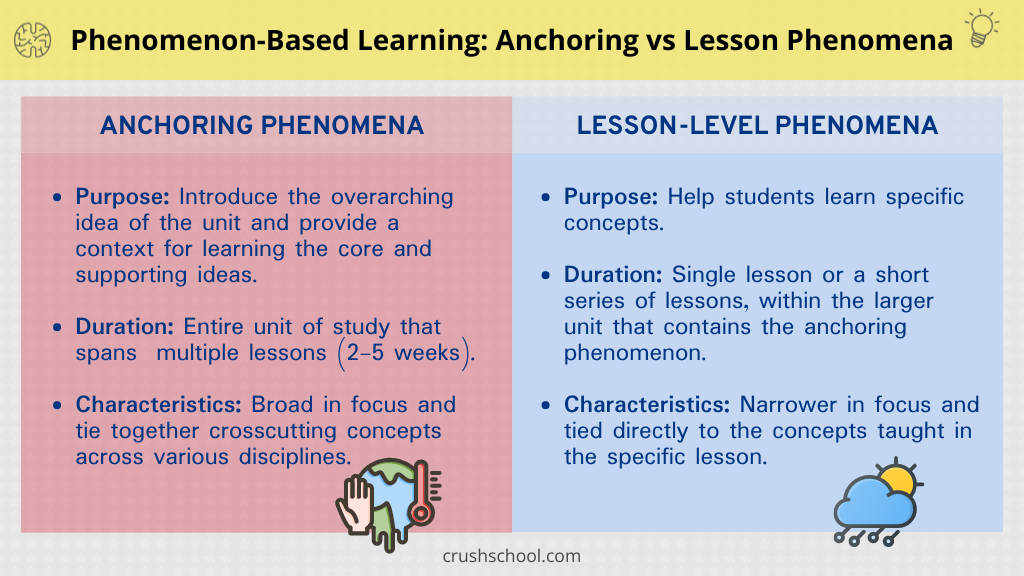
Engage: NGSS emphasizes the use of phenomena—observable events that can be explained scientifically—to spark curiosity and drive learning of concepts and skills through inquiry. The Engage phase of the 5E model captivates students’ interest and activates their prior knowledge.
By presenting a fun phenomenon, such as the year without a summer, you can immediately draw students into the lesson on lesser-known effects of volcanism, setting the stage for the initial exploration.
Hands-On Exploration
Explore: In this phase, teachers can design hands-on activities that explore key concepts or experiments that help explain the phenomenon. This phase aligns with NGSS’s focus on Science and Engineering Practices (SEPs), such as asking questions, developing models, and analyzing data. Ideally, you plan a lesson that challenges students to use online resources and simple materials you provide them with to design and build their own model or create their own experiment (and understanding) that shows the process, rather than giving them a set of directions to follow.
Activities such as creating a simulation of volcanic ash and gas spread using confetti and a fan allow students to actively engage in the scientific process and model the work of professional scientists.
Constructing Explanations
Explain: Here, students can use their models or experiments to show their understanding of the phenomenon and its key concepts. You may need to provide some instruction (direct, small group, individual) to clarify and expand on the more complex concepts. This phase connects the hands-on experiences from the Explore phase with the Disciplinary Core Ideas (DCIs) outlined in NGSS. By constructing explanations for the investigated phenomenon, students develop a deeper conceptual understanding and refine their scientific thinking.
For example, you can ask student groups to record a video of their confetti explosion and spread and explain how it relates to an explosion of a volcano such as Tambora aka the year without a summer culprit.
Extending Learning
Elaborate: Challenge your students to apply the concepts they learned to new situations or to explain other, related processes. This leads to a deeper and more flexible understanding of the concepts. This phase supports NGSS’s emphasis on Crosscutting Concepts (CCCs) by encouraging students to recognize patterns and make connections across different scientific disciplines.
For instance, after studying how the particles ejected from Mount Tambora spread and led to a year without a summer, students might explore how ocean circulation and the Earth’s rotation affect global wind patterns..
Assessing Understanding
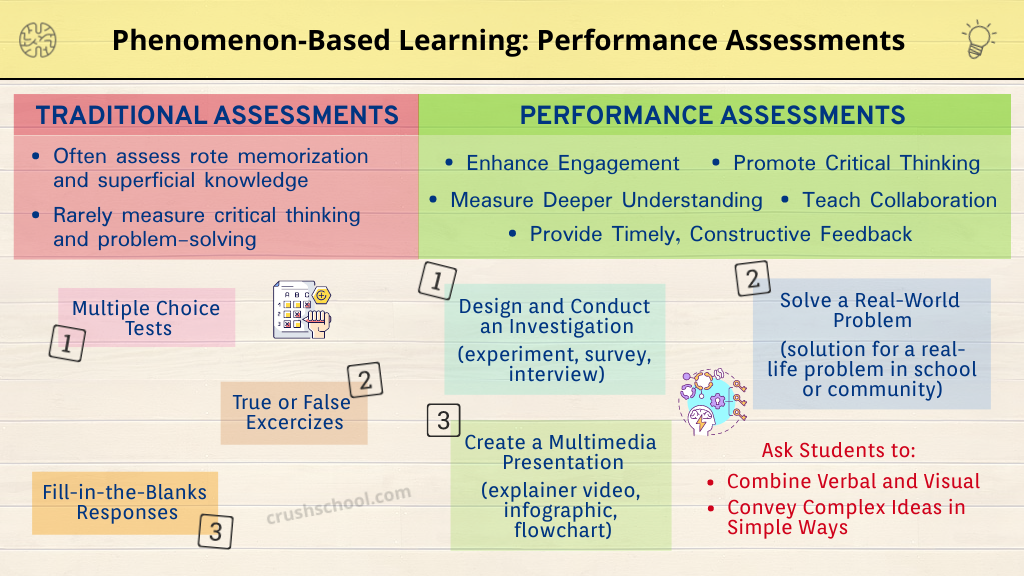
Evaluate: The Evaluate phase is designed for students to demonstrate their learning through assessments that can seamlessly be aligned with NGSS’s three-dimensional framework (DCIs, SEPs, and CCCs). Performance assessments, as NGSS calls them, might include investigative projects, multimedia presentations, or other reflections that help teachers gauge factual knowledge and application of scientific concepts and scientific and science and engineering skills.
For example, students could create a museum exhibit that contains: (1) a model that thoroughly explains the types of volcanic eruptions that lead to ejection of large amounts of gas and particulates, (2) a statistical analysis of how the explosion of Tambora compares to average eruptions of this kind, and (3) a computer simulation of the mechanism of how the volcanic smog from Tambora spread and led to the year without a summer showing the influence of ocean circulation and global wind patterns on this process.
5E Model and NGSS Just Fit
The 5E model’s emphasis on inquiry, hands-on learning, and real-world application makes it ideal for implementing NGSS. By starting with phenomena, the 5E model can be used to engage students in authentic scientific exploration, helping them build a deeper understanding of science concepts and practices. This approach not only aligns with the goals of NGSS by preparing students to think and act like scientists and equipping them with the skills and knowledge needed for them to become informed citizens, difference makers, and problem solvers of the future.
BOOKS & TOOLS
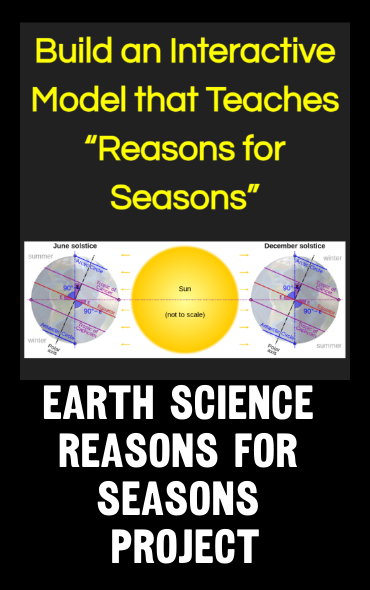
Save planning time with this week-long Earth and Space Science engineering lesson. In this 5 day project, Earth and Space Science students build an interactive physical model that shows the “reasons for seasons” and an interactive computer interface that guides the user through the learning experience.
Includes 12 detailed slides (PDF and Google Slides link for editing) + detailed teacher directions (last 2 slides).
The project follows the guidelines set by the Next Generation Science Standards (NGSS) and guides students in using Science and Engineering Practices (SEPs).
Student Performance Objectives:
Design and create a physical model that teaches how solar radiation changes based on latitude and hemisphere.
Create a computer interface that contains directions for using the model and understanding the content.
Student Learning Objectives:
Explain why the amount of solar energy Earth’s surface receives varies at different latitudes.
Explain the reasons for seasons on Earth.
Save time by not having to plan for a week of solar system instruction and employ your students in authentic learning with this NGSS-focused engineering challenge.
Includes 14 detailed slides (PDF and Google Slides link for editing) + detailed teacher directions (last slide).
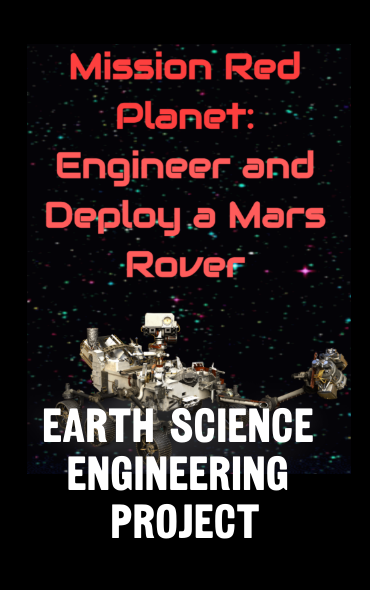
Mission Red Planet: Engineer and Deploy a Mars Rover is a challenging 5-day project designed to engage your Earth and Space or engineering students in real-world inquiry and problem solving.
Mission Objectives:
Build the Rover: Design and build a realistic self-propelled space explorer model (Mars rover) that can successfully land and rove.
Land the Rover: Design and perform a simulated planetary surface landing.
Deploy the Rover: Design and build a system that triggers movement upon (and not before) landing.
Explore the Planet’s Surface: Design and build a system that allows your rover to move at least 15 feet or 5 meters.
Save your prep time and engage your students in authentic learning with this NGSS-focused engineering challenge.
Includes 12 detailed lesson materials slides (PDF and Google Slides link for editing) + detailed teacher directions (last slide).
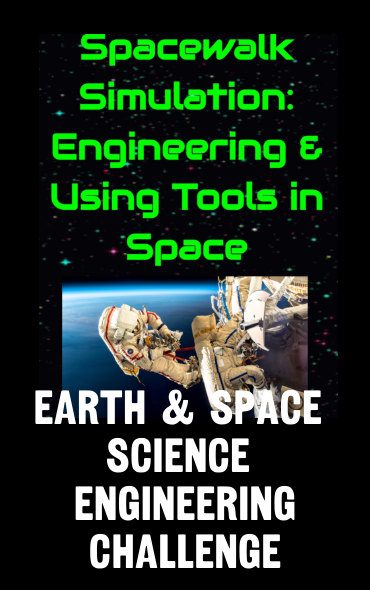
Mission Red Planet: Engineer and Deploy a Mars Rover is a challenging 3 to 4-day project designed to engage your Earth and Space or engineering students in real-world inquiry and problem solving.
Mission Objectives:
Design and build the tools needed for a space walk.
Perform a simulated space walk during which you complete two tasks:
- Fix the damaged hull outside of the ship’s storage area.
- Remove the debris from the shield generator vents.
Explain and propose solutions to the challenges astronauts face when working in space.
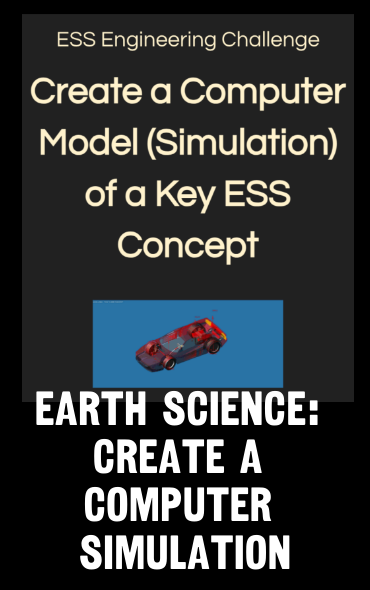
Save planning time with this introductory, 3-4 day Earth and Space Science engineering challenge in which students create a computer simulation of an Earth Science topic.
Includes 12 detailed slides (PDF and Google Slides link for editing) + detailed teacher directions (last slide) + a BONUS resource: Animation Guide for Google Slides.
The project follows the guidelines set by the Next Generation Science Standards (NGSS) and guides students in using Science and Engineering Practices (SEPs).
Student Performance and Learning Objectives:
Design and create an informative computer simulation.
Use computer animation to simulate a key ESS concept.
Explain the key ideas of an ESS concept of your choice.


3 Equity Promoting Posters.
(1) Equity (11 x17):
Everyone has a different start and finish line
Quality is more important that quantity
Understanding that diversity makes us stronger
Inclusion despite beliefs, appearances, and circumstances
Thoughtfulness lowers barriers and reduces biases
Yesterday's mistakes are today's learning agenda
(2) Equality vs Equity (11 x 17 side-by-side comparison)
(3) Equality vs Equity (11 x 17 the difference Quote)
Every poster contains accompanying images.
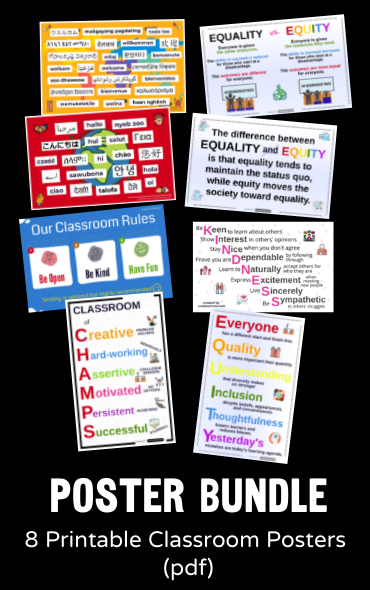
8 digital, printable, size 11 x 17 classroom posters:
“Welcome” in multiple languages
“Hi” in multiple languages
Three Equity posters
Classroom Rules: Be Open, Be Kind, Have Fun
“Classroom of Champs”
“Kindness”
ON SALE until August 30th.

In this classroom Mistakes are Expected, Respected, Inspected, Corrected!
Learned helplessness is a result of years of conditioning that mistakes are bad for learning. Nothing is further from the truth - some of the most powerful life lessons come from making mistakes, reflecting on them, and growing as a result.
This is a PNG Poster you can print and display in your classroom to encourage a culture of risk-taking and learning from mistakes.
- October 2026 3
- September 2026 6
- August 2026 9
- July 2026 7
- June 2026 9
- May 2026 9
- April 2026 7
- March 2026 1
- December 2025 1
- September 2025 2
- August 2025 5
- July 2025 4
- June 2025 2
- August 2024 2
- July 2024 2
- June 2024 1
- October 2023 1
- September 2023 3
- August 2023 6
- July 2023 6
- July 2022 2
- June 2022 1
- November 2020 3
- October 2020 3
- April 2020 1
- March 2020 5
- July 2019 1
- June 2019 1
- April 2019 1
- January 2019 1
- November 2018 3
- October 2018 2
- September 2018 1
- August 2018 7
- July 2018 11
- June 2018 4
- May 2018 5
- April 2018 2
- March 2018 4
- February 2018 5
- January 2018 3
- December 2017 1
- November 2017 5
- October 2017 7
- September 2017 6
- August 2017 5
- July 2017 3
- June 2017 10
- May 2017 7
- April 2017 7
- March 2017 15
- February 2017 12
- January 2017 13
- December 2016 15
- November 2016 8
- October 2016 7
- September 2016 12
- August 2016 14
- July 2016 10
- June 2016 13
- May 2016 10
- April 2016 8
- March 2016 5
- February 2016 7
- January 2016 6
- December 2015 5
- November 2015 8
- October 2015 2