
Assume They All Have ADHD

I finally figured it out.
The holy grail of teaching.
Assume all your students have ADHD.
Before you rage, let me be explain.
I’m not trying to be flippant about or dismissive of those who live with Attention Deficit and Hyperactivity Disorder. The struggle is real: it’s extremely hard to stay focused, organized, and in control of your impulses if you have ADHD.
And it’s nearly impossible to navigate systems not designed with ADHD in mind.
This article is not about minimizing. It’s about recognizing.
Today’s classrooms are filled with students whose attention spans are shorter, whose distractions are constant, and whose learning environments must evolve to meet them where they are.
The Attention Span Reality
Whether it’s due to technology, information overload, or bad habits, staying attentive is harder for many students than ever before.
Long lectures lose them. Multi-step directions overwhelm them. Passive learning makes them bored and leaves them behind.
So instead of designing lessons for the ideal student, lets plan for the real one that sits in front of us.
Let’s assume every student needs clarity, structure, movement, and engagement to succeed.
The Benefits of Assuming Widespread ADHD
1. Shortening Attention Spans Are Acknowledged, Not Ignored.
In planning for shorter attention windows, we can naturally build in less-stressful pacing, more variety, and opportunities for students to reset their focus.
2. Universal Support
Instead of reserving accommodations for a few, we normalize strategies that help everyone: chunking tasks, using visuals, offering flexibility, and giving more frequent feedback.
3. Engagement Becomes The Priority, Not Just Compliance.
Students aren’t just expected to sit and get—they’re expected to do, interact, and think.
4. Struggling Students Stop Feeling Singled Out.
When supports for all are built into your classroom, no one is “the kid who needs extra help.” It’s just how learning happens.
Strategies That Actually Work
Talk little, Have them do A Lot
If you’re talking for more than 10 minutes straight, you’re losing students. Break instruction into short bursts and follow each with an active task—discussion, writing, problem-solving, or creation.
Better yet, try to keep your talking to the first 10 minutes. Then, let your students collaborate and create. This allows you to walk from group to group and help, probe, challenge, and give feedback.
Chunk everything
Directions, assignments, readings. Break them into smaller, manageable parts. Give one step at a time when possible.
Use Short Videos
Find or record quick 2–minute videos to teach or review key concepts. Allow students to view and revisit them at their own pace and place.
Make movement Mandatory, Not Forbidden
Stand-and-share, gallery walks, quick partner switches, or physical activity brain breaks, because even high schoolers find air punching their fears helpful. Oh, and movement resets attention.
Make Objectives and Expectations Visible
Put instructions where students can see them. Model examples. Show what success looks like instead of just talking about it.
Use timers and clear time limits
Short, defined work periods create urgency and focus and help avoid the free time-induced drifting.
Frequent check-ins over big assessments
Quick formative checks—exit tickets, polls, short reflections, quick drawings (my fave)—keep students accountable and give you real-time feedback. You can still have a big assessment at the end of the unit, while practicing for it with these low-stakes activities.
Give Them choices
Choice increases ownership. Let students pick between formats, topics, or ways to demonstrate understanding.
Normalize re-engagement
Instead of punishing distraction, build routines that help students get back on track quickly and without shame. If you’re not comfortable with call and response, play a sound or song you can condition your students to understand as a “lock in y’all” signal.
Reduce cognitive overload
This one’s big. Too often do we shut our students brains down with too much information all at once.
Simplify.
Fewer and less busy slides. Limit, separate, and replace text with images and speech. When introducing (front-loading) concepts, highlight the big idea, bottom-line the directions and point to the place they live (display or digital), stop talking, and have them figure out the supporting details through the ensuing activity.
The Big Shift
Don’t lower expectations. Remove barriers.
When we assume all students need support with attention, we stop blaming them for disengagement and start designing better learning experiences. The result isn’t just better behavior—it’s authentic participation, deeper understanding, and more equitable outcomes.
Assuming they all have ADHD isn’t a diss or diagnosis. It’s a design principle.
And it might just be the mindset shift that makes modern classrooms work.
Thanks for reading my thoughts! I hope they help you in your teaching game and bringing out the best in your students. Check out my shop if you need some science teaching help or swag.
And, if you enjoy reading my thoughts and science-based strategies, stay in touch to get updates on my upcoming book Unschooling School—scheduled for release in late August 2026.
BOOKS & TOOLS

Equity-Promoting Classroom Poster. What does EQUITY in the classroom look like?
Everyone has a different start and finish line
Quality is more important that quantity
Understanding that diversity makes us stronger
Inclusion despite beliefs, appearances, and circumstances
Thoughtfulness lowers barriers and reduces biases
Yesterday's mistakes are today's learning agenda
You can teach your students about equity and make it a daily classroom practice using this inspirational poster, which also includes images that accompany the equity description. You can discuss each letter characteristic with your students as a way of introducing your inclusive classroom and display it prominently as a reminder that diversity makes the classroom community stronger.
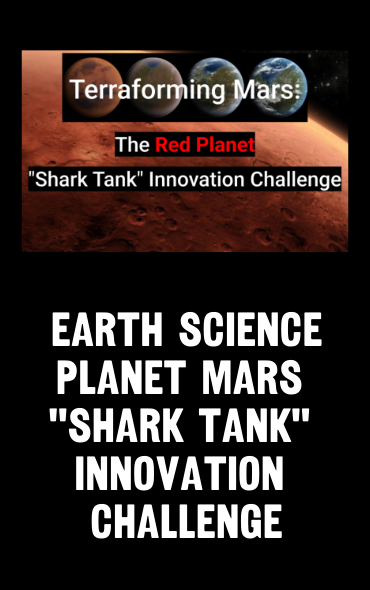
Are your students tired of just reading about Earth? Do they gaze longingly at the night sky, dreaming of a future beyond textbook pages? Excellent! Because today, we're not just learning about science; we're making science. We're launching them into the ultimate entrepreneurial challenge: Terraforming Mars: The Red Planet "Shark Tank" Innovation Challenge!
Forget your quaint little recycling programs. We're talking about taking a dusty, desolate rock and turning it into a vacation spot for humanity.
This isn't just a project; it's a desperate plea from the future (and a cunning way to keep them engaged). Your students will become "Terraforming Tech Startups," armed with nothing but their wits, some internet access, and a burgeoning understanding of how Earth actually works. Because, let's be honest, trying to make Mars habitable without understanding our own planet's life support systems is like trying to bake a cake without knowing what flour is.
Prepare for an explosion of creativity (hopefully not literal, on Mars or in your classroom) as they grapple with the fundamental cycles that make life possible. The competitive drive to secure that "virtual investment" (and bragging rights) will channel all their boundless energy into productive, scientific output. Just try to keep the "mad scientist" cackles to a minimum.
Student Learning and Performance Objectives:
Demonstrate understanding of the Carbon, Water, Nitrogen, and Oxygen cycles.
Apply your knowledge of the principles of these cycles to design an ecosystem on a different planet (e.g. Mars).
Illustrate how biogeochemical cycles support life in a closed system (Earth, Mars colony, dome ecosystem etc.).
Pitch your solutions to practice collaboration, critical thinking, and creative problem-solving/design.
What's included:
20 slides that introduce, explain, and guide the teacher and students
Introductory popcorn reading activity
Research Guide (G-doc link): Includes Note-taking space and links to reputable websites for students to use.
Project timeline and detailed tasks for each day
Group Roles explained in detail
Detailed teacher notes on prep, main lesson, and best practices
List of materials
Student Learning and Performance Objectives
Grading Rubric and Peer Evaluation Form
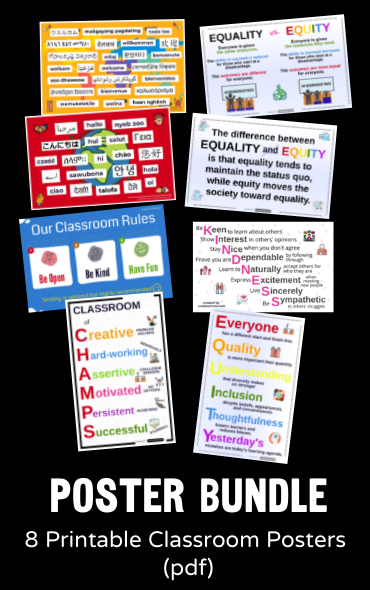
8 digital, printable, size 11 x 17 classroom posters:
“Welcome” in multiple languages
“Hi” in multiple languages
Three Equity posters
Classroom Rules: Be Open, Be Kind, Have Fun
“Classroom of Champs”
“Kindness”
ON SALE until August 30th.

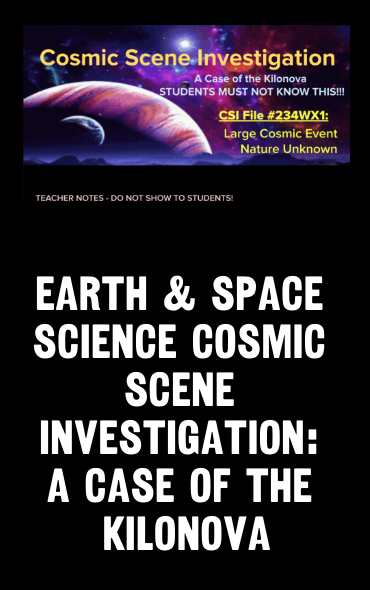
In this 50 - 70 minute, CSI-style investigation, designed for a high school Earth and Space Science classroom, students investigate a space phenomenon of kilonova. The investigation is set up so students do not know a kilonova occurred. Rather, they are given five case files on a major phenomenon that occurred in a fictional galaxy V57-1. The case files contain information they will have to interpret and research online to first understand the clues each file contains to later be able to arrive at the correct conclusion that a kilonova, caused by a collision and merging of two neutron stars has taken place.
Why and how does this learning strategy work?
Rote memorization out; seeking answers and deeper learning in.
The CSI-style approach to learning is fun, engaging, and motivating for learners, because they are called upon, thus challenged to find answers based on evidence rather than given a list of facts to study about a topic; space in this case.
When students are allowed to act as investigators, they develop skills such as analyzing evidence from various sources to understand the world and how it works. They not only hone and apply Science and Engineering Practices (SEPs), but also learn Earth and Space Science content while investigating a real-world (or real-space) phenomenon, which is what the Next Generation Science Standards (NGSS) call for.
Student Learning and Performance Objectives:
Analyze scientific evidence to arrive at a correct conclusion about the cosmic event that occurred in a distant galaxy. Synthesize multi-messenger astronomical evidence to draw conclusions about complex cosmic phenomena.
Understand the role of various astronomical instruments in space exploration.
Describe different types of data collected by these instruments.
Explain how element emission spectra are used to identify space objects and phenomena.
What's included:
13 slides that introduce, explain, and guide the teacher and students
Detailed teacher notes on prep, main lesson, and follow up activities
A link to a student-only slideshow.
Detailed student directions.
5 case files that contain data collected about the event for students to investigate
Teacher answer key describing what conclusions students should make from each case file.
Report File - guided Google Doc for students to fill out as they take note on each case file. data and generate their conclusions
Student Learning and Performance Objectives
Debriefing activity and key talking points
Follow up discussion questions and a next day bell ringer
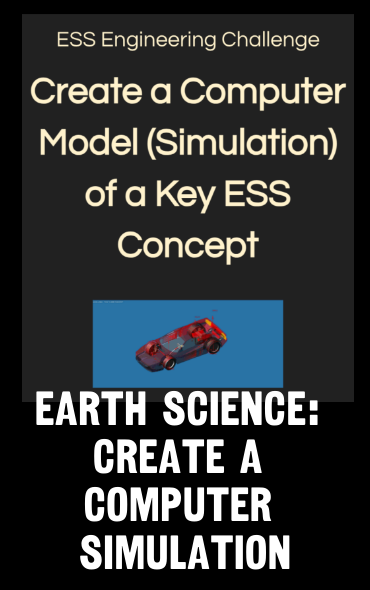
Save planning time with this introductory, 3-4 day Earth and Space Science engineering challenge in which students create a computer simulation of an Earth Science topic.
Includes 12 detailed slides (PDF and Google Slides link for editing) + detailed teacher directions (last slide) + a BONUS resource: Animation Guide for Google Slides.
The project follows the guidelines set by the Next Generation Science Standards (NGSS) and guides students in using Science and Engineering Practices (SEPs).
Student Performance and Learning Objectives:
Design and create an informative computer simulation.
Use computer animation to simulate a key ESS concept.
Explain the key ideas of an ESS concept of your choice.

In this 3- to 4-day lesson, designed for a high school Earth and Space Science classroom, student groups are assigned and investigate 4 leading solutions to the climate change crisis our planet is experiencing. Then, they are called upon to debate against each other to try to convince others that their solution is the most viable and provide counterarguments against other solutions. It’s an intellectual thunderdome in which students are encouraged to use science to attacks each others points of view on climate change but not character.
Why and how does this learning strategy work?
Rote memorization out; seeking answers and deeper learning in.
The debate-style approach to learning is engaging and motivating for learners, because they are challenged to use real evidence and their wits to outmaneuver their opposition.
Not only do they act as investigators, developing communication, collaboration, and argumentation skills but they learn about viable solutions to the climate change conundrum we all find ourselves in. They learn Earth and Space Science content while investigating and debating solutions to a real-world phenomenon, which is what the Next Generation Science Standards (NGSS) call for.
Student Learning and Performance Objectives:
Research multiple, complex climate change solutions to discover that the world is more complicated than a single TikTok trend.
Articulate scientific arguments with actual evidence.
Listen to opposing viewpoints, to hone "social awareness" skills.
Realize that climate change solutions are multi-faceted, messy, and require more than just good vibes.
Describe and support with, not mere belief but actual evidence, the leading climate solutions proposed by, not the coven of online witches but the scientific community.
What's included:
24 slides that introduce, explain, and guide the teacher and students
Detailed teacher notes on prep, main lesson, and follow up activities
General Lesson flow for teacher to follow to make it all seamless
A short and funny “hook” to increase student buy in
Detailed student directions
A list (research starter pack) of links to legit, scientific websites for students to use.
Group roles (team jobs) with descriptions of what each entails.
4 climate change solutions to assign to 4 different student groups
Student Learning and Performance Objectives
Detailed Grading Rubric to guide students and make assessment easy
Debate Day introduction and format description
Follow up discussion questions (reflection and debrief)
Can teachers make Chemistry less stressful for students?
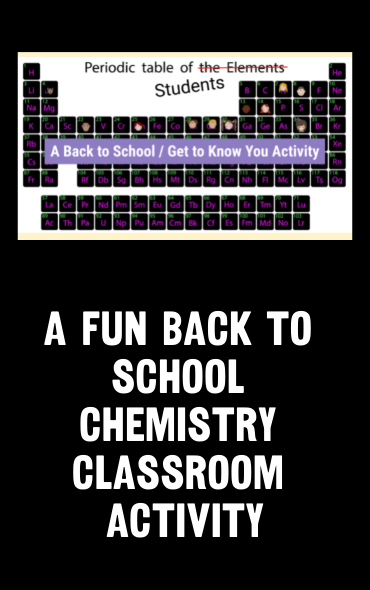
I am not sure about this one. After all, chemistry gets the bad rep for being hard and a lot of work. But while this may be true, teachers can help make the beginning of the school year less stressful for their students by easing into chemistry using a low pressure, high bang for their buck activity.
In this one- to two- day Back to School activity, designed for a high school Chemistry classroom, students visually share and learn various facts about each other which helps in building a supportive classroom community and, along the way, learn some chemistry lingo and facts that will come in handy later. But, psssst! Don't tell them they are unconsciously learning chemistry. Just let them have fun getting to know each other and their teacher.
Why and how does this learning strategy work?
The main idea is to begin the new school year and your chemistry class low-stress. This benefits both students and teachers as we often find getting back to doing something we are rusty on rough (translation for non-teachers: we are barely holding it together and are ten seconds from crashing out, because we are only about 50% sure we still know how to participate in society at large, let alone teach). So rather than continuously wondering about the 10,000 things that can go wrong (but never will) in the first few days of the new school year, we can combine chemistry, social-emotional learning, and classroom community-building and get to know our students a little bit before we hit them with atoms, bonding, stoichiometry, and Le Chatelier's Principle.
Student Learning and Performance Objectives:
Put together a periodic table of chemistry students in our class.
Create an element box for each student with their characteristics, likes, dislikes etc.
Start building a classroom community.
Allow students to familiarize themselves with each other by learning a few things about their classmates.
What's included:
10 slides that introduce, explain, and guide the teacher and students through this 2-day activity
An element box/card template for either digital or old school use (you choose)
Teacher notes explaining the purpose, teacher participation, possible extensions, and the side benefits of the activity
Student Learning and Performance Objectives
Materials list
Detailed directions for what information students should include on their card
Directions on how to assemble the classroom periodic table
Follow up discussion questions