CRUSH SCHOOL

I blog on Brain-Based Learning, Metacognition, EdTech, and Social-Emotional Learning. I am the author of the Crush School Series of Books, which help students understand how their brains process information and learn. I also wrote The Power of Three: How to Simplify Your Life to Amplify Your Personal and Professional Success, but be warned that it's meant for adults who want to thrive and are comfortable with four letter words.

Filtering by Category: Learning

5-minute High Impact Tools For Teachers
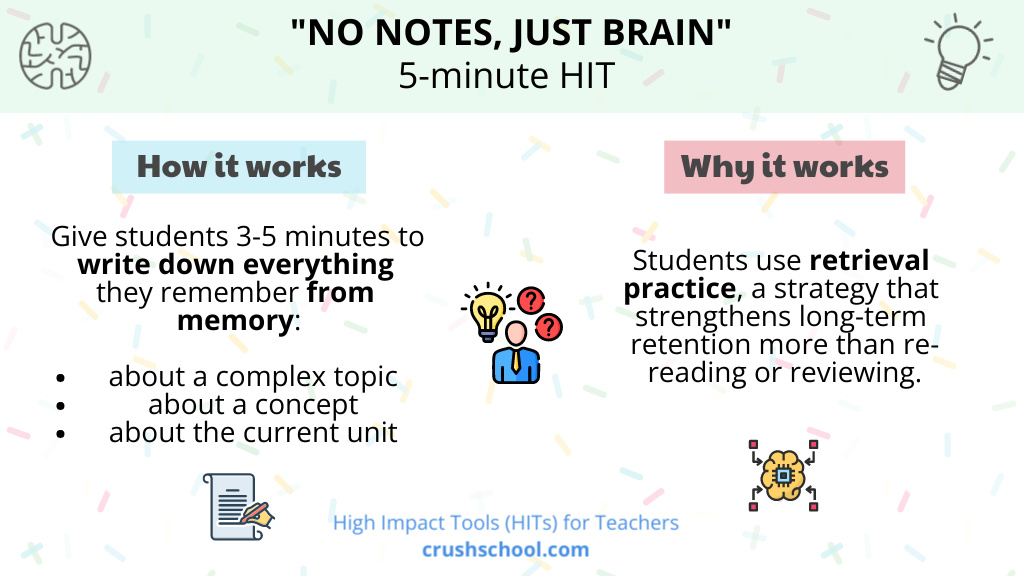
I recently started including a 5-minute HIT—a low effort, easy-to-implement classroom strategy—in my free newsletters.

HITs or High Impact Tools for Teachers are 5-minute, easy to use classroom activities that leverage science-based learning strategies such as retrieval practice, dual coding, spacing, interleaving, elaboration etc. to improve learner concept retention and understanding.

Check out “No Notes, Just Brain” above.

Each HIT includes 2 sections: How It Works and Why It Works.

How It Works gives you simple directions to give to students to follow.

Why It Works explains the science behind why using this strategy is more effective than traditional learning.

HITs can be used anytime during the course of a regular class, but are best for the first or the last 5 minutes of any class, regardless of the subject matter.

I plan on sending one on Wednesday (the week edition) and one on Sunday (the weekend edition).

Sometimes, the HIT will be accompanied by a new article.

I hope you enjoy and use them to help your students learn, review, and understand better.

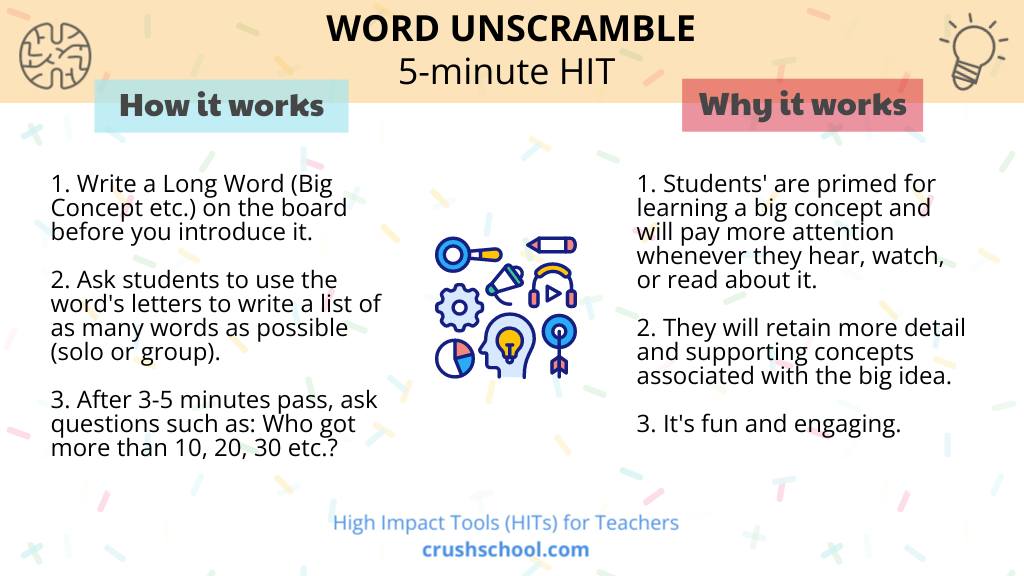
Here’s the Weekend HIT:

BOOKS & TOOLS
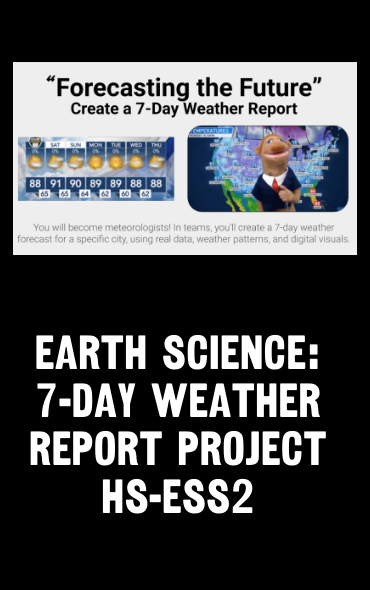
Earth Science: 7-Day Weather Report Project (NGSS) HS-ESS2
$4.00

Save planning time with this Atmosphere Unit, 5-day Honors Earth and Space Science Project in which students research, design, create, and present a 7-day weather forecast for a specific city in the US or abroad.

Student Performance and Learning Objectives:

  1. Explain how weather data is collected and interpreted.

  2. Explain how weather patterns may be affected by geography (mountains, plains, valleys etc.).

  3. Explain the atmospheric conditions (pressure, moisture etc.) necessary for different weather (sunny, windy, rainy etc.).

What's included:

  1. 16 slides (Google Slides link for easy use and editing to fit your purposes)

  2. Learning Objectives

  3. Group Roles / Jobs (up to 5 with detailed description of jobs)

  4. Detailed Project Directions / Requirements

  5. Materials/Web Resources List

  6. Link to a "Wheel of Names" containing city names - students spin and receive their assigned city.

  7. Link to a grading rubric for student and teacher use (printable doc).

The project follows the guidelines set by the Next Generation Science Standards (NGSS).


Questions?
Email me at oskar@crushschool.com. I’m happy to answer your questions.

Fair Use
Feel free to share and use this resource with your students.

Please do not share it with other parties or use for profit. All rights by crushschool.com.

EQUITY Poster
$1.50

Equity-Promoting Classroom Poster. What does EQUITY in the classroom look like?

  • Everyone has a different start and finish line

  • Quality is more important that quantity

  • Understanding that diversity makes us stronger

  • Inclusion despite beliefs, appearances, and circumstances

  • Thoughtfulness lowers barriers and reduces biases

  • Yesterday's mistakes are today's learning agenda

You can teach your students about equity and make it a daily classroom practice using this inspirational poster, which also includes images that accompany the equity description. You can discuss each letter characteristic with your students as a way of introducing your inclusive classroom and display it prominently as a reminder that diversity makes the classroom community stronger.
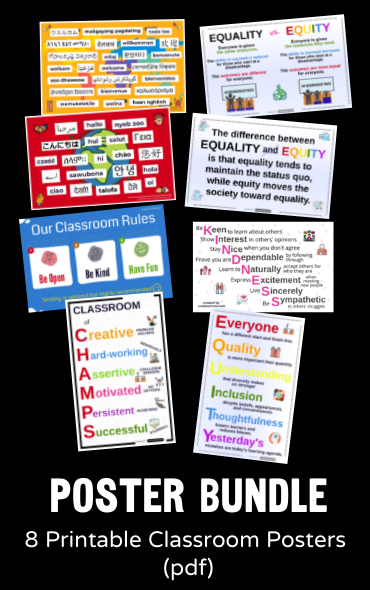
Classroom Posters Bundle of 8
Sale Price: $5.00 Original Price: $8.00

8 digital, printable, size 11 x 17 classroom posters:

  1. “Welcome” in multiple languages

  2. “Hi” in multiple languages

  3. Three Equity posters

  4. Classroom Rules: Be Open, Be Kind, Have Fun

  5. “Classroom of Champs”

  6. “Kindness”

ON SALE until August 30th.

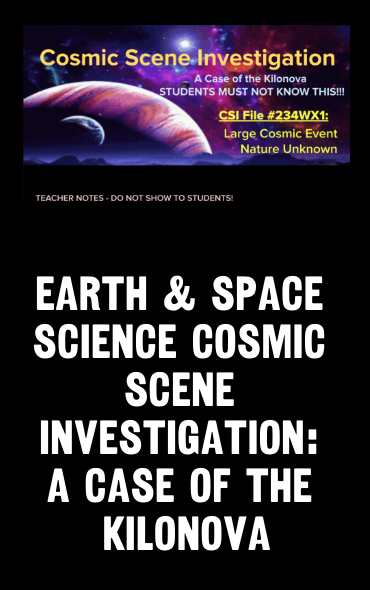
[Earth & Space Science] Cosmic Scene Investigation: A Case of the Kilonova
$4.00

In this 50 - 70 minute, CSI-style investigation, designed for a high school Earth and Space Science classroom, students investigate a space phenomenon of kilonova. The investigation is set up so students do not know a kilonova occurred. Rather, they are given five case files on a major phenomenon that occurred in a fictional galaxy V57-1. The case files contain information they will have to interpret and research online to first understand the clues each file contains to later be able to arrive at the correct conclusion that a kilonova, caused by a collision and merging of two neutron stars has taken place.

Why and how does this learning strategy work?

Rote memorization out; seeking answers and deeper learning in.

The CSI-style approach to learning is fun, engaging, and motivating for learners, because they are called upon, thus challenged to find answers based on evidence rather than given a list of facts to study about a topic; space in this case.

When students are allowed to act as investigators, they develop skills such as analyzing evidence from various sources to understand the world and how it works. They not only hone and apply Science and Engineering Practices (SEPs), but also learn Earth and Space Science content while investigating a real-world (or real-space) phenomenon, which is what the Next Generation Science Standards (NGSS) call for.

Student Learning and Performance Objectives:

  1. Analyze scientific evidence to arrive at a correct conclusion about the cosmic event that occurred in a distant galaxy. Synthesize multi-messenger astronomical evidence to draw conclusions about complex cosmic phenomena.

  2. Understand the role of various astronomical instruments in space exploration.

  3. Describe different types of data collected by these instruments.

  4. Explain how element emission spectra are used to identify space objects and phenomena.

What's included:

  1. 13 slides that introduce, explain, and guide the teacher and students

  2. Detailed teacher notes on prep, main lesson, and follow up activities

  3. A link to a student-only slideshow.

  4. Detailed student directions.

  5. 5 case files that contain data collected about the event for students to investigate

  6. Teacher answer key describing what conclusions students should make from each case file.

  7. Report File - guided Google Doc for students to fill out as they take note on each case file. data and generate their conclusions

  8. Student Learning and Performance Objectives

  9. Debriefing activity and key talking points

  10. Follow up discussion questions and a next day bell ringer

Cornell Notes on Steroids Notebook Bundle of 6
$18.00

The Cornell Notes on Steroids Notebookis a 8.5"x11" 120-page academic notebook that contains an organizational method that improves on the Cornell Note-Taking System. BUNDLE & SAVE.
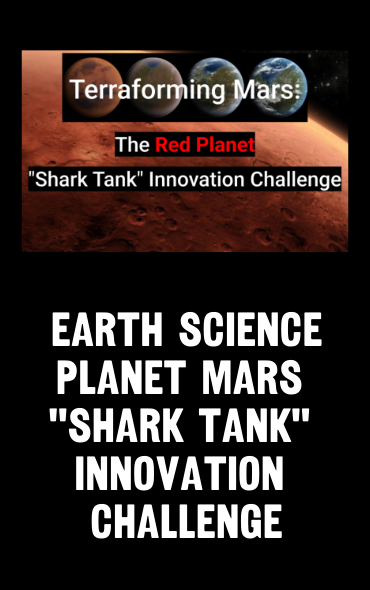
[Earth Science] Terraforming Mars: The Red Planet "Shark Tank" Innovation Challenge
$4.00

Are your students tired of just reading about Earth? Do they gaze longingly at the night sky, dreaming of a future beyond textbook pages? Excellent! Because today, we're not just learning about science; we're making science. We're launching them into the ultimate entrepreneurial challenge: Terraforming Mars: The Red Planet "Shark Tank" Innovation Challenge!

Forget your quaint little recycling programs. We're talking about taking a dusty, desolate rock and turning it into a vacation spot for humanity.

This isn't just a project; it's a desperate plea from the future (and a cunning way to keep them engaged). Your students will become "Terraforming Tech Startups," armed with nothing but their wits, some internet access, and a burgeoning understanding of how Earth actually works. Because, let's be honest, trying to make Mars habitable without understanding our own planet's life support systems is like trying to bake a cake without knowing what flour is.

Prepare for an explosion of creativity (hopefully not literal, on Mars or in your classroom) as they grapple with the fundamental cycles that make life possible. The competitive drive to secure that "virtual investment" (and bragging rights) will channel all their boundless energy into productive, scientific output. Just try to keep the "mad scientist" cackles to a minimum.

Student Learning and Performance Objectives:

  1. Demonstrate understanding of the Carbon, Water, Nitrogen, and Oxygen cycles.

  2. Apply your knowledge of the principles of these cycles to design an ecosystem on a different planet (e.g. Mars).

  3. Illustrate how biogeochemical cycles support life in a closed system (Earth, Mars colony, dome ecosystem etc.).

  4. Pitch your solutions to practice collaboration, critical thinking, and creative problem-solving/design.

What's included:

  1. 20 slides that introduce, explain, and guide the teacher and students

  2. Introductory popcorn reading activity

  3. Research Guide (G-doc link): Includes Note-taking space and links to reputable websites for students to use.

  4. Project timeline and detailed tasks for each day

  5. Group Roles explained in detail

  6. Detailed teacher notes on prep, main lesson, and best practices

  7. List of materials

  8. Student Learning and Performance Objectives

  9. Grading Rubric and Peer Evaluation Form
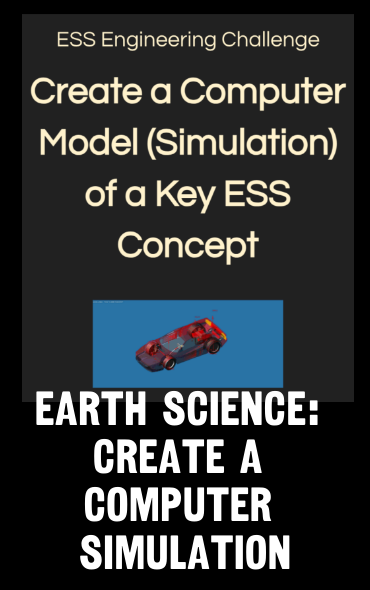
Earth Science: Create a Computer Simulation of an ESS Concept
Sale Price: $2.00 Original Price: $3.00

Save planning time with this introductory, 3-4 day Earth and Space Science engineering challenge in which students create a computer simulation of an Earth Science topic.

Includes 12 detailed slides (PDF and Google Slides link for editing) + detailed teacher directions (last slide) + a BONUS resource: Animation Guide for Google Slides.

The project follows the guidelines set by the Next Generation Science Standards (NGSS) and guides students in using Science and Engineering Practices (SEPs).

Student Performance and Learning Objectives:

  1. Design and create an informative computer simulation.

  2. Use computer animation to simulate a key ESS concept.

  3. Explain the key ideas of an ESS concept of your choice.

Climate Change Debate: The Earth Science Intellectual Thunderdome
$4.00

In this 3- to 4-day lesson, designed for a high school Earth and Space Science classroom, student groups are assigned and investigate 4 leading solutions to the climate change crisis our planet is experiencing. Then, they are called upon to debate against each other to try to convince others that their solution is the most viable and provide counterarguments against other solutions. It’s an intellectual thunderdome in which students are encouraged to use science to attacks each others points of view on climate change but not character.

Why and how does this learning strategy work?

Rote memorization out; seeking answers and deeper learning in.

The debate-style approach to learning is engaging and motivating for learners, because they are challenged to use real evidence and their wits to outmaneuver their opposition.

Not only do they act as investigators, developing communication, collaboration, and argumentation skills but they learn about viable solutions to the climate change conundrum we all find ourselves in. They learn Earth and Space Science content while investigating and debating solutions to a real-world phenomenon, which is what the Next Generation Science Standards (NGSS) call for.

Student Learning and Performance Objectives:

  1. Research multiple, complex climate change solutions to discover that the world is more complicated than a single TikTok trend.

  2. Articulate scientific arguments with actual evidence.

  3. Listen to opposing viewpoints, to hone "social awareness" skills.

  4. Realize that climate change solutions are multi-faceted, messy, and require more than just good vibes.

  5. Describe and support with, not mere belief but actual evidence, the leading climate solutions proposed by, not the coven of online witches but the scientific community.

What's included:

  1. 24 slides that introduce, explain, and guide the teacher and students

  2. Detailed teacher notes on prep, main lesson, and follow up activities

  3. General Lesson flow for teacher to follow to make it all seamless

  4. A short and funny “hook” to increase student buy in

  5. Detailed student directions

  6. A list (research starter pack) of links to legit, scientific websites for students to use.

  7. Group roles (team jobs) with descriptions of what each entails.

  8. 4 climate change solutions to assign to 4 different student groups

  9. Student Learning and Performance Objectives

  10. Detailed Grading Rubric to guide students and make assessment easy

  11. Debate Day introduction and format description

  12. Follow up discussion questions (reflection and debrief)

Mistakes Are What It Takes

Mistakes are what it takes to learn better
Every act of conscious learning requires the willingness to suffer an injury to one’s self-esteem. That is why young children, before they are aware of their own self-importance, learn so easily.
— Thomas Szasz

Change How Mistakes Are Looked At

This one will be hard. Jumping off a building without a parachute or at least a bungee cord to learn about gravity is risky. It’s also either crazy, or really stupid, or both, because the risk involved is not reasonable. And while this example seems drastic, it might not be far off from the way many students perceive taking risks - asking questions, volunteering answers, and being wrong - in school.

So how do we change this classroom risk aversion?

Expect and Respect Mistakes

expect and respect mistakes

We can create a culture of mistake making in our classrooms by communicating to our students at the beginning of the school year that we expect and want them to make mistakes, because learning is more memorable when we inspect and correct our mistakes.

As teachers, we need to communicate this message frequently, because behavior modification takes time and effort.

In addition, we can be honest about our own mistakes, point them out when we make them, analyze them, and correct them as they happen. I found that students respect me more and I build more authentic relationships when I admit my mess-ups.

Inspect and Correct Mistakes

Inspect and correct your mistakes

How does making, inspecting, and correcting our mistakes help us learn better?

We tend to feel embarrassed when we get something wrong in front of our peers, which makes these experiences more memorable than instances in which we guess correctly. And the benefits of such blush moments, evidenced by the sudden rush of blood to our heads and visible on our faces, cannot be understated. Emotions do wanders for the memory-making process of information encoding.

Additionally, we tend to put time into careful processing of mistakes we make as we do not want to be wrong again, especially about the same thing. We want to show we’re smart by improving ourselves and learning from our mistakes. Such processing and reprocessing leads to deeper knowledge. Deeper knowledge is the definition of true learning.

The key for students is to keep trying, knowing they will be wrong at times.

The key for teachers is to make mistakes part of the learning menu (FREE to you). And tips are required.

If no mistake you have made, losing you are. A different game you should play.
— Yoda

If you enjoyed this post or found it helpful consider signing up for my newsletter.

Hi! I'm Oskar.

I teach, write, and create to make teaching easier and learning simpler.

oc pro.png

BOOKS

Mistakes Are... Poster
$3.00

In this classroom Mistakes are Expected, Respected, Inspected, Corrected!

Learned helplessness is a result of years of conditioning that mistakes are bad for learning. Nothing is further from the truth - some of the most powerful life lessons come from making mistakes, reflecting on them, and growing as a result.

This is a PNG Poster you can print and display in your classroom to encourage a culture of risk-taking and learning from mistakes.

Classroom Posters Bundle of 8
Sale Price: $5.00 Original Price: $8.00

8 digital, printable, size 11 x 17 classroom posters:

  1. “Welcome” in multiple languages

  2. “Hi” in multiple languages

  3. Three Equity posters

  4. Classroom Rules: Be Open, Be Kind, Have Fun

  5. “Classroom of Champs”

  6. “Kindness”

ON SALE until August 30th.

Are Your Students Dual Coding? How To Make Combining Verbal With Visual The Usual

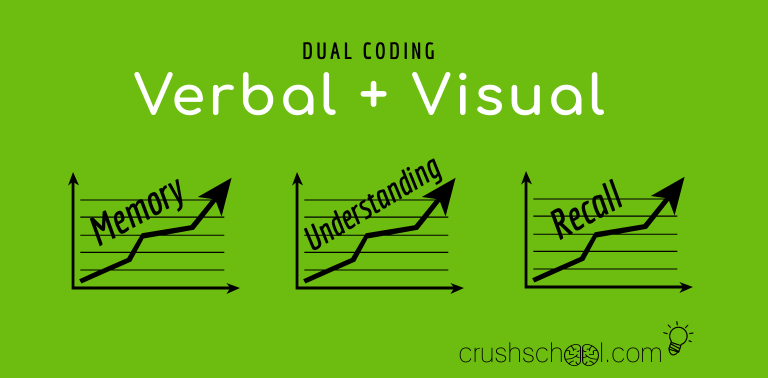
Dual Coding: Combining Verbal and Visual increases memory, understanding, and retention.

Warning! This is my second article in a row that is full of cheesy and rhymy graphics designed to promote nerdy and sciency research-supported learning strategies. Luckily, the strategies described below work and are different than these methods, which also work. As always, read at your own risk of being slightly entertained and, on my good day, enlightened. Thanks for reading!

Learning how to learn is life’s most important skill.
— Tony Buzan

In this and my previous article, I condensed research-based effective learning to six strategies: Active Learning, Teaching, Visualizing, Smart Practice, Chunking, and Mistake Making, which be viewed as a set of micro skills - smaller but integral parts of the macro “Effective Learning” skill.

This article covers Visualizing and deliberate use of Dual Coding to help learners of all walks of life, but especially our students, learn how to learn. If you’d like to read about Active Learning, Smart Practice, and Teaching to Learn click here.

The strategies are universal — they can be used in any subject, field of knowledge, or profession to learn anything. They should be used if the learner is planning to actually learn and not just do the thing where he just crams and passes the test.

And if the teacher wants her students to actually learn and not cram and forget? She must teach them how to learn and apply, use these practices in her classroom, and show them how to learn when on their own. Knowledge is only power if they can apply it and they can’t apply that which they do not have. Let’s show them why dual coding works and how to use it to make sure they have so they can apply.

We do not see with our eyes. We see with our brains.
— John Medina
Visualize to internalize

John Medina, the developmental molecular biologist and author of Brain Rules: 12 Principles for Surviving and Thriving at Work, Home, and School suggests that vision trumps all other senses, because throughout human evolution it has been the most dominant sense that relies on about half of our brain’s resources.

And let’s not start talking about that icky, long-debunked learning styles theory, because it’s a bunch of road apples. Every human being has their own learning style that uses all of the senses to learn. But vision’s the shiz.

Making Information Visual

Some civilizations have used written symbols to convey what anthropologists consider coherent information for four to five thousand years, but most cultures have only known writing for a few centuries. Our species has been around for two hundred thousand years and for almost the entirety of that time we were not learning through reading and writing.

Making It Visual Poster

We used our senses, and because we can see farther than we can hear, or feel, or taste, or smell (thankfully) our vision was the sense that served us best. Along with the other senses, we predominantly used vision to find food so we could feed, to spot predators so we could fight or flee, and to evaluate members of the opposite sex so we could f… breed.

Vision had time to evolve through many millennia. The brain systems that help with decoding text, while promising, are still developing and long-term storage of verbal information is hard. Perhaps the case for using more imagery in learning is best made with the picture superiority effect (PSE), a well-researched phenomenon that shows we remember and retrieve information presented in pictures better than verbal (written and spoken) knowledge.

But doing it is not be as simple as it sounds. Telling students to imagine a concept will not be enough for some, because their spatial capacity — the ability to make, manipulate, and modify visual images in their mind — might not be well developed as a result of its previous underuse. Anyone can close their eyes and conjure a tree, but take a highly abstract concept such as the atom and most students will revert to the age-old, crude, and full of misconceptions “solar system” model. And then chemistry teachers, myself included, wonder: Why oh why do they miss so many easy atom questions on the test?

All kids start out curious. We see this in babies when they gaze in amazement at new faces and objects. Where does this curiosity go and why do some students dread high school science classes and often mask anxiety with indifference? We could blame traditional schooling, but do we truly know? It’s not that simple nor does it do us any good to dwell while teaching. The best course is to show them how to reawaken their imagination.

Imagination awakened — that’s a powerful learning tool. While not in the job description, it is the teacher’s job is to help students use their imagination in the context in which it’s often underutilized — the classroom. The more abstract the concept we teach is, the more important it becomes to create visual reference points, mental imagery that makes it more concrete. At first, we can provide visuals and model how to generate them to our students.

For example… The atom is the simplest building block of matter and one of the most abstract and difficult concepts to correctly understand for students, because it’s unlike anything they’ve ever seen. It’s very small, yet the electrons are very far away from the nucleus — relatively speaking… The nucleus is where pretty much all of the atom’s mass is in the form of protons and neutrons, but it is the smallest part of the atom — relatively speaking… The electrons weigh close to nothing but make up the largest region of the atom we call the electron cloud as the electrons create a sort of an “after image” when they revolve really fast (some calculations have it close to 5,000,000 miles per hour) around the nucleus in the so-called orbitals, which aren’t even paths electrons follow, but rather probabilities of where they can be. Moreover — due to the fact that the electrons are about two thousand times smaller than the protons or neutrons, and they are spaced out, and they are sparse — the electron cloud and the atom itself is comprised of mostly… empty space.

If you don’t teach chemistry, are not a science nerd, or always thought of an atoms as a bunch of balls revolving around a cluster of balls in the middle like planets around the sun, it’s perfectly normal if you’ve developed a migraine reading the above. Scientists don’t completely understand what the atom looks like themselves, and if they tell you they do, they are lying.

I always draw a (very unartistic) football stadium to represent the atom and to aid the student understanding of what it might look like and its scale. I draw the coin the ref flips in the center of the field and ask students to think of it as the nucleus. Then, I draw a few randomly spaced out tiny dots where the stands are and ask my students to imagine they are grains of sand — each ''sitting” in its own seat far away and each representing one electron. Then, I ask them to create this mental image: Remove the stadium, refs, seats, and everything else your mind conjured previously and leave only the coin and the grains of sand suspended in space. Finally, I tell students to animate it: imagine the grains of sand (electrons) revolving around the coin (nucleus) in a three-dimensional space — not like planets around the sun, but rather, the would-be-paths can be horizontal or vertical or skewed in any direction around the nucleus.

The point is to help my students to start seeing things with their mind not just eyes - to use their imagination to draw mental representations of concepts - and to do it often. Ideally, students will learn to create mental images for everything verbal they learn so it is stored in two different but connected parts of the brain, which will then aid recall and understanding. While such practice of converting verbal into visual is natural for some people, other learners must be shown how to do it and given frequent opportunities to better develop their visual-spatial awareness and abilities through deliberate practice.

Dual Coding

The mental model of the atom I created in my own mind for myself is something I share with my chemistry students to tie the insanely abstract to something more tangible. But there’s more to it…

The Dual Coding Theory (DCT) explains two ways of storing memories in the human brain — verbal (text, speech, hearing) and non-verbal (focusing on images). The benefit of having two separate systems of information encoding is that our mind can hold information related to one concept in two different regions of the brain. During initial processing, neurons in different regions of the brain “fire and wire” together connecting the verbal and the visual representations of the same concept. Through repeated processing, these neural pathways thicken (myelination) leading to more elaborate recall, faster application, and deeper understanding of the concept. It’s like having two different people continually discussing a concept and learning from each other by bringing two different ways of looking at the same thing into their interactions.

Dual Coding Poster

Thus, it serves our students well to learn to effectively visualize written or spoken information — it might not be easy, but is always possible. Visualization is a skill that must be practiced, because images enhance recall of verbal material. When a concept elicits an image, it has a higher chance of being retained in our memory and can be recalled more easily.

It does not matter if the images are created through deliberate action and not conjured automatically by the brain — they are just as effective, because the learner’s brain forms two distinct neural memory and processing pathways for the information. But because many students do not spontaneously generate mental images to support their learning, teachers should include plenty of visuals when teaching. Additionally, teachers can provide image-generation practice by creating classroom activities that call on students to physically draw or digitally create pictorial representations of the concepts they are learning.

The point is… students don’t have to be Leo-flippin’-Da-Vinci to take full advantage of dual coding. We can help them develop the ability to visualize so they can internalize. Seeing with their brains not just eyes will help them be more wise. Learning how to learn best will help them capitalize on many opportunities and win the ultimate prize - a meaningful life.

Dual Coding: Combing Verbal With Visual Key Takeaways:

  1. Visual learning is more potent as evidenced by picture superiority effect (PSE) but is at the same time underutilized in many classrooms.

  2. Information retention, understanding, and recall is increased when it’s dual-coded.

  3. Ability to visualize isn’t always automatic but it is a skill that can be developed with practice.

References:

Medina, John. Brain Rules: 12 Principles for Surviving and Thriving at Work, Home, and School. Pear Press; Second edition (April 22, 2014).


If you enjoyed this post or found it helpful consider signing up for my newsletter below.

2026 Crush School