CRUSH SCHOOL

I blog on Brain-Based Learning, Metacognition, EdTech, and Social-Emotional Learning. I am the author of the Crush School Series of Books, which help students understand how their brains process information and learn. I also wrote The Power of Three: How to Simplify Your Life to Amplify Your Personal and Professional Success, but be warned that it's meant for adults who want to thrive and are comfortable with four letter words.

Filtering by Tag: active learning

Mindful EdTech: What I Learned And What I’m Skeptical Of After Reading The Digital Delusion
Tech-Free Science Classroom Collaboration.png

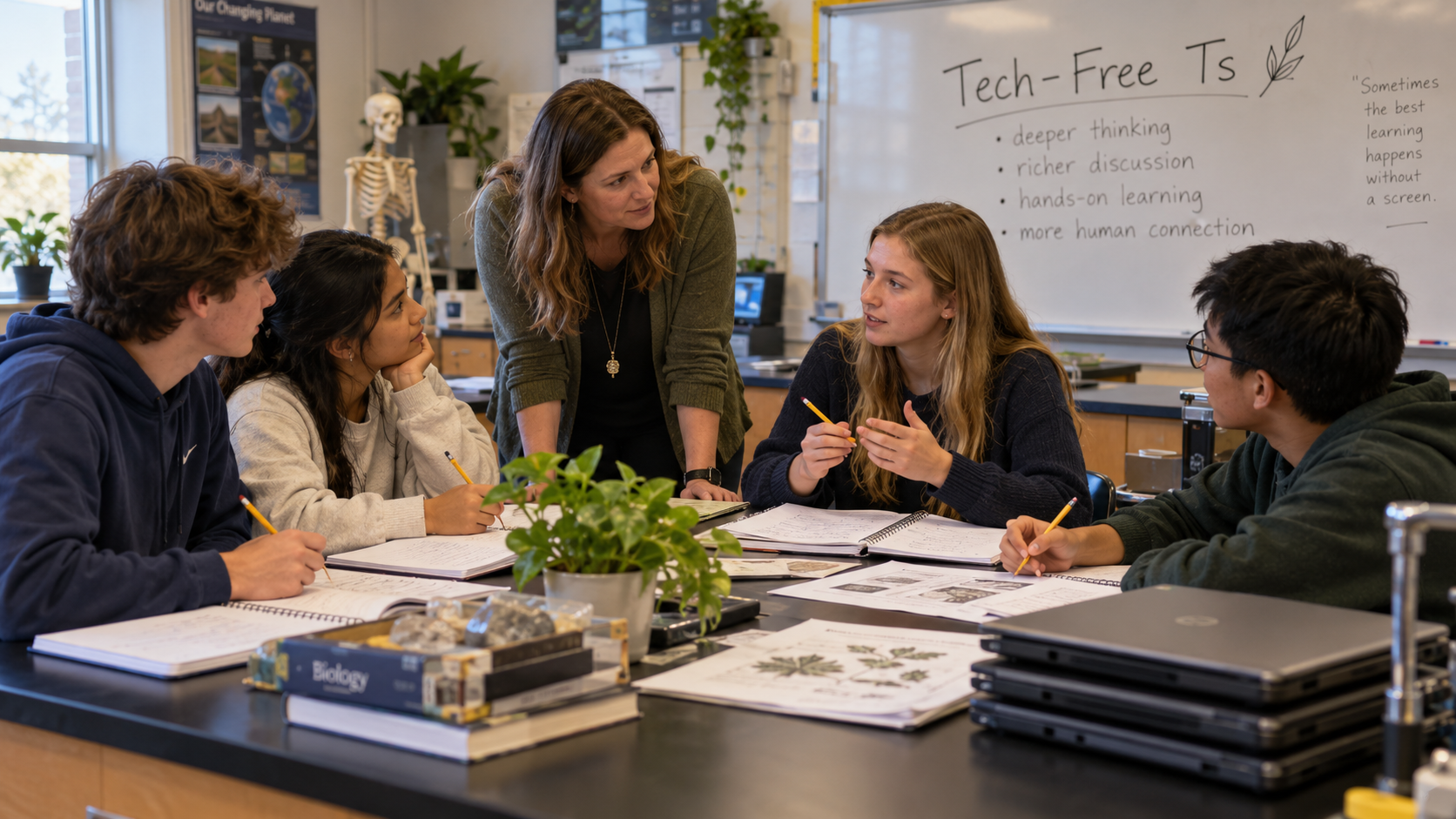
Tech-Free Ts: Two days a week without screens. More discussion, deeper thinking, and a reminder that learning happens in the brain, not on the device.

I'm about to do something that might send a few of my students into a state of panic.

Twice a week, I'm going to ask them to learn without a screen.

No Chromebooks. No phones. No digital this or that. Just students, their brains, and the occasionally terrifying prospect of having to think without consulting Google or their friendly digital-neighborhood AI.

I'm calling it Tech-Free Ts: Tech-Free Tuesdays and Tech-Free Thursdays—not a classroom revolution, but a big change nonetheless.

The idea came after reading The Digital Delusion and discussing it with my chemistry brethren. The book, written by a cognitive scientist Jared Cooney Horvath, challenges many of the assumptions we've been making about technology and learning, particularly the widespread belief that putting students in front of screens makes education better, more engaging, or more effective.

It really got me thinking…

Over the years, school districts have invested enormous amounts of money, time, and PD time into bringing technology into classrooms. We've learned new platforms, adopted countless apps, and turned activities that once required paper and pencil into ones that call for a Chromebook, a decent internet connection, and an occasional visit to the den, because the IT dude is there and a student’s laptop poo-pooed itself.

But all that aside, a question now lingers in my mind—one I probably should have been asking myself before and more often: Are my students actually learning more, or are they just doing more stuff on screens?

Not suggesting technology is the enemy—I use it regularly and some of my favorite classroom activities would be hard without it. I also remain unconvinced that every argument in The Digital Delusion should be accepted at face value.

For one, correlation doesn't equal causation. Just because student achievement has declined while educational technology use has increased doesn't mean one caused the other. Perhaps it’s the ever-increasing and often-annoying smart phone use that has a bigger impact on learning or lack thereof.

The author also lumps different types of technology uses together, without always distinguishing between passive screen time and activities that require meaningful thinking.

Additionally, author's interpretation of research—which is what likely drives book sales—has been questioned.

But this is precisely why I'm interested in trying Tech-Free Ts in my own classroom. Rather than simply accepting the book's conclusions, I want to see what happens when screens disappear twice a week.

Will students focus better, think more deeply, and remember more? Or will I discover that the screens weren't really the problem in the first place? It's hardly a controlled scientific experiment, but it should give me something interesting to look at and think about.

But the book, and more importantly, our discussions about it, reminded me of something I've believed for a long time: Learning doesn't happen because students are busy, entertained, or clicking on things. It happens because their brains are doing the work.

And sometimes, the best way to get those brains working might be to close the laptops.

So Now Then…

Reading Digital Delusion and discussing it with colleagues encouraged me to reconsider how technology affects student attention, memory, and deeper learning. One key takeaway was that technology does not automatically improve learning. In some cases, constant digital distractions and passive screen-based activities can interfere with students' ability to focus, process information, and retain knowledge.

Our discussions emphasized the importance of using technology intentionally rather than simply because it is available. We also critically examined the author's claims, recognizing that how technology is used matters more than screen time alone.

As a result, I plan to implement "Tech-Free Ts"—Tuesdays and Thursdays, when students will engage in learning without any digital devices, with an emphasis on discussion, retrieval practice, problem-solving, and hands-on activities. I also plan to evaluate digital assignments more carefully to ensure they promote active thinking rather than passive consumption.

Ultimately, this experience reinforced my belief that effective teaching should begin with how students learn, not with the tech.


For 100+ ready-to-use activities that improve student memory of class content and help them engage in deeper processing, check out my book Spark. Wire. Fire. on Amazon.


BOOKS & TOOLS
 
3 Memory Palace Lessons
$3.00

Flashcards are okay but there's a better way. The Memory (or Mind) Palace Method is a powerful learning and memorization technique that when mastered allows a student to remember 10, 20, or even 30 vocabulary words or concepts (definitions included) with ease.

And, they actually remember what they learned using memory palaces! This series of lessons (which can be used as classroom handouts) walks students through creating their first memory palace, filling it with information they need to learn, and using it to train their memories. It also contains short readings, a video lesson, memory palace examples, and practice drills.

Fair Use

Feel free to use with your students. Please do not share it with other parties or use for profit. All rights by crushschool.com.
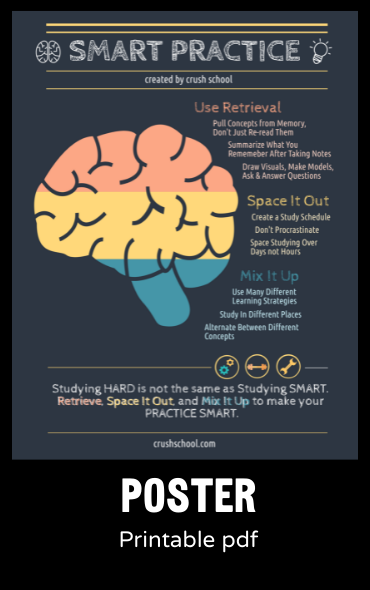
 
Smart Practice Digital Poster
Sale Price: $2.00 Original Price: $3.00

Retrieval Practice, Spaced Practice, and Mixed Practice (Interleaving).

Studying Hard is not the same as Studying Smart. This High Quality printable, digital (PNG) poster is a constant classroom reminder of best practices for teachers and learning the smart way for students.

 
Mistakes Are... Poster
$3.00

In this classroom Mistakes are Expected, Respected, Inspected, Corrected!

Learned helplessness is a result of years of conditioning that mistakes are bad for learning. Nothing is further from the truth - some of the most powerful life lessons come from making mistakes, reflecting on them, and growing as a result.

This is a PNG Poster you can print and display in your classroom to encourage a culture of risk-taking and learning from mistakes.
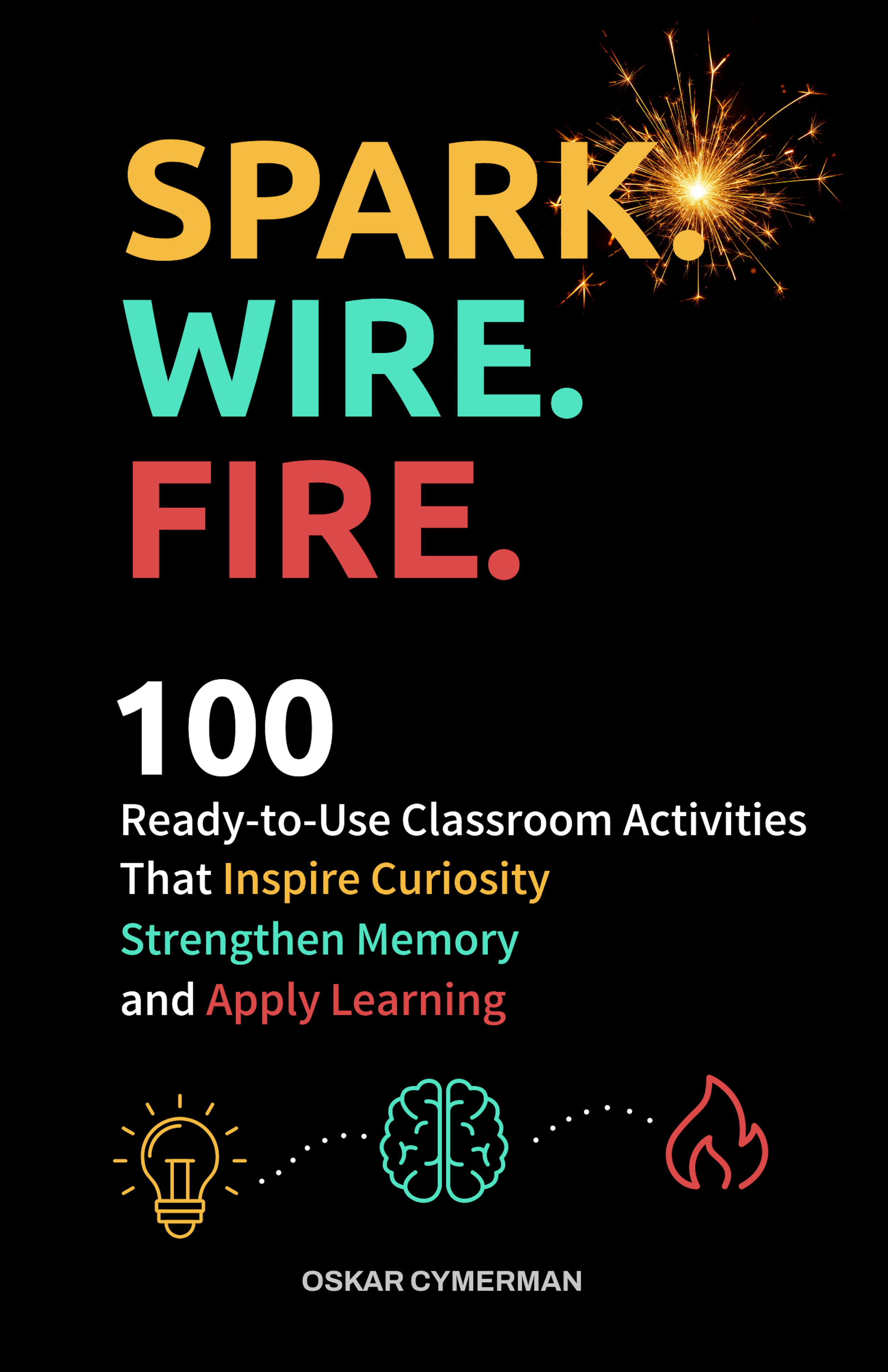
 
Book cover for Spark. Wire. Fire.: 100 Ready-to-Use Classroom Activities That Inspire Curiosity, Strengthen Memory, and Apply Learning, a teacher resource focused on classroom engagement, memory, and active learning strategies.

NEW BOOK

100+ practical, brain-based activities teachers can use right away with or without technology.

Mistakes Are What It Takes

Mistakes are what it takes to learn better
“Every act of conscious learning requires the willingness to suffer an injury to one’s self-esteem. That is why young children, before they are aware of their own self-importance, learn so easily.”
— Thomas Szasz

Change How Mistakes Are Looked At

This one will be hard. Jumping off a building without a parachute or at least a bungee cord to learn about gravity is risky. It’s also either crazy, or really stupid, or both, because the risk involved is not reasonable. And while this example seems drastic, it might not be far off from the way many students perceive taking risks - asking questions, volunteering answers, and being wrong - in school.

So how do we change this classroom risk aversion?

Expect and Respect Mistakes

expect and respect mistakes

We can create a culture of mistake making in our classrooms by communicating to our students at the beginning of the school year that we expect and want them to make mistakes, because learning is more memorable when we inspect and correct our mistakes.

As teachers, we need to communicate this message frequently, because behavior modification takes time and effort.

In addition, we can be honest about our own mistakes, point them out when we make them, analyze them, and correct them as they happen. I found that students respect me more and I build more authentic relationships when I admit my mess-ups.

Inspect and Correct Mistakes

Inspect and correct your mistakes

How does making, inspecting, and correcting our mistakes help us learn better?

We tend to feel embarrassed when we get something wrong in front of our peers, which makes these experiences more memorable than instances in which we guess correctly. And the benefits of such blush moments, evidenced by the sudden rush of blood to our heads and visible on our faces, cannot be understated. Emotions do wanders for the memory-making process of information encoding.

Additionally, we tend to put time into careful processing of mistakes we make as we do not want to be wrong again, especially about the same thing. We want to show we’re smart by improving ourselves and learning from our mistakes. Such processing and reprocessing leads to deeper knowledge. Deeper knowledge is the definition of true learning.

The key for students is to keep trying, knowing they will be wrong at times.

The key for teachers is to make mistakes part of the learning menu (FREE to you). And tips are required.

“If no mistake you have made, losing you are. A different game you should play.”
— Yoda

If you enjoyed this post or found it helpful consider signing up for my newsletter.

Hi! I'm Oskar.

I teach, write, and create to make teaching easier and learning simpler.

oc pro.png

BOOKS

Mistakes Are... Poster
$3.00

In this classroom Mistakes are Expected, Respected, Inspected, Corrected!

Learned helplessness is a result of years of conditioning that mistakes are bad for learning. Nothing is further from the truth - some of the most powerful life lessons come from making mistakes, reflecting on them, and growing as a result.

This is a PNG Poster you can print and display in your classroom to encourage a culture of risk-taking and learning from mistakes.

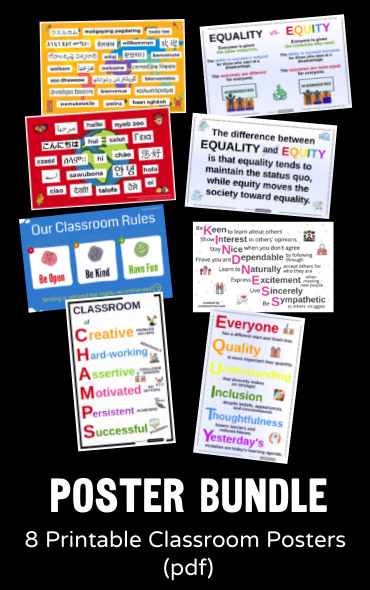
8 Classroom Posters
Sale Price: $5.00 Original Price: $8.00

8 digital, printable, size 11 x 17 classroom posters:

  1. “Welcome” in multiple languages

  2. “Hi” in multiple languages

  3. Three Equity posters

  4. Classroom Rules: Be Open, Be Kind, Have Fun

  5. “Classroom of Champs”

  6. “Kindness”

ON SALE until August 30th.

10 Ideas For Increasing Your Creativity

A bowl of cereal with gummy bears in it is creative twist on traditional breakfast. Being open to playing with your food or, on a bigger scale, playing with the traditional ways of doing things helps us become more creative

Photo courtesy of Gratisography

“To be creative means to be in love with life.”
— Osho

I learned today that velociraptors were turkey-sized and T-Rex topped out at ten miles per hour, which means you don’t have to be Usain Bolt to outrun one. Damn you Hollywood, Jurassic Park, and Steven Spielberg for having me think they were cool.

But my dino disillusionment aside, learning these facts while watching Weird But True with my son gave me a creative way to start this article after over a year of blog silence.

Creativity awakens imagination, spurs innovation, and provides inspiration. But for me, creativity makes work fun. It allows me to see things in new ways and create new ways to teach and help my students learn.

In my twenty years of teaching, I learned that everyone is creative and everyone can take deliberate action to increase their creativity.

Here’s a list of 10 things anyone can do every day to up their creativity.

Learn Something New

It doesn’t matter what you learn. Just learn something you did not know before. Even if the new information you put in your brain is unrelated to the work you do, your brain will find a way to use it. 3 days, or 3 months, or 3 years from now, perhaps in a form of a sudden spark of genius or a slow methodical approach - you will apply this learning to something. Consciously or without you knowing, the info you learn today will make something you’re creating in the future a bit more creative; a bit better.

Learn something new every day and you will increase your chances of coming up with new and innovative ways of doing things and creating more impactful and fulfilling work.

Listen To A Podcast

This should be easy if you commute to work. Connect your phone to your car’s stereo or use the phone/headphones combo on your public trans ride to work and voila - instant mobile university! Of course, shock-jock garbage doesn’t count, because garbage in - garbage out.

Good podcasts are not hard to find. Some of my faves are Hidden Brain, Akimbo, The Knowledge Project, Inquiring Minds, TED Radio Hour, and The James Altucher Show. Be ready to pause a podcast, so you can start writing down ideas. You can just use your phone’s note app or carry a small notebook. If driving, dictate the epiphanies and ideas your mind generates while listening into your phone’s note app.

Read

As a kid growing up in Poland, I was great at devouring books. Now, I suck at reading books. I wish I was better, but I’m really bad at books. I own a lot of them. I still buy books and promise myself I will read them. I still may, but for now, I am happy reading bits and pieces of whole books. A chapter here and a chapter there is my usual fare that helps me prepare and keeps me away from brain numbing solitaire.

The books I frequently keep coming back to and extract information from are Brain Rules, Atomic Habits, Ultralearning, and Make It Stick.

I still read though. Every day. It’s just that I mostly read from illuminated screens. And it’s illuminating. It gives me ideas on how to learn faster, teach better, tweak lessons, come up with topics for articles I might write, potential side hustles, and other unexpected things. I read on my phone and laptop. I use Feedly to aggregate new education, teaching, and science blogs and articles. My go tos are NPR, TED Blog, TED Education, John Spencer, The Cult of Pedagogy, and Getting Smart.

If you have close to zero time to read, use Blinkist. The app creators pull the meat out of the best books out there, summarize the gists, and provide the takeaways in less-than-ten-minute text or audio (you choose) packages, designed for the busiest of the busy bees of the world so they can keep learning and get better at creating.

Write

Listen, read, learn, and then write about it. Write it for an audience of one (you) or one hundred - it doesn’t matter. The best thing about writing about what you’re learning is not the passing of what you learned on to others, which is very gratifying, but the slowing down of your thought stream , which in turn allows for deeper reflection and the forming of new understandings. Writing then, is a way to reprocess that which you’re learning, is creative by default, and stimulates new creativity.

Flip The Script

Take a perspective you disagree with and find arguments for it. Look for things or people you disagree with and come up with positive qualities they have. Maybe you hate mosquitos. I mean they suck. Literally… But maybe they are necessary, because geckos eat them. And geckos are cool. Remember the one from the commercials? It’s one cool gecko.

Think of a recent argument you had with someone. Perhaps it did not come to blows, but you vehemently disagreed. Think back to some of the arguments your counterpart had and try to find a few pros for the views you so passionately disagreed with. I’m not telling you to start agreeing. I’m telling you to see what you have not been able to before. Flipping the script and doing it often is the essence of creativity.

Converse

Talk to the woman standing behind you in the insanely long REI line.

Ask the kid next to you if he knows what happened to all the missing Jersey Mike’s sandwich numbers. I mean, how the hell do you go from three to eighty three? Does big Mike have a love-hate relationship with middle numbers?

Ask the guy browsing the same Trader Joe’s beer aisle if he also wanted an instant refund after buying and trying that awful seasonal pumpkin gourd ale beer impostor thingy. I bought six. Big mistake. It’s Halloween special suckiness still haunts me.

But do not talk about the weather. Fuck weather. There’s too much weather talk. Just don’t. Pick a different topic and go.

Create

I love John Spencer’s creativity. But I hate him for this intro:

My goal is simple. I want to make something each day. Sometimes I make things. Sometimes I make a difference. On a good day, I get to do both. - John Spencer

I hate how perfect it is. I know, I know - perfect is the enemy of good, but still… This should be my bio and I hate that I did not come up with it before he did. I guess I just hate myself. Wait… I don’t! I’m inspired.

Seriously, to be creative, one must create. To become more creative, one must keep creating. Creating something every day, will continue increasing your creativity.

You hate that popcorn ceiling in your basement? Watch some YouTube and remove that shit yourself.

Your kid is bored? Find a PBS Kids project and do it with them.

Create an infographic flyer using Google Draw/Slides or Piktochart for that b-day, holiday, or grad party. It is easier than you think and helluva lot more satisfying than Evite.

Write a poem or rap to explain something to someone. Start small. A few lines, that’s all. If it rhymes, cool. If it don’t, you’re no fool. School others or get schooled.

Or, make up a story.

Make Up Stories

Huh? Am I asking you to lie? You damn straight I am. But it will not make you a bad person. It will make you a more creative one. Just hear me out.

People love stories. From very little, we have been learning how to be good and kind and not assholes from stories. Why stop now? Why not use storytelling to teach our coworkers or help older kids (even the forty-something ones like me) learn?

I recently told my chemistry students that I spent one college summer hitchhiking through Europe performing magic tricks dressed as a clown. Then, I poured water into a clear plastic cup, put an index card over it, and flipped it. Boom! The magic (or pressure) of the underlying air kept the card stuck to the mouth of the cup, which kept the water in the cup and not pouring on the victim’s, I mean student volunteer’s head.

Johnny’s head was about two inches below the card. A few students were sad the magic trick didn’t fail…

Then, we talked briefly about gases and gas pressure before proceeding to students performing a bunch of simple experiments that involve gases. There was energy in the room. It was fun telling the story and seeing the students engaged in the activity.

Of course, I hitchhiked through Europe at 19 years old, but I never owned a clown costume or performed street tricks. To spice up the story and the learning build up, I also claimed I made money making balloon animals. Total lie. Clowns scare the crap out of me and I’m too much of an anxious freak to be a street performer. Still, I was glad to muster enough courage to create this learning experience for my students.

Making up stories to represent a concept or to prove a point is far from evil. It’s creative and fun and necessary.

Do Something New

“Do something that scares you every day” has become a cliche line promoted by self help gurus and leadership experts. It’s true that stepping out of your comfort zone can help you level up, but you need not to subject yourself to PTSD inducing experiences to become more creative. You can do simple stuff like ordering a different-than-usual Starbucks drink or taking an alternative route back from work tomorrow - something to change things up.

If you typically eat lunch at your work desk, check out the cafeteria on Monday. If you always take the elevator, take the stairs on Tuesday. Wake up 10 minutes earlier on Wednesday and enjoy the view from your kitchen window while paying attention to every detail you have failed to see before. Wear two different socks to work on Thursday and see if anyone notices and points it out, because if they do, you can explain why and ask what they think about it. If they don’t, smirk every time your mind reminds you of your dirty little secret. And on Friday? Friday’s all you, but you get the idea. Keep it creative.

Do this sort of thing frequently to create many new experiences, because no matter how small, new experiences will lead to new outlooks and these in turn will lead to newfound creativity. It’ll sneak up on you out of nowhere; rattlesnake-in-a-desert-like.

Reinvent The Wheel, But…

Don’t take a wheel and use it as a wheel. Use it as something else. Create a new game in which players roll a wheel down the hill to kill Bill (the human-shaped wooden tower). But make sure Quentin T. is cool with it before you name it that or else you might get sued.

Take an idea from one field and use it in yours. Maybe you saw someone from a different department in your school or place of work use a neat strategy to do something? Could you repurpose it and use in yours? Could you reinvent it?

Whenever you see something neat, something seemingly unrelated, think How can I use it?

Then, use it.

Reflect and remake

Failures increase creativity if you reflect on them, learn from them, apply this learning to improve upon the original ideas, and try again. Mr. Dennis, the most epic teacher ever who happened to be my 10th grade history teacher, always talked about the first Toyota coming off the boat in the 70s, not making it up the first hill it encountered, and going right back to Japan with that whole first shipment of US-bound Toyotas.

I did zero fact checking on this and maybe Mr. D was straight up lying, but the moral of the story was that when the Toyota came back much improved the next year, it proceeded to grab a major share of the US market it still holds today. So while failure may be embarrassing, it forces new solutions, which require creativity and lead to success.

So fail, because mistakes is what it takes. Then, reflect and remake your failures.

Up your creativity through this iterative process.

Move Toward Creativity

If sitting seems wrong to you sometimes, you’re right. The insidious act of sitting restricts blood circulation and reduces the flow of the beautiful, beneficial, and creativity-inducing oxygen to your brain.

So take fluffy for a longer walk. Opt for the stairs not the mall escalator. Get an adjustable standing desk and alternate between sitting and standing while working. Take your kid to the park and swing on the swings or kick/throw/hit a ball. If you despise exercise, biking is easier. Don’t drive to the nearby grocery store. Put on a backpack and walk.

Body movement increases blood movement, which increases oxygen movement, which increases the movement of creative out-of-the-blue thoughts in your noggin. This is called divergent thinking and science proves divergent creativity is where it’s at.

Oops… This was 12. Oh well. Hope you found them swell.

Key Takeaways

  1. Creativity is a skill we can continue getting better at.

  2. Becoming more creative involves deliberate daily practice. Learning, reflecting, and remaking are a few ways to stimulate creativity.

  3. Being open to new experiences, forcing yourself to look at things from multiple view points, incorporating more physical movement, and creating new things will make you more creative faster.


If you enjoyed this post or found it helpful consider signing up for my newsletter below.

Hi! I'm Oskar.

I teach, write, and create to make teaching easier and learning simpler.

BOOKS