
Mindful EdTech: What I Learned And What I’m Skeptical Of After Reading The Digital Delusion
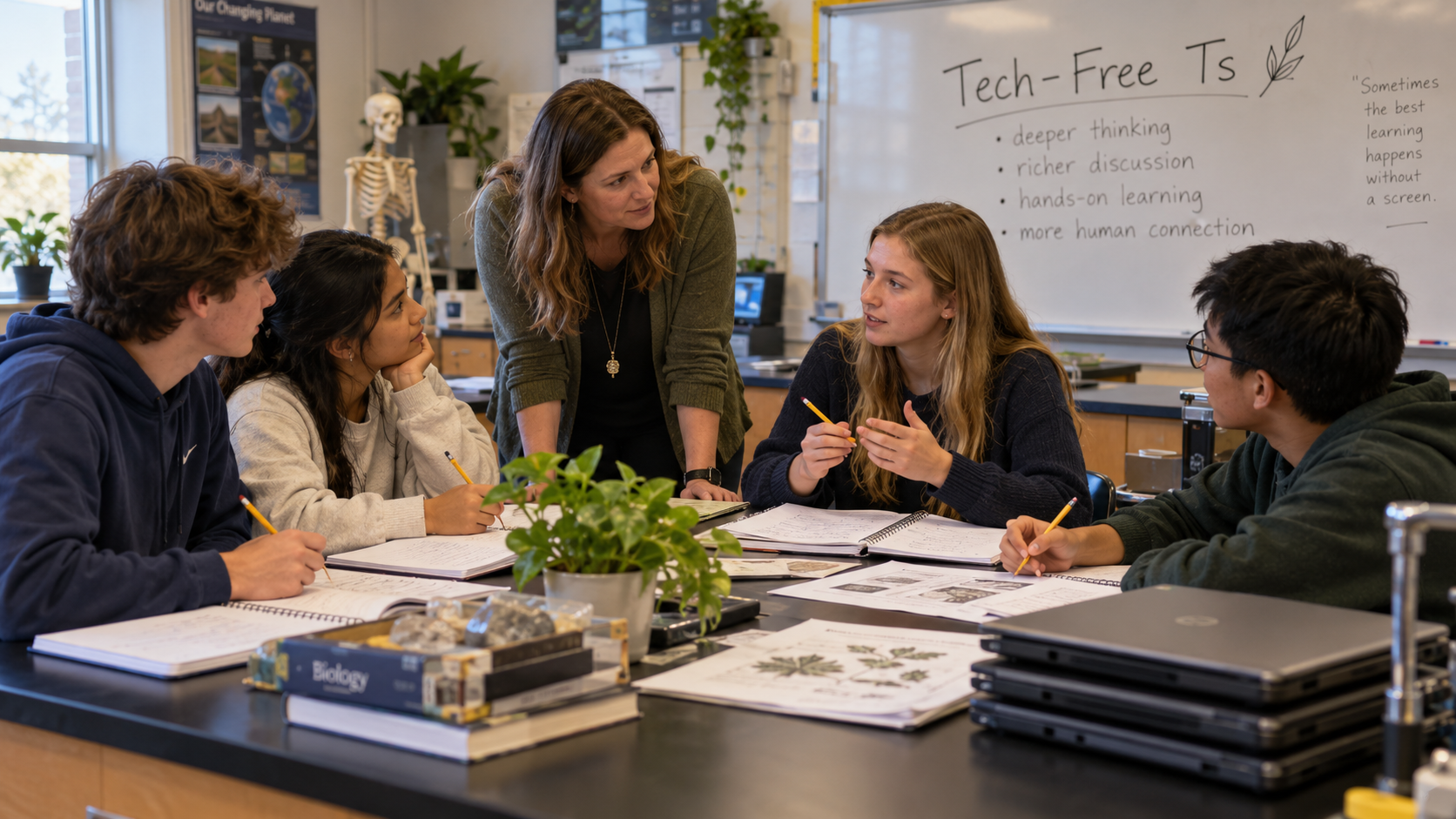
Tech-Free Ts: Two days a week without screens. More discussion, deeper thinking, and a reminder that learning happens in the brain, not on the device.
I'm about to do something that might send a few of my students into a state of panic.
Twice a week, I'm going to ask them to learn without a screen.
No Chromebooks. No phones. No digital this or that. Just students, their brains, and the occasionally terrifying prospect of having to think without consulting Google or their friendly digital-neighborhood AI.
I'm calling it Tech-Free Ts: Tech-Free Tuesdays and Tech-Free Thursdays—not a classroom revolution, but a big change nonetheless.
The idea came after reading The Digital Delusion and discussing it with my chemistry brethren. The book, written by a cognitive scientist Jared Cooney Horvath, challenges many of the assumptions we've been making about technology and learning, particularly the widespread belief that putting students in front of screens makes education better, more engaging, or more effective.
It really got me thinking…
Over the years, school districts have invested enormous amounts of money, time, and PD time into bringing technology into classrooms. We've learned new platforms, adopted countless apps, and turned activities that once required paper and pencil into ones that call for a Chromebook, a decent internet connection, and an occasional visit to the den, because the IT dude is there and a student’s laptop poo-pooed itself.
But all that aside, a question now lingers in my mind—one I probably should have been asking myself before and more often: Are my students actually learning more, or are they just doing more stuff on screens?
Not suggesting technology is the enemy—I use it regularly and some of my favorite classroom activities would be hard without it. I also remain unconvinced that every argument in The Digital Delusion should be accepted at face value.
For one, correlation doesn't equal causation. Just because student achievement has declined while educational technology use has increased doesn't mean one caused the other. Perhaps it’s the ever-increasing and often-annoying smart phone use that has a bigger impact on learning or lack thereof.
The author also lumps different types of technology uses together, without always distinguishing between passive screen time and activities that require meaningful thinking.
Additionally, author's interpretation of research—which is what likely drives book sales—has been questioned.
But this is precisely why I'm interested in trying Tech-Free Ts in my own classroom. Rather than simply accepting the book's conclusions, I want to see what happens when screens disappear twice a week.
Will students focus better, think more deeply, and remember more? Or will I discover that the screens weren't really the problem in the first place? It's hardly a controlled scientific experiment, but it should give me something interesting to look at and think about.
But the book, and more importantly, our discussions about it, reminded me of something I've believed for a long time: Learning doesn't happen because students are busy, entertained, or clicking on things. It happens because their brains are doing the work.
And sometimes, the best way to get those brains working might be to close the laptops.
So Now Then…
Reading Digital Delusion and discussing it with colleagues encouraged me to reconsider how technology affects student attention, memory, and deeper learning. One key takeaway was that technology does not automatically improve learning. In some cases, constant digital distractions and passive screen-based activities can interfere with students' ability to focus, process information, and retain knowledge.
Our discussions emphasized the importance of using technology intentionally rather than simply because it is available. We also critically examined the author's claims, recognizing that how technology is used matters more than screen time alone.
As a result, I plan to implement "Tech-Free Ts"—Tuesdays and Thursdays, when students will engage in learning without any digital devices, with an emphasis on discussion, retrieval practice, problem-solving, and hands-on activities. I also plan to evaluate digital assignments more carefully to ensure they promote active thinking rather than passive consumption.
Ultimately, this experience reinforced my belief that effective teaching should begin with how students learn, not with the tech.
For 100+ ready-to-use activities that improve student memory of class content and help them engage in deeper processing, check out my book Spark. Wire. Fire. on Amazon.
BOOKS & TOOLS
Flashcards are okay but there's a better way. The Memory (or Mind) Palace Method is a powerful learning and memorization technique that when mastered allows a student to remember 10, 20, or even 30 vocabulary words or concepts (definitions included) with ease.
And, they actually remember what they learned using memory palaces! This series of lessons (which can be used as classroom handouts) walks students through creating their first memory palace, filling it with information they need to learn, and using it to train their memories. It also contains short readings, a video lesson, memory palace examples, and practice drills.
Fair Use
Feel free to use with your students. Please do not share it with other parties or use for profit. All rights by crushschool.com.
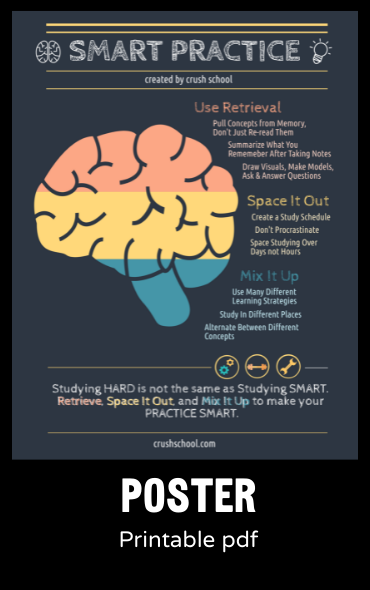
Retrieval Practice, Spaced Practice, and Mixed Practice (Interleaving).
Studying Hard is not the same as Studying Smart. This High Quality printable, digital (PNG) poster is a constant classroom reminder of best practices for teachers and learning the smart way for students.

In this classroom Mistakes are Expected, Respected, Inspected, Corrected!
Learned helplessness is a result of years of conditioning that mistakes are bad for learning. Nothing is further from the truth - some of the most powerful life lessons come from making mistakes, reflecting on them, and growing as a result.
This is a PNG Poster you can print and display in your classroom to encourage a culture of risk-taking and learning from mistakes.
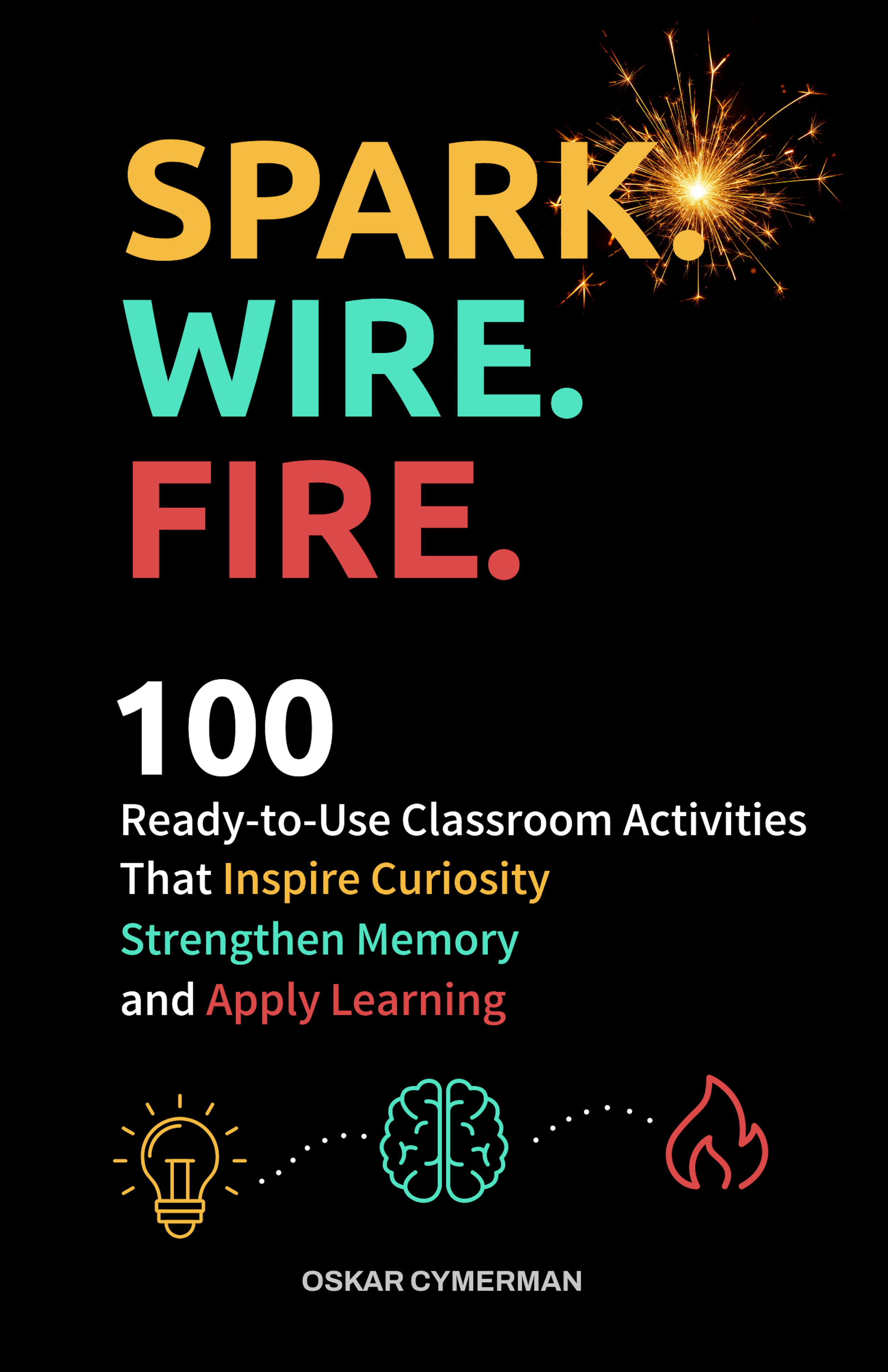
NEW BOOK
100+ practical, brain-based activities teachers can use right away with or without technology.