CRUSH SCHOOL

I blog on Brain-Based Learning, Metacognition, EdTech, and Social-Emotional Learning. I am the author of the Crush School Series of Books, which help students understand how their brains process information and learn. I also wrote The Power of Three: How to Simplify Your Life to Amplify Your Personal and Professional Success, but be warned that it's meant for adults who want to thrive and are comfortable with four letter words.

The Tragedy of Performance Over Learning (Act I)
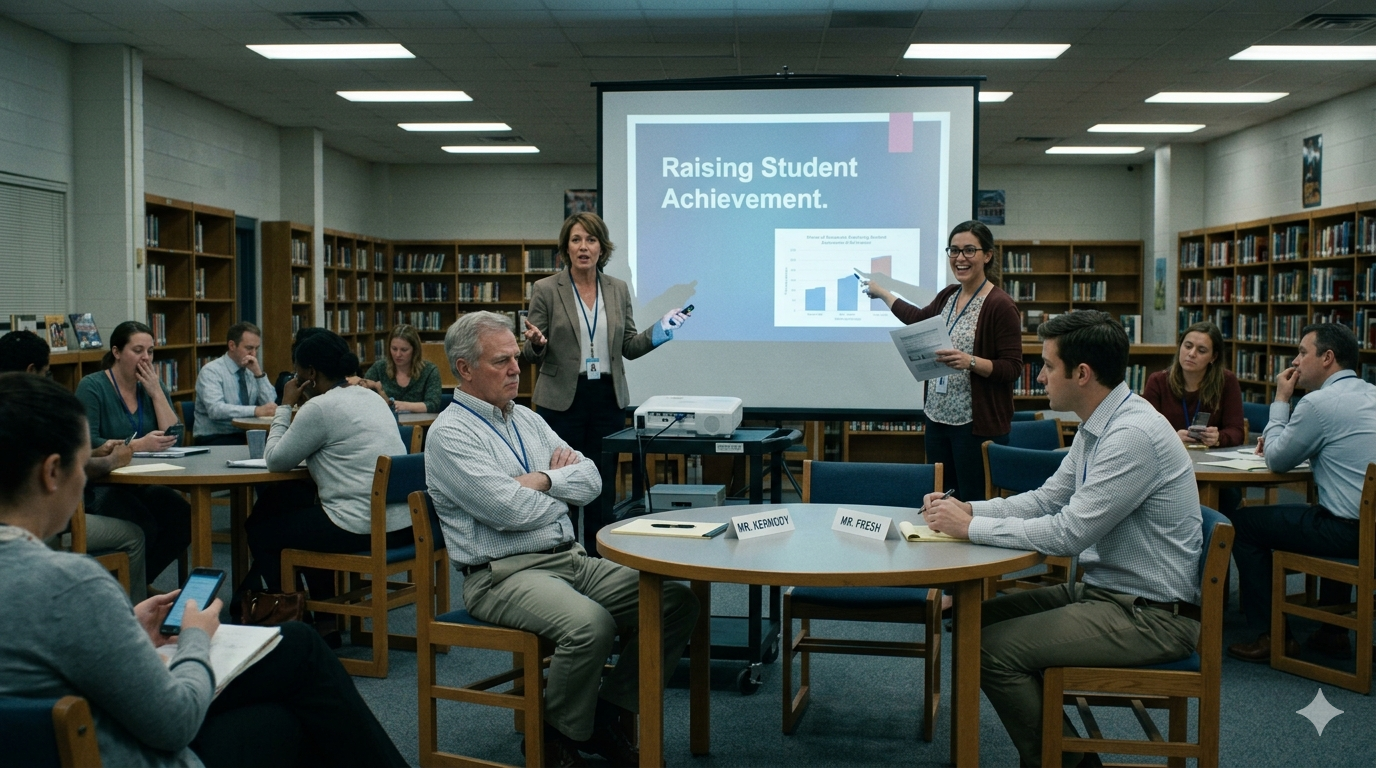
Act I. Scene I. — The Staff Meeting

(The setting: A fluorescent-lit high school library, projector humming quietly, displaying a “Raising Student Achievement” slide. Teachers sit in small groups, minds somewhere between the beach and denial.)

Characters:

  • PRINCIPAL KIM, mid-40s, energetic buzzword user

  • MR. KERMODY, a sarcastic teacher nearing retirement

  • MR. FRESH, young teacher pursuing his Master’s in Educational Leadership 

  • MS. LEHIGH, data specialist overly enthusiastic about tables and graphs

PRINCIPAL KIM: Welcome back everyone! I hope you are well rested and just as excited as I am to keep making our school great for our students! Because the data is in and our reading proficiency scores went up by 1.5% and math readiness increased by 1.1%! Today is all about deep diving into the test data and planning how we can level up even more! Take us through it Ms. Lehigh!

MS. LEHIGH: Alright, team, our state’s alternative pay system, Q Comp, is once again allowing teachers to earn extra pay for increasing our standardized test scores. Earlier, our school's administrative team met and decided to set a new goal of two percent increase in math and reading. We got this!

MR. KERMODY:  Why stop there? Let’s just shoot for a hundred. Really give them a show.

MR. FRESH: Technically, two percent is realistic if we implement new strategies like targeted formative assessments and tiered intervention cycles…

MR. KERMODY (interrupting): English, please.

MS. LEHIGH: If we disaggregate the subgroups, we’ll see our biggest gap is still students in the ‘approaching proficiency’ range. If we move just twenty seven of them to ‘meets,’ we can hit the target.

MR. KERMODY: So, we’re not teaching kids. We’re moving dots on a chart. Got it.

PRINCIPAL KIM: Come on, Kermody. You know data tells our story.

MR. KERMODY: If data told our story, it’d be a tragedy.

(MR. FRESH leans forward, defensive.)

MR. FRESH: We can’t just dismiss the data. It’s how we measure success.

MR. KERMODY: And by “success,” you mean how well they can eliminate wrong answers under pressure?

PRINCIPAL KIM: Alright, alright, let’s stay positive. We’re setting a goal of two percent growth. Now get in your PLCs and make it happen people.

MR. KERMODY (under his breath): Two percent increase in bullshit, coming right up.

(The projector blinks to black. The teachers shuffle out.)

End of Act I.


I hope you enjoyed this excerpt from my upcoming book Unschooling School: Teaching Agency and Free Thinking in a System Built for Compliance and Conformity—scheduled for release in late August 2026.

In it, I am experimenting with narrative nonfiction and elements of playwriting such as the scene above. But most of the book is filled with strategies that make the classroom more game-changing, because we all know schools at large—for all the wrong reasons—are taking their time with that.

BOOKS & TOOLS

EQUITY Poster
$1.50

Equity-Promoting Classroom Poster. What does EQUITY in the classroom look like?

  • Everyone has a different start and finish line

  • Quality is more important that quantity

  • Understanding that diversity makes us stronger

  • Inclusion despite beliefs, appearances, and circumstances

  • Thoughtfulness lowers barriers and reduces biases

  • Yesterday's mistakes are today's learning agenda

You can teach your students about equity and make it a daily classroom practice using this inspirational poster, which also includes images that accompany the equity description. You can discuss each letter characteristic with your students as a way of introducing your inclusive classroom and display it prominently as a reminder that diversity makes the classroom community stronger.
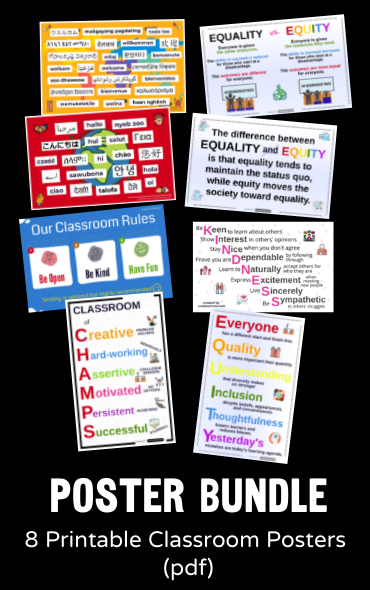
Classroom Posters Bundle of 8
Sale Price: $5.00 Original Price: $8.00

8 digital, printable, size 11 x 17 classroom posters:

  1. “Welcome” in multiple languages

  2. “Hi” in multiple languages

  3. Three Equity posters

  4. Classroom Rules: Be Open, Be Kind, Have Fun

  5. “Classroom of Champs”

  6. “Kindness”

ON SALE until August 30th.

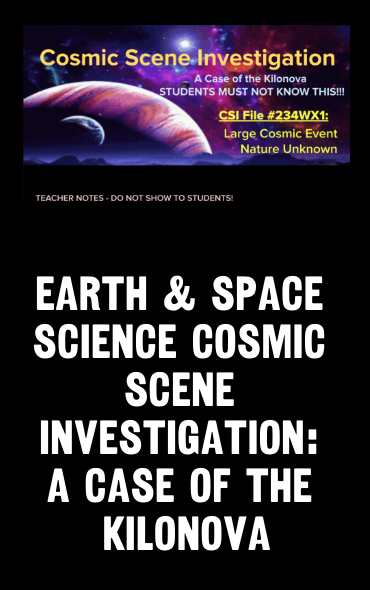
[Earth & Space Science] Cosmic Scene Investigation: A Case of the Kilonova
$4.00

In this 50 - 70 minute, CSI-style investigation, designed for a high school Earth and Space Science classroom, students investigate a space phenomenon of kilonova. The investigation is set up so students do not know a kilonova occurred. Rather, they are given five case files on a major phenomenon that occurred in a fictional galaxy V57-1. The case files contain information they will have to interpret and research online to first understand the clues each file contains to later be able to arrive at the correct conclusion that a kilonova, caused by a collision and merging of two neutron stars has taken place.

Why and how does this learning strategy work?

Rote memorization out; seeking answers and deeper learning in.

The CSI-style approach to learning is fun, engaging, and motivating for learners, because they are called upon, thus challenged to find answers based on evidence rather than given a list of facts to study about a topic; space in this case.

When students are allowed to act as investigators, they develop skills such as analyzing evidence from various sources to understand the world and how it works. They not only hone and apply Science and Engineering Practices (SEPs), but also learn Earth and Space Science content while investigating a real-world (or real-space) phenomenon, which is what the Next Generation Science Standards (NGSS) call for.

Student Learning and Performance Objectives:

  1. Analyze scientific evidence to arrive at a correct conclusion about the cosmic event that occurred in a distant galaxy. Synthesize multi-messenger astronomical evidence to draw conclusions about complex cosmic phenomena.

  2. Understand the role of various astronomical instruments in space exploration.

  3. Describe different types of data collected by these instruments.

  4. Explain how element emission spectra are used to identify space objects and phenomena.

What's included:

  1. 13 slides that introduce, explain, and guide the teacher and students

  2. Detailed teacher notes on prep, main lesson, and follow up activities

  3. A link to a student-only slideshow.

  4. Detailed student directions.

  5. 5 case files that contain data collected about the event for students to investigate

  6. Teacher answer key describing what conclusions students should make from each case file.

  7. Report File - guided Google Doc for students to fill out as they take note on each case file. data and generate their conclusions

  8. Student Learning and Performance Objectives

  9. Debriefing activity and key talking points

  10. Follow up discussion questions and a next day bell ringer
[Earth Science] Terraforming Mars: The Red Planet "Shark Tank" Innovation Challenge
$4.00

Are your students tired of just reading about Earth? Do they gaze longingly at the night sky, dreaming of a future beyond textbook pages? Excellent! Because today, we're not just learning about science; we're making science. We're launching them into the ultimate entrepreneurial challenge: Terraforming Mars: The Red Planet "Shark Tank" Innovation Challenge!

Forget your quaint little recycling programs. We're talking about taking a dusty, desolate rock and turning it into a vacation spot for humanity.

This isn't just a project; it's a desperate plea from the future (and a cunning way to keep them engaged). Your students will become "Terraforming Tech Startups," armed with nothing but their wits, some internet access, and a burgeoning understanding of how Earth actually works. Because, let's be honest, trying to make Mars habitable without understanding our own planet's life support systems is like trying to bake a cake without knowing what flour is.

Prepare for an explosion of creativity (hopefully not literal, on Mars or in your classroom) as they grapple with the fundamental cycles that make life possible. The competitive drive to secure that "virtual investment" (and bragging rights) will channel all their boundless energy into productive, scientific output. Just try to keep the "mad scientist" cackles to a minimum.

Student Learning and Performance Objectives:

  1. Demonstrate understanding of the Carbon, Water, Nitrogen, and Oxygen cycles.

  2. Apply your knowledge of the principles of these cycles to design an ecosystem on a different planet (e.g. Mars).

  3. Illustrate how biogeochemical cycles support life in a closed system (Earth, Mars colony, dome ecosystem etc.).

  4. Pitch your solutions to practice collaboration, critical thinking, and creative problem-solving/design.

What's included:

  1. 20 slides that introduce, explain, and guide the teacher and students

  2. Introductory popcorn reading activity

  3. Research Guide (G-doc link): Includes Note-taking space and links to reputable websites for students to use.

  4. Project timeline and detailed tasks for each day

  5. Group Roles explained in detail

  6. Detailed teacher notes on prep, main lesson, and best practices

  7. List of materials

  8. Student Learning and Performance Objectives

  9. Grading Rubric and Peer Evaluation Form

Climate Change Debate: The Earth Science Intellectual Thunderdome
$4.00

In this 3- to 4-day lesson, designed for a high school Earth and Space Science classroom, student groups are assigned and investigate 4 leading solutions to the climate change crisis our planet is experiencing. Then, they are called upon to debate against each other to try to convince others that their solution is the most viable and provide counterarguments against other solutions. It’s an intellectual thunderdome in which students are encouraged to use science to attacks each others points of view on climate change but not character.

Why and how does this learning strategy work?

Rote memorization out; seeking answers and deeper learning in.

The debate-style approach to learning is engaging and motivating for learners, because they are challenged to use real evidence and their wits to outmaneuver their opposition.

Not only do they act as investigators, developing communication, collaboration, and argumentation skills but they learn about viable solutions to the climate change conundrum we all find ourselves in. They learn Earth and Space Science content while investigating and debating solutions to a real-world phenomenon, which is what the Next Generation Science Standards (NGSS) call for.

Student Learning and Performance Objectives:

  1. Research multiple, complex climate change solutions to discover that the world is more complicated than a single TikTok trend.

  2. Articulate scientific arguments with actual evidence.

  3. Listen to opposing viewpoints, to hone "social awareness" skills.

  4. Realize that climate change solutions are multi-faceted, messy, and require more than just good vibes.

  5. Describe and support with, not mere belief but actual evidence, the leading climate solutions proposed by, not the coven of online witches but the scientific community.

What's included:

  1. 24 slides that introduce, explain, and guide the teacher and students

  2. Detailed teacher notes on prep, main lesson, and follow up activities

  3. General Lesson flow for teacher to follow to make it all seamless

  4. A short and funny “hook” to increase student buy in

  5. Detailed student directions

  6. A list (research starter pack) of links to legit, scientific websites for students to use.

  7. Group roles (team jobs) with descriptions of what each entails.

  8. 4 climate change solutions to assign to 4 different student groups

  9. Student Learning and Performance Objectives

  10. Detailed Grading Rubric to guide students and make assessment easy

  11. Debate Day introduction and format description

  12. Follow up discussion questions (reflection and debrief)

Assume They All Have ADHD

I finally figured it out.

The holy grail of teaching.

Assume all your students have ADHD.

Before you rage, let me be explain.

I’m not trying to be flippant about or dismissive of those who live with Attention Deficit and Hyperactivity Disorder. The struggle is real: it’s extremely hard to stay focused, organized, and in control of your impulses if you have ADHD.

And it’s nearly impossible to navigate systems not designed with ADHD in mind.

This article is not about minimizing. It’s about recognizing.

Today’s classrooms are filled with students whose attention spans are shorter, whose distractions are constant, and whose learning environments must evolve to meet them where they are.

The Attention Span Reality

Whether it’s due to technology, information overload, or bad habits, staying attentive is harder for many students than ever before.

Long lectures lose them. Multi-step directions overwhelm them. Passive learning makes them bored and leaves them behind.

So instead of designing lessons for the ideal student, lets plan for the real one that sits in front of us.

Let’s assume every student needs clarity, structure, movement, and engagement to succeed.

The Benefits of Assuming Widespread ADHD

1. Shortening Attention Spans Are Acknowledged, Not Ignored.

In planning for shorter attention windows, we can naturally build in less-stressful pacing, more variety, and opportunities for students to reset their focus.

2. Universal Support

Instead of reserving accommodations for a few, we normalize strategies that help everyone: chunking tasks, using visuals, offering flexibility, and giving more frequent feedback.

3. Engagement Becomes The Priority, Not Just Compliance.

Students aren’t just expected to sit and get—they’re expected to do, interact, and think.

4. Struggling Students Stop Feeling Singled Out.

When supports for all are built into your classroom, no one is “the kid who needs extra help.” It’s just how learning happens.

Strategies That Actually Work

Talk little, Have them do A Lot

If you’re talking for more than 10 minutes straight, you’re losing students. Break instruction into short bursts and follow each with an active task—discussion, writing, problem-solving, or creation.

Better yet, try to keep your talking to the first 10 minutes. Then, let your students collaborate and create. This allows you to walk from group to group and help, probe, challenge, and give feedback.

Chunk everything

Directions, assignments, readings. Break them into smaller, manageable parts. Give one step at a time when possible.

Use Short Videos

Find or record quick 2–minute videos to teach or review key concepts. Allow students to view and revisit them at their own pace and place.

Make movement Mandatory, Not Forbidden

Stand-and-share, gallery walks, quick partner switches, or physical activity brain breaks, because even high schoolers find air punching their fears helpful. Oh, and movement resets attention.

Make Objectives and Expectations Visible

Put instructions where students can see them. Model examples. Show what success looks like instead of just talking about it.

Use timers and clear time limits

Short, defined work periods create urgency and focus and help avoid the free time-induced drifting.

Frequent check-ins over big assessments

Quick formative checks—exit tickets, polls, short reflections, quick drawings (my fave)—keep students accountable and give you real-time feedback. You can still have a big assessment at the end of the unit, while practicing for it with these low-stakes activities.

Give Them choices

Choice increases ownership. Let students pick between formats, topics, or ways to demonstrate understanding.

Normalize re-engagement

Instead of punishing distraction, build routines that help students get back on track quickly and without shame. If you’re not comfortable with call and response, play a sound or song you can condition your students to understand as a “lock in y’all” signal.

Reduce cognitive overload

This one’s big. Too often do we shut our students brains down with too much information all at once.

Simplify.

Fewer and less busy slides. Limit, separate, and replace text with images and speech. When introducing (front-loading) concepts, highlight the big idea, bottom-line the directions and point to the place they live (display or digital), stop talking, and have them figure out the supporting details through the ensuing activity.

The Big Shift

Don’t lower expectations. Remove barriers.

When we assume all students need support with attention, we stop blaming them for disengagement and start designing better learning experiences. The result isn’t just better behavior—it’s authentic participation, deeper understanding, and more equitable outcomes.

Assuming they all have ADHD isn’t a diss or diagnosis. It’s a design principle.

And it might just be the mindset shift that makes modern classrooms work.


Thanks for reading my thoughts! I hope they help you in your teaching game and bringing out the best in your students. Check out my shop if you need some science teaching help or swag.

And, if you enjoy reading my thoughts and science-based strategies, stay in touch to get updates on my upcoming book Unschooling School—scheduled for release in late August 2026.


BOOKS & TOOLS

EQUITY Poster
$1.50

Equity-Promoting Classroom Poster. What does EQUITY in the classroom look like?

  • Everyone has a different start and finish line

  • Quality is more important that quantity

  • Understanding that diversity makes us stronger

  • Inclusion despite beliefs, appearances, and circumstances

  • Thoughtfulness lowers barriers and reduces biases

  • Yesterday's mistakes are today's learning agenda

You can teach your students about equity and make it a daily classroom practice using this inspirational poster, which also includes images that accompany the equity description. You can discuss each letter characteristic with your students as a way of introducing your inclusive classroom and display it prominently as a reminder that diversity makes the classroom community stronger.

 
[Earth Science] Terraforming Mars: The Red Planet "Shark Tank" Innovation Challenge
$4.00

Are your students tired of just reading about Earth? Do they gaze longingly at the night sky, dreaming of a future beyond textbook pages? Excellent! Because today, we're not just learning about science; we're making science. We're launching them into the ultimate entrepreneurial challenge: Terraforming Mars: The Red Planet "Shark Tank" Innovation Challenge!

Forget your quaint little recycling programs. We're talking about taking a dusty, desolate rock and turning it into a vacation spot for humanity.

This isn't just a project; it's a desperate plea from the future (and a cunning way to keep them engaged). Your students will become "Terraforming Tech Startups," armed with nothing but their wits, some internet access, and a burgeoning understanding of how Earth actually works. Because, let's be honest, trying to make Mars habitable without understanding our own planet's life support systems is like trying to bake a cake without knowing what flour is.

Prepare for an explosion of creativity (hopefully not literal, on Mars or in your classroom) as they grapple with the fundamental cycles that make life possible. The competitive drive to secure that "virtual investment" (and bragging rights) will channel all their boundless energy into productive, scientific output. Just try to keep the "mad scientist" cackles to a minimum.

Student Learning and Performance Objectives:

  1. Demonstrate understanding of the Carbon, Water, Nitrogen, and Oxygen cycles.

  2. Apply your knowledge of the principles of these cycles to design an ecosystem on a different planet (e.g. Mars).

  3. Illustrate how biogeochemical cycles support life in a closed system (Earth, Mars colony, dome ecosystem etc.).

  4. Pitch your solutions to practice collaboration, critical thinking, and creative problem-solving/design.

What's included:

  1. 20 slides that introduce, explain, and guide the teacher and students

  2. Introductory popcorn reading activity

  3. Research Guide (G-doc link): Includes Note-taking space and links to reputable websites for students to use.

  4. Project timeline and detailed tasks for each day

  5. Group Roles explained in detail

  6. Detailed teacher notes on prep, main lesson, and best practices

  7. List of materials

  8. Student Learning and Performance Objectives

  9. Grading Rubric and Peer Evaluation Form

 
Classroom Posters Bundle of 8
Sale Price: $5.00 Original Price: $8.00

8 digital, printable, size 11 x 17 classroom posters:

  1. “Welcome” in multiple languages

  2. “Hi” in multiple languages

  3. Three Equity posters

  4. Classroom Rules: Be Open, Be Kind, Have Fun

  5. “Classroom of Champs”

  6. “Kindness”

ON SALE until August 30th.


[Earth & Space Science] Cosmic Scene Investigation: A Case of the Kilonova
$4.00

In this 50 - 70 minute, CSI-style investigation, designed for a high school Earth and Space Science classroom, students investigate a space phenomenon of kilonova. The investigation is set up so students do not know a kilonova occurred. Rather, they are given five case files on a major phenomenon that occurred in a fictional galaxy V57-1. The case files contain information they will have to interpret and research online to first understand the clues each file contains to later be able to arrive at the correct conclusion that a kilonova, caused by a collision and merging of two neutron stars has taken place.

Why and how does this learning strategy work?

Rote memorization out; seeking answers and deeper learning in.

The CSI-style approach to learning is fun, engaging, and motivating for learners, because they are called upon, thus challenged to find answers based on evidence rather than given a list of facts to study about a topic; space in this case.

When students are allowed to act as investigators, they develop skills such as analyzing evidence from various sources to understand the world and how it works. They not only hone and apply Science and Engineering Practices (SEPs), but also learn Earth and Space Science content while investigating a real-world (or real-space) phenomenon, which is what the Next Generation Science Standards (NGSS) call for.

Student Learning and Performance Objectives:

  1. Analyze scientific evidence to arrive at a correct conclusion about the cosmic event that occurred in a distant galaxy. Synthesize multi-messenger astronomical evidence to draw conclusions about complex cosmic phenomena.

  2. Understand the role of various astronomical instruments in space exploration.

  3. Describe different types of data collected by these instruments.

  4. Explain how element emission spectra are used to identify space objects and phenomena.

What's included:

  1. 13 slides that introduce, explain, and guide the teacher and students

  2. Detailed teacher notes on prep, main lesson, and follow up activities

  3. A link to a student-only slideshow.

  4. Detailed student directions.

  5. 5 case files that contain data collected about the event for students to investigate

  6. Teacher answer key describing what conclusions students should make from each case file.

  7. Report File - guided Google Doc for students to fill out as they take note on each case file. data and generate their conclusions

  8. Student Learning and Performance Objectives

  9. Debriefing activity and key talking points

  10. Follow up discussion questions and a next day bell ringer

 
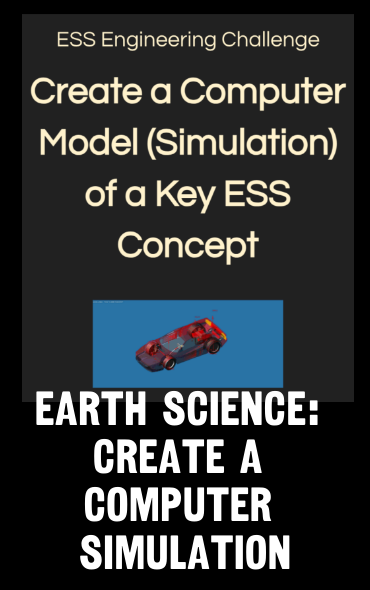
Earth Science: Create a Computer Simulation of an ESS Concept
Sale Price: $2.00 Original Price: $3.00

Save planning time with this introductory, 3-4 day Earth and Space Science engineering challenge in which students create a computer simulation of an Earth Science topic.

Includes 12 detailed slides (PDF and Google Slides link for editing) + detailed teacher directions (last slide) + a BONUS resource: Animation Guide for Google Slides.

The project follows the guidelines set by the Next Generation Science Standards (NGSS) and guides students in using Science and Engineering Practices (SEPs).

Student Performance and Learning Objectives:

  1. Design and create an informative computer simulation.

  2. Use computer animation to simulate a key ESS concept.

  3. Explain the key ideas of an ESS concept of your choice.

 
Climate Change Debate: The Earth Science Intellectual Thunderdome
$4.00

In this 3- to 4-day lesson, designed for a high school Earth and Space Science classroom, student groups are assigned and investigate 4 leading solutions to the climate change crisis our planet is experiencing. Then, they are called upon to debate against each other to try to convince others that their solution is the most viable and provide counterarguments against other solutions. It’s an intellectual thunderdome in which students are encouraged to use science to attacks each others points of view on climate change but not character.

Why and how does this learning strategy work?

Rote memorization out; seeking answers and deeper learning in.

The debate-style approach to learning is engaging and motivating for learners, because they are challenged to use real evidence and their wits to outmaneuver their opposition.

Not only do they act as investigators, developing communication, collaboration, and argumentation skills but they learn about viable solutions to the climate change conundrum we all find ourselves in. They learn Earth and Space Science content while investigating and debating solutions to a real-world phenomenon, which is what the Next Generation Science Standards (NGSS) call for.

Student Learning and Performance Objectives:

  1. Research multiple, complex climate change solutions to discover that the world is more complicated than a single TikTok trend.

  2. Articulate scientific arguments with actual evidence.

  3. Listen to opposing viewpoints, to hone "social awareness" skills.

  4. Realize that climate change solutions are multi-faceted, messy, and require more than just good vibes.

  5. Describe and support with, not mere belief but actual evidence, the leading climate solutions proposed by, not the coven of online witches but the scientific community.

What's included:

  1. 24 slides that introduce, explain, and guide the teacher and students

  2. Detailed teacher notes on prep, main lesson, and follow up activities

  3. General Lesson flow for teacher to follow to make it all seamless

  4. A short and funny “hook” to increase student buy in

  5. Detailed student directions

  6. A list (research starter pack) of links to legit, scientific websites for students to use.

  7. Group roles (team jobs) with descriptions of what each entails.

  8. 4 climate change solutions to assign to 4 different student groups

  9. Student Learning and Performance Objectives

  10. Detailed Grading Rubric to guide students and make assessment easy

  11. Debate Day introduction and format description

  12. Follow up discussion questions (reflection and debrief)

 
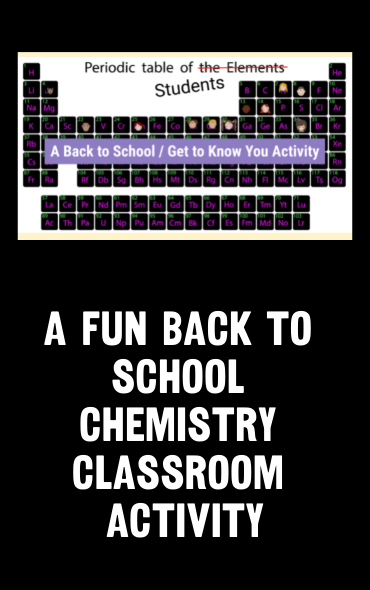
Periodic Table of Students: A Fun Back to School Chemistry Classroom Activity
$3.00

Can teachers make Chemistry less stressful for students?

I am not sure about this one. After all, chemistry gets the bad rep for being hard and a lot of work. But while this may be true, teachers can help make the beginning of the school year less stressful for their students by easing into chemistry using a low pressure, high bang for their buck activity.

In this one- to two- day Back to School activity, designed for a high school Chemistry classroom, students visually share and learn various facts about each other which helps in building a supportive classroom community and, along the way, learn some chemistry lingo and facts that will come in handy later. But, psssst! Don't tell them they are unconsciously learning chemistry. Just let them have fun getting to know each other and their teacher.

Why and how does this learning strategy work?

The main idea is to begin the new school year and your chemistry class low-stress. This benefits both students and teachers as we often find getting back to doing something we are rusty on rough (translation for non-teachers: we are barely holding it together and are ten seconds from crashing out, because we are only about 50% sure we still know how to participate in society at large, let alone teach). So rather than continuously wondering about the 10,000 things that can go wrong (but never will) in the first few days of the new school year, we can combine chemistry, social-emotional learning, and classroom community-building and get to know our students a little bit before we hit them with atoms, bonding, stoichiometry, and Le Chatelier's Principle.

Student Learning and Performance Objectives:

  1. Put together a periodic table of chemistry students in our class.

  2. Create an element box for each student with their characteristics, likes, dislikes etc.

  3. Start building a classroom community.

  4. Allow students to familiarize themselves with each other by learning a few things about their classmates.

What's included:

  1. 10 slides that introduce, explain, and guide the teacher and students through this 2-day activity

  2. An element box/card template for either digital or old school use (you choose)

  3. Teacher notes explaining the purpose, teacher participation, possible extensions, and the side benefits of the activity

  4. Student Learning and Performance Objectives

  5. Materials list

  6. Detailed directions for what information students should include on their card

  7. Directions on how to assemble the classroom periodic table

  8. Follow up discussion questions

Shake Up Your Classroom With "What If" Scenarios

I sometimes wonder if learning science (or any other subject) feels to students like reading a manual for a world, life, or society they’re not actually allowed to touch.

Despite best efforts, the education companies put out textbooks students resist to read and fail to follow.

Even the most "modern" educational materials feel like they were written by evil robots that hate teenagers. Filled with jargon that makes a simple rain cloud sound like a classified government project, they simply suck.

But the learning doesn’t have to suck.

"What If" Scenarios

AKA the art of throwing a metaphorical wrench kids do not have to dodge into your own lesson plan.

Instead of a dry lecture on reservoirs, try dropping something like this on them:

"What if your city’s reservoir is evaporating so fast it looks like a giant puddle, and the mayor just called you to fix it?"

Or for plate tectonics:

"What if a new fault line opened up right under the school’s football field?"

Then, let them figure out the solution to the crisis in a small group.

Turning your classroom into a disaster zone is actually a genius move because…

It Forces Them To Actually Think

When you break the "perfect" system, Google can't save them. Students can't just copy-paste the definition of a levee if the "What If" says the levee just sprouted a leak. Because after they Google what levies are, they have to actually use their brains to figure out why things may be failing and how to patch the holes. It’s less "memorize the diagram" and more "MacGyver the solution."

They’re problem-solving.

And, if the admin asks, they’re SEPeeing, ‘cause NGSS is where it’s at.

It Turns Mistakes Into Skills

In a normal lab, a wrong answer is just a red mark on a paper. In a "What If" scenario, a "wrong" idea is just a prototype that exploded. It gives kids the freedom to be creative and a little bit wild. "Can we cover the canal with giant floating LEGO bricks to stop evaporation?" Maybe not, but at least they're thinking about surface area, sun exposure, and minimizing the heat transfer.

Critical thinking, creativity, collaboration, and communication. Skills.

It Ends The Annoying "When Will I Ever Use This?"

Nothing kills that spirit-wilting and soul-corroding question faster than a crisis, because suddenly, knowing how an aqueduct works isn't just a test question—it's the only way to get water to a thirsty city in their simulation.

It turns them from bored students into the heroes of their own mind-conjured movies.

It Gets Them Arguing In A Good Way

Real science is basically just a bunch of people in a room arguing about the best way to not let a tsunami ruin everyone’s weekend.

The “What If” scenarios force kids to work in teams, propose and defend their often-weird and sometimes crazy ideas, and realize there’s no one right answer to fix all the world’s troubles—just the one that’s the least likely to end in a fire or flood.

So, next time your lesson feels fake, break a dam. Open a rift. Invoke a drought.

Your students will love and thank you for the chaos.


Wanna try? Check out my list of 10 Water Management "What Ifs" and watch your 8th to 10th graders turn into the frantic, brilliant problem-solvers you always knew they were. I also created this $4 project/lesson combo.

My 10 "What If" Scenarios for the Water Management Infrastructure

  1. The Cracked Dam: What if a major dam developed a structural crack during a record-breaking rainstorm? How would you animate the evacuation plan for the town below?

  2. The Dried-Up Aqueduct: What if a mountain range shifted slightly due to an earthquake and broke a main aqueduct? How would a city of millions get water the next morning?

  3. The Levee Choice: What if a storm is so big that a levee is about to break? Do you intentionally flood an empty farm to save a crowded city?

  4. The Reservoir Conflict: What if two different states share one reservoir, but a drought leaves only enough water for one state's crops? Who gets to decide who eats?

  5. The Invasive Canal: What if a new canal connects two rivers, but an invasive species of fish uses it to travel and destroy the local ecosystem? Was the canal worth the cost?

  6. The Hydro-Halt: What if a dam stops producing electricity because the water level is too low? How does a city keep its lights on without burning coal or gas?

  7. The Evaporating Lake: What if a reservoir is losing 20% of its water just to evaporation from the sun? Could you design a "lid" or a floating cover for it?

  8. The Clogged Pipe: What if an aqueduct becomes clogged with trash or minerals? How do engineers clean a pipe that is 10 feet wide and 200 miles long?

  9. The Levee Upgrade: What if a city builds a levee so high that the river can no longer see the sun? Does the river "die" if it is trapped behind concrete walls?

  10. The Canal Shortcut: What if a shipping canal saves boats three weeks of travel time but destroys a sacred historical site to be built? How do you balance money vs. history?


Thanks for reading my thoughts! I hope they help you up your teaching game and bring out the skills in your students.

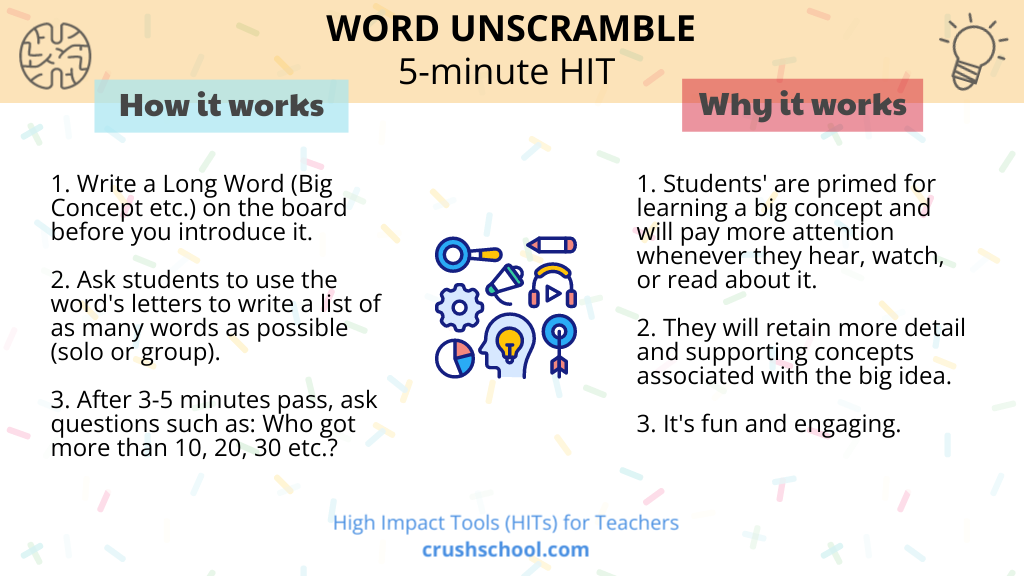
Sign up for my free High Impact Teaching Tools Newsletter to receive easy but powerful micro-lessons (like the “Word Unscramble” below) you can use in your classroom immediately.

Check out my shop if you need some science teaching help or swag.

Hi! I'm Oskar.          I teach, write, and speak to make learning better.

oc pro.png

BOOKS & TOOLS

 
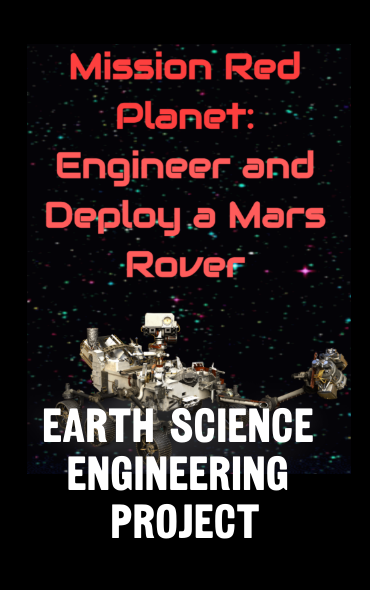
Earth Science: Mission Red Planet (Mars Rover Project)
Sale Price: $3.00 Original Price: $7.00

Save time by not having to plan for a week of solar system instruction and employ your students in authentic learning with this NGSS-focused engineering challenge.

Includes 14 detailed slides (PDF and Google Slides link for editing) + detailed teacher directions (last slide).

Mission Red Planet: Engineer and Deploy a Mars Rover is a challenging 5-day project designed to engage your Earth and Space or engineering students in real-world inquiry and problem solving.

Mission Objectives:

  1. Build the Rover: Design and build a realistic self-propelled space explorer model (Mars rover) that can successfully land and rove. 

  2. Land the Rover: Design and perform a simulated planetary surface landing.

  3. Deploy the Rover: Design and build a system that triggers movement upon (and not before) landing.

  4. Explore the Planet’s Surface: Design and build a system that allows your rover to move at least 15 feet or 5 meters.


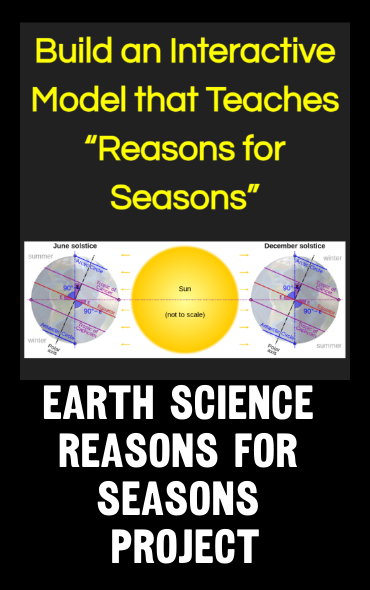
Earth Science Reasons for Seasons Project
Sale Price: $2.00 Original Price: $4.00

Save planning time with this week-long Earth and Space Science engineering lesson. In this 5 day project, Earth and Space Science students build an interactive physical model that shows the “reasons for seasons” and an interactive computer interface that guides the user through the learning experience.

Includes 12 detailed slides (PDF and Google Slides link for editing) + detailed teacher directions (last 2 slides).

The project follows the guidelines set by the Next Generation Science Standards (NGSS) and guides students in using Science and Engineering Practices (SEPs).

Student Performance Objectives:

  1. Design and create a physical model that teaches how solar radiation changes based on latitude and hemisphere.

  2. Create a computer interface that contains directions for using the model and understanding the content. 

Student Learning Objectives:

  1. Explain why the amount of solar energy Earth’s surface receives varies at different latitudes. 

  2. Explain the reasons for seasons on Earth.


Earth Science: Water Resource Management Video Project + Lesson (HS-ESS3)
$4.00

Save planning time with this Earth's Water Unit, 5-day Honors Earth and Space Science Project and Lesson in which students first learn about the importance of water as a resource by creating an animated video on dams, reservoirs, canals, aqueducts, and levees. 

The 4-day video project is followed by a 1-day lesson that improves student understanding of the five water management infrastructure elements mentioned above through examining their pros and cons.

Student Performance Objective: Create an engaging animated video that educates viewers about various aspects of water management, focusing specifically on dams & reservoirs, canals, aqueducts, and levees.

Learning Objective: Explain the importance of dams, reservoirs, canals, aqueducts, and levees, their functioning, benefits, challenges, and their role in sustainable water resource management.

What's included:

  1. 13 slides (Google Slides link for easy use and editing to fit your purposes)

  2. Teacher Guide that explains the lesson flow.

  3. Introductory popcorn reading activity to help students understand the importance and complexity of water management.

  4. Performance and Learning Objectives

  5. Detailed Project Directions / Requirements

  6. Grading Rubric for students to follow and teachers to help with assessment

  7. Links to Example Animated Videos (2)

  8. Tips for Student Success

  9. Follow up activity that includes 12 hypothetical "what If" scenarios related to dams, reservoirs, levees, canals, and aqueducts to increase student understanding and practice problem solving

  10. Link to the "Wheel of Names" to help in topic assignment for small groups

  11. Peer Review / Exit Ticket Document for accountability and assessment

The project follows the guidelines set by the Next Generation Science Standards (NGSS).

2026 Crush School