
Beginning the School Year with NGSS and Phenomenon-Based Learning

The start of a new school year is an opportunity for a science teacher to engage students in science learning that is both fun and effective. Combining the Next Generation Science Standards (NGSS) with phenomenon-based learning (PhenBL) in the right way can create a lively classroom environment where students develop a deep understanding of scientific concepts through real-world explorations.
Here’s how to make it fun and effective.
NGSS and Phenomenon-Based Learning
NGSS focuses on three dimensions: disciplinary core ideas (DCIs), science and engineering practices (SEPs), and crosscutting concepts (CCCs). These standards encourage students to think and work like scientists and engineers, emphasizing inquiry, evidence-based reasoning, and the interconnectedness of scientific concepts.
Phenomenon-based learning involves using observable events or phenomena to anchor learning. Students investigate these phenomena through questioning, experimentation, and critical thinking, leading to a deeper and more relevant understanding of scientific principles.
Steps to Implement NGSS and Phenomenon Based Learning
1. Identify Compelling Phenomena
Start by selecting phenomena that are engaging, relatable, and aligned with the NGSS. Effective phenomena are those that naturally spark curiosity and connect to students’ lives. For instance, exploring why leaves change color in the fall or investigating the effects of plastic pollution on marine life can be excellent starting points.
2. Develop Driving Questions
Formulate open-ended driving questions that guide the inquiry process. These questions should be broad enough to allow for exploration but specific enough to maintain focus. Examples include, “How do plants adapt to different environments?” or “What causes extreme weather events?”
3. Design Coherent Learning Experiences
Plan a series of interconnected lessons and activities that allow students to explore the driving questions. Utilize a mix of hands-on experiments, collaborative projects, and technology-enhanced investigations. Ensure that these experiences integrate the three dimensions of NGSS, promoting a holistic understanding of the content.
4. Encourage Student-Led Inquiry
Empower students to take ownership of their learning by encouraging them to ask questions, design experiments, and present their findings. Facilitate a classroom environment where students feel comfortable taking risks, making mistakes, and learning from them. Provide scaffolding and support as needed, but allow students the freedom to explore and discover.
5. Use Formative Assessments
Incorporate ongoing formative assessments to gauge student understanding and adjust instruction accordingly. Use a variety of assessment methods, such as observations, discussions, quizzes, and student reflections. This approach helps identify misconceptions early and provides opportunities for timely feedback and intervention.
6. Foster a Collaborative Classroom Culture
Create a classroom culture that values collaboration, communication, and respect. Encourage students to work together, share ideas, and construct knowledge collectively. Group work, peer reviews, and class discussions are essential components of a collaborative learning environment.
Check out this classroom poster on collaboration.
7. Reflect and Iterate
At the end of each unit or project, take time to reflect with your students on what worked well and what could be improved. Use this feedback to refine your approach and enhance future learning experiences. Continuous reflection and iteration are key to the successful implementation of NGSS and PBL.
Embrace Phenomena and Watch Your Students Grow
Implementing NGSS with phenomenon-based learning sets the stage for an engaging and effective science classroom. When teachers use interesting phenomena and foster collaborative inquiry into these phenomena, students develop a deeper understanding of concepts and a passion for learning. PhenBL is challenging, exciting, and… a lot of work, but if you embrace this approach, you will see your students thrive and become curious, capable, and confident young scientists.
If you’d like some help getting started with Phenomena-Based Learning in Earth Science, check out the Intro Unit of Study I created and will start using in less than two weeks time. Yikes!
It contains 5 PhenBL Student Projects, will last about 3 weeks, and is on sale through Labor Day.
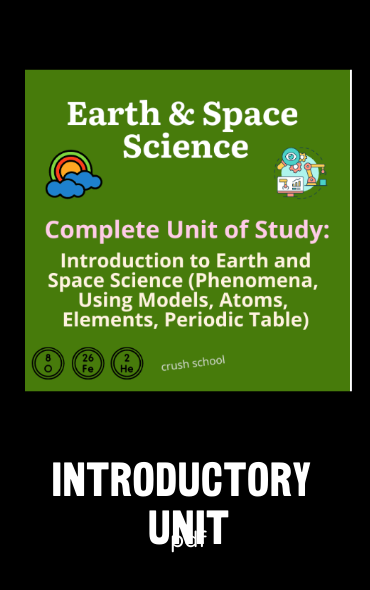
Save 2 - 3 weeks of planning time and start your Earth and Space Science school year off right using NGSS and Phenomenon Based Learning with this “Introduction to Earth and Space Science” Unit that contains 5 relevant and engaging multi-day projects.
BOOKS & TOOLS

Equity-Promoting Classroom Poster. What does EQUITY in the classroom look like?
Everyone has a different start and finish line
Quality is more important that quantity
Understanding that diversity makes us stronger
Inclusion despite beliefs, appearances, and circumstances
Thoughtfulness lowers barriers and reduces biases
Yesterday's mistakes are today's learning agenda
You can teach your students about equity and make it a daily classroom practice using this inspirational poster, which also includes images that accompany the equity description. You can discuss each letter characteristic with your students as a way of introducing your inclusive classroom and display it prominently as a reminder that diversity makes the classroom community stronger.
Save 2 - 3 weeks of planning time and start your Earth and Space Science school year off right using NGSS and Phenomenon Based Learning with this “Introduction to Earth and Space Science” Unit that contains 5 relevant and engaging multi-day projects.
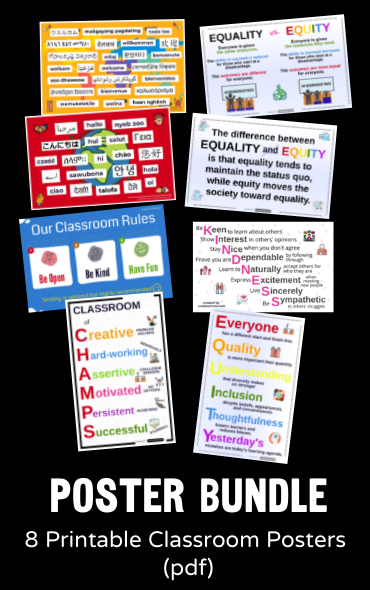
8 digital, printable, size 11 x 17 classroom posters:
“Welcome” in multiple languages
“Hi” in multiple languages
Three Equity posters
Classroom Rules: Be Open, Be Kind, Have Fun
“Classroom of Champs”
“Kindness”
ON SALE until August 30th.


- October 2026 2
- September 2026 6
- August 2026 9
- July 2026 7
- June 2026 9
- May 2026 9
- April 2026 7
- March 2026 1
- December 2025 1
- September 2025 2
- August 2025 5
- July 2025 4
- June 2025 2
- August 2024 2
- July 2024 2
- June 2024 1
- October 2023 1
- September 2023 3
- August 2023 6
- July 2023 6
- July 2022 2
- June 2022 1
- November 2020 3
- October 2020 3
- April 2020 1
- March 2020 5
- July 2019 1
- June 2019 1
- April 2019 1
- January 2019 1
- November 2018 3
- October 2018 2
- September 2018 1
- August 2018 7
- July 2018 11
- June 2018 4
- May 2018 5
- April 2018 2
- March 2018 4
- February 2018 5
- January 2018 3
- December 2017 1
- November 2017 5
- October 2017 7
- September 2017 6
- August 2017 5
- July 2017 3
- June 2017 10
- May 2017 7
- April 2017 7
- March 2017 15
- February 2017 12
- January 2017 13
- December 2016 15
- November 2016 8
- October 2016 7
- September 2016 12
- August 2016 14
- July 2016 10
- June 2016 13
- May 2016 10
- April 2016 8
- March 2016 5
- February 2016 7
- January 2016 6
- December 2015 5
- November 2015 8
- October 2015 2