
The Problem-Solving Classroom: Creating Critical Thinkers of Tomorrow
In a rapidly evolving world, the ability to solve complex problems is more crucial than ever before. Because of this, teachers’ responsibility extends beyond imparting knowledge; we must equip our students with essential life skills, and problem-solving is at the forefront. This blog post will delve into the significance of teaching problem-solving skills and provide examples of activities that teachers can implement to nurture this critical skill in their students.
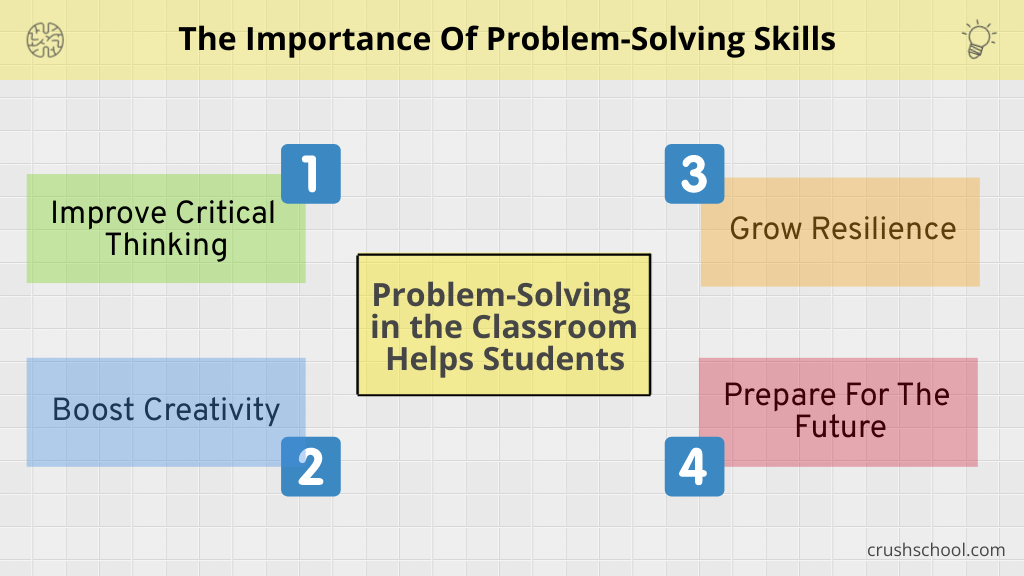
The Importance of Problem-Solving Skills
Problem-solving is a multifaceted skill that benefits students in various aspects of their lives, from academic success to personal and professional growth. Let’s take a look at why teaching problem-solving skills is of paramount importance.
Developing Critical Thinking
Problem-solving encourages students to think critically and analytically. It requires them to assess a situation, identify the problem, and develop a systematic approach to find a solution. These cognitive processes foster intellectual growth and curiosity.
Growing Resilience
Life is full of challenges and setbacks. Teaching problem-solving equips students with the resilience to face difficulties head-on, adapt to change, and persevere through obstacles.
Boosting Creativity
Problem-solving often demands thinking outside the box. When students encounter diverse problems, they learn to generate creative solutions and apply their creativity to various aspects of their personal and professional lives.
Preparing for the Future
In the age of automation and artificial intelligence, problem-solving skills are highly valued by employers. Students with strong problem-solving abilities are better equipped for the job market and future career success.
Activities to Teach Problem-Solving Skills
Problem-solving is an important skill, but we already knew that. Let's explore some activities teachers can use to help students develop better problem-solving.
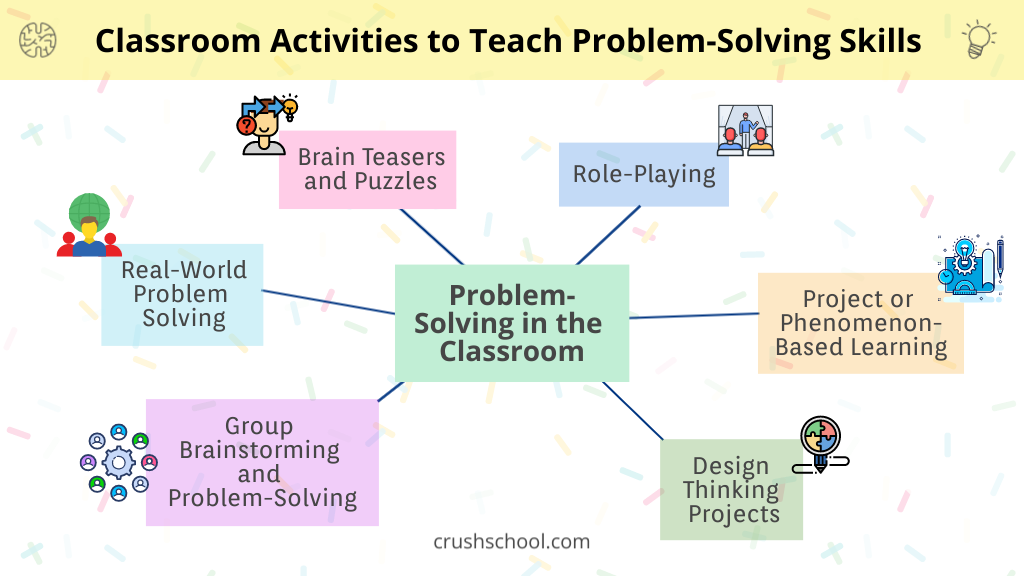
Brain Teasers and Puzzles
Challenge students with riddles, logic puzzles, and brain teasers that require them to think critically and figure out solutions. These can be short, focused warm up (bell ringer) activities or brain breaks in the middle of the class that call on students to solve a problem that uses their knowledge of science or other discipline. Check out the science teasers from Braingle or the math teasers in this Edutopia article.
Group Brainstorming and Problem-Solving
Encourage group discussions to share various approaches to solving the same problem, fostering collaboration and multiple perspectives. An example of this is giving various groups of students the same problem to solve and then have each group compare their unique solutions. Check out the Woodbury Water Tower engineering challenge I use with my Principles of Engineering students.
Real-World Problem Solving
Present students with real-life scenarios or current events that require problem-solving skills. These scenarios can range from ethical dilemmas to environmental issues. Then, ask students to research, analyze, and propose solutions to these problems, promoting active engagement and global awareness.
For example, you might ask your students to create an advertising campaign to encourage drivers to switch to hybrid or electric vehicles to alleviate the issues of air pollution, greenhouse effect, and climate change. Such activities do not only lead to fact-finding and proposing solutions for the actual problem, but also lead to the examination of the social issues associated with the problem and looking at ways of overcoming society’s resistance to making real changes.
Role-Playing
Use role-playing activities to simulate real-life situations. For example, students can act as diplomats negotiating a peace treaty or as business owners facing financial challenges. Role-playing helps students develop empathy, effective communication, and decision-making skills, which are all important facets of effective problem-solving.
Design Thinking Projects
Introduce students to the design thinking process, which involves empathizing, defining problems, ideating solutions, prototyping, and testing. Assign design thinking projects that require students to tackle real-world problems through a structured, iterative approach. Check out the Design Thinking Your Ideal Learning Experience series of lessons I use at the beginning of each school year.
Project or Phenomenon-Based Learning
Implement project-based learning (PBL) or phenomenon-based learning (PhenBL) in your curriculum. Such approaches encourage students to work on longer-term, open-ended projects that require research, collaboration, and problem-solving.
For example, students could design and build a sustainable garden for their school, addressing ecological and logistical challenges along the way. Or, you can ask students to create a multimedia product that showcases what they’ve learned and proposes solutions to a problem they investigated.
So What?
Teaching problem-solving skills is a fundamental responsibility of educators. These skills empower students to think critically, adapt to change, and become future-ready. By incorporating activities such as brain teasers, real-world problem solving, role-playing, design thinking, and project/phenomenon-based learning into the curriculum, teachers can foster a generation of innovative and resilient problem solvers who are prepared to tackle the challenges of the 21st century. Let’s equip our students with the tools they need to navigate an ever-changing world and make an impact we and they can be proud of.
BOOKS & TOOLS

In this classroom Mistakes are Expected, Respected, Inspected, Corrected!
Learned helplessness is a result of years of conditioning that mistakes are bad for learning. Nothing is further from the truth - some of the most powerful life lessons come from making mistakes, reflecting on them, and growing as a result.
This is a PNG Poster you can print and display in your classroom to encourage a culture of risk-taking and learning from mistakes.

3 Equity Promoting Posters.
(1) Equity (11 x17):
Everyone has a different start and finish line
Quality is more important that quantity
Understanding that diversity makes us stronger
Inclusion despite beliefs, appearances, and circumstances
Thoughtfulness lowers barriers and reduces biases
Yesterday's mistakes are today's learning agenda
(2) Equality vs Equity (11 x 17 side-by-side comparison)
(3) Equality vs Equity (11 x 17 the difference Quote)
Every poster contains accompanying images.
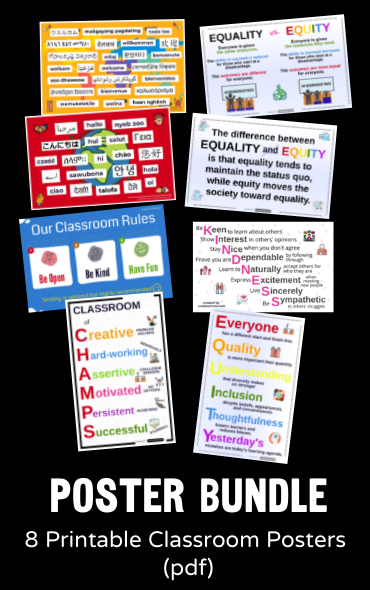
8 digital, printable, size 11 x 17 classroom posters:
“Welcome” in multiple languages
“Hi” in multiple languages
Three Equity posters
Classroom Rules: Be Open, Be Kind, Have Fun
“Classroom of Champs”
“Kindness”
ON SALE until August 30th.


- October 2026 1
- September 2026 6
- August 2026 9
- July 2026 7
- June 2026 9
- May 2026 9
- April 2026 7
- March 2026 1
- December 2025 1
- September 2025 2
- August 2025 5
- July 2025 4
- June 2025 2
- August 2024 2
- July 2024 2
- June 2024 1
- October 2023 1
- September 2023 3
- August 2023 6
- July 2023 6
- July 2022 2
- June 2022 1
- November 2020 3
- October 2020 3
- April 2020 1
- March 2020 5
- July 2019 1
- June 2019 1
- April 2019 1
- January 2019 1
- November 2018 3
- October 2018 2
- September 2018 1
- August 2018 7
- July 2018 11
- June 2018 4
- May 2018 5
- April 2018 2
- March 2018 4
- February 2018 5
- January 2018 3
- December 2017 1
- November 2017 5
- October 2017 7
- September 2017 6
- August 2017 5
- July 2017 3
- June 2017 10
- May 2017 7
- April 2017 7
- March 2017 15
- February 2017 12
- January 2017 13
- December 2016 15
- November 2016 8
- October 2016 7
- September 2016 12
- August 2016 14
- July 2016 10
- June 2016 13
- May 2016 10
- April 2016 8
- March 2016 5
- February 2016 7
- January 2016 6
- December 2015 5
- November 2015 8
- October 2015 2