
Relax and Refresh: The Teacher Guide to Balanced Summering

Oh summer… a glorious expanse of unscheduled time, devoid of lesson plans, meetings, never-ending grading, and the enervating flickering of fluorescent lights. But what do we do with this fleeting freedom? How do we recharge our teaching batteries and stay sharp and ready for the end-of-summer onslaught?
Check out my guide to having a relaxing summer that will help you up your teaching game is a sneaky, stress-free way.
Embrace the Art of Strategic Laziness
First things first: you've earned some serious couch time. Just be careful not to let your brain turn into a Netflix-induced pile of mush. Here’s how to strategize your laziness:
Binge-Watch Documentaries aka Couch Professional Development
Forget the latest reality TV drama. Dive into a captivating documentary series. History documentaries? You're practically prepping for social studies. Science documentaries? Boom, STEM integration! Travel documentaries? Global awareness, baby! You're not just vegetating; you're absorbing information passively. Brilliant, ain’t it?
Check out Life on Our Planet on Netflix or any of the history shows on PBS.
Read for Pleasure and Sneak in Some Learning Theory
Pick up that thriller or romance you've been eyeing ‘cause no one has to know. But also grab a book on kick ass teaching, because it will help you kick ass in the classroom. No pressure to dissect it, just let intellectual osmosis take effect. If you accidentally fall asleep with it on your face, consider it a deep dive into the subconscious, as your mind processes what you’ve read while you snooze and drool on yourself.
I’ve recently enjoyed Storyworthy and Ultralearning and always come back to and learn more about how humans learn best when I revisit Brain Rules.
Master the Art of the Nap aka Cognitive Restoration
Naps aren't just for babies, sloths, and baby sloths. They’re brain power-ups. A well-timed or completely unexpected nap can clear the mental cobwebs, help you process information, and spark new ideas (like how to finally get that one student to stop picking his nose or how to get all students to happily put their phones away because they just can’t wait for what you have to say today).
Learn Something New Without Realizing You're Learning
Summer is the perfect time to explore hobbies that accidentally make you a better teacher. Here’s how to do it low key:
Take a Class That Has Nothing to Do with Education
Pottery? Stand-up comedy? Advanced interpretive dance? The more obscure, the better! You'll be honing problem-solving skills, critical thinking, and potentially developing a unique talent to share (or at least laugh about) with your future students. “Remember when I tried to sculpt a vase and it came out looking like a melted traffic cone? Epic!”
Become a Local Tourist aka Uncover Hidden Gems
Explore your own city or nearby towns or natural spaces. Visit museums, historical sites, quirky roadside attractions, or that one waterfall up north. You'll not only relax but also discover local resources and fascinating facts that can be woven into future lessons. "Did you know our town has the world's largest rubber band ball? Let's write a persuasive essay about why it should be our state's symbol!"
Conquer a New Recipe Aka Practice Measurement and Patience
Baking or cooking a complex dish requires precision, sequencing, and the ability to follow instructions (skills often lacking in students and adults). Plus, you get to eat the results! That’s some delicious professional development.
My go to is The Complete America’s Test Kitchen TV Show Cookbook, because they use science to perfect classic recipes and I’ve never made a recipe from it that wasn’t delicious.
Play With Technology
Yes, we've spent the school year glued to screens. But let’s be real: if you’re reading this, you’re on a screen. But summer tech does not have to be taxing if you choose to only play with it.
Explore Educational Apps for Fun, Not for Planning
Tinker with a few free educational apps that you've been curious about. Play around with them, see how intuitive they are, and discover their hidden features. You're not vetting them for your classroom; you're just experiencing them. If one makes you laugh or teaches you something surprising, it's a win.
Have you tried Khanmigo, Canva, or AI such as Google Gemini yet?
Listen to Podcasts While Doing Something Else
Commuting, cleaning, sunbathing – podcasts are your auditory companions. Find ones on current events, historical mysteries, or even obscure scientific breakthroughs. It's like having a fascinating lecture whispered directly into your ears; note-taking disallowed.
Hidden Brain, TED Radio Hour, Inquiring Minds, and The Jordan Harbinger Show are my faves.
Tidy Up Your Digital Life aka Reclaim Your Sanity
Delete those 7,000 unread emails. Organize your files. Back up your photos. Decluttered digital space equals a decluttered mind, leaving more room for important things, like remembering the name of that student who always wore mismatched socks (I still do!).
Check out this Digital Declutter Article and Checklist.
Prepare (Just a Little) for Next Year (Without Stressing Out)
A little bit of prep can go a long way in September, but the key is minimal effort.
Brainstorm One Big Idea
Don't plan out your entire year. Just think of one exciting new project or activity you always wanted to try. It could be a class-wide debate, a collaborative art installation, or a unit on the history of memes. Having one exciting idea bubbling will keep your creative juices flowing without overwhelming you.
Treat Yourself to Some New Supplies (Not Necessarily School-Related)
A new pair of shoes for each day of the week? A desktop toy that hypnotizes while it jiggles? A desk-size diffuser to mask the classroom must and stank? Investing in something small and fun for your workspace might create a little spark of excitement for the new year.
I use this classy-looking, inexpensive diffuser.
Reconnect with Colleagues Outside of School
Grab coffee or lunch with a fellow teacher. Or, better yet, arrange a happy hour that’s not on Friday after school to share your summer stories and commiserate about the impending return. It's a reminder that you're not alone in this noble, highly chaotic profession.
So my dear educator: embrace your summer with a relaxed mind and a low key, secret agenda of self-improvement. When September rolls around, you'll be refreshed, recharged, and possibly armed with an impressive collection of traffic cone-themed pottery and teaching strategery. Your students won't know what hit them.
What's one completely non-school-related skill you'd love to learn this summer?
Check out my shop (see top) if you need some classroom wall decor or a few thoughtful and engaging Earth and Space Science lessons. I try to keep the prices decent, but if you cannot spare the $, please email me and I’ll give you whatever you need for free.
BOOKS & TOOLS

Equity-Promoting Classroom Poster. What does EQUITY in the classroom look like?
Everyone has a different start and finish line
Quality is more important that quantity
Understanding that diversity makes us stronger
Inclusion despite beliefs, appearances, and circumstances
Thoughtfulness lowers barriers and reduces biases
Yesterday's mistakes are today's learning agenda
You can teach your students about equity and make it a daily classroom practice using this inspirational poster, which also includes images that accompany the equity description. You can discuss each letter characteristic with your students as a way of introducing your inclusive classroom and display it prominently as a reminder that diversity makes the classroom community stronger.
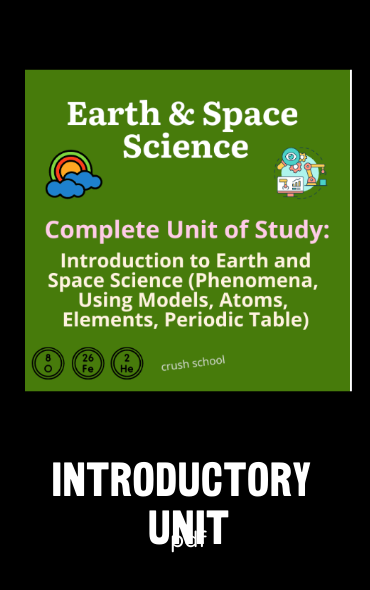
Save 2 - 3 weeks of planning time and start your Earth and Space Science school year off right using NGSS and Phenomenon Based Learning with this “Introduction to Earth and Space Science” Unit that contains 5 relevant and engaging multi-day projects.
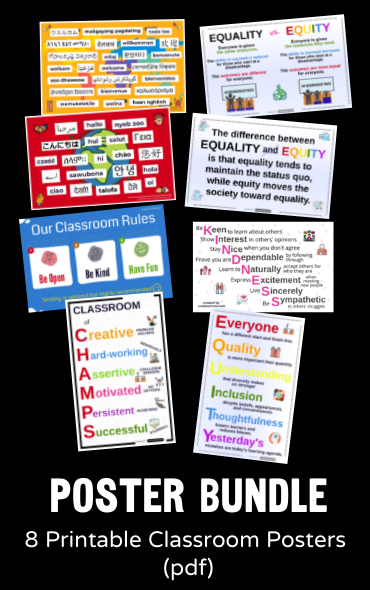
8 digital, printable, size 11 x 17 classroom posters:
“Welcome” in multiple languages
“Hi” in multiple languages
Three Equity posters
Classroom Rules: Be Open, Be Kind, Have Fun
“Classroom of Champs”
“Kindness”
ON SALE until August 30th.
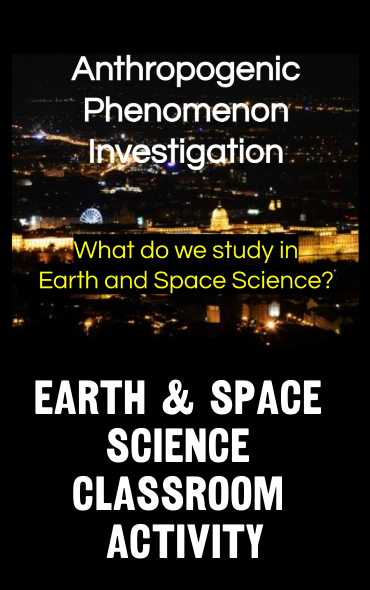
Save planning time with this 3 to 4-day Earth and Space Science NGSS-aligned introductory lesson during which students learn about the Systems Approach to studying science and analyzing real world phenomena.
The lesson involves investigating an anthropogenic phenomenon and examining human influence on the four spheres (biosphere, hydrosphere, atmosphere, and geosphere).
During the investigation, students create models and use them to explain how each of the four spheres is affected in a video that educates viewers on the consequences of human actions and the interconnectedness of the Earth’s systems.
Includes 9 detailed slides (PDF and Google Slides link for editing) + detailed teacher directions (2 slides).
The project follows the guidelines set by the Next Generation Science Standards (NGSS) and guides students in using Science and Engineering Practices (SEPs), Crosscutting Concepts (CCCs), and Disciplinary Core Ideas (DCIs).
Student Learning Objectives:
Describe what a Phenomenon is and give examples of Natural and Anthropogenic Phenomena.
Explain how phenomena can be used to study scientific concepts.
Describe the four spheres: atmosphere, hydrosphere, geosphere, and biosphere, and give examples of different matter interactions between them.
Understand, explain, and apply the Systems Approach when investigating Earth and Space Science Phenomena.
Break down how a Specific Anthropogenic Phenomenon affects each of the four spheres.


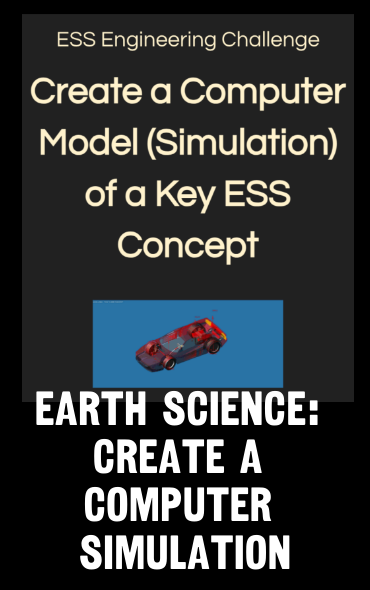
Save planning time with this introductory, 3-4 day Earth and Space Science engineering challenge in which students create a computer simulation of an Earth Science topic.
Includes 12 detailed slides (PDF and Google Slides link for editing) + detailed teacher directions (last slide) + a BONUS resource: Animation Guide for Google Slides.
The project follows the guidelines set by the Next Generation Science Standards (NGSS) and guides students in using Science and Engineering Practices (SEPs).
Student Performance and Learning Objectives:
Design and create an informative computer simulation.
Use computer animation to simulate a key ESS concept.
Explain the key ideas of an ESS concept of your choice.
- October 2026 1
- September 2026 6
- August 2026 9
- July 2026 7
- June 2026 9
- May 2026 9
- April 2026 7
- March 2026 1
- December 2025 1
- September 2025 2
- August 2025 5
- July 2025 4
- June 2025 2
- August 2024 2
- July 2024 2
- June 2024 1
- October 2023 1
- September 2023 3
- August 2023 6
- July 2023 6
- July 2022 2
- June 2022 1
- November 2020 3
- October 2020 3
- April 2020 1
- March 2020 5
- July 2019 1
- June 2019 1
- April 2019 1
- January 2019 1
- November 2018 3
- October 2018 2
- September 2018 1
- August 2018 7
- July 2018 11
- June 2018 4
- May 2018 5
- April 2018 2
- March 2018 4
- February 2018 5
- January 2018 3
- December 2017 1
- November 2017 5
- October 2017 7
- September 2017 6
- August 2017 5
- July 2017 3
- June 2017 10
- May 2017 7
- April 2017 7
- March 2017 15
- February 2017 12
- January 2017 13
- December 2016 15
- November 2016 8
- October 2016 7
- September 2016 12
- August 2016 14
- July 2016 10
- June 2016 13
- May 2016 10
- April 2016 8
- March 2016 5
- February 2016 7
- January 2016 6
- December 2015 5
- November 2015 8
- October 2015 2