Too Much What, Not Enough How

A student in my 4th-hour Learning to Study Effectively class asked me today how to best memorize information for his upcoming biology test. The 10-page study guide packet all filled out, he had trouble remembering all that stuff. They say better late than never, but the test was scheduled for next hour... He wanted to learn but didn't know how... Royally screwed is what he was.
it's hard to argue with the statement that the purpose of school is for students to learn. We do that, but I think teachers focus on the what of learning much too much. The how of learning, which is transferable and transcends any subject, is often amiss from our instruction. At best, it's vague and incomplete.
Study Strategies
Most teachers (I hope) talk about spaced repetition. Problem is we're not specific enough. It seems simple enough to do, right? Students too might think it's simple, but many never do spaced repetition, because they don't know how to begin. They're not given a plan. They have to come up with their own. They don't know how to do that. We rarely teach them how. They procrastinate.
Study Habits
Students don't know how to develop good habits. Teachers differentiate between good and bad study habits, but we don't teach how good habits are developed. We don't explain that ingrained bad habits need to be replaced gradually by new habits. We don't take the time to help our students come up with a plan to change. We say Don't do that but do this instead. It's a bad joke.
Learning Strategies
We might mention learning effectively and move on to the topic of the day. In high school, we assume a mention is enough and we rush to the important stuff; the curriculum. We reiterate main concepts, but we don't reiterate learning how to learn techniques. We might reteach main subject ideas students struggled with, but we don't reteach, remind, and reinforce learning how to learn strategies.
Ironically, subject struggles often result from the underlying lack of understanding of how the human brain learns; how it encodes, stores, and recalls information. If students don't know which strategies speed up learning and which waste time, how are they to learn effectively?
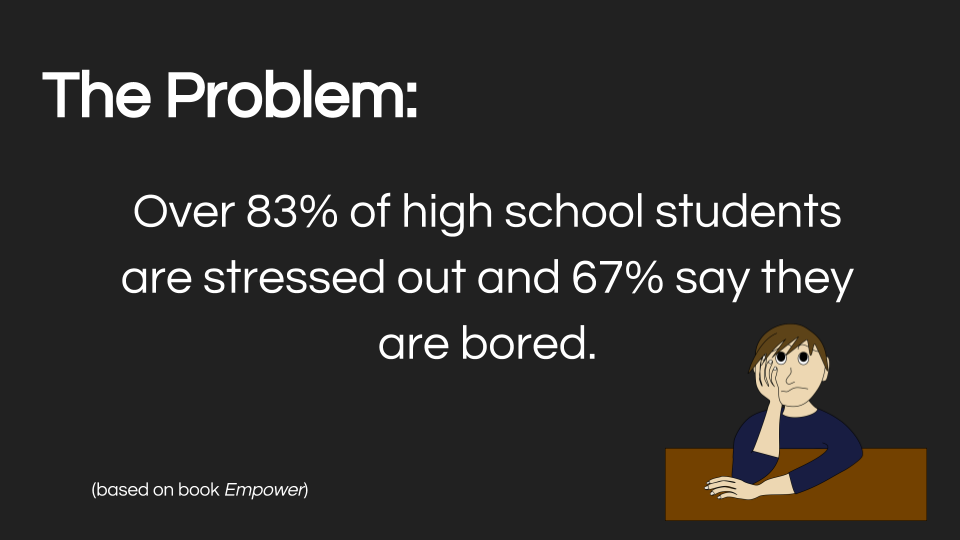
Students often give up because the strategies they use are ineffective. Too hard, too passive, too slow, too boring.
So... Let's Start Teaching Students How To Learn Better
Let's teach them how to learn FASTer.
I recently started listening to Jim Kwik's podcast Kwik Brain. Besides knowing what he's talking about, Jim uses a lot of mnemonics to teach learning strategies. A lot of the information he shares is common sense, but not common practice as he puts it. Kind of like what we rarely do, but should be doing more of in schools to help our students learn...
Anyways... Let's break down the acronym FAST Jim uses to explain how anyone can learn faster and remember more.
FAST stands for Forget, Active, State, and Teach.
Forget your limitations, what you know, and what you need to do.
When I said F is for Forget to my 1st-hour chemistry class, one student exclaimed: I do! All the time! But actually, the idea is to stop the negative self-talk that students often partake in.
I suck at math. I'm bad at reading and writing. Science is not my thing. Those are limitations that students reinforce all the time. Problem is that if they keep thinking that way about a subject or task, they will indeed suck, be bad, and it won't be their thing. You see, our hippocampi, the parts of the brain that decide what's important, receive the message that it's not important when we think we suck at something. And, we don't learn it as a result.
Forget what you know. This is something I am guilty of often. When I assume I know a lot about something, I am not 100% receptive to learning. I don't know everything and I'm not a know-it-all. If I can remember that, I'll keep an open mind and learn more.
Forget what you need to do later today, tomorrow, next week and next month. Be present and focus on the task at hand. Immerse yourself in the experience that is now. If you do, you will learn faster.
Active Learning
Probably a no-brainer, but we often miss the point in the classroom. Too often, the learning is passive. Students consume the information all the while they should be creating with it. Creating meaning. Creating understanding. All we have to do is limit direct instruction to 10 minutes and allow students to discuss key ideas, draw visuals, record videos, make models etc. that show their learning.
State of Mind and Being Matters
Stressed, tired, and disengaged brains don't learn. It's true that teachers have limited influence when it comes to how a student is feeling when she's in our class. But we can do these three things:
Minimize stress in our class. Be flexible and don't force it. Is homework necessary? Are deadlines more important than the learning itself?
Discuss with students how rest, sleep, and exercise affects learning. Make movement and brain breaks part of the classroom culture.
Be enthusiastic, passionate, caring, active, and novel yourself.
If Your Students Can Teach a Concept, They Get to Learn It Twice
Every teacher gets this. All we need to do is reflect on the countless hours we spend strategizing how to teach concepts so they're understandable and memorable to our students. The more we do it the deeper our understanding of the concept becomes as new realizations keep coming.
We can increase the number of such light bulb moments for our students.
The key to getting our students to employ the teaching strategy for themselves is to design lessons that ask students to teach their peers. One way to do this is to have students create instructional videos in which they explain how something works or how to do something.
Just today, I had my chemistry students use Flipgrid to explain how to calculate the average atomic mass of an element. The goal was to help them learn and remember it better. Take a peek at their videos here.
F.A.S.T. Forget. Active. State. Teach.
Encourage your students to Forget the limitations they place on themselves and they will learn faster.
Design lessons for Active learning and your students will learn faster and understand better.
Model a State of curiosity, enthusiasm, and caring and many students will follow in your footsteps and they will learn faster and remember more.
Create a classroom culture in which students Teach each other and they will learn faster and deeper.
By the way... Did you think I left the student who asked me for help hanging? Not a chance! Yes, the test was the next hour, but I had to give him something. I taught him a visualization strategy I'll talk about in a near-future post. I will ask him if it helped tomorrow. In the meantime, I will make you a promise: You'll like this technique :)
Until then, remember you have the power to change lives. Use it often.
Oskar
Thanks for reading! If you liked this article, share it with others and sign up for my Newsletter.

Hi! I'm Oskar.
I teach, write, speak, rant to make the world better.
BOOKS & TOOLS

CONTACT ME
BLOG ARCHIVE:
- August 2026 2
- July 2026 7
- June 2026 9
- May 2026 9
- April 2026 7
- March 2026 1
- December 2025 1
- September 2025 2
- August 2025 5
- July 2025 4
- June 2025 2
- August 2024 2
- July 2024 2
- June 2024 1
- October 2023 1
- September 2023 3
- August 2023 6
- July 2023 6
- July 2022 2
- June 2022 1
- November 2020 3
- October 2020 3
- April 2020 1
- March 2020 5
- July 2019 1
- June 2019 1
- April 2019 1
- January 2019 1
- November 2018 3
- October 2018 2
- September 2018 1
- August 2018 7
- July 2018 11
- June 2018 4
- May 2018 5
- April 2018 2
- March 2018 4
- February 2018 5
- January 2018 3
- December 2017 1
- November 2017 5
- October 2017 7
- September 2017 6
- August 2017 5
- July 2017 3
- June 2017 10
- May 2017 7
- April 2017 7
- March 2017 15
- February 2017 12
- January 2017 13
- December 2016 15
- November 2016 8
- October 2016 7
- September 2016 12
- August 2016 14
- July 2016 10
- June 2016 13
- May 2016 10
- April 2016 8
- March 2016 5
- February 2016 7
- January 2016 6
- December 2015 5
- November 2015 8
- October 2015 2