
How to Use Misconceptions to Improve Student Learning and Memory
Every student comes to the classroom with their own ideas about how the world works.
Some of these ideas are right and some are wrong.
But before student misconceptions are corrected, consider leveraging them in learning. Use students misconceptions “for them” not “against them” and their minds will thank you… or at least they’ll retain more and understand better.
One of the best ways to do this is with short, cognitively-intense activities such as the “Wrong Answer Warm Up” below. Check it out.
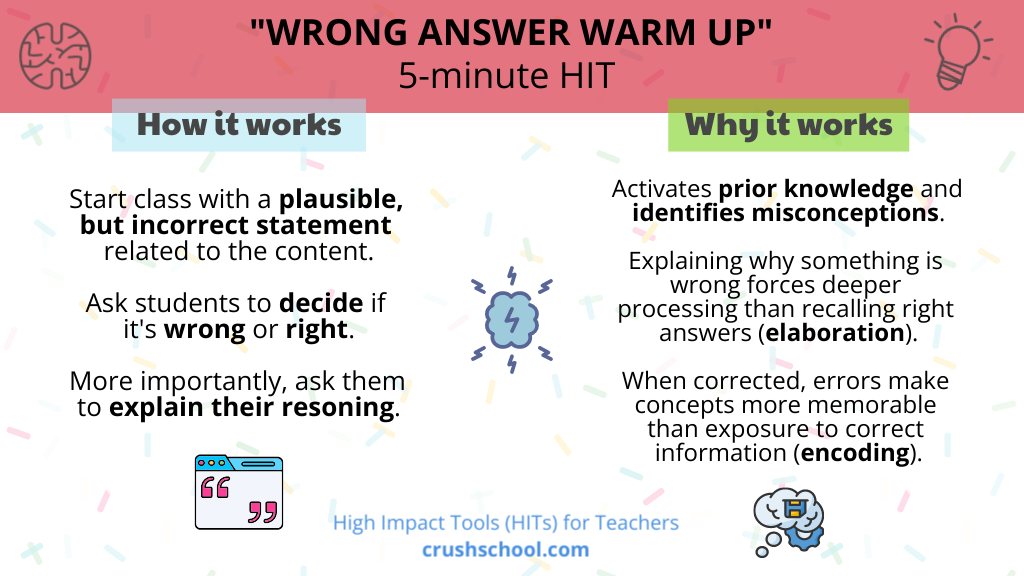
Using Misconceptions to Teach and Improve Students Memory
How To Use Misconceptions and Why It Helps in Learning
Starting class with a misconception related to the big idea activates prior knowledge and brings the misconception to the surface. Thus, look for one of those common and annoying misconceptions you deal with every year to kill it in its tracks.
When students argue for their misconception and are later set straight, they remember the correct answer, not the wrong one due to cognitive conflict—a mismatch between what they believed and what is actually true. As a result, their brains “update” the old model with the newly discovered understanding.
Plausible Misconceptions: Example Prompts
“Using big words improves your writing.”
“Seasons are caused by Earth being closer or farther from the sun.”
“Multiplying always makes numbers bigger.”
“Ancient civilizations were less advanced than we are.”
Pro Tips For Leveraging Misconceptions in the Classroom
Make the wrong answer believable, not ridiculous.
Ask: Why might someone think this? to lower risk of “being exposed for not knowing” and to stimulate student thinking and discussion.
Never reveal the right answer before letting students work on it first.
Keep it fast-paced to spark the lesson, but don’t turn it into the lesson.
Bottom Line
Don’t avoid wrong answers—use them. When students figure out, explain, and correct their own errors, their learning gets deeper and lasts longer.
Thanks for reading!
Creating engaging warm-ups, exit tickets, and brain resets can be a time-consuming, so I started to compile the ones I use with my students as 5-minute micro-lessons I call HITs (High Impact Tools for Teachers) and sharing them via my Free HITs Newsletter.
Sign up below and get 5 Active Learning Strategies You Can Use Today. It’s 5 Editable Activity Slides you can use in your classroom right away—any time, any subject, zero prep required + 5 Teacher Slides with pro tips and rationale.
BOOKS & TOOLS

Equity-Promoting Classroom Poster. What does EQUITY in the classroom look like?
Everyone has a different start and finish line
Quality is more important that quantity
Understanding that diversity makes us stronger
Inclusion despite beliefs, appearances, and circumstances
Thoughtfulness lowers barriers and reduces biases
Yesterday's mistakes are today's learning agenda
You can teach your students about equity and make it a daily classroom practice using this inspirational poster, which also includes images that accompany the equity description. You can discuss each letter characteristic with your students as a way of introducing your inclusive classroom and display it prominently as a reminder that diversity makes the classroom community stronger.

In this classroom Mistakes are Expected, Respected, Inspected, Corrected!
Learned helplessness is a result of years of conditioning that mistakes are bad for learning. Nothing is further from the truth - some of the most powerful life lessons come from making mistakes, reflecting on them, and growing as a result.
This is a PNG Poster you can print and display in your classroom to encourage a culture of risk-taking and learning from mistakes.
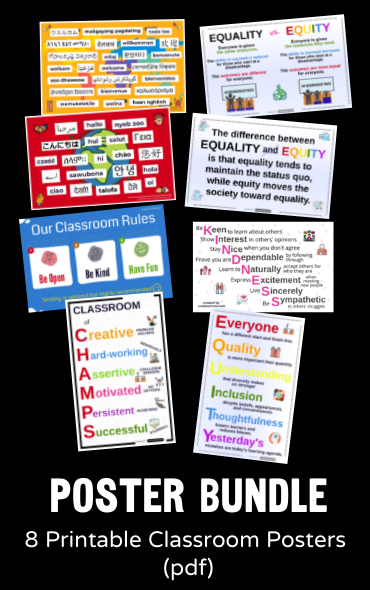
8 digital, printable, size 11 x 17 classroom posters:
“Welcome” in multiple languages
“Hi” in multiple languages
Three Equity posters
Classroom Rules: Be Open, Be Kind, Have Fun
“Classroom of Champs”
“Kindness”
ON SALE until August 30th.
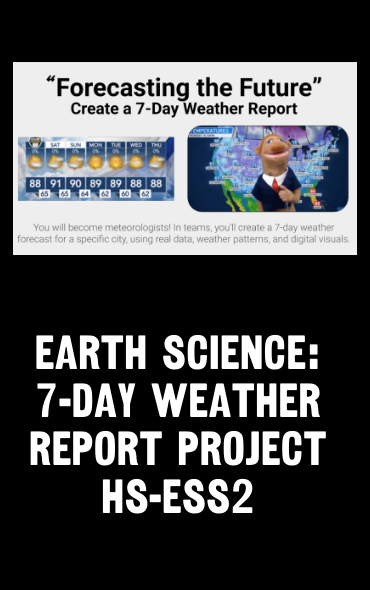
Save planning time with this Atmosphere Unit, 5-day Honors Earth and Space Science Project in which students research, design, create, and present a 7-day weather forecast for a specific city in the US or abroad.
Student Performance and Learning Objectives:
Explain how weather data is collected and interpreted.
Explain how weather patterns may be affected by geography (mountains, plains, valleys etc.).
Explain the atmospheric conditions (pressure, moisture etc.) necessary for different weather (sunny, windy, rainy etc.).
What's included:
16 slides (Google Slides link for easy use and editing to fit your purposes)
Learning Objectives
Group Roles / Jobs (up to 5 with detailed description of jobs)
Detailed Project Directions / Requirements
Materials/Web Resources List
Link to a "Wheel of Names" containing city names - students spin and receive their assigned city.
Link to a grading rubric for student and teacher use (printable doc).
The project follows the guidelines set by the Next Generation Science Standards (NGSS).
Questions?
Email me at oskar@crushschool.com. I’m happy to answer your questions.
Fair Use
Feel free to share and use this resource with your students.
Please do not share it with other parties or use for profit. All rights by crushschool.com.