
How to Build Better Learners, Not Better Test-Takers
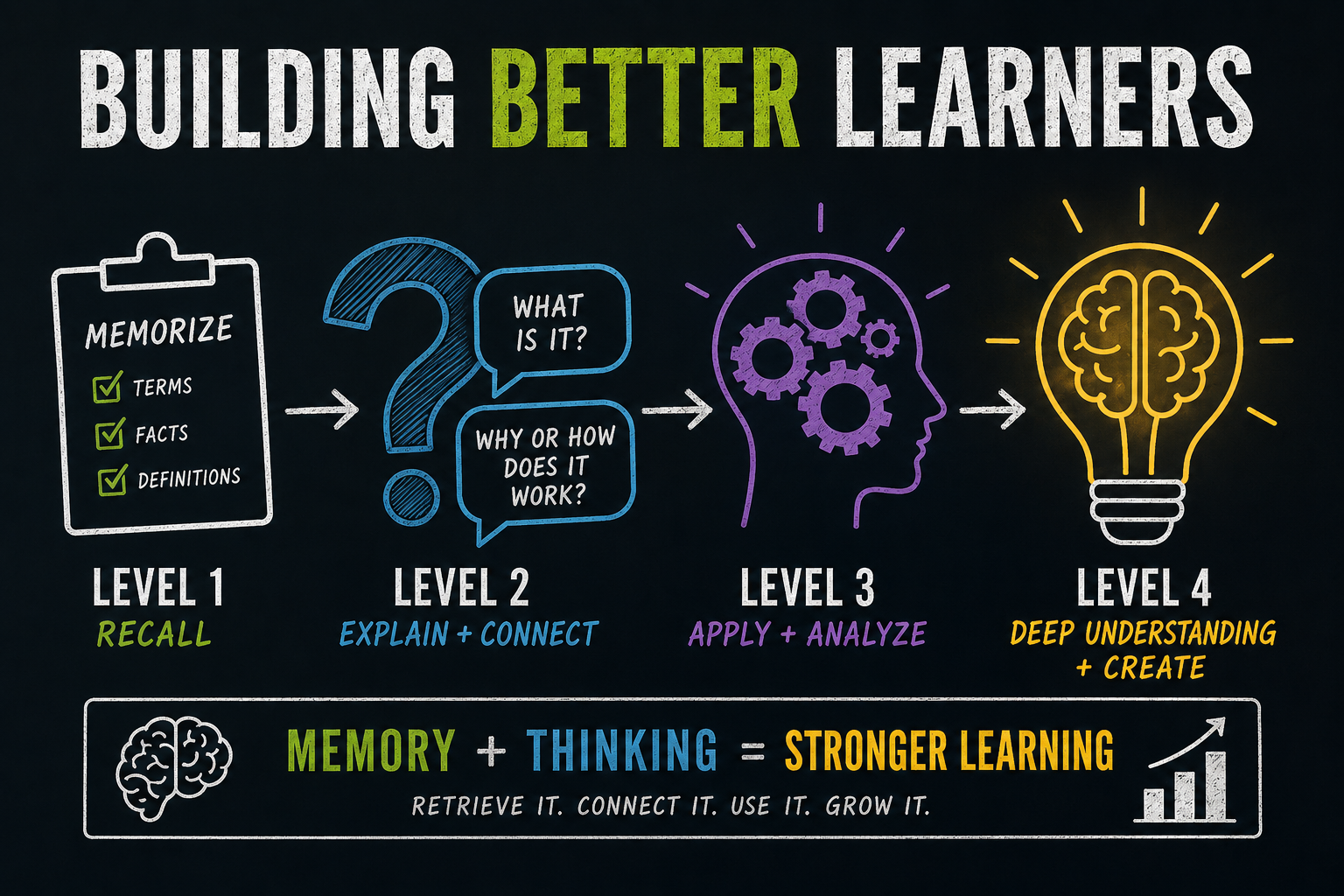
Memorization matters, but stronger learning happens when students explain, connect, apply, and use what they know.
“I swear they forget everything five minutes after the test.”
A veteran teacher drops into the lounge chair. Coffee in one hand. Laptop in the other. The universal body language of defeat.
“They knew it yesterday,” she continues. “I literally watched them review. They could define every term. Today? Gone. Completely, like they looked into that Men in Black memory eraser thing.”
Two teachers nod silently while in line to microwave lunches of questionable nutritional value.
“They memorize just enough to survive the quiz,” a science teacher adds, “and then immediately delete the file from memory.
Sadly, that teacher lounge conversation describes modern learning well.
A lot of what happens in schools is painfully superficial. Students memorize a bunch of definitions throughout the week, survive a quiz on Friday, and mentally throw up the information by Monday. They recognize vocabulary words, dates etc. just long enough to pick the correct answer on a multiple choice quiz. But they don’t retain.
And can we blame them?
We’ve Built a System that Rewards Memorization
Most students quickly learn that school is less about understanding and more about grades and quick, but temporary information storage.
Memorize. Repeat. Forget. Repeat again–the school equivalent of downloading a file and dragging it into the trash bin after use.
But memorization is not the problem.
Cognitively-speaking, memorizing facts is extremely important. The brain needs stored information to analyze, synthesize, problem solve, think critically, create, or transfer knowledge. Memorizing information allows the brain to retrieve knowledge quickly, reduce cognitive load, recognize patterns faster, and free up working memory for more advanced thinking.
The problem is memorization without understanding, application, or connection.
Many students have been conditioned to stop at Level 1 thinking– they memorize vocabulary, formulas, dates, and definitions.
Strong Learners Go One Level Deeper
They ask: Why? How? What connects to this? What causes this? Why does this matter? What happens if this changes?
Such deeper processing is where stronger understanding forms and true learning happens. Memorized information provides building materials. Deeper processing is what turns those materials into actual brain structures.
This is exactly why strategies like 2 Questions, 2 Levels work. They intentionally move students from simple retrieval into deeper reasoning. The first question checks whether students can recognize or recall information, while the second forces them to explain, connect, justify, predict, or analyze.
When a student answers “What is Newton’s Second Law?,” they are doing Level 1 thinking.
Following with “Why does a heavier object require more force to accelerate?,” forces Level 2 processing. Now the student must think through the relationship between force, mass, and motion rather than simply recite a definition.
The same applies to every subject.
An ELA student may memorize that “theme” is the message of a story, but asking “How do the character’s choices reveal the theme?,” forces deeper thinking.
The strategy helps students see the difference between recognizing information and actually understanding it. It teaches them metacognition–thinking about their thinking. It builds their “learning how to learn” skillset–picking study strategies and learning approaches that promote better understanding and long-term retention.
How to Use the 2 Questions, 2 Levels Classroom Strategy
First, give students one basic recall question about recently learned content
Then ask a second question that requires explanation, reasoning, application, or analysis about the same concept
Students answer both questions individually or with a partner
Encourage students to explain how or why in detail
Discuss differences between the two types of thinking (metacognition)
Why Memorization Still Matters
One major reason memorization matters, however, is that working memory is very limited. The brain can only actively process a small amount of information at one time. When knowledge becomes memorized and easily retrievable, it frees up working memory for more advanced thinking. This is called automaticity.
A student who automatically recalls multiplication facts can focus on algebraic reasoning instead of mentally struggling with basic arithmetic. A fluent reader can focus on meaning and analysis rather than decoding every individual word.
Memorization, when done correctly, reduces cognitive load and makes higher-level thinking possible.
Why Retrieval Practice Matters
Retrieval strengthens learning as well. Every time students successfully recall information, the neural pathways associated with that information become stronger and more efficient. Retrieval leads to myelination–the brain pathway along which the information flows becomes faster and smoother, making it easier to access later.
This is one reason retrieval practice is so powerful. The brain grows and strengthens what it repeatedly uses.
But retrieval alone is not enough.
How Strong Thinking Develops
Strong thinking develops when students elaborate–explain ideas, connect concepts, defend reasoning, apply knowledge, and process information deeply enough that it becomes flexible and usable rather than fragile and temporary.
Over time, students begin realizing that smart learners do not just remember information. They explain it, connect it, and reason through and with it.
Through this realization, more of them become better learners.
Level 1 thinking isn’t bad. It’s necessary. Students need basic knowledge before they can create with it. Memorization is the starting point of learning, but it should never be the end.
If we want students to become stronger thinkers and better learners, we have to regularly push them beyond simple recognition and into explanation, reasoning, application, and connection.
That means every day implementation of classroom strategies that force deeper processing instead of rewarding temporary memorization alone.
Strategies like 2 Questions, 2 Levels train students to move from “What is it?” to “How does it work?” and eventually to “Why does it matter?”
That progression is where deeper learning lives.
Final Thoughts on Memory and Understanding
Strong thinking depends on both long-term and working memory.
The brain cannot analyze what it cannot retrieve.
Thus, understanding grows from memory, not instead of it, and we need to have our students practice both every day to build their brains and help them become better learners.
Want 100+ ready-to-use ways to make learning deeper?
Spark. Wire. Fire. gives you classroom activities that spark curiosity, strengthen memory, and move learning into application so check it out.
Need an engaging, more impactful strategy right away?
Use the Master Teacher Toolkit to quickly find bell ringers, brain breaks, exit tickets, class activities, and complete lesson sequences.
BOOKS & TOOLS
Flashcards are okay but there's a better way. The Memory (or Mind) Palace Method is a powerful learning and memorization technique that when mastered allows a student to remember 10, 20, or even 30 vocabulary words or concepts (definitions included) with ease.
And, they actually remember what they learned using memory palaces! This series of lessons (which can be used as classroom handouts) walks students through creating their first memory palace, filling it with information they need to learn, and using it to train their memories. It also contains short readings, a video lesson, memory palace examples, and practice drills.
Fair Use
Feel free to use with your students. Please do not share it with other parties or use for profit. All rights by crushschool.com.

Equity-Promoting Classroom Poster. What does EQUITY in the classroom look like?
Everyone has a different start and finish line
Quality is more important that quantity
Understanding that diversity makes us stronger
Inclusion despite beliefs, appearances, and circumstances
Thoughtfulness lowers barriers and reduces biases
Yesterday's mistakes are today's learning agenda
You can teach your students about equity and make it a daily classroom practice using this inspirational poster, which also includes images that accompany the equity description. You can discuss each letter characteristic with your students as a way of introducing your inclusive classroom and display it prominently as a reminder that diversity makes the classroom community stronger.
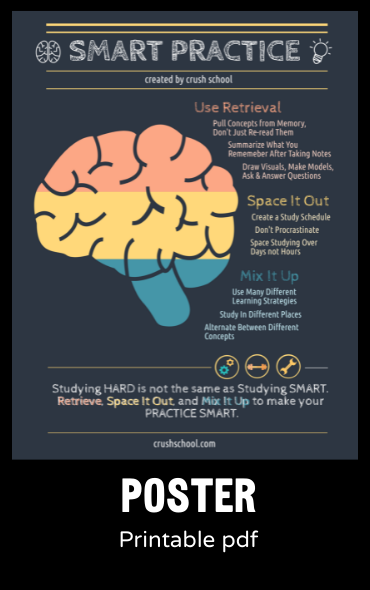
Retrieval Practice, Spaced Practice, and Mixed Practice (Interleaving).
Studying Hard is not the same as Studying Smart. This High Quality printable, digital (PNG) poster is a constant classroom reminder of best practices for teachers and learning the smart way for students.

In this classroom Mistakes are Expected, Respected, Inspected, Corrected!
Learned helplessness is a result of years of conditioning that mistakes are bad for learning. Nothing is further from the truth - some of the most powerful life lessons come from making mistakes, reflecting on them, and growing as a result.
This is a PNG Poster you can print and display in your classroom to encourage a culture of risk-taking and learning from mistakes.
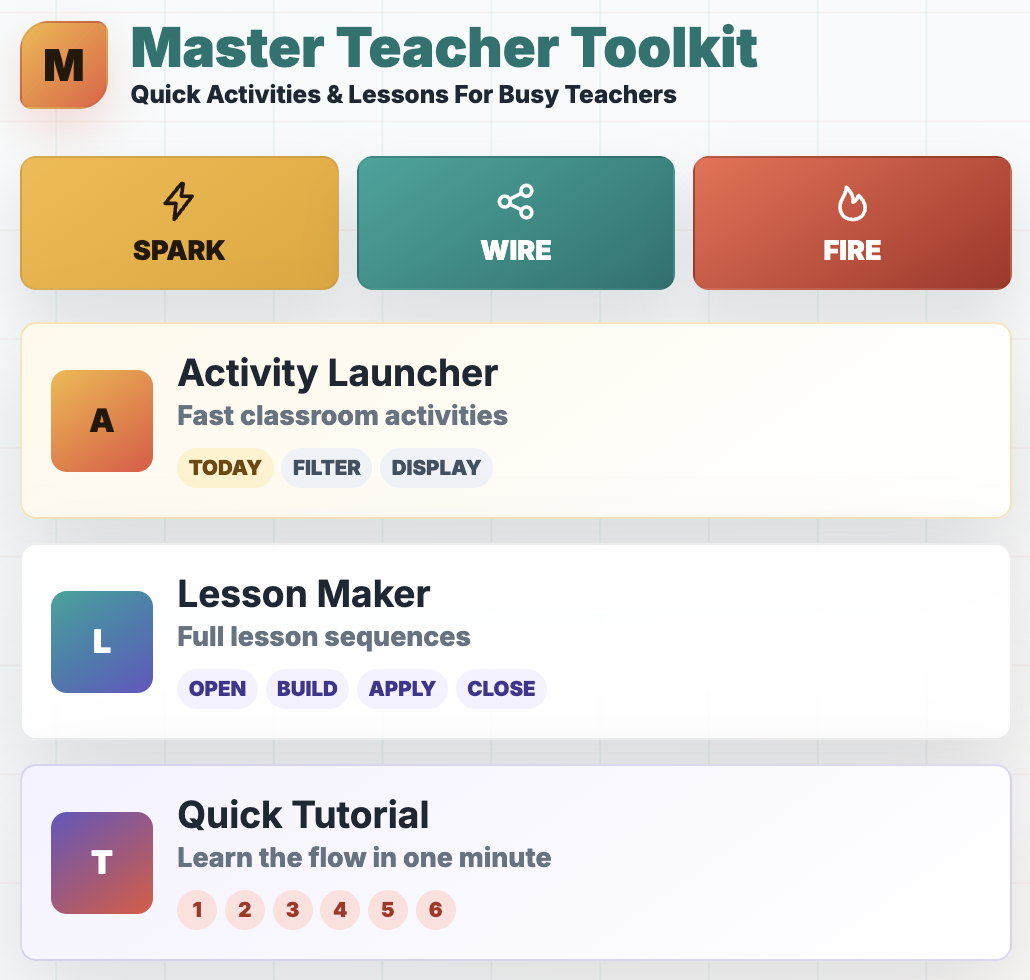
Teaching App
Launch engaging, deeper learning activities and lessons in seconds. Then, launch and display them to students instantly.
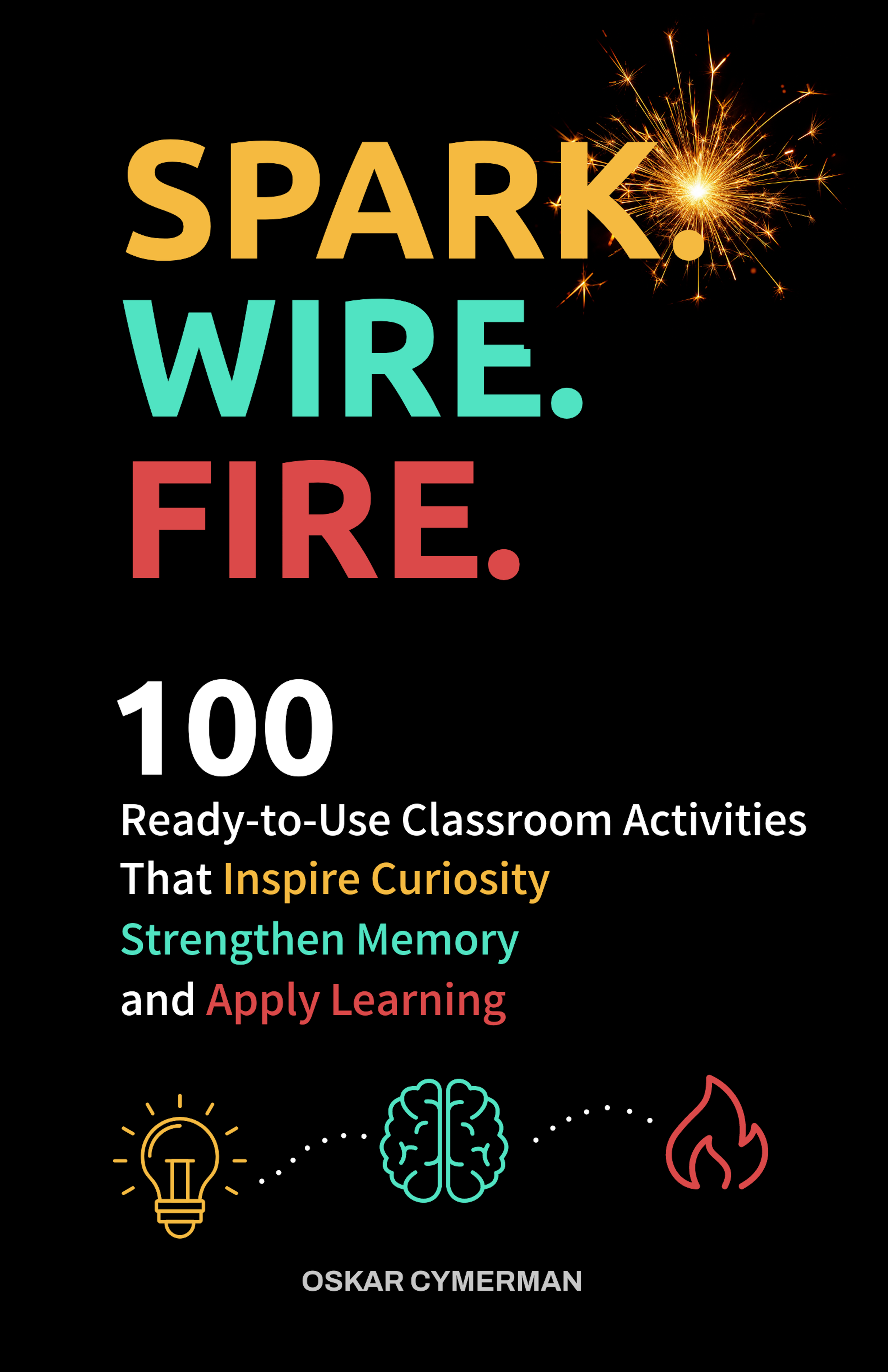
NEW BOOK
100+ practical activities teachers can use right away with little or no prep.