
Teaching for Attention Spans: 3 Classroom Engagement Strategies for the Age of Distraction

Short, high-energy classroom activities like Picture It, 90-Second Teacher, and What If? help students focus, think, explain, and actively engage with learning.
Teaching has always required attention.
But teaching now is a different beast.
Students walk into class with phones, notifications, stress, sleep deprivation, social drama, sports, jobs, and a million mental tabs already open. Then we ask them to focus on cell structure, theme, linear equations, Reconstruction, or whatever wonderful lesson we spent too much time planning.
And sometimes they do.
For about eight minutes.
Then it begins. The side conversation. The blank stare. The Chromebook tab shuffle. The “Can I go to the bathroom?” escape attempt.
It’s easy to blame the current generation for having shorter attention spans, but that doesn’t really help us teach them.
So the question is: How do we design learning for the attention spans students actually have?
I don’t mean lowering expectations, but teaching smarter—using short, focused, high-energy classroom engagement strategies that pull students back into thinking before their attention takes a hike of the mental variety.
In other words, we need to plan intentional, engaging, and active learning classroom moves that work with the brain instead of against it.
Attention Is Not Automatic
I don’t know about you, but one of the biggest mistakes teaching mistakes I made in the past was assuming students are ready to learn just because class started.
They’re not. Their bodies are present, but their brains may still be in the hallway, at lunch, on their phones, or thinking about something that happened three periods ago.
That’s why the first few minutes matter so much.
A strong bell ringer, lesson hook, quick visual task, partner explanation, or discussion starter helps students shift from “I’m physically here” to “I’m actually thinking.”
That shift is everything, because attention is the gateway to learning.
No attention = no learning.
That’s why teaching for attention spans matters. We don’t need to entertain our students every second, but we do need to create moments that spark their curiosity, activate prior knowledge, and give them something meaningful to do.
Why Short Activities Work
Short activities work because they match how the brain processes information.
Long stretches of passive listening can overload working memory. Even when students are trying, too much information at once can cause the brain to shut down or wander.
Short, high-impact activities give students a chance to reset.
They can draw, teach, question, explain, move, debate, or connect ideas before returning to the lesson.
This is why many science backed teaching strategies are not complicated. They are small shifts that change what students are doing with information.
Instead of only listening, students think.
Instead of only copying, students create.
Instead of only watching, students explain.
Instead of only receiving information, students use it.
That is learning that works because it engages the mind more actively.
3 Simple Strategies for Distracted Students
Here are three high impact teaching strategies you can use when students need more than another slide, worksheet, or reminder to “pay attention.”
1. Picture It
Give students a concept, process, event, theory, or big idea. Then, ask them to create a quick visual metaphor or analogy for it.
Not a perfect drawing. Just a simple image that shows what the idea is like.
For example, students might show natural selection as a tournament bracket, theme as roots beneath a tree, or cultural diffusion as ripples spreading across water.
Then students label key parts of the drawing and explain how the metaphor represents the concept.
Picture It works because it gives students a different way into the learning. Some students struggle with abstract vocabulary, long definitions, or heavy teacher explanations. But when they have to turn an idea into a visual, they have to think about what the idea actually means.
This uses dual coding, retrieval, elaboration, and transfer without making students feel like they are doing a traditional review task.
It also makes learning visible as it helps teachers see student understanding. A missing label, weird connection, or a confusing image say you a lot.
2. 90-Second Teacher
Pair students up and give each student a different concept connected to a larger theme.
Students get 90 seconds to prepare. They can create a quick sketch, diagram, example, or visual, but they cannot simply copy a definition.
Then each partner gets 90 seconds to teach their concept using their visual and their own words.
After both partners teach, they figure out how the two concepts connect.
This is one of those active learning strategies that sounds almost too simple, but the pacing makes it powerful.
The time limit creates urgency. The drawing gives students something to explain. The teaching forces them to organize their thinking. The connection piece keeps the activity from becoming another isolated vocabulary practice.
Students are not just learning a word. They are explaining it, hearing another concept, and figuring out how ideas fit together.
That is exactly the kind of student centered learning strategy that helps distracted students stay involved, because everyone has a job and nobody can disappear for twenty minutes.
3. What If?
Give students a concept, process, event, vocabulary term, formula, or big idea.
Then have them answer four quick prompts: What is it? How does it work? Why does it matter? What if it changed?
That last question is the magic. “What if it changed?” pushes students beyond memorization. It forces them to think about consequences, systems, relationships, and real-world impact.
Examples: What if the greenhouse effect changed? What if probability could be greater than 1? What if foreshadowing disappeared from a story? What if citizens had less voice in a democracy?
Students can answer individually, with partners, or in small groups. Then they compare responses and discuss which explanations are strongest.
What If? works because it turns a concept into something students have to use.
They retrieve what they know, explain how it works, decide why it matters, and stretch the idea into a new situation.
Deeper than copying a definition, it gives students a reason to think.
Engagement Is Not Extra
“Engagement” is not about games, noise, entertainment, or otherwise keeping students amused.
It is about getting students mentally involved. Engaged students are ones that are visualizing, explaining, connecting, questioning, teaching, predicting, retrieving, and applying ideas.
That’s the heart of brain based teaching. Students doing the thinking. And when students do more of the thinking, learning becomes stronger.
This is especially important as teachers prepare for a new school year. During July, many teachers start thinking about first day activities, bell ringers, classroom management, and back-to-school routines.
But let’s not make the mistake of just planning for what students shouldn’t do.
Let’s plan for what they will do.
Let’s plan for curiosity, retrieval, intentional movement, discussion, and attention.
This is exactly why I wrote Spark. Wire. Fire.: 100 Ready-to-Use Classroom Activities That Inspire Curiosity, Strengthen Memory, and Apply Learning.
The idea is simple:
Spark curiosity and attention.
Wire learning into memory.
Fire learning into application.
The book is full of ready-to-use classroom activities designed to help teachers make learning more active, memorable, and manageable without spending hours creating everything from scratch.
Some activities are bell ringers and lesson hooks. Some are retrieval practice activities. Some help students collaborate, discuss, move, debate, draw, teach, and apply what they know.
The goal is not to make teaching flashy, but to make learning stick.
If Picture It, 90-Second Teacher, and What If? feel useful, the book gives you many more activities built around the same idea: short, practical, brain-based teaching strategies that help students pay attention, remember more, and use what they learn.
You can check it out here: Spark. Wire. Fire. on Amazon
Final Thoughts
Teaching for attention spans does not mean giving up on deep learning, but creating better entry points into it.
Students still need content, practice, and challenge. But they also need sparks—small moments that wake up attention, activate thinking, and pull them into the hard work of learning.
Distracted students don’t need longer lectures. They need better reasons to engage and activate their thinking.
Because that’s where learning that works begins.
P.S. If you need instant classroom moves, check out the Master Teacher Toolkit Web App and minimize your prep while maximizing learning. It’s less that $5 per month and even cheaper with annual subscription.
BOOKS & TOOLS
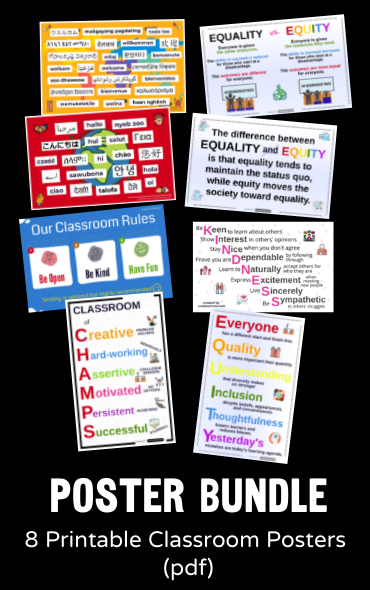
8 digital, printable, size 11 x 17 classroom posters:
“Welcome” in multiple languages
“Hi” in multiple languages
Three Equity posters
Classroom Rules: Be Open, Be Kind, Have Fun
“Classroom of Champs”
“Kindness”
ON SALE until August 30th.
Flashcards are okay but there's a better way. The Memory (or Mind) Palace Method is a powerful learning and memorization technique that when mastered allows a student to remember 10, 20, or even 30 vocabulary words or concepts (definitions included) with ease.
And, they actually remember what they learned using memory palaces! This series of lessons (which can be used as classroom handouts) walks students through creating their first memory palace, filling it with information they need to learn, and using it to train their memories. It also contains short readings, a video lesson, memory palace examples, and practice drills.
Fair Use
Feel free to use with your students. Please do not share it with other parties or use for profit. All rights by crushschool.com.

Equity-Promoting Classroom Poster. What does EQUITY in the classroom look like?
Everyone has a different start and finish line
Quality is more important that quantity
Understanding that diversity makes us stronger
Inclusion despite beliefs, appearances, and circumstances
Thoughtfulness lowers barriers and reduces biases
Yesterday's mistakes are today's learning agenda
You can teach your students about equity and make it a daily classroom practice using this inspirational poster, which also includes images that accompany the equity description. You can discuss each letter characteristic with your students as a way of introducing your inclusive classroom and display it prominently as a reminder that diversity makes the classroom community stronger.

In this classroom Mistakes are Expected, Respected, Inspected, Corrected!
Learned helplessness is a result of years of conditioning that mistakes are bad for learning. Nothing is further from the truth - some of the most powerful life lessons come from making mistakes, reflecting on them, and growing as a result.
This is a PNG Poster you can print and display in your classroom to encourage a culture of risk-taking and learning from mistakes.
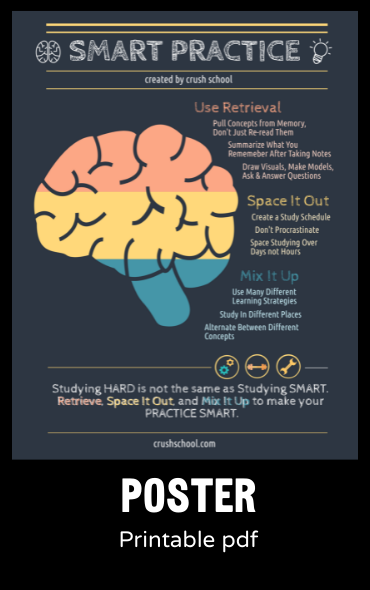
Retrieval Practice, Spaced Practice, and Mixed Practice (Interleaving).
Studying Hard is not the same as Studying Smart. This High Quality printable, digital (PNG) poster is a constant classroom reminder of best practices for teachers and learning the smart way for students.
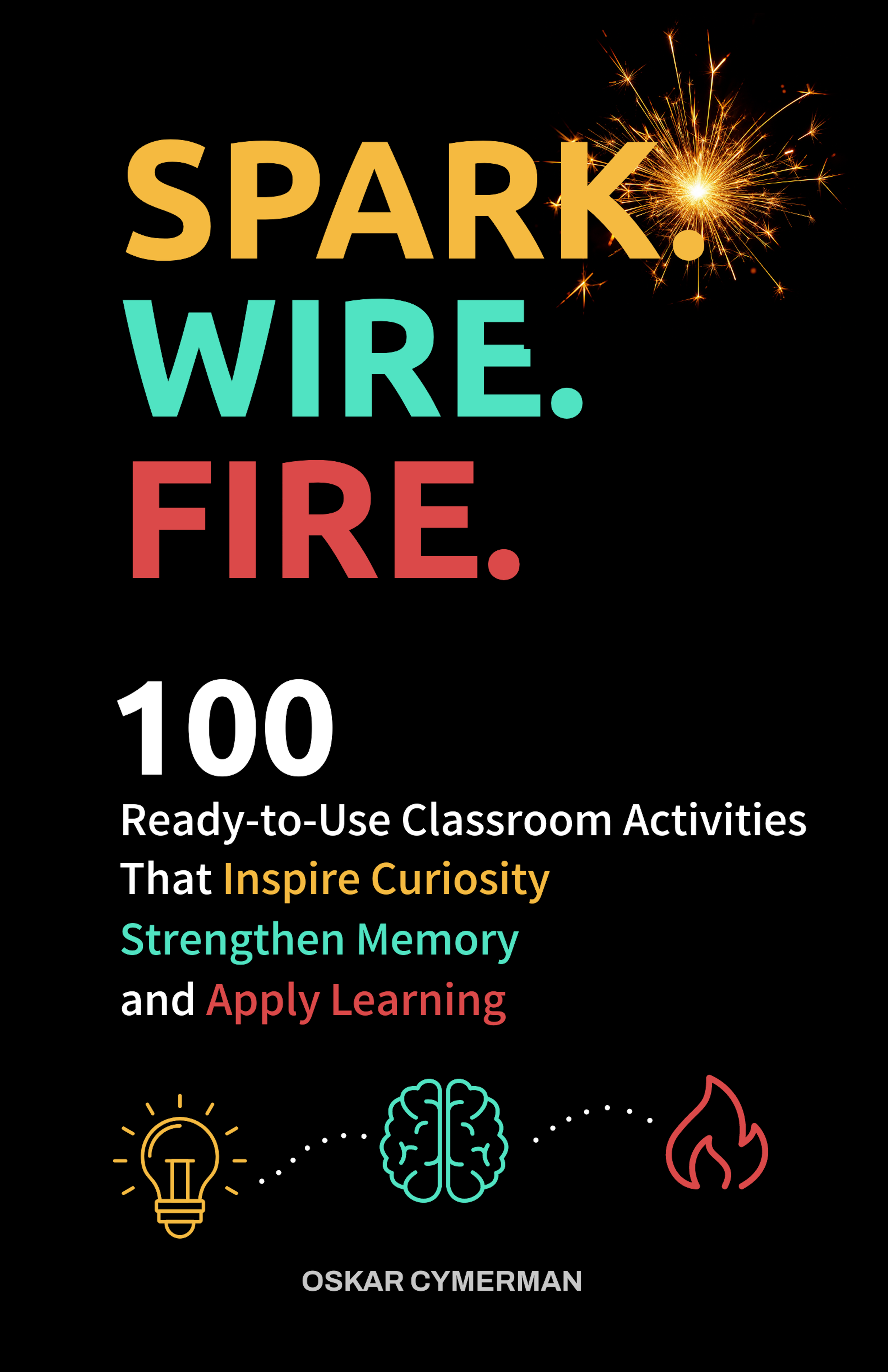
NEW BOOK
100+ practical activities teachers can use right away with little or no prep.
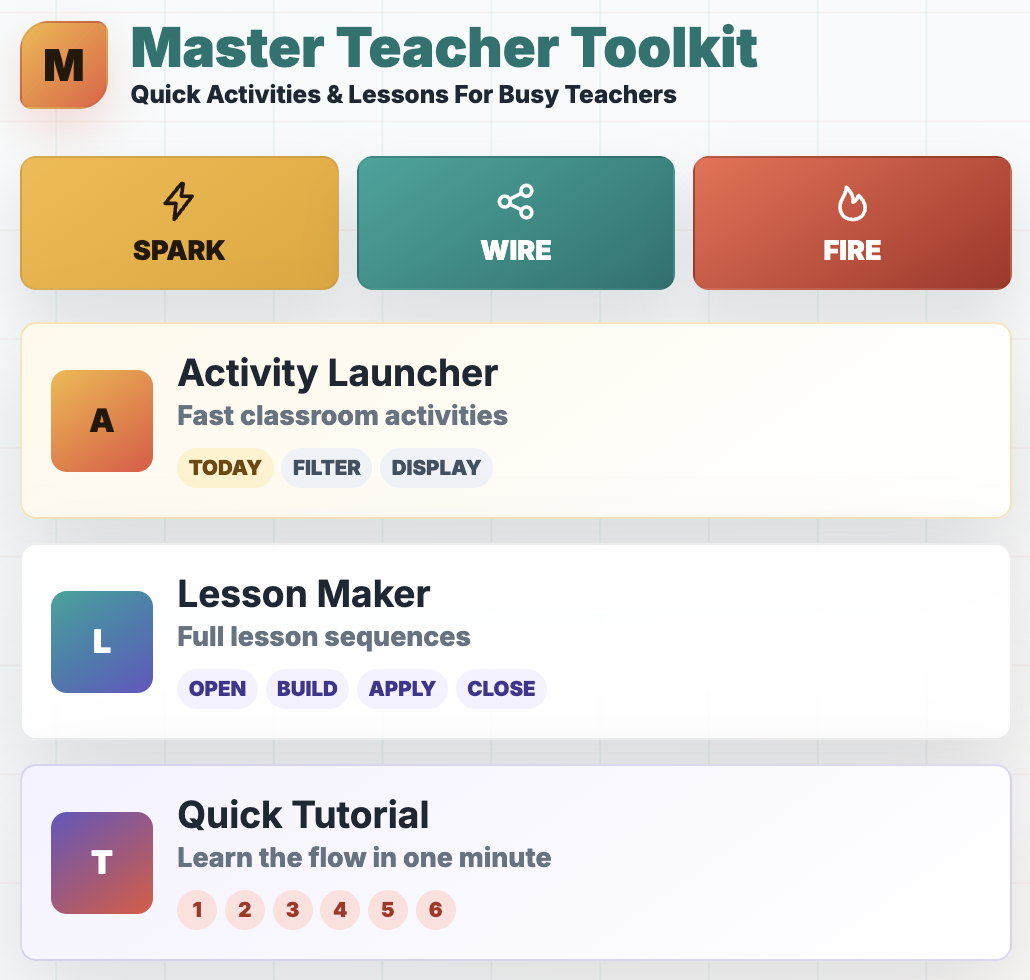
Teaching App
Build engaging lessons in seconds. Then, launch and display them to students instantly.