
3 Classroom Engagement Moves All Teachers Can Use
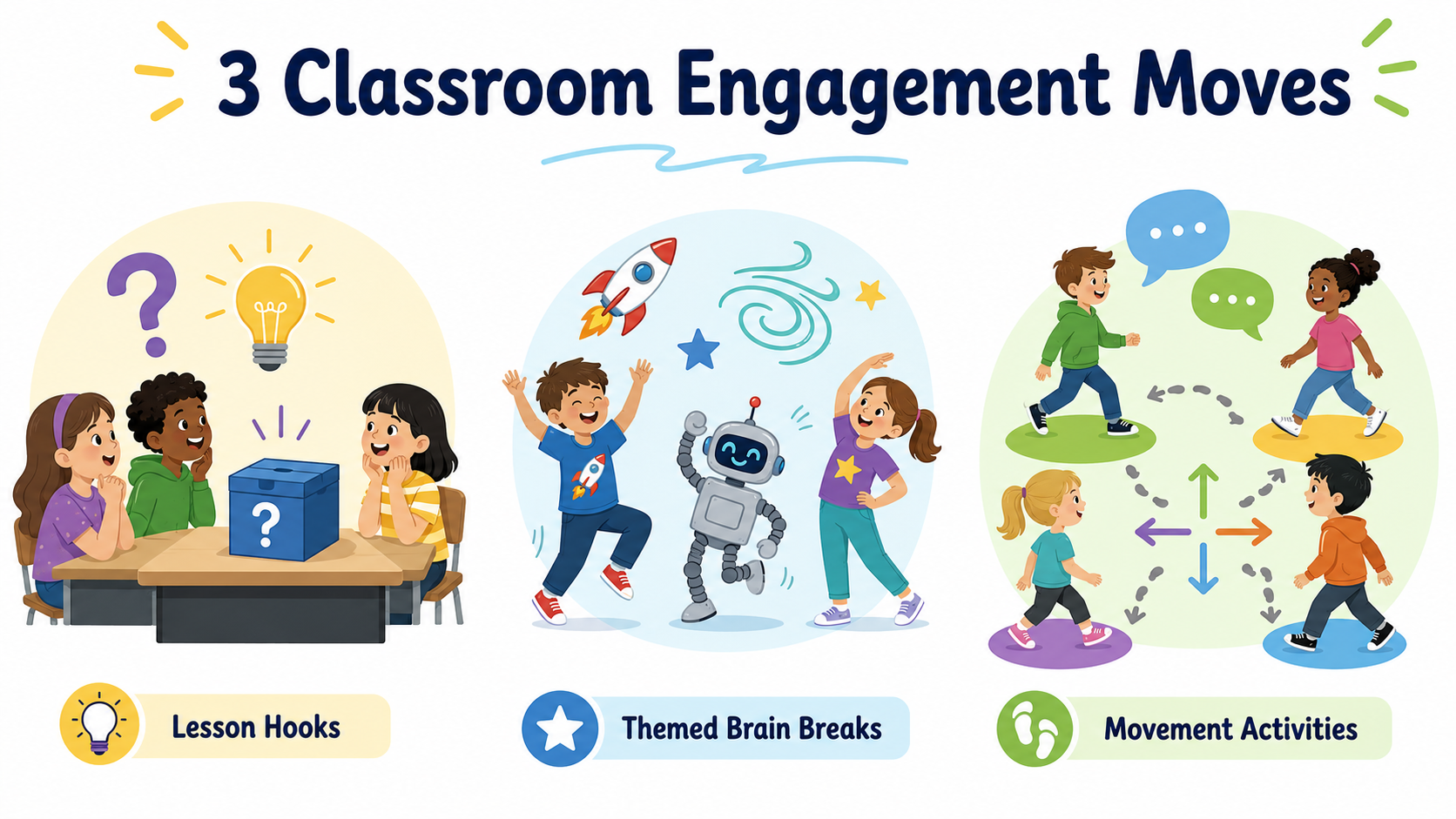
Lesson hooks, themed brain breaks, and movement activities help students focus, think, move, and actively engage with learning.
After 23 years in the classroom, I have learned that student engagement does not automatically happen because we ask for it.
The students might quiet down and look like they’re paying attention, but ensuring they stay tuned into the learning requires intentionality—thoughtful lesson design. That is where simple, science-backed teaching strategies can make a big difference.
Luckily, this does not involve teachers constantly coming up with ways to entertain their students or more prep. What’s needed are practical moves that help students pay attention, process information, retrieve what they know, and apply ideas in meaningful, brain-engaging ways.
Three of the most useful classroom engagement strategies are lesson hooks, brain breaks, and learning activities that involve movement. They’re simple, flexible, and usable in any subject area. They work because they take advantage of the different ways the human brain has evolved to learn.
1. Lesson Hooks
A lesson hook is a short opening activity that gives students a reason to care before instruction begins. It might be a strange image, a surprising question, or a quick challenge related to the day’s content.
A strong lesson hook sparks curiosity, activates prior knowledge, and gives students’ brains something to look for during the lesson. If students are not paying attention, very little gets encoded into memory.
That makes lesson hooks one of the most useful strategies for distracted students. Instead of starting class with “Take out your Chromebooks,” a hook helps students open a mental doorway to their own learning. It helps them shift from the “hallway-happenings mode” into the “classroom-thinking mode.”
In Prediction Mystery, the teacher shows students part of a situation, image, demo, graph, story, or problem and asks them to predict what will happen next. Students make a prediction and explain their reasoning before the reveal arrives during the lesson later.
It’s simple, but powerful. Prediction creates curiosity. Once students commit, they want to know if they’re right. That initial small moment sparks big mental investment and pulls students into the lesson before more-pointed instruction begins.
2. Brain Breaks
Sometimes, instead of another reminder to focus, the class needs a reset.
That is where brain breaks come in handy. Short movement breaks built around a fun theme, such as space, sports, or even a few simple body shifts reset attention and renew focus. They give students a quick chance to stand up, move, breathe, laugh a little, and come back to the learning with more energy.
This works because attention fades. Students are not machines. Their working memory gets full, their bodies get restless, and their brains start shutting down. When we are teaching for attention spans shortened by screens, fatigue, stress, and the general chaos of being a kid, a short reset can make the next part of class go much better.
Just don’t let a brain break become a ten-minute circus. Think of it as a short, clear, and easy to follow classroom re-engagement move structured to help students reset without derailing the lesson.
For example, a 90-second “Space Mission” brain break might have students squat for a rocket launch countdown, moonwalk backward, dodge imaginary meteors, reach slowly in zero gravity, and freeze in a space explorer pose.
3. Learn-on-the-Move Activities
Movement activities get students out of passive learning. Instead of sitting and receiving information, students physically respond, sort, choose, debate, or move to show their thinking.
The cognitive science is pretty straightforward on this. Movement can increase energy and attention, but the real power lies in tying movement to thinking. When students move to a corner, stand by an answer, switch partners, sort examples, or physically represent a concept, they have to make a decision and decision-making forces processing.
That is why movement activities are more than “ants-in-my-pants” removers. When done well, they become active, student-centered learning strategies that stimulate student thinking and move them away from the passivity of just watching the teacher do the thinking. Students are making choices, explaining their reasoning, listening to others, and revising their ideas.
In Four Corners Chaos, the teacher labels four corners of the room with different responses, opinions, categories, or levels of agreement. Then students hear a statement or question and move to the corner that matches their thinking. After that, they explain why they chose that corner.
This works because students have to commit. They cannot just sit there and disappear into the background. They move, choose, explain, listen, and sometimes change their minds. That is classroom engagement with a purpose.
Why It Matters
Lesson hooks, brain breaks, and movement activities are not extras. They are not just ways to make class more fun. They are high impact teaching strategies that help student brains and bodies perform what learning that sticks requires.
Students need to pay attention and connect new ideas to what they already know. They need to retrieve information from memory and explain their thinking. And, they need to apply ideas in different ways.
They need to do the mental heavy lifting, not just watch the teacher do it.
Because true learning requires action.
Not chaos, games, or fake engagement.
Thinking. Retrieval. Movement. Elaboration. Argumentation. Application.
Active learning routines matter. They create moments where students are not just receiving information, but doing something with it.
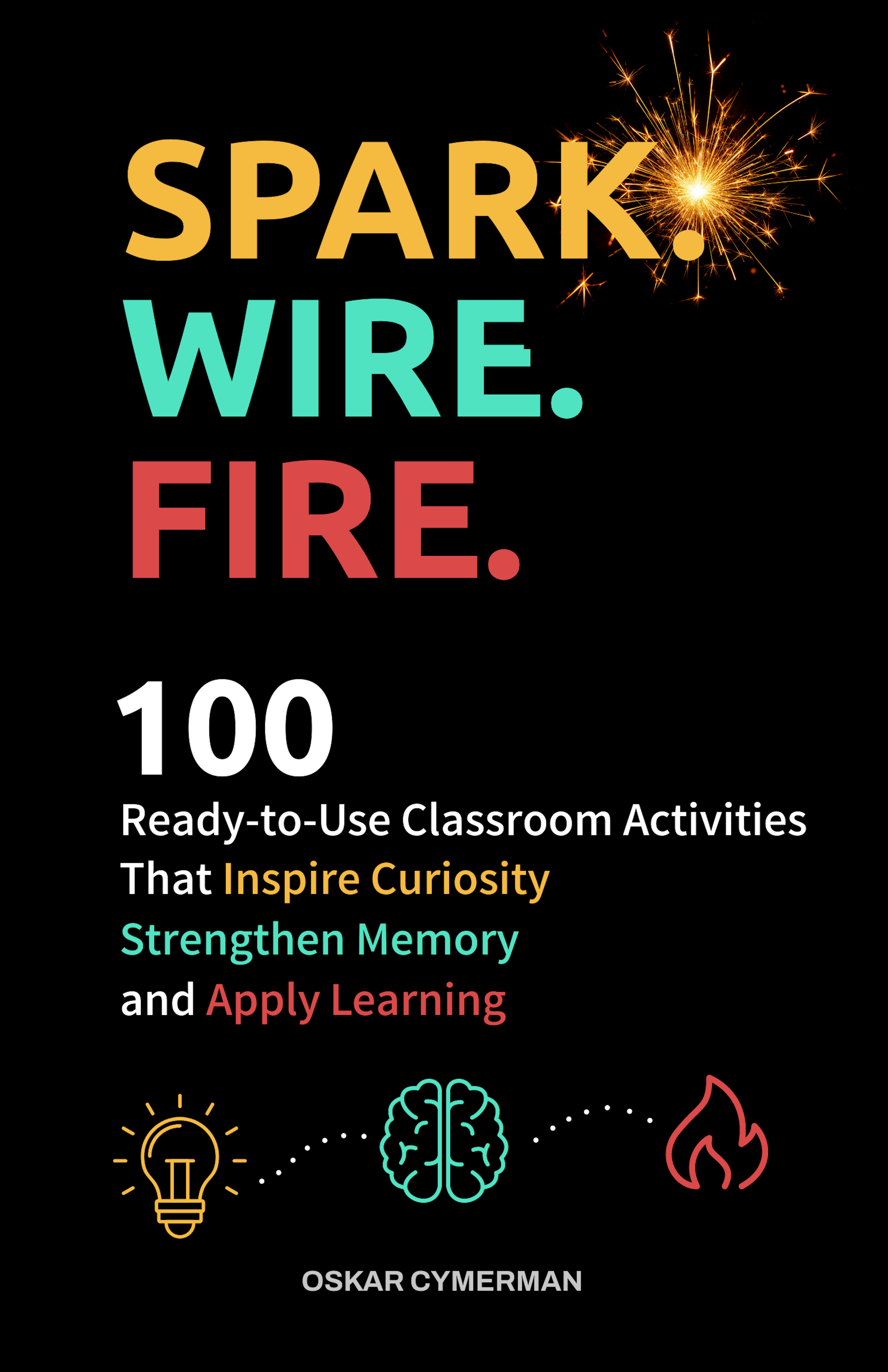
I wrote Spark. Wire. Fire. to create and organize teaching strategies that inspire curiosity, strengthen memory, and apply learning so I can use them in my classroom.
I really hope the book helps other teachers make learning more active in theirs.
It is built around a simple framework: spark curiosity and attention, wire learning into memory, and fire learning into application.
Intentional student engagement does not have to be just another difficult-to-use thing added to a teacher’s plate. It should be something we can easily build into the first five minutes, the middle of a lesson, or the final stretch of class.
One small, but powerful move at a time.
If you are looking for ready-to-use bell ringers, lesson hooks, brain breaks, retrieval practice activities, learning-on-the-go techniques, discussion starters, review games, and active learning strategies for the new school year, Spark. Wire. Fire. is available on Amazon.
And if you need instant classroom moves, check out the Master Teacher Toolkit Web App and minimize your prep while maximizing learning.
BOOKS & TOOLS
Flashcards are okay but there's a better way. The Memory (or Mind) Palace Method is a powerful learning and memorization technique that when mastered allows a student to remember 10, 20, or even 30 vocabulary words or concepts (definitions included) with ease.
And, they actually remember what they learned using memory palaces! This series of lessons (which can be used as classroom handouts) walks students through creating their first memory palace, filling it with information they need to learn, and using it to train their memories. It also contains short readings, a video lesson, memory palace examples, and practice drills.
Fair Use
Feel free to use with your students. Please do not share it with other parties or use for profit. All rights by crushschool.com.

Equity-Promoting Classroom Poster. What does EQUITY in the classroom look like?
Everyone has a different start and finish line
Quality is more important that quantity
Understanding that diversity makes us stronger
Inclusion despite beliefs, appearances, and circumstances
Thoughtfulness lowers barriers and reduces biases
Yesterday's mistakes are today's learning agenda
You can teach your students about equity and make it a daily classroom practice using this inspirational poster, which also includes images that accompany the equity description. You can discuss each letter characteristic with your students as a way of introducing your inclusive classroom and display it prominently as a reminder that diversity makes the classroom community stronger.

In this classroom Mistakes are Expected, Respected, Inspected, Corrected!
Learned helplessness is a result of years of conditioning that mistakes are bad for learning. Nothing is further from the truth - some of the most powerful life lessons come from making mistakes, reflecting on them, and growing as a result.
This is a PNG Poster you can print and display in your classroom to encourage a culture of risk-taking and learning from mistakes.
Available Now
100+ practical activities teachers can use right away with little or no prep.
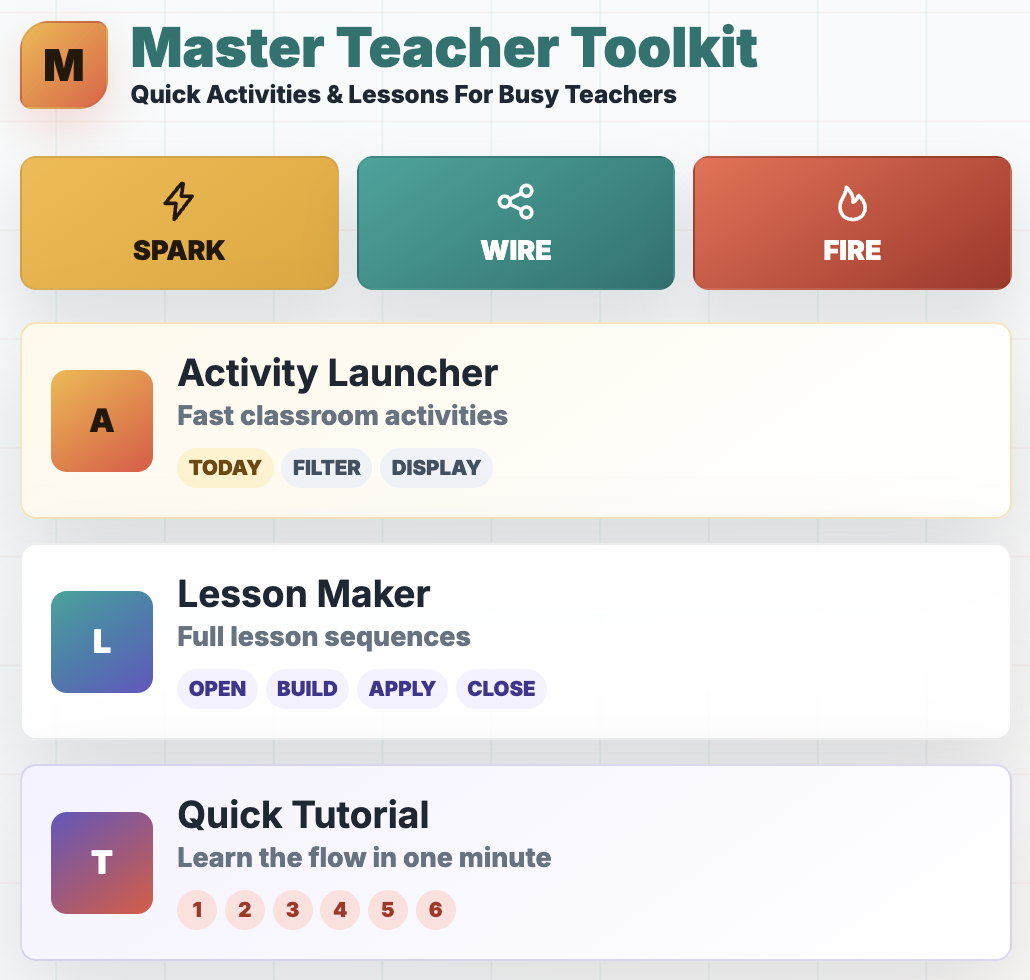
Teaching App
Launch Activities Instantly and Build Lessons in seconds. Too good to be true? See for yourself :)