
The Problem with Feedback and How to Fix It
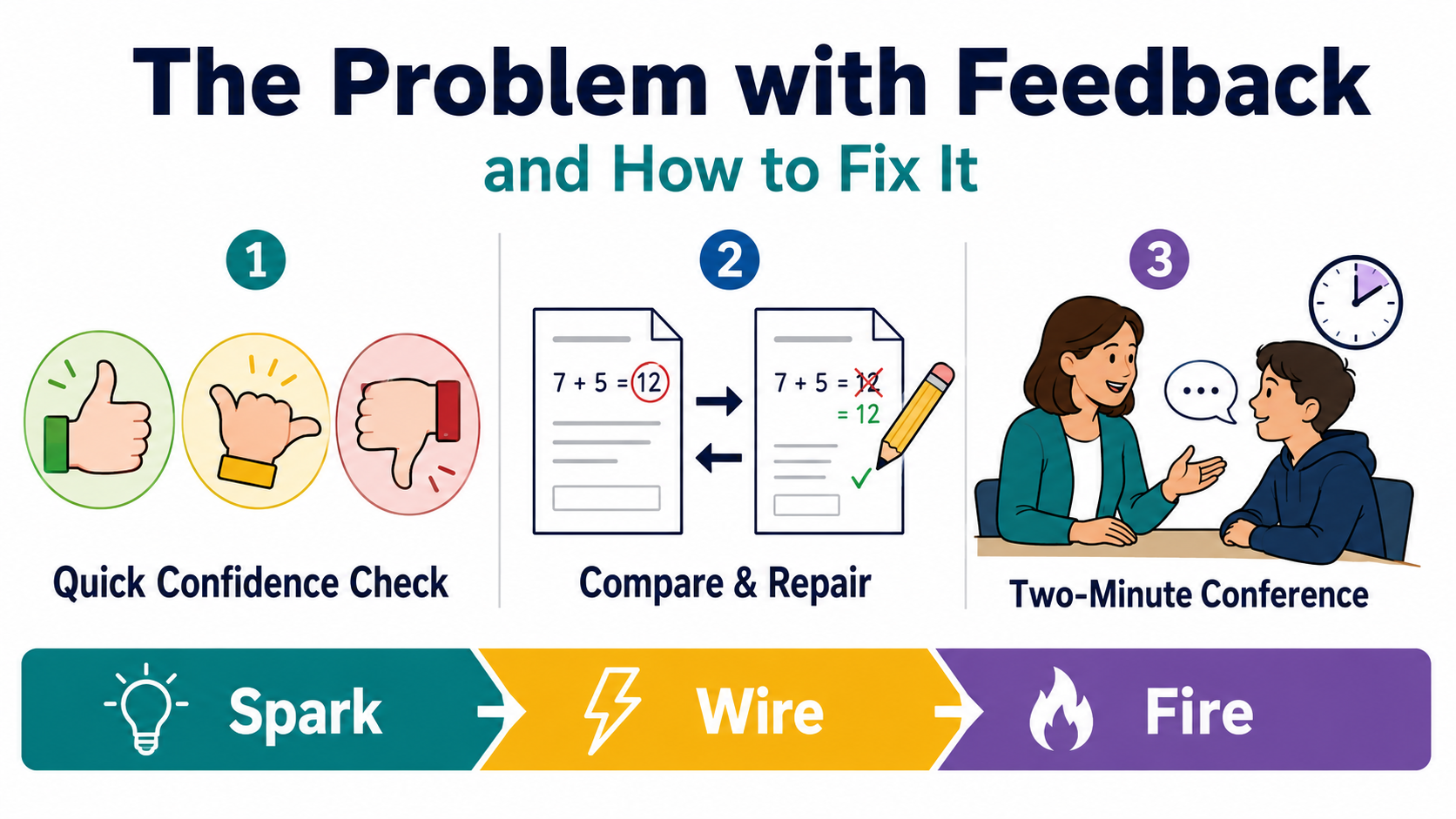
Quick Confidence Check, Compare & Repair, and Two-Minute Conference help teachers give faster feedback students can actually use.
Feedback is one of the most important parts of learning.
It is also one of the most frustrating parts of teaching.
Teachers know students need feedback. We know they need to see what they understand, what they missed, where their reasoning went wrong, and how to improve. But we also know the reality.
Feedback takes time.nA lot of time.
You collect the assignment. You bring it home. You stare at the stack with the kind of dread usually reserved for dental work and airport security lines. You start grading. You write comments. You circle mistakes. You leave helpful notes. You try to be specific, encouraging, accurate, and somehow not spend seven minutes on each paper.
Then, days later, students get the work back.
Some read the comments. Some look only at the grade. Some shove it into a folder where papers go to die. Some ask bluntly, “Can I throw this away?”
And just like that, hours of teacher effort produce very little learning.
That’s the feedback problem. It often arrives too late, takes too much teacher time, and comes after students have already moved on mentally.
By the time students get comments back, it’s over. The test is done. The assignment is finished. The grade is entered. The learning moment hasn’t just cooled off—it’s cold.
Because feedback works best when students can use it.
It needs to be timely, clear, and connected to an immediate chance to improve. If students cannot act on the feedback, it becomes more like a report card on the past than a tool for better learning.
This is why we need more real-time feedback built into everyday instruction.
Not more grading, comments, or stacks of notebook paper.
More feedback while student thinking is still happening.
That’s where short classroom strategies can help. Many activities in the Spark. Wire. Fire. book are designed to make student thinking visible right away.
And when thinking becomes visible, feedback becomes faster. Teachers can spot misconceptions, listen to explanations, ask follow-up questions, correct errors, and help students revise before the learning moment disappears.
Here are but a few ways to give and get better feedback.
1. Quick Confidence Check
One simple strategy is Quick Confidence Check.
After students answer a question, solve a problem, write a claim, choose an explanation, or complete a step, they quickly rate their confidence.
Ask them to show 3, 2, 1 fingers (maybe avoiding their middles finger?):
3 = I can explain this.
2 = I think I get it, but I need to check.
1 = I’m not there yet.
This gives the teacher immediate feedback without collecting anything complicated. If half the class has the right answer but most students mark a 1 or 2, that tells you something important. They may have guessed. They may have copied the method. They may have followed the example but not fully understood it.
That is valuable information while there is still time to do something about it.
Students also get feedback from themselves. They have to pause and ask, “Do I actually understand this, or did I just get through it?” That small metacognitive moment matters because students often confuse completion with understanding.
For example, in Social Studies, students might write a cause-and-effect statement about the causes of the American Revolution. Afterward, they show 1, 2, or 3 fingers to rate whether they can explain how that cause contributed to colonial resistance.
It takes less than a minute, but it gives both teacher and student a clearer picture of where the learning actually is.
2. Compare & Repair
Another strategy is Compare & Repair.
Students answer, solve, draw, write, or explain something on their own. Then they compare their response with a partner, a small group, an exemplar, or a teacher-provided answer. Their job is not just to see whether they were right or wrong, but to repair the thinking.
They look for what is missing, unclear, weak, incorrect, incomplete, or unsupported. Then they revise.
This is feedback students can use immediately.
Instead of the teacher writing, “Needs more evidence” three days later, students notice the missing evidence while the idea is still fresh. Instead of circling an error after the assignment is over, the class catches the misconception when students still care about fixing it.
In Chemistry, students might compare two stoichiometry setups and repair the one with the wrong mole ratio. In ELA, students might compare thesis statements and revise the one that is too vague. In social studies, they might compare two explanations of an event and add missing context.
The feedback happens through comparison, discussion, and revision.
That is much more useful than a comment students see after their brain has already checked the assignment as last-week’s news.
3. Two-Minute Conference
A third strategy is Two-Minute Conference.
Students complete a quick response, explanation, problem, sketch, or claim. Then the teacher chooses a few students or groups for a fast conference while the rest of the class continues working.
The goal is not to grade the whole thing, but to ask one actionable question that helps the student improve while the learning is still happening:
“What part are you most confident about?”
“Where did your thinking get stuck?”
“What evidence supports that answer?”
“Can you explain why that step works?”
“What would make this clearer?”
“What is one thing you would change if you had another minute?”
Students get immediate, specific feedback they can actually use. Instead of reading a comment four days later, they hear one targeted question in the moment and have a chance to respond, rethink, and improve.
In Earth and Space Science, I might ask, “What evidence shows that this is a convection current?” In ELA, a teacher might ask, “How does that quote support your claim?” In social studies, a teacher might ask, “Which cause had the biggest impact, and why?”
The Two-Minute Conference also gives the teacher better information. You hear students explaining their thinking, not just looking at their final answer. And when you hear the thinking, you can catch misunderstandings before they become permanent.
Feedback as conversation, not paperwork.
And while nothing eliminates grading except possibly becoming a goat farmer (and even then the goats probably have standards) Two Minute Conferences reduce the amount of feedback that has to happen after the fact. They help teachers catch problems when students still have a chance to adjust their understanding.
Feedback should not only tell students how they did, but help them do better.
Real-time feedback also shifts responsibility to students. Instead of passively receiving a grade, students compare answers, revise explanations, defend reasoning, fix mistakes, and notice gaps in their understanding. This builds metacognition—a fancy way of saying students start thinking about their thinking and learning.
That’s when feedback becomes power.
No longer just “Here is what you got wrong,” but “Here is what you improved and now understand better.”
Grading-heavy feedback systems is not what we need. Most of us are already drowning in those. What we need are small, practical routines that make learning visible and usable during class.
A quick confidence check. A comparison and repair. A two-minute conference.
Tiny changes. huge dividends. Instead of feedback arriving after learning, it becomes part of learning.
That’s the fix. Make thinking visible sooner. Give feedback faster. Let students act on it immediately.
Because feedback is power when we can use it to improve.
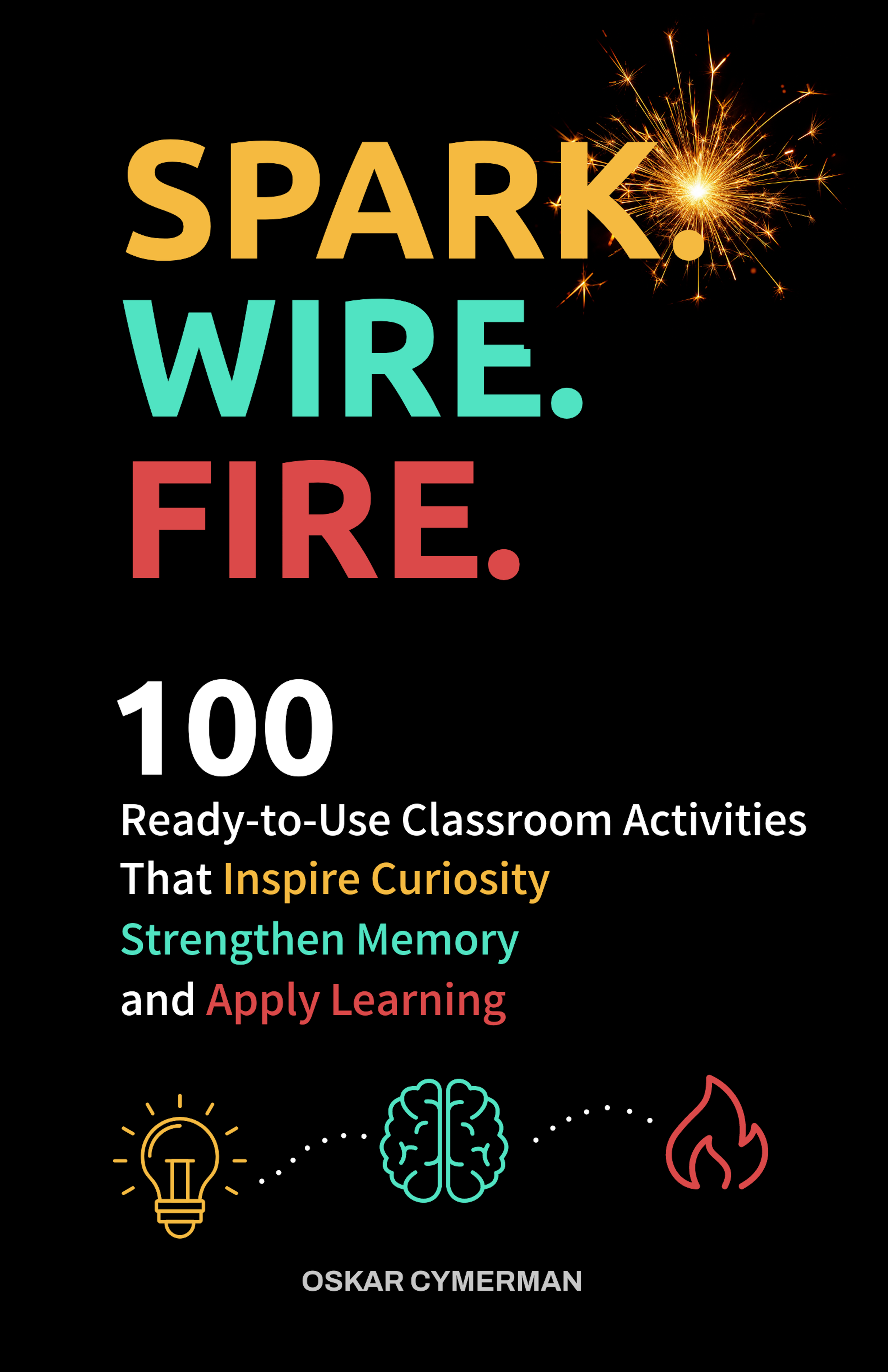
For 100+ ready-to-use activities that help students think, retrieve, connect, and apply, check out my book Spark. Wire. Fire. on Amazon.
If you want faster access to bell ringers, exit tickets, mid-lesson checks, and other active content review strategies my Master Teacher Toolkit app helps you find classroom-ready ideas instantly.
BOOKS & TOOLS
MTT Next Time FREE Teacher Reflections iPhone App
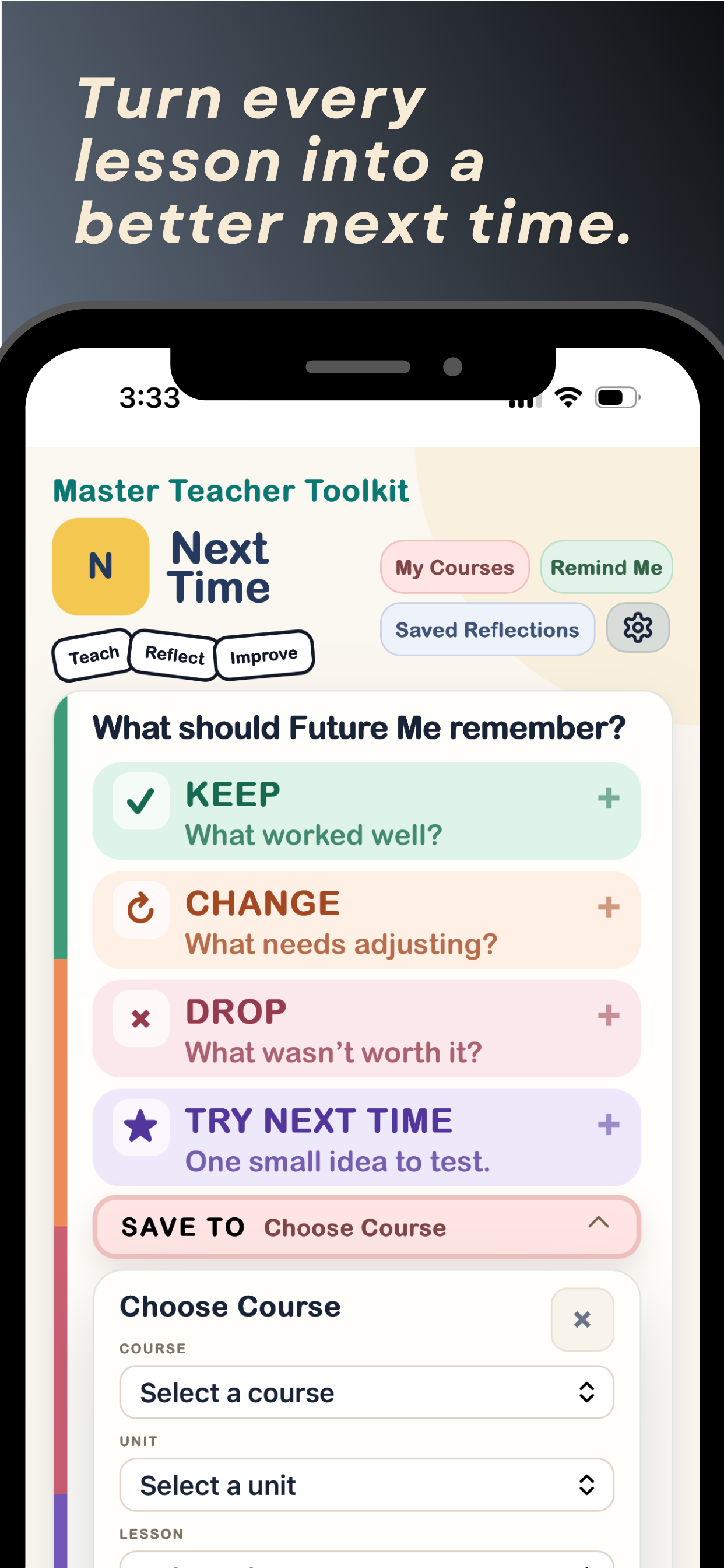
Teach. Reflect. Improve.
Flashcards are okay but there's a better way. The Memory (or Mind) Palace Method is a powerful learning and memorization technique that when mastered allows a student to remember 10, 20, or even 30 vocabulary words or concepts (definitions included) with ease.
And, they actually remember what they learned using memory palaces! This series of lessons (which can be used as classroom handouts) walks students through creating their first memory palace, filling it with information they need to learn, and using it to train their memories. It also contains short readings, a video lesson, memory palace examples, and practice drills.
Fair Use
Feel free to use with your students. Please do not share it with other parties or use for profit. All rights by crushschool.com.

Equity-Promoting Classroom Poster. What does EQUITY in the classroom look like?
Everyone has a different start and finish line
Quality is more important that quantity
Understanding that diversity makes us stronger
Inclusion despite beliefs, appearances, and circumstances
Thoughtfulness lowers barriers and reduces biases
Yesterday's mistakes are today's learning agenda
You can teach your students about equity and make it a daily classroom practice using this inspirational poster, which also includes images that accompany the equity description. You can discuss each letter characteristic with your students as a way of introducing your inclusive classroom and display it prominently as a reminder that diversity makes the classroom community stronger.

In this classroom Mistakes are Expected, Respected, Inspected, Corrected!
Learned helplessness is a result of years of conditioning that mistakes are bad for learning. Nothing is further from the truth - some of the most powerful life lessons come from making mistakes, reflecting on them, and growing as a result.
This is a PNG Poster you can print and display in your classroom to encourage a culture of risk-taking and learning from mistakes.
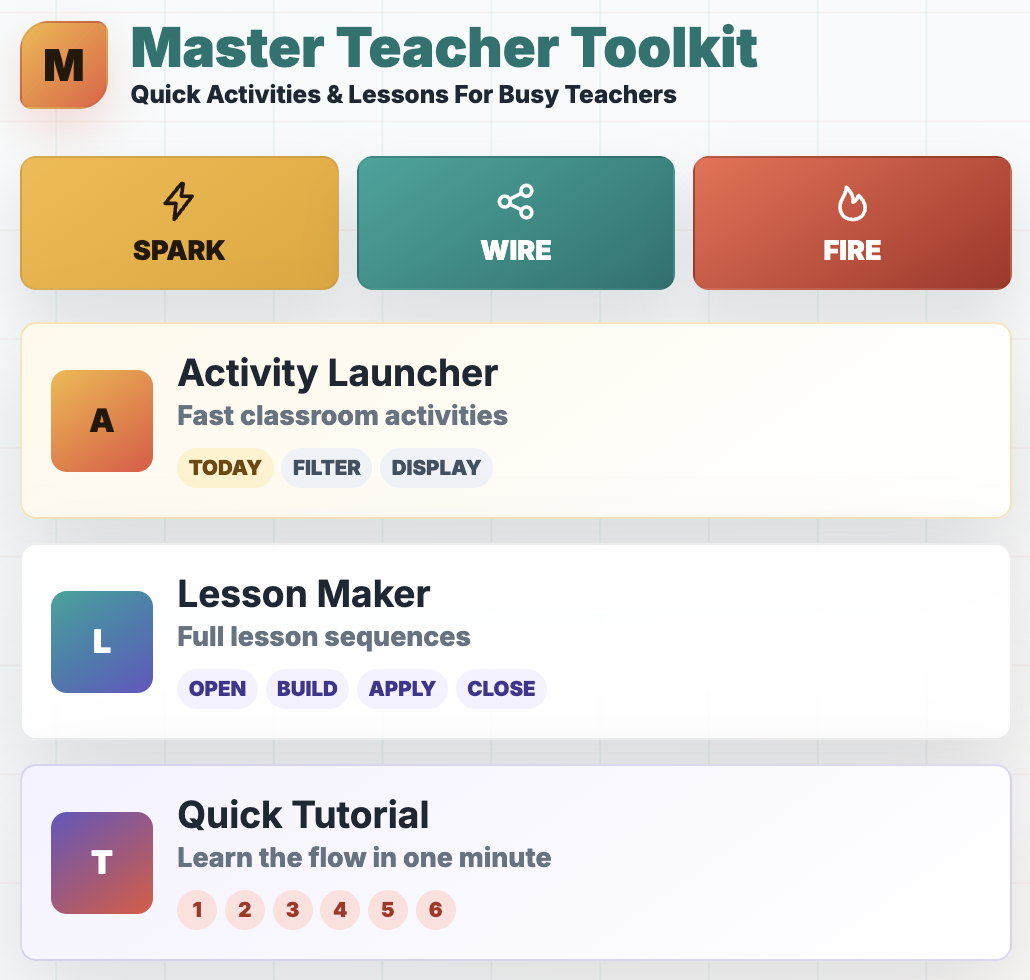
Teaching App
Launch engaging, deeper learning activities and lessons in seconds. Then, launch and display them to students instantly.
NEW BOOK
100+ practical activities teachers can use right away with little or no prep.