
The Problem with Review Packets
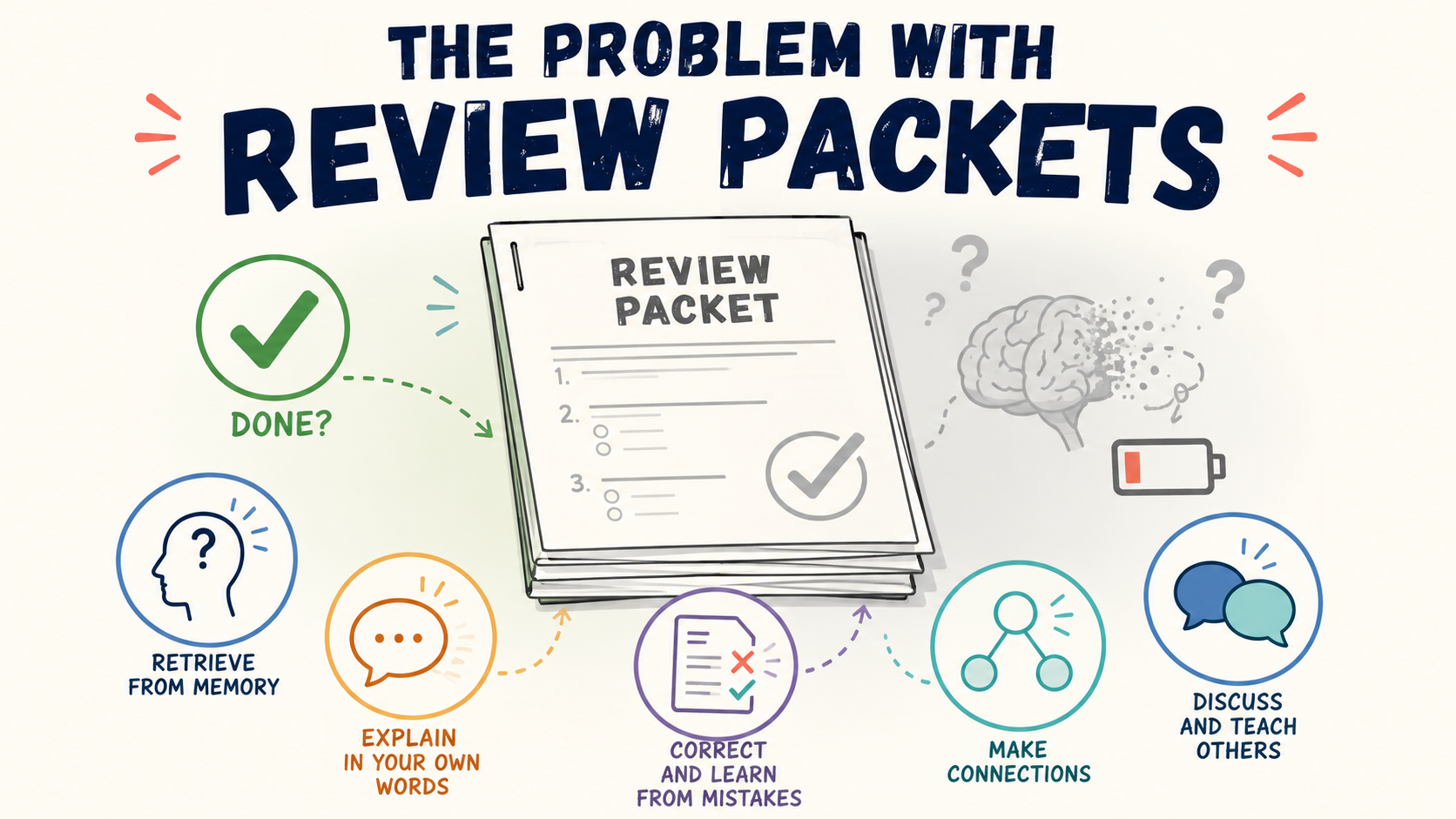
Review packets can look productive, but real review should help students retrieve, explain, connect, and use what they know.
Review packets feel responsible.
They look organized. They give students something to do. They create the illusion that we are preparing them for the test in a serious and structured way. There are pages, questions and “Unit Review” in bold that makes it feel important.
But let’s be honest.
A lot of review packets are ineffective.
Not because review is bad. Students need repeated exposure, practice, retrieval, feedback, and opportunities to strengthen memory. The problem is that many review packets do not actually do those things very well.
Instead, students flip through notes, hunt for answers, copy definitions, ask “Is this correct?” twelve times, and try to finish the packet as quickly as possible. Some students do the whole thing and some half. Some wait for the answer key. Many complete it and still have no idea what they know or do not know.
The Review Packet Problem
The packet gets done, but learning does not always get stronger.
This is because review should not be about data entry—moving information from notes to paper.
Review should involve moving information from memory to use. That means students need to retrieve it before they look it up. They need to explain why an answer makes sense. They need to compare similar ideas. They need to correct mistakes. They need to apply concepts to new situations.
A review packet often rewards recognition. Students see a word and think, “Oh yeah, I remember that.” But recognition is not the same as retrieval. Recognition can trick students into thinking they know something because it looks familiar, but when the test comes and notes disappear the idea is gone.
Retrieval Practice: What Real Review Does
Real review should make students pull information from memory.
That is why retrieval practice activities are so powerful. A brain dump, a no-notes explanation, a quick quiz, a wrong answer correction, a partner teach-back, a concept sort, or a two-question challenge can reveal what students actually know. These activities make students work with the material instead of simply finding it.
Review should also include deeper processing. Students should not only answer “What is it?” They should answer “How does it work?” “Why does it matter?” “What connects to this?” “What happens if it changes?” That is how review becomes more than test prep. It becomes learning.
Should Review Packets Be Banned?
Not hardly. After all, review packets tell students what they need to know.
And while a good packet can help organize practice, it should not be the main review strategy. Instead, treat it as one tool of a better review routine.
Have students try sections without notes first. Build in partner explanations. Add mistake analysis. Include concept connections. Ask students to mark confidence levels. Turn some questions into discussion prompts. Use the packet as a launchpad, not a silent worksheet marathon.
Because the goal of review is not to keep students busy until the test.
The goal is to strengthen memory, expose confusion, deepen understanding, and help students use what they know.
A packet alone cannot do that.
Students need to retrieve, explain, connect, apply, fix mistakes, compare ideas, teach each each other, and most importantly, think.
That is what real review looks like.
And yes, it may be a little louder than a packet.
But it is a lot more useful.
For 100+ ready-to-use activities that help students think, retrieve, connect, and apply, check out my book Spark. Wire. Fire. on Amazon.
If you want faster access to bell ringers, exit tickets, mid-lesson checks, and other active content review strategies my Master Teacher Toolkit app helps you find classroom-ready ideas instantly.
BOOKS & TOOLS
Flashcards are okay but there's a better way. The Memory (or Mind) Palace Method is a powerful learning and memorization technique that when mastered allows a student to remember 10, 20, or even 30 vocabulary words or concepts (definitions included) with ease.
And, they actually remember what they learned using memory palaces! This series of lessons (which can be used as classroom handouts) walks students through creating their first memory palace, filling it with information they need to learn, and using it to train their memories. It also contains short readings, a video lesson, memory palace examples, and practice drills.
Fair Use
Feel free to use with your students. Please do not share it with other parties or use for profit. All rights by crushschool.com.

Equity-Promoting Classroom Poster. What does EQUITY in the classroom look like?
Everyone has a different start and finish line
Quality is more important that quantity
Understanding that diversity makes us stronger
Inclusion despite beliefs, appearances, and circumstances
Thoughtfulness lowers barriers and reduces biases
Yesterday's mistakes are today's learning agenda
You can teach your students about equity and make it a daily classroom practice using this inspirational poster, which also includes images that accompany the equity description. You can discuss each letter characteristic with your students as a way of introducing your inclusive classroom and display it prominently as a reminder that diversity makes the classroom community stronger.

In this classroom Mistakes are Expected, Respected, Inspected, Corrected!
Learned helplessness is a result of years of conditioning that mistakes are bad for learning. Nothing is further from the truth - some of the most powerful life lessons come from making mistakes, reflecting on them, and growing as a result.
This is a PNG Poster you can print and display in your classroom to encourage a culture of risk-taking and learning from mistakes.
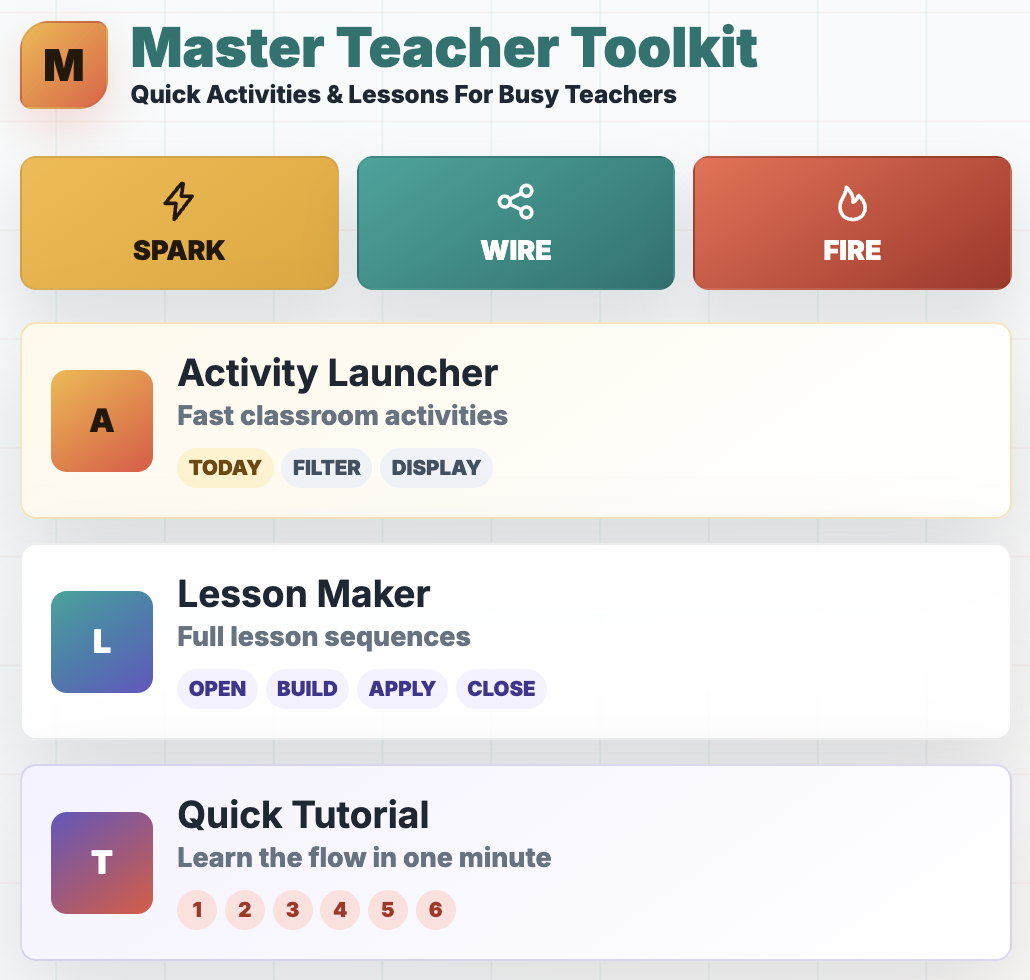
Teaching App
Launch engaging, deeper learning activities and lessons in seconds. Then, launch and display them to students instantly.
NEW BOOK
100+ practical activities teachers can use right away with little or no prep.