
Smart Practice: How Retrieval, Spacing, and Interleaving Improve Learning
Jake studied harder than almost everyone else in his class.
The night before every science test, he sat at the kitchen table for hours. He underlined concepts and re-read his notes. He reviewed vocabulary words and examples. He stayed up past midnight trying to cram it all in.
Then the test came back.
63%.
Again.
Jake wasn’t lazy or dumb. Nor was he bad at school.
He just fell into the trap of using learning strategies that didn’t work.
And honestly? Most students use crappy study strategies because schools often reward the illusion of studying instead of actual learning. Students are conditioned to review, reread, and cram because those strategies feel productive and often lead to good test grades.
But feeling productive and actually learning are two very different things.
Real learning requires struggle. It requires thinking. It requires retrieval, spacing, and variation.
It requires Smart Practice.
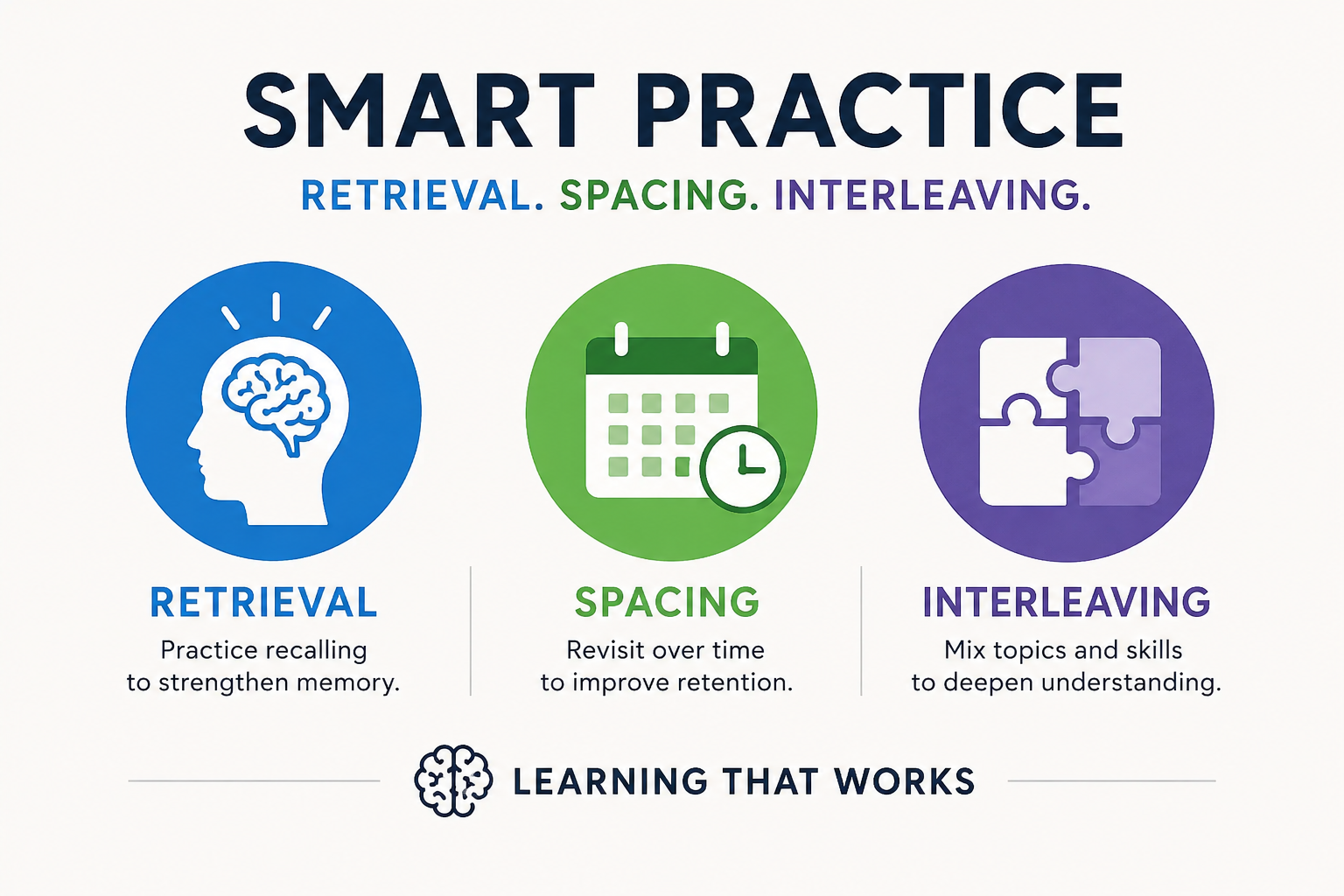
Smart Practice is one of the most effective examples of learning that works because it combines three powerful, research-supported approaches:
Retrieval Practice
Spaced Practice
Interleaving
Together, they form one of the most effective science backed teaching strategies teachers can use to improve retention, attention, and long-term understanding.
They’re not gimmicks but brain based teaching strategies rooted in cognitive science and proven to improve learning.
What Is Smart Practice?
Smart Practice is the combination of:
Retrieval → pulling information out of memory
Spacing → revisiting learning over time
Interleaving → mixing topics and skills together
Instead of cramming information into short-term memory, Smart Practice strengthens long-term memory pathways.
This matters because student forgetting is not usually a motivation problem, but a practice problem. The brain learns best when it has to work. That’s why many of the best active learning strategies create productive struggle instead of passive review.
Retrieval Practice: Learn by Remembering
Retrieval practice means forcing the brain to recall information without looking at notes.
Every time students retrieve information from memory, they strengthen the neural pathway (myelination) connected to that information. This makes the memory easier to access later and is one of the highest-impact retrieval practice activities teachers can use to improve retention.
Unfortunately, many classrooms still rely heavily on passive review such as highlighting or underlining, watching lectures, copying to notes, or reading the textbook.
The problem?
Students can recognize information without actually being able to recall it independently. Recognition is not mastery and is often dubbed as “the illusion of learning.”
Retrieval changes that.
3 Classroom Examples of Retrieval Practice
1. Brain Dump
At the start of class, students write down everything they remember from yesterday’s lesson or last week’s worth of lessons with no notes allowed.
It’s simple, fast, and highly effective and works extremely well as a strategy for distracted students because it immediately activates thinking instead of passive listening.
2. 3-2-1 Recall
Students write:
3 things they remember
2 connections they can make
1 question they still have
This combines retrieval with elaboration and reflection and is one of the easiest student centered learning strategies to implement because students actively process information instead of receiving it passively.
Students create a concept map entirely from memory. Then they compare with peers and revise.
This strengthens organization, retrieval, and deeper understanding simultaneously.
Spacing: Stop Cramming
Cramming works for temporary survival. The problem is that information learned in one giant session fades quickly.
Spacing solves this problem by revisiting learning over time.
Instead of studying something once for 45 minutes, students study it briefly multiple times across days or weeks.
The brain interprets repeated exposure over time as important information worth keeping. This is especially important when teaching for short attention spans because attention naturally declines during long uninterrupted learning sessions.
The brain needs resets. Spacing provides them.
3 Classroom Examples of Spaced Practice
1. Weekly Spiral Warm-Ups
Every warm-up includes a question or two from previous lessons or units.
Students continuously revisit old learning instead of abandoning it after an assignment or test. This is one of the simplest high impact teaching strategies because it requires minimal prep but produces long-term retention.
2. Delayed Exit Tickets
Instead of reviewing material immediately after instruction, revisit it several days later with a short, formative quiz or reflection.
The delay strengthens memory retrieval. The struggle helps learning stick.
3. Mini Review Cycles
Spend 5 minutes every few days revisiting old concepts through discussion, diagrams, or quick retrieval activities.
Tiny reviews beat massive cramming sessions every time.
Interleaving: Mix It Up
Most students practice in blocks.
Ten identical math problems. One chapter at a time. One topic at a time.
The problem is that blocked practice creates familiarity, not flexibility—students become good at solving problems only when they already know exactly which strategy to use.
Interleaving changes this.
Interleaving mixes concepts, skills, or question types together so students must decide how to think instead of simply repeating a procedure. This improves transfer, discrimination, and problem-solving ability.
It also improves classroom engagement because variation reduces monotony and increases attention.
Predictability kills focus. Variation wakes the brain up.
3 Classroom Examples of Interleaving
1. Mixed Problem Sets
Instead of 15 identical problems, mix multiple skills together. This means students must identify the strategy to use before solving each problem. This identification process strengthens understanding.
2. Station Rotation
Students rotate through stations reviewing different concepts using a variety of strategies:
vocabulary
diagrams
practice problems
data analysis
short writing
The variety keeps cognitive engagement higher.
3. Compare and Contrast Activities
Ask students to explain the difference between similar concepts.
Examples:
weather vs. climate
physical vs. chemical change
renewable vs. nonrenewable resources
Interleaving strengthens discrimination between ideas instead of treating learning as isolated facts.
Why Smart Practice Works
Smart Practice works because it aligns with how the brain actually learns. It:
combats passive learning
reduces forgetting
strengthens memory pathways
improves transfer
increases engagement
creates deeper understanding
Most importantly, Smart Practice shifts classrooms away from “sit and get” instruction and toward learning that works.
This is what effective science backed teaching strategies look like in practice.
Not more worksheets or longer lectures, but better learning design.
Back to Jake…
Jake’s problem was never effort.
It was strategy.
Instead of rereading notes for three straight hours the night before the test, Smart Practice would have helped him:
retrieve information regularly
revisit concepts over time
mix old and new learning together
Imagine if Jake had:
done daily brain dumps
reviewed old material every few days
practiced mixed question sets
used spaced mini-reviews instead of cramming
His brain would have been forced to strengthen learning repeatedly instead of trying to panic-store information.
And that’s the difference between studying and learning.
The first creates temporary familiarity. The latter creates durable understanding.
If we want classrooms filled with deeper thinking, stronger retention, and real engagement, we need more than students being busy.
We need intentional practice. Enter Smart Practice.
Want More Learning That Works?
If you enjoyed the ideas in this article, you'll find 100 more inside Spark. Wire. Fire.: 100 Ready-to-Use Classroom Activities that Inspire Curiosity, Strengthen Memory, and Apply Learning.
This practical guide is packed with simple, classroom-tested activities designed to increase engagement, strengthen memory, improve retrieval, and help students become more independent learners. Every strategy is grounded in cognitive science and can be implemented with minimal preparation.
Whether you're looking for new bell ringers, review activities, discussion starters, retrieval practice activities, or effective strategies for distracted students, you'll find ready-to-use ideas that help transform passive classrooms into active learning environments.
Check it out on Amazon and discover more learning that works.
And if you’d like instant access to Retrieval, Spacing, Interleaving, and many other high impact classroom activities subscribe to the Master Teacher Toolkit and launch them in seconds.
BOOKS & TOOLS
Flashcards are okay but there's a better way. The Memory (or Mind) Palace Method is a powerful learning and memorization technique that when mastered allows a student to remember 10, 20, or even 30 vocabulary words or concepts (definitions included) with ease.
And, they actually remember what they learned using memory palaces! This series of lessons (which can be used as classroom handouts) walks students through creating their first memory palace, filling it with information they need to learn, and using it to train their memories. It also contains short readings, a video lesson, memory palace examples, and practice drills.
Fair Use
Feel free to use with your students. Please do not share it with other parties or use for profit. All rights by crushschool.com.

Equity-Promoting Classroom Poster. What does EQUITY in the classroom look like?
Everyone has a different start and finish line
Quality is more important that quantity
Understanding that diversity makes us stronger
Inclusion despite beliefs, appearances, and circumstances
Thoughtfulness lowers barriers and reduces biases
Yesterday's mistakes are today's learning agenda
You can teach your students about equity and make it a daily classroom practice using this inspirational poster, which also includes images that accompany the equity description. You can discuss each letter characteristic with your students as a way of introducing your inclusive classroom and display it prominently as a reminder that diversity makes the classroom community stronger.

In this classroom Mistakes are Expected, Respected, Inspected, Corrected!
Learned helplessness is a result of years of conditioning that mistakes are bad for learning. Nothing is further from the truth - some of the most powerful life lessons come from making mistakes, reflecting on them, and growing as a result.
This is a PNG Poster you can print and display in your classroom to encourage a culture of risk-taking and learning from mistakes.
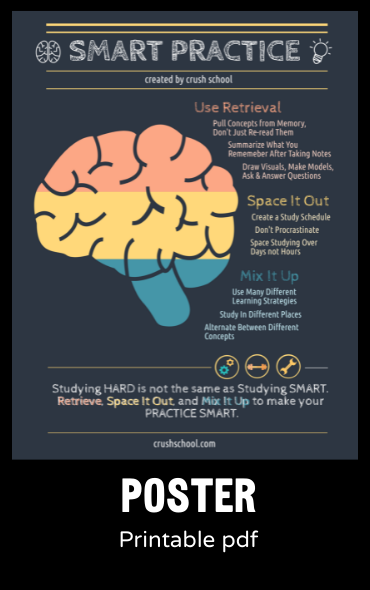
Retrieval Practice, Spaced Practice, and Mixed Practice (Interleaving).
Studying Hard is not the same as Studying Smart. This High Quality printable, digital (PNG) poster is a constant classroom reminder of best practices for teachers and learning the smart way for students.
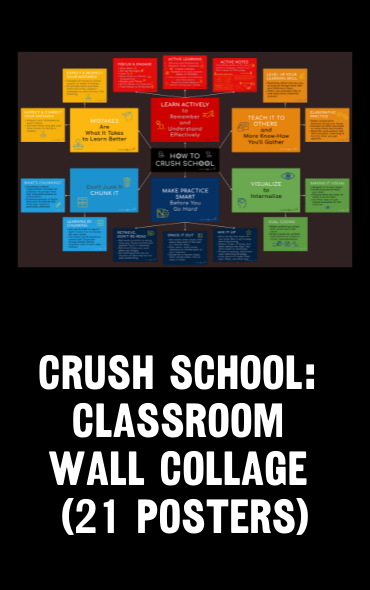
Classroom Wall Collage designed to promote effective, research-based, active learning strategies. Consists of 6 categories:
Learn Actively (Active Learning Strategies to avoid passive learning)
Mistakes Are What It Takes to Learn (Promoting a classroom culture of making and learning from mistakes and why such learning is effective)
Don’t Junk It, Chunk It (How to use the brain chunking technique)
Make Practice Smart (How to use smart and intentional study strategies instead of regurgitating and cramming information)
Visualize to Internalize (Dual Coding Strategy)
Teach It To Others (How to use what you learn to teach others to in turn learn it on a deeper level)
Each category includes 2 or 3 more specific descriptions of how it should be used. And, it rhymes for extra swag and student retention!
A total of 21 posters. Upon payment, you will be directed to a Google Drive link, which gives you 24 hours to copy the folder containing all 21 images to your Google Drive to use for educational purposes only.
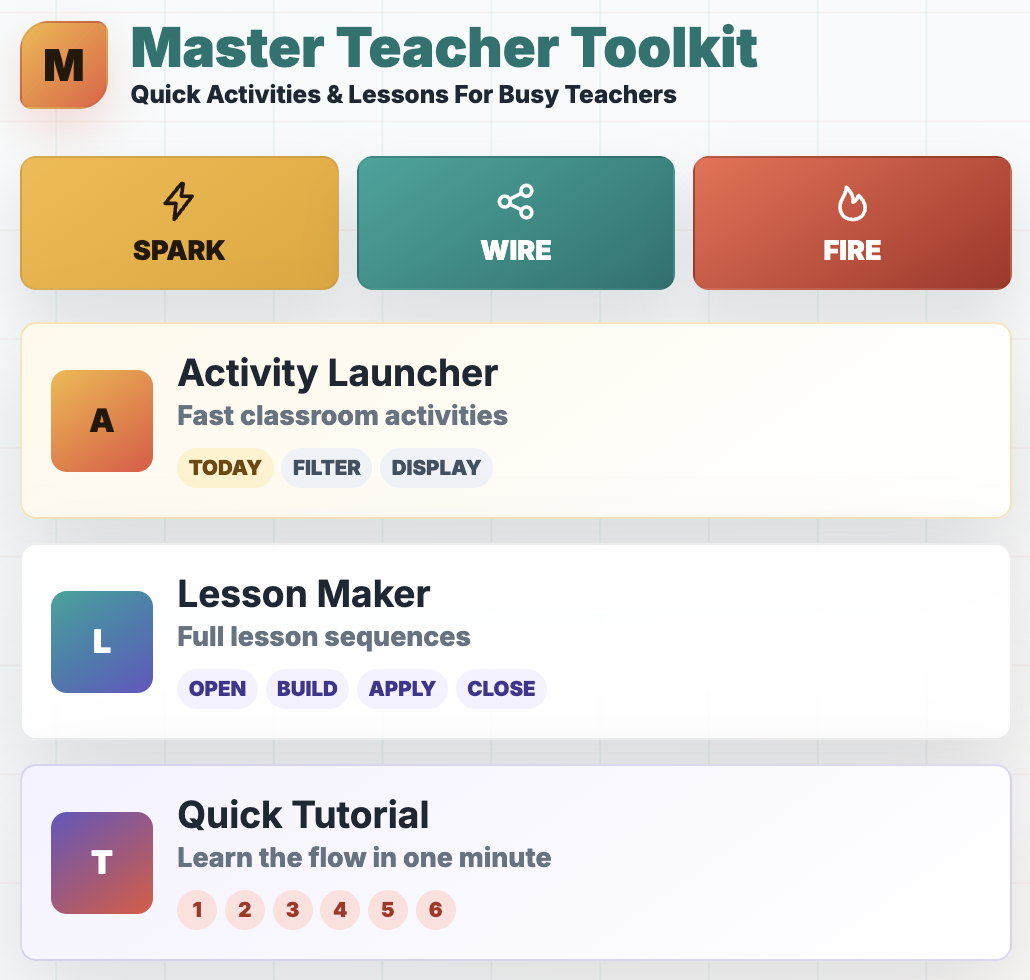
Teaching App
Build engaging lessons in seconds. Then, launch and display them to students instantly.
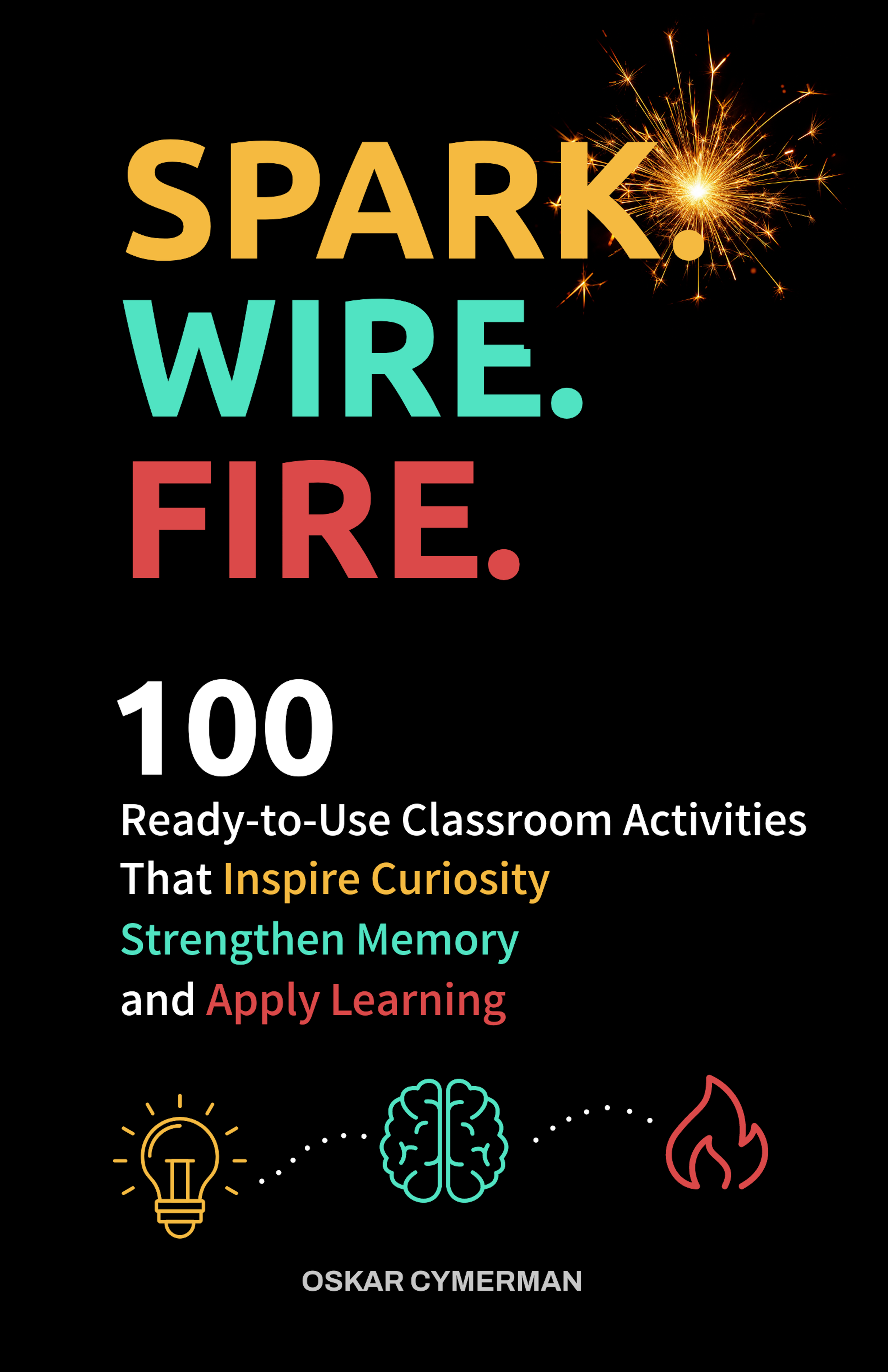
NEW BOOK
100+ practical activities teachers can use right away with little or no prep.