
Mystery Reveal: A Better Bell Ringer for Curiosity and Thinking
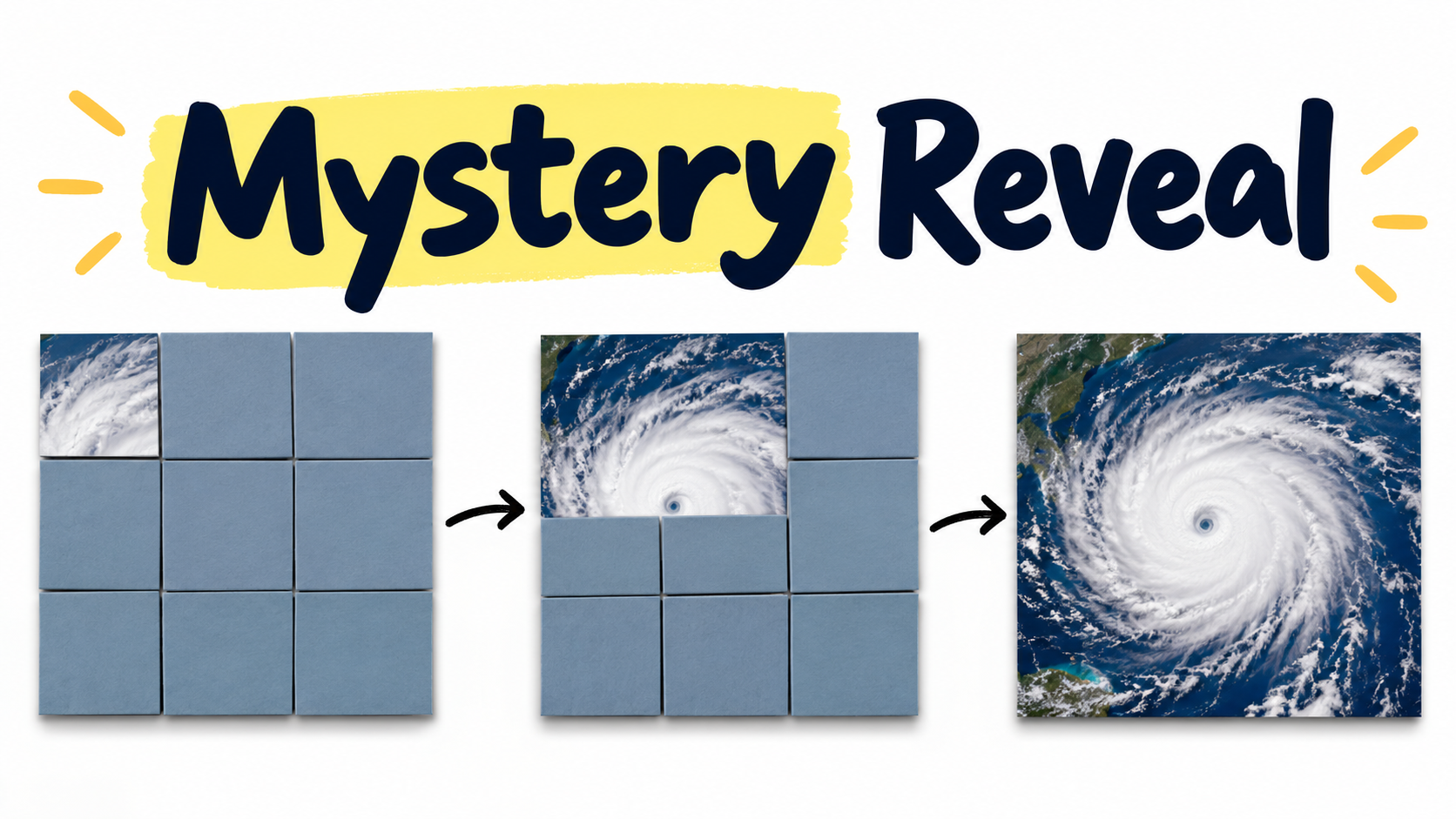
Mystery Reveal sparks curiosity by showing students part of an image, graph, quote, or problem and asking them to predict, revise, and connect their thinking to the lesson.
A lot of bell ringers are technically fine.
Students come in, sit down, answer a question or solve a problem, keep students busy while we take attendance, quickly answer an email, and mentally prepare for whatever sixth period plans for us.
But a good bell ringer should do more than occupy students.
A good bell ringer should spark learning; prepare the brain. It should make students curious, activate what they already know, and give them a reason to pay attention to what comes next.
That is the purpose of a Spark activity in the Spark-Wire-Fire Framework. It prepares students to learn before the main lesson begins. It challenges their thinking in perhaps unusual and unexpected way.
It does not need to be complicated or use a lot of technology.
It just needs to tickle the brain the way Mystery Reveal does.
What Is Mystery Reveal?
Mystery Reveal is a bell ringer that begins with partial information. Instead of showing students the whole thing right away, you hide part of it. Students might see one corner of a photo, one section of a graph, one line from a quote, one small part of a diagram, or one step of a problem.
Their job is to figure out what they are looking at.
At first, their guesses may be rough. That’s okay. The point is not to be correct, but to get them thinking. As more information appears, students update their predictions. They may confirm their original idea, abandon it, or realize they were completely off.
Students are no longer passively waiting for the teacher to tell them what something means, but actively building meaning from clues.
In other words, their brains are awake for the lesson.
How to Use Mystery Reveal
To use Mystery Reveal, choose something connected to the day’s learning. It could be an image, graph, diagram, quote, map, object, equation, political cartoon, or a historical artifact. Then cover most of it with rectangular or square shapes.
Start by revealing only a small piece. Ask students what they think it is and what evidence supports their prediction. Then reveal another piece and ask them to revise their thinking. Continue until the full image or example is visible. Then, connect the reveal to the day’s lesson.
The basic flow is simple:
Show a small part.
Students predict.
Reveal more.
Students revise.
Reveal the whole thing.
Connect it to the lesson.
The key is to ask students to explain their reasoning. “What do you think it is?” is the start, but “What makes you think that?” is where learning happens. That second question forces students to notice details, use evidence, and connect the mystery to what they already know.
What It Can Look Like in Class
In Earth and Space Science, you might slowly reveal a satellite image of a hurricane. At first, students may only see a swirl of clouds. They might guess tornado, galaxy, storm, or smoke. As more of the image appears, they notice the circular shape, the eye, the ocean beneath it, and the cloud bands. Now they can revise their prediction and explain how they know it is a hurricane.
In Chemistry, you might reveal part of a particle diagram. Students may first notice dots, colors, or spacing. As more of the model appears, they begin to identify whether they are looking at an element, compound, mixture, solid, liquid, gas, or reaction. The reveal becomes a way to activate vocabulary and get students thinking about structure before you teach or review the concept.
In English, you might reveal one sentence or phrase from a larger quote. Students predict the speaker, mood, conflict, or theme. As more of the quote appears, they revise their interpretation. This works especially well before reading a short story, poem, speech, or argument because students begin with inference instead of summary.
In Social Studies, you might reveal part of a map, political cartoon, propaganda poster, or historical photograph. Students look for clues: clothing, symbols, location, facial expressions, weapons, borders, slogans, or perspective. Before you explain the historical context, students are already asking questions and making observations.
In Math, you might reveal part of a graph, geometric figure, data display, or worked problem. Students predict what kind of function, pattern, mistake, or relationship they are seeing. When the full example appears, they can compare their prediction to the actual structure.
The strategy works because it is flexible.
It does not belong to one subject.
It belongs to the brain. Any brain.
Why Mystery Reveal Works
Mystery Reveal works because curiosity focuses attention. When students make a prediction, they create a mental gap between what they know and what they want to know. That gap makes the reveal more meaningful.
Students care more about the answer because they have already invested a guess or two into it.
The strategy also activates prior knowledge. Students cannot make a prediction from nothing. They have to pull from what they have seen before, what they remember, what patterns they recognize, and what clues seem familiar. This primes the brain for the lesson because students are already connecting new information to existing knowledge.
Mystery Reveal also encourages students to revise their thinking. That’s HUGE.
In real learning, students often need to update their first idea. They notice something new, compare evidence, rethink a claim, and adjust their explanation. Mystery Reveal builds that habit in a quick, low-pressure way.
And perhaps most importantly, it makes students do cognitive work right away.
They are not copying, waiting,OR pretending to be busy. They are observing, predicting, explaining, and revising.
Not too shabby..
What Makes a Good Mystery Reveal?
Always connect it to the lesson. The mystery should not be random just because random entertains. If you reveal a close-up picture of a banana and then teach plate tectonics, students may be awake, but they will also be confused and perhaps wonder if Earth’s crust slides about on giant banana peels or something.
The best Mystery Reveals create curiosity and lead directly into the lesson.
A good reveal also gives students a fighting change—enough clues so they can make reasonable predictions. If the first tile shows nothing but off-white pixels, you have created not curiosity, but resentment. Start with a clue that is unclear but useful. Students should be able to notice something meaningful, even if they cannot identify the full image yet.
It also helps if the reveal allows for revision. If students know the answer after the first tile, the mystery is over too soon. If they still have no idea after six tiles, the mystery becomes annoying. Aim for that sweet spot where students can make a guess, question it, and improve it as more information appears.
Finally, keep it short. Mystery Reveal is a bell ringer, not a five-season Netflix series. Five minutes works well.
Easy Mystery Reveal Prompts
Here are a few prompts you can use with almost any Mystery Reveal:
What do you think this is? What evidence supports your prediction?
What detail seems most important so far?
What is one prediction you are starting to doubt?
What new clue changed your thinking?
What do you think will be revealed next?
How might it connect to what we are learning today?
These questions turn the activity from a guessing game into a thinking routine. Students are not just shouting random answers. They are practicing observation, evidence, revision, and explanation.
They fell under our spell, which, unfortunately for them, is learning.
A Simple Example
Imagine you are teaching weather systems. You place a satellite image of a hurricane on a slide and cover it with nine tiles. You reveal one tile showing curved white cloud bands over blue ocean.
Students write a quick prediction. Some say hurricane. Some say storm. Some say galaxy because apparently everything circular in science is either a hurricane or a galaxy.
You reveal another tile. Now they see more cloud rotation. Students revise. You ask, “What evidence supports your prediction?” They mention the spiral shape, cloud bands, and ocean location. You reveal the rest of the image and connect it to warm ocean water, low pressure, rotation, and storm development.
In five minutes, students have already activated prior knowledge, used evidence, revised a prediction, and walked into the lesson with a reason to care.
That is much better than beginning with, “Today we will learn about tropical cyclones,” followed by the silent emotional collapse of everyone in the room.
Keep It Simple
Mystery Reveal does not require fancy technology. You can make it in Google Slides or PowerPoint by placing rectangles over an image and deleting them one at a time. For younger students, you can even hold up an object in a bag and slowly reveal parts of it.
The point is not the tool, but the thinking.
If students are predicting, explaining, revising, and connecting, the strategy is working. If the activity becomes more about animations, transitions, sound effects, and teacher performance, it may look more exciting, but the learning can get buried under the show.
Keep the design simple. Keep the reveal focused. Keep the connection to the lesson clear.
Final Thoughts
Mystery Reveal is one of those strategies that works because it respects how attention actually works. Students are more likely to engage when there is something to figure out. They are more likely to remember when they connect new information to what they already know. They are more likely to think deeply when they have to explain and revise.
That is what a good Spark bell ringer should do.
It should not just start the class. It should start the thinking.
Mystery Reveal does that with a simple routine: show a little, predict, reveal more, revise. Then connect. It’s quick, flexible, low-prep, and usable in almost any subject.
And best of all, it gives students a reason to lean in before they check out.
Which is nice, because otherwise we might just be standing there with a learning objective on the board, hoping it works like a magic spell.
Want More Learning That Works?
If you enjoyed the ideas in this article, you'll find 100 more inside Spark. Wire. Fire.: 100 Ready-to-Use Classroom Activities that Inspire Curiosity, Strengthen Memory, and Apply Learning.
This practical guide is packed with simple, classroom-tested activities designed to increase engagement, strengthen memory, improve retrieval, and help students become more independent learners. Every strategy is grounded in cognitive science and can be implemented with minimal preparation.
Whether you're looking for new bell ringers, review activities, discussion starters, retrieval practice activities, or effective strategies for distracted students, you'll find ready-to-use ideas that help transform passive classrooms into active learning environments.
Check it out on Amazon and discover more learning that works.
And if you’d like instant access to Retrieval, Spacing, Interleaving, and many other high impact classroom activities subscribe to the Master Teacher Toolkit and launch them in seconds.
BOOKS & TOOLS
Flashcards are okay but there's a better way. The Memory (or Mind) Palace Method is a powerful learning and memorization technique that when mastered allows a student to remember 10, 20, or even 30 vocabulary words or concepts (definitions included) with ease.
And, they actually remember what they learned using memory palaces! This series of lessons (which can be used as classroom handouts) walks students through creating their first memory palace, filling it with information they need to learn, and using it to train their memories. It also contains short readings, a video lesson, memory palace examples, and practice drills.
Fair Use
Feel free to use with your students. Please do not share it with other parties or use for profit. All rights by crushschool.com.

Equity-Promoting Classroom Poster. What does EQUITY in the classroom look like?
Everyone has a different start and finish line
Quality is more important that quantity
Understanding that diversity makes us stronger
Inclusion despite beliefs, appearances, and circumstances
Thoughtfulness lowers barriers and reduces biases
Yesterday's mistakes are today's learning agenda
You can teach your students about equity and make it a daily classroom practice using this inspirational poster, which also includes images that accompany the equity description. You can discuss each letter characteristic with your students as a way of introducing your inclusive classroom and display it prominently as a reminder that diversity makes the classroom community stronger.

In this classroom Mistakes are Expected, Respected, Inspected, Corrected!
Learned helplessness is a result of years of conditioning that mistakes are bad for learning. Nothing is further from the truth - some of the most powerful life lessons come from making mistakes, reflecting on them, and growing as a result.
This is a PNG Poster you can print and display in your classroom to encourage a culture of risk-taking and learning from mistakes.
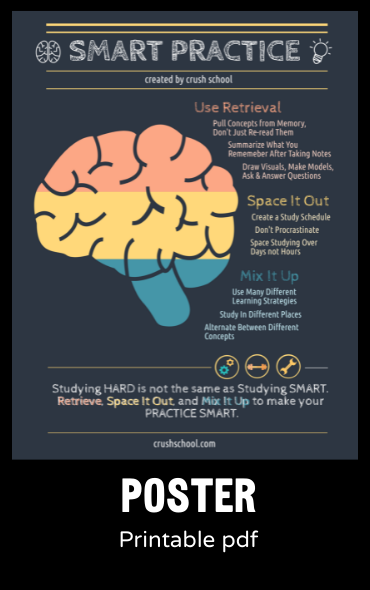
Retrieval Practice, Spaced Practice, and Mixed Practice (Interleaving).
Studying Hard is not the same as Studying Smart. This High Quality printable, digital (PNG) poster is a constant classroom reminder of best practices for teachers and learning the smart way for students.
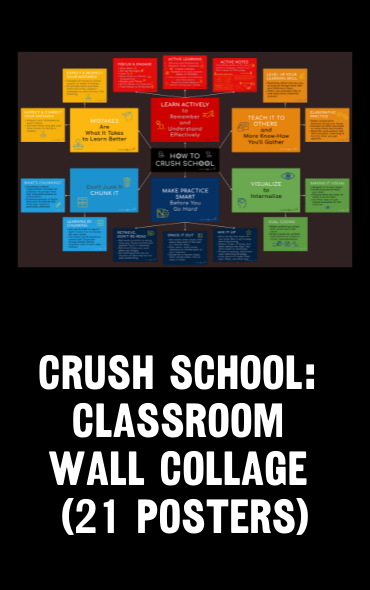
Classroom Wall Collage designed to promote effective, research-based, active learning strategies. Consists of 6 categories:
Learn Actively (Active Learning Strategies to avoid passive learning)
Mistakes Are What It Takes to Learn (Promoting a classroom culture of making and learning from mistakes and why such learning is effective)
Don’t Junk It, Chunk It (How to use the brain chunking technique)
Make Practice Smart (How to use smart and intentional study strategies instead of regurgitating and cramming information)
Visualize to Internalize (Dual Coding Strategy)
Teach It To Others (How to use what you learn to teach others to in turn learn it on a deeper level)
Each category includes 2 or 3 more specific descriptions of how it should be used. And, it rhymes for extra swag and student retention!
A total of 21 posters. Upon payment, you will be directed to a Google Drive link, which gives you 24 hours to copy the folder containing all 21 images to your Google Drive to use for educational purposes only.
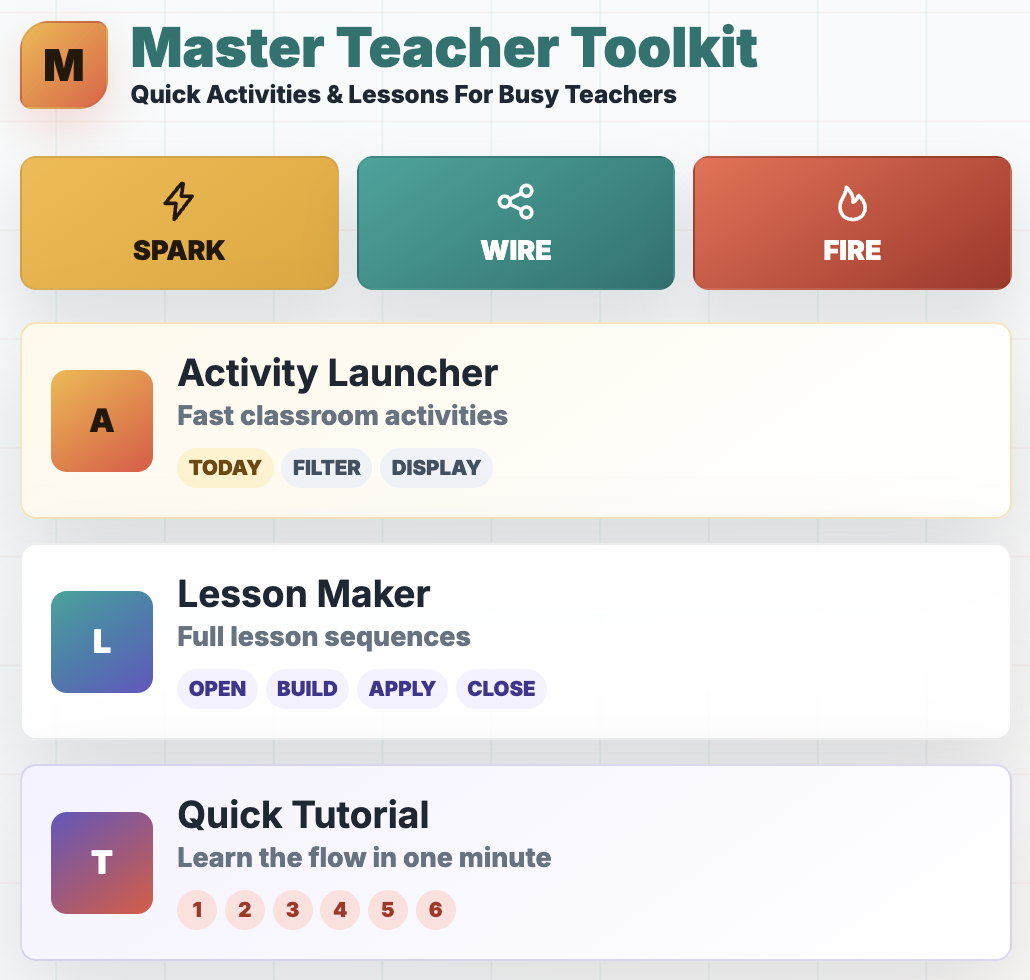
Teaching App
Build engaging lessons in seconds. Then, launch and display them to students instantly.
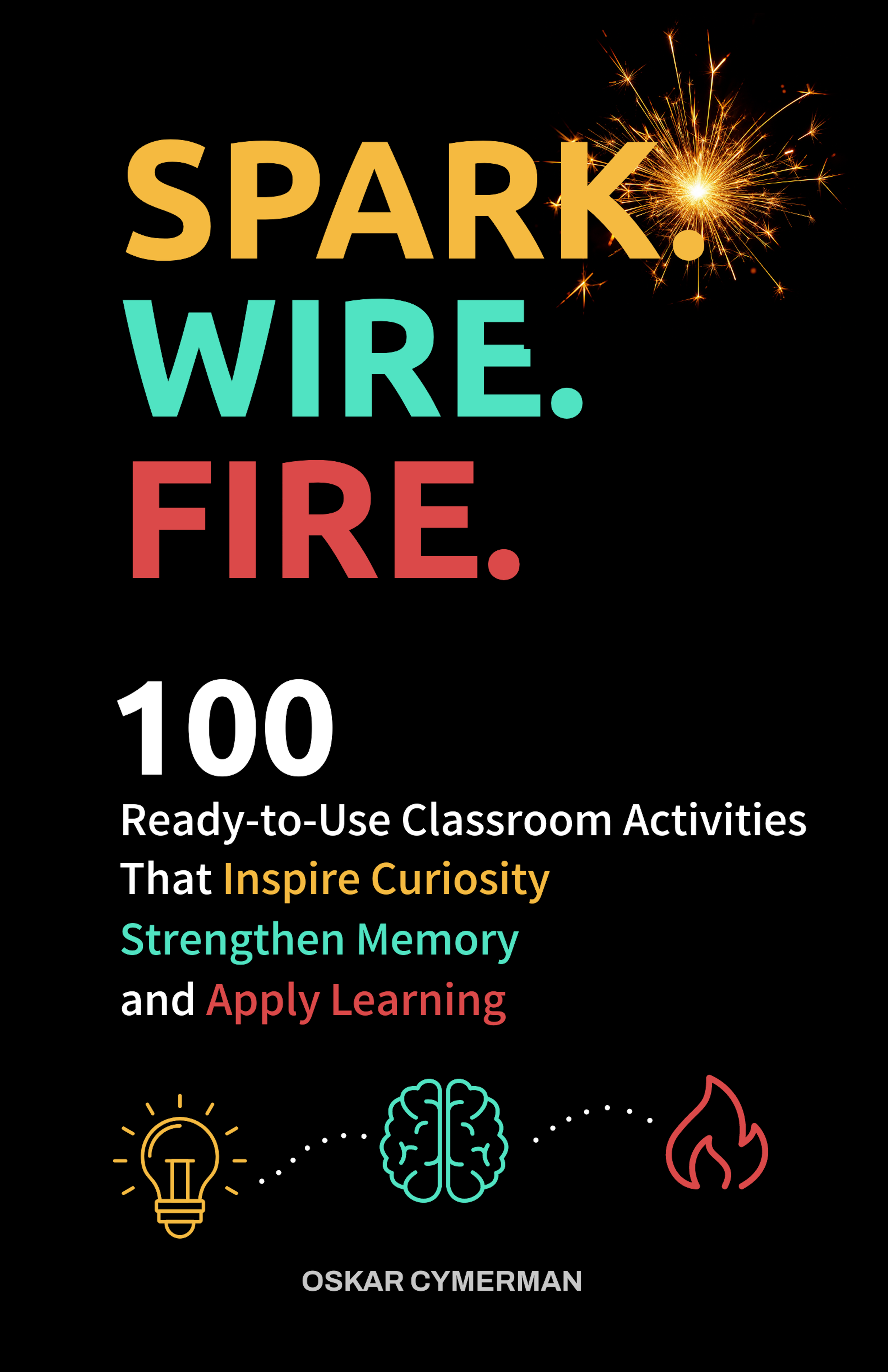
NEW BOOK
100+ practical activities teachers can use right away with little or no prep.