
One Word Challenge: A Simple Bell Ringer That Builds Better Connections
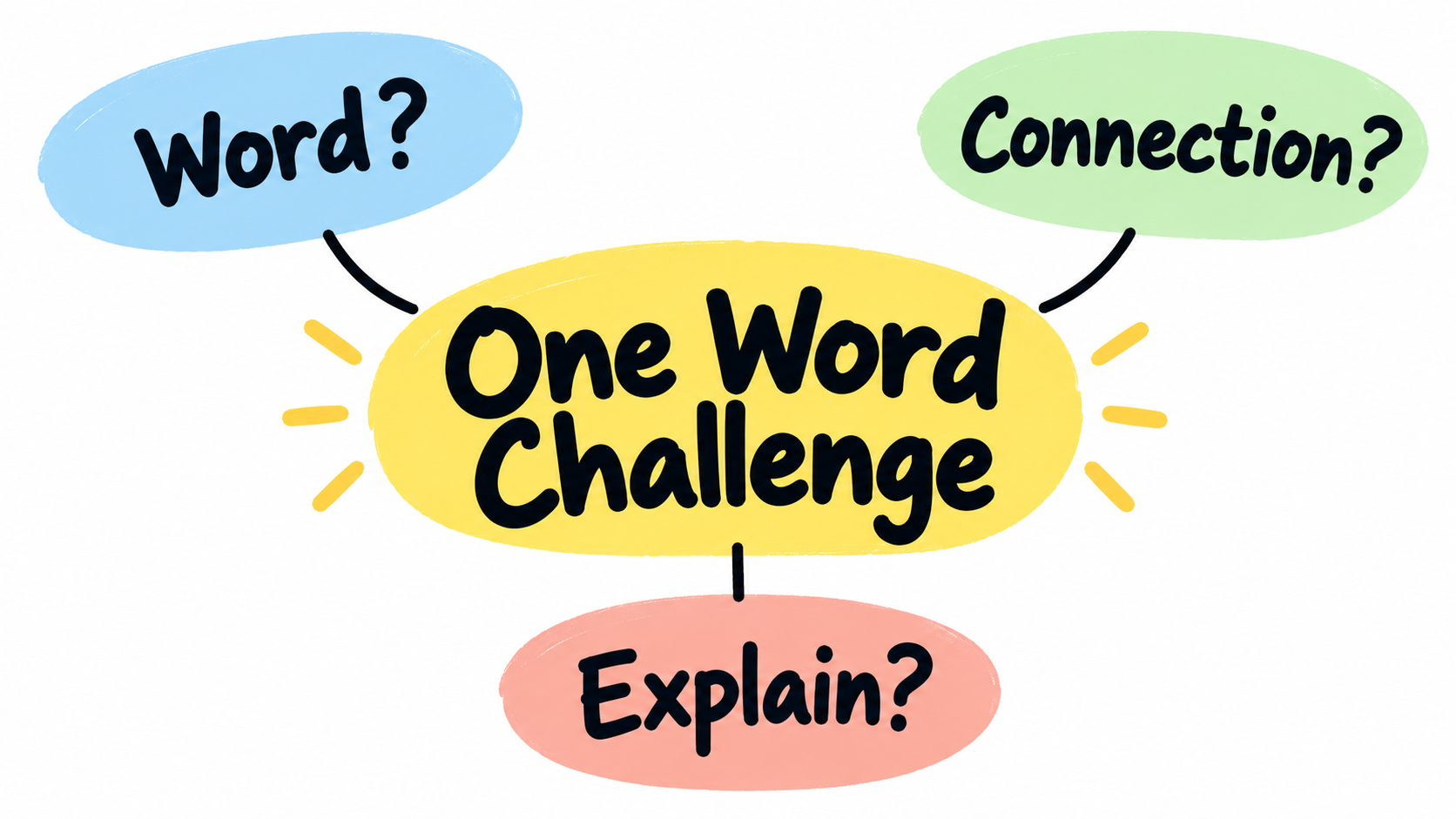
One Word Challenge helps students start class by choosing a connected word and explaining how the ideas relate.
Some bell ringers ask students to answer a question.
Some ask them to recall a definition.
Others ask them to write three sentences about something they barely remember from yesterday, which usually results in a couple sentence fragments and a heroic attempt to stretch IDK into academic language.
Some such bell ringers are necessary. The problem is that too many of them are either too passive, too disconnected, or too complicated for the first five minutes of class.
Students need something quick enough to start immediately, but meaningful enough to get their brains moving.
One Word Challenge works really well for this.
One Word Challenge is a simple Spark strategy that asks students to connect one word to another and explain the relationship. That’s it. No elaborate direction steps.
One word, one connection, and one explanation.
So What Is One Word Challenge?
One Word Challenge starts with a single word connected to the day’s lesson, a previous lesson, or a larger unit. Students respond by writing one related word and then explaining how the two words connect.
For example, if the word is convection, a student might write mantle because convection currents in the mantle help move tectonic plates. Another student might write density because warmer, less dense material rises while cooler, denser material sinks. A third student might write wind because convection also affects air movement in the atmosphere.
The activity is simple, but the thinking is not. Students have to retrieve something they know, choose a connection, and explain why that connection makes sense. That is much more useful than just copying a definition from the board while their brain quietly waits for class to actually begin.
The explanation is the most important part.
Without it, One Word Challenge becomes a word association game. With it, the activity becomes retrieval, reasoning, elaboration, and connection-making.
That is a lot of learning for one word.
How to Use One Word Challenge
Start by choosing one important word. It can be a vocabulary term, concept, person, event, process, skill, theme, equation, symbol, or category. Write that word on the board, project it on a slide, or say it out loud.
Then give students this simple prompt: “Write one word connected to today’s word. Then explain the connection in one sentence.”
That is the basic version, and it works beautifully because students can start right away. They do not need a handout or to ask, “Wait, what are we doing?” twelve times, although someone still might because tradition matters.
After students write, have them share with a partner. Then ask for a few examples from the class. As students share, you can quickly see what they remember, what connections they are making, and where misconceptions might be hiding.
For an even stronger version, ask students to improve their first response. After hearing a partner’s idea, they can add a better explanation, choose a stronger connection, or write a second connected word. This small revision step turns the activity from a quick warm-up into a better thinking routine.
Why It Works
One Word Challenge activates prior knowledge. Before students can learn something new, they need something to connect it to. The brain does not store information like a filing cabinet where every idea politely waits in its own folder. Learning is more like a network. New ideas stick better when they attach to ideas student brains already store.
The activity also creates retrieval practice. Students have to pull a related word from memory instead of simply recognizing one from a list. That small act of remembering matters as retrieval strengthens learning. It also helps students realize what they know and what they only sort of recognize.
One Word Challenge promotes elaboration. When students explain the connection between two ideas, they are adding meaning. They are not just saying, “These two things go together.” They are explaining how and why they go together. That extra thinking helps deepen understanding.
It also gives teachers fast feedback. If the word is erosion and students write weathering with a strong explanation, great. If they write volcano and the explanation is “because Earth science,” you have learned something useful.
Maybe the concept map in their head looks like a junk drawer. Maybe the student has a loose connection. Or loose screw. Either way, now you know.
Classroom Examples
In Earth and Space Science, you might put the word plate tectonics on the board. A student could write earthquakes because earthquakes often happen along plate boundaries where plates move, collide, or slide past each other. Another student could write mountains because some mountains form when plates collide and push rock upward.
In Chemistry, you might use the word atom. Students could connect it to proton, element, bond, electron, or nucleus. Each connection reveals a different piece of understanding. A student who writes element and explains that elements are defined by the number of protons in their atoms is showing a much stronger connection than a student who writes small because atoms are small.
In English, you might use the word conflict. Students could connect it to character because conflict reveals what a character wants, fears, or values. They could connect it to theme because the way a conflict is resolved often helps reveal the message of a story.
In Social Studies, you might use the word revolution. Students could connect it to power, taxation, protest, government, or inequality. The class discussion becomes more interesting when students see that different words can connect to the same concept in different ways.
In Math, you might use the word slope. Students could connect it to rate, line, change, graph, or equation. The explanations tell you whether students understand slope as a memorized formula or as a relationship between quantities.
The word can be simple. The thinking should be deep.
Easy Variations
Once students understand the basic routine, you can change the challenge slightly to fit your evil plans. This keeps the activity fresh without turning it into a completely new set of directions every time.
You can ask students to choose a word from last week’s learning instead of yesterday’s. This adds spacing, which helps students revisit older material before it disappears into the academic fog.
You can ask for a word from another unit. This pushes students to make bigger connections across the course. For example, a Chemistry student might connect energy to bonding, reaction rate, phase change, or thermochemistry.
You can ask students to choose a word that shows cause and effect. For example, if the word is deforestation, a student might choose erosion because removing trees can increase soil loss.
My fave is asking students to name the most surprising connection they can conjure and defend. This adds a little creativity, evidence still required. The word cannot be random. It has to make some kind of sense.
You can also turn it into a partner challenge. Student A writes a connected word. Student B has to explain the connection. Then they switch. This works well because it helps students practice listening and flexible thinking.
What to Watch Out For
The most common problem with One Word Challenge is shallow answers. Students may write a connected word that is technically related but explain it in a vague way. You will see sentences like, “They are connected because they both have to do with science,” which is true in the least helpful and most teacher-annoying way possible.
That is why the explanation matters. Push students to be specific and ban basic answers. A good response should explain the relationship clearly enough that someone else can understand the connection without guessing or being amused by the annoyance it causes.
Another issue is that students may choose the easiest possible word every time. That is not always bad, especially at the beginning, but over time you can raise the challenge. Ask for a less obvious connection. Ask them to use a word from a previous unit. Ask them to explain a connection no one else at their table used.
You can also model a weak response and a strong response. For example:
Weak response: ”Convection connects to heat because they are related.”
Stronger response: ”Convection connects to heat because warm material becomes less dense and rises, while cooler material sinks, creating a cycle of movement.”
Students usually do better when they see what better looks like, so you better show them. This will make you a better teacher. Just annoyin’.
Why It Makes a Good Spark Bell Ringer
A Spark bell ringer should prepare students to learn. It should wake up relevant ideas, create curiosity, or help students start making meaning before the main lesson begins. One Word Challenge does this because it is fast, flexible, and cognitively active.
It also works because it lowers the barrier to entry. Students do not have to write a paragraph. They do not have to solve a long problem. They do not have to complete a worksheet before their brain has fully accepted that class is really happening. They just need to make one connection and explain it.
That simplicity is the strength of the activity. It is easy enough to use on a regular basis, but meaningful enough to support deeper learning.
And honestly, that is what teachers need more of. Not more complicated routines. Not more beautiful activities that require 42 minutes of prep and a level of organization no mortal can sustain in October.
Just simple strategies that students can do quickly and teachers will actually use.
Final Thoughts
One Word Challenge is not flashy. It is not a gamified review. It does not require music, animations, or a dramatic reveal. It is just one word, one connected word, and one explanation.
But it is a small routine that does a lot. It helps students retrieve information, activate prior knowledge, build connections, explain their thinking, and prepare for the lesson ahead.
That is what a good bell ringer should do.
It shouldn’t just fill time. It should jumpstart brains.
For 100+ ready-to-use activities that help students think, retrieve, connect, and apply, check out my book Spark. Wire. Fire. on Amazon.
If you want faster access to bell ringers, exit tickets, mid-lesson checks, and other active content review strategies my Master Teacher Toolkit app helps you find classroom-ready ideas instantly.
BOOKS & TOOLS
Flashcards are okay but there's a better way. The Memory (or Mind) Palace Method is a powerful learning and memorization technique that when mastered allows a student to remember 10, 20, or even 30 vocabulary words or concepts (definitions included) with ease.
And, they actually remember what they learned using memory palaces! This series of lessons (which can be used as classroom handouts) walks students through creating their first memory palace, filling it with information they need to learn, and using it to train their memories. It also contains short readings, a video lesson, memory palace examples, and practice drills.
Fair Use
Feel free to use with your students. Please do not share it with other parties or use for profit. All rights by crushschool.com.

Equity-Promoting Classroom Poster. What does EQUITY in the classroom look like?
Everyone has a different start and finish line
Quality is more important that quantity
Understanding that diversity makes us stronger
Inclusion despite beliefs, appearances, and circumstances
Thoughtfulness lowers barriers and reduces biases
Yesterday's mistakes are today's learning agenda
You can teach your students about equity and make it a daily classroom practice using this inspirational poster, which also includes images that accompany the equity description. You can discuss each letter characteristic with your students as a way of introducing your inclusive classroom and display it prominently as a reminder that diversity makes the classroom community stronger.

In this classroom Mistakes are Expected, Respected, Inspected, Corrected!
Learned helplessness is a result of years of conditioning that mistakes are bad for learning. Nothing is further from the truth - some of the most powerful life lessons come from making mistakes, reflecting on them, and growing as a result.
This is a PNG Poster you can print and display in your classroom to encourage a culture of risk-taking and learning from mistakes.
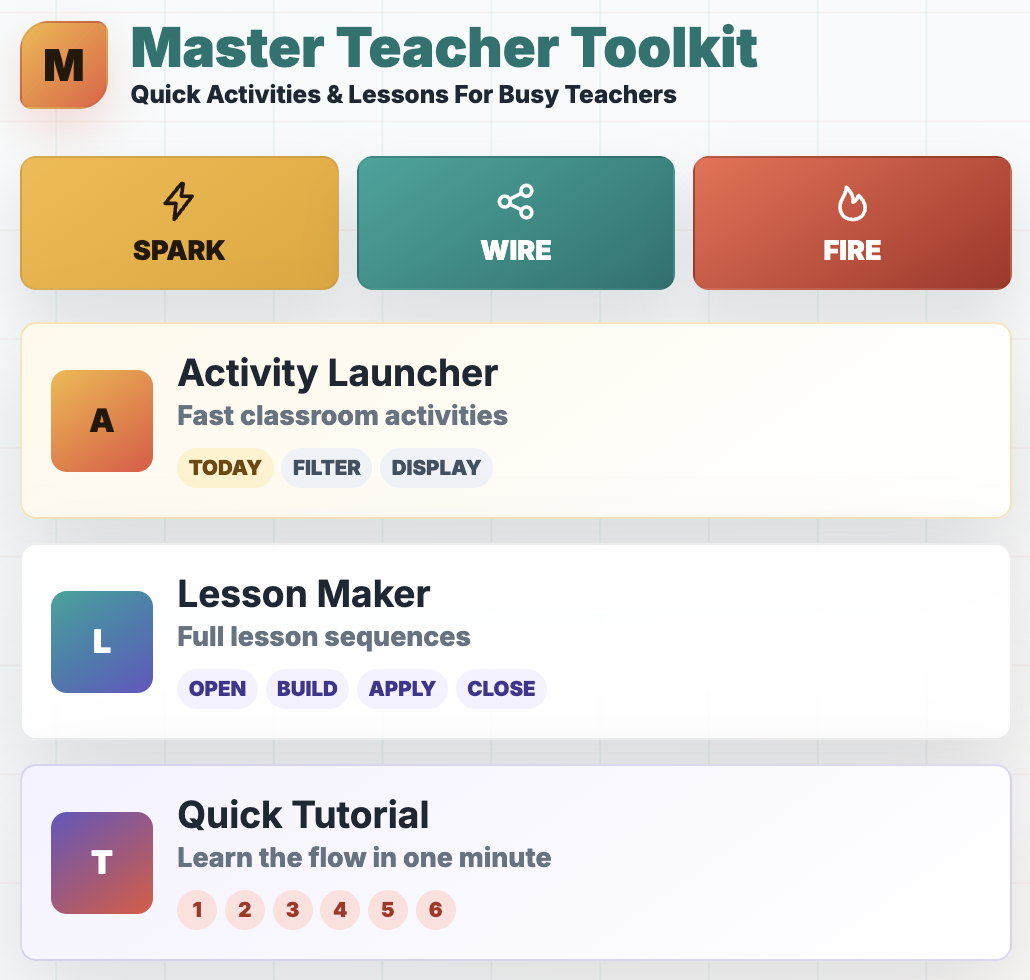
Teaching App
Launch engaging, deeper learning activities and lessons in seconds. Then, launch and display them to students instantly.
NEW BOOK
100+ practical activities teachers can use right away with little or no prep.