CRUSH SCHOOL

I blog on Brain-Based Learning, Metacognition, EdTech, and Social-Emotional Learning. I am the author of the Crush School Series of Books, which help students understand how their brains process information and learn. I also wrote The Power of Three: How to Simplify Your Life to Amplify Your Personal and Professional Success, but be warned that it's meant for adults who want to thrive and are comfortable with four letter words.

Filtering by Category: Teaching

How to Use Misconceptions to Improve Student Learning and Memory

Every student comes to the classroom with their own ideas about how the world works.

Some of these ideas are right and some are wrong.

But before student misconceptions are corrected, consider leveraging them in learning. Use students misconceptions “for them” not “against them” and their minds will thank you… or at least they’ll retain more and understand better.

One of the best ways to do this is with short, cognitively-intense activities such as the “Wrong Answer Warm Up” below. Check it out.
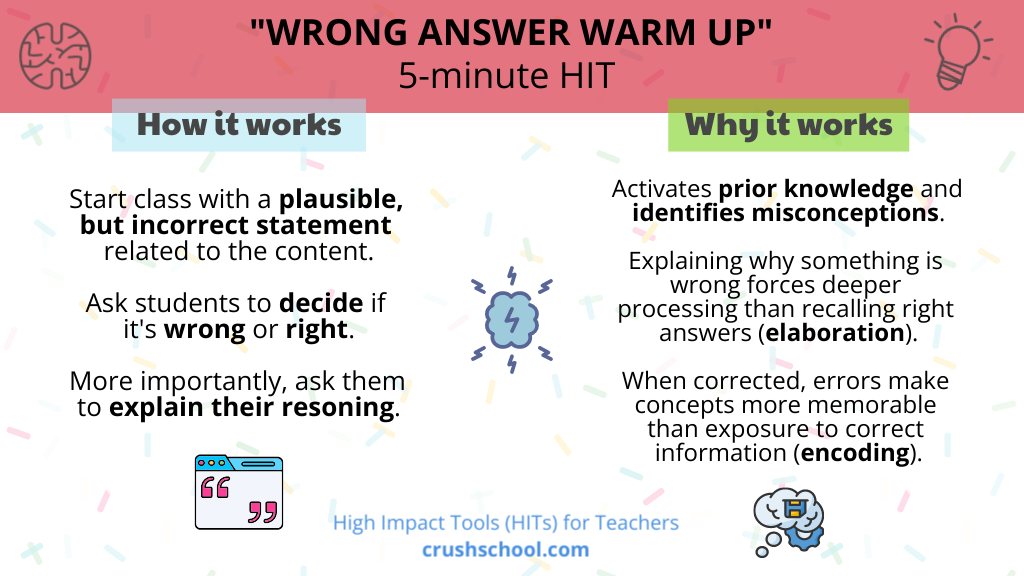
Using Misconceptions to Teach and Improve Students Memory

How To Use Misconceptions and Why It Helps in Learning

Starting class with a misconception related to the big idea activates prior knowledge and brings the misconception to the surface. Thus, look for one of those common and annoying misconceptions you deal with every year to kill it in its tracks.

When students argue for their misconception and are later set straight, they remember the correct answer, not the wrong one due to cognitive conflict—a mismatch between what they believed and what is actually true. As a result, their brains “update” the old model with the newly discovered understanding.

Plausible Misconceptions: Example Prompts

  • “Using big words improves your writing.”

  • “Seasons are caused by Earth being closer or farther from the sun.”

  • “Multiplying always makes numbers bigger.”

  • “Ancient civilizations were less advanced than we are.”

Pro Tips For Leveraging Misconceptions in the Classroom

  • Make the wrong answer believable, not ridiculous.

  • Ask: Why might someone think this? to lower risk of “being exposed for not knowing” and to stimulate student thinking and discussion.

  • Never reveal the right answer before letting students work on it first.

  • Keep it fast-paced to spark the lesson, but don’t turn it into the lesson.

Bottom Line

Don’t avoid wrong answers—use them. When students figure out, explain, and correct their own errors, their learning gets deeper and lasts longer.


Thanks for reading!

Creating engaging warm-ups, exit tickets, and brain resets can be a time-consuming, so I started to compile the ones I use with my students as 5-minute micro-lessons I call HITs (High Impact Tools for Teachers) and sharing them via my Free HITs Newsletter.

Sign up below and get 5 Active Learning Strategies You Can Use Today. It’s 5 Editable Activity Slides you can use in your classroom right away—any time, any subject, zero prep required + 5 Teacher Slides with pro tips and rationale.

BOOKS & TOOLS
 
 
EQUITY Poster
$1.50

Equity-Promoting Classroom Poster. What does EQUITY in the classroom look like?

  • Everyone has a different start and finish line

  • Quality is more important that quantity

  • Understanding that diversity makes us stronger

  • Inclusion despite beliefs, appearances, and circumstances

  • Thoughtfulness lowers barriers and reduces biases

  • Yesterday's mistakes are today's learning agenda

You can teach your students about equity and make it a daily classroom practice using this inspirational poster, which also includes images that accompany the equity description. You can discuss each letter characteristic with your students as a way of introducing your inclusive classroom and display it prominently as a reminder that diversity makes the classroom community stronger.

 
Mistakes Are... Poster
$3.00

In this classroom Mistakes are Expected, Respected, Inspected, Corrected!

Learned helplessness is a result of years of conditioning that mistakes are bad for learning. Nothing is further from the truth - some of the most powerful life lessons come from making mistakes, reflecting on them, and growing as a result.

This is a PNG Poster you can print and display in your classroom to encourage a culture of risk-taking and learning from mistakes.
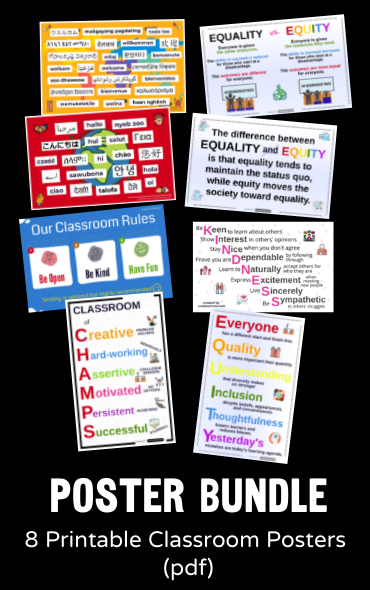
 
Classroom Posters Bundle of 8
Sale Price: $5.00 Original Price: $8.00

8 digital, printable, size 11 x 17 classroom posters:

  1. “Welcome” in multiple languages

  2. “Hi” in multiple languages

  3. Three Equity posters

  4. Classroom Rules: Be Open, Be Kind, Have Fun

  5. “Classroom of Champs”

  6. “Kindness”

ON SALE until August 30th.

 
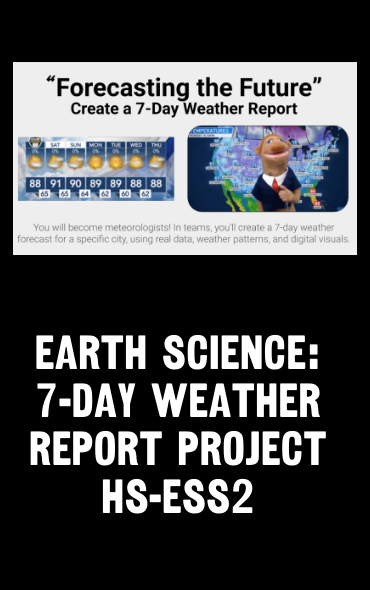
Earth Science: 7-Day Weather Report Project (NGSS) HS-ESS2
$4.00

Save planning time with this Atmosphere Unit, 5-day Honors Earth and Space Science Project in which students research, design, create, and present a 7-day weather forecast for a specific city in the US or abroad.

Student Performance and Learning Objectives:

  1. Explain how weather data is collected and interpreted.

  2. Explain how weather patterns may be affected by geography (mountains, plains, valleys etc.).

  3. Explain the atmospheric conditions (pressure, moisture etc.) necessary for different weather (sunny, windy, rainy etc.).

What's included:

  1. 16 slides (Google Slides link for easy use and editing to fit your purposes)

  2. Learning Objectives

  3. Group Roles / Jobs (up to 5 with detailed description of jobs)

  4. Detailed Project Directions / Requirements

  5. Materials/Web Resources List

  6. Link to a "Wheel of Names" containing city names - students spin and receive their assigned city.

  7. Link to a grading rubric for student and teacher use (printable doc).

The project follows the guidelines set by the Next Generation Science Standards (NGSS).


Questions?
Email me at oskar@crushschool.com. I’m happy to answer your questions.

Fair Use
Feel free to share and use this resource with your students.

Please do not share it with other parties or use for profit. All rights by crushschool.com.
The Problem-Solving Classroom: Creating Critical Thinkers of Tomorrow

In a rapidly evolving world, the ability to solve complex problems is more crucial than ever before. Because of this, teachers’ responsibility extends beyond imparting knowledge; we must equip our students with essential life skills, and problem-solving is at the forefront. This blog post will delve into the significance of teaching problem-solving skills and provide examples of activities that teachers can implement to nurture this critical skill in their students.

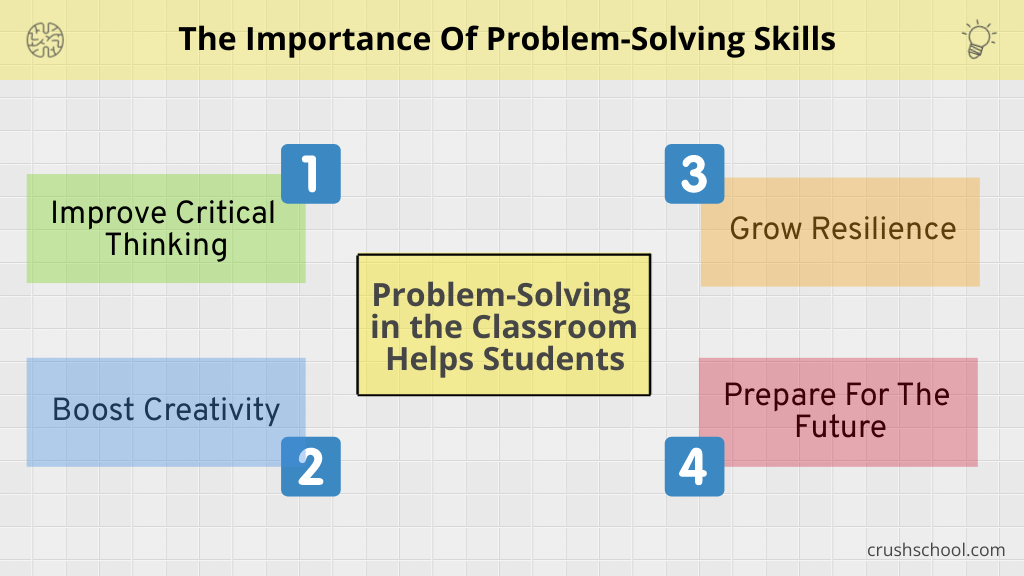
The Importance of Problem-Solving Skills

Problem-solving is a multifaceted skill that benefits students in various aspects of their lives, from academic success to personal and professional growth. Let’s take a look at why teaching problem-solving skills is of paramount importance.

  1. Developing Critical Thinking

    Problem-solving encourages students to think critically and analytically. It requires them to assess a situation, identify the problem, and develop a systematic approach to find a solution. These cognitive processes foster intellectual growth and curiosity.

  2. Growing Resilience

    Life is full of challenges and setbacks. Teaching problem-solving equips students with the resilience to face difficulties head-on, adapt to change, and persevere through obstacles.

  3. Boosting Creativity

    Problem-solving often demands thinking outside the box. When students encounter diverse problems, they learn to generate creative solutions and apply their creativity to various aspects of their personal and professional lives.

  4. Preparing for the Future

    In the age of automation and artificial intelligence, problem-solving skills are highly valued by employers. Students with strong problem-solving abilities are better equipped for the job market and future career success.

Activities to Teach Problem-Solving Skills

Problem-solving is an important skill, but we already knew that. Let's explore some activities teachers can use to help students develop better problem-solving.

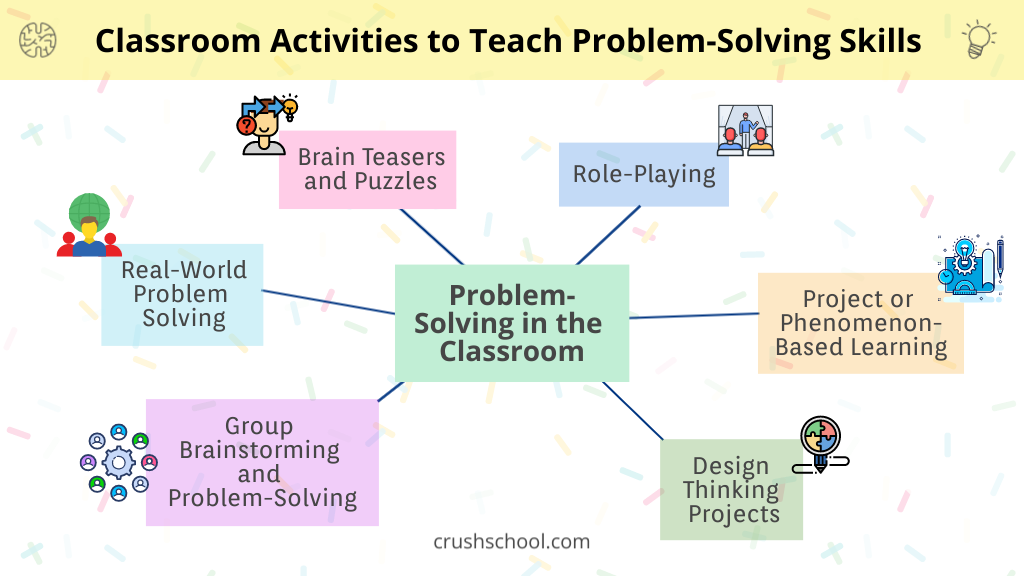
  1. Brain Teasers and Puzzles

    Challenge students with riddles, logic puzzles, and brain teasers that require them to think critically and figure out solutions. These can be short, focused warm up (bell ringer) activities or brain breaks in the middle of the class that call on students to solve a problem that uses their knowledge of science or other discipline. Check out the science teasers from Braingle or the math teasers in this Edutopia article.

  2. Group Brainstorming and Problem-Solving

    Encourage group discussions to share various approaches to solving the same problem, fostering collaboration and multiple perspectives. An example of this is giving various groups of students the same problem to solve and then have each group compare their unique solutions. Check out the Woodbury Water Tower engineering challenge I use with my Principles of Engineering students.

  3. Real-World Problem Solving

    Present students with real-life scenarios or current events that require problem-solving skills. These scenarios can range from ethical dilemmas to environmental issues. Then, ask students to research, analyze, and propose solutions to these problems, promoting active engagement and global awareness.

    For example, you might ask your students to create an advertising campaign to encourage drivers to switch to hybrid or electric vehicles to alleviate the issues of air pollution, greenhouse effect, and climate change. Such activities do not only lead to fact-finding and proposing solutions for the actual problem, but also lead to the examination of the social issues associated with the problem and looking at ways of overcoming society’s resistance to making real changes.

  4. Role-Playing

    Use role-playing activities to simulate real-life situations. For example, students can act as diplomats negotiating a peace treaty or as business owners facing financial challenges. Role-playing helps students develop empathy, effective communication, and decision-making skills, which are all important facets of effective problem-solving.

  5. Design Thinking Projects

    Introduce students to the design thinking process, which involves empathizing, defining problems, ideating solutions, prototyping, and testing. Assign design thinking projects that require students to tackle real-world problems through a structured, iterative approach. Check out the Design Thinking Your Ideal Learning Experience series of lessons I use at the beginning of each school year.

  6. Project or Phenomenon-Based Learning

    Implement project-based learning (PBL) or phenomenon-based learning (PhenBL) in your curriculum. Such approaches encourage students to work on longer-term, open-ended projects that require research, collaboration, and problem-solving.

    For example, students could design and build a sustainable garden for their school, addressing ecological and logistical challenges along the way. Or, you can ask students to create a multimedia product that showcases what they’ve learned and proposes solutions to a problem they investigated.

So What?

Teaching problem-solving skills is a fundamental responsibility of educators. These skills empower students to think critically, adapt to change, and become future-ready. By incorporating activities such as brain teasers, real-world problem solving, role-playing, design thinking, and project/phenomenon-based learning into the curriculum, teachers can foster a generation of innovative and resilient problem solvers who are prepared to tackle the challenges of the 21st century. Let’s equip our students with the tools they need to navigate an ever-changing world and make an impact we and they can be proud of.

BOOKS & TOOLS

Phenomena Poster
$1.50

This 11x17 poster defines and gives examples of phenomena.

Mistakes Are... Poster
$3.00

In this classroom Mistakes are Expected, Respected, Inspected, Corrected!

Learned helplessness is a result of years of conditioning that mistakes are bad for learning. Nothing is further from the truth - some of the most powerful life lessons come from making mistakes, reflecting on them, and growing as a result.

This is a PNG Poster you can print and display in your classroom to encourage a culture of risk-taking and learning from mistakes.

Equity: Bundle of 3 Posters - SAVE 25%
$4.00

3 Equity Promoting Posters.

(1) Equity (11 x17):

  • Everyone has a different start and finish line

  • Quality is more important that quantity

  • Understanding that diversity makes us stronger

  • Inclusion despite beliefs, appearances, and circumstances

  • Thoughtfulness lowers barriers and reduces biases

  • Yesterday's mistakes are today's learning agenda

(2) Equality vs Equity (11 x 17 side-by-side comparison)

(3) Equality vs Equity (11 x 17 the difference Quote)

Every poster contains accompanying images.

Classroom Posters Bundle of 8
Sale Price: $5.00 Original Price: $8.00

8 digital, printable, size 11 x 17 classroom posters:

  1. “Welcome” in multiple languages

  2. “Hi” in multiple languages

  3. Three Equity posters

  4. Classroom Rules: Be Open, Be Kind, Have Fun

  5. “Classroom of Champs”

  6. “Kindness”

ON SALE until August 30th.

PhenBL 16-Slide Professional Development Interactive Presentation
Sale Price: $10.00 Original Price: $15.00

For use by a school district-level administrator or trainer or a consultant with a professional audience such as teachers and other stakeholders to explain the ins and outs of Phenomenon-Based Learning:

  • 16 slides with speaker notes to aid presentation and cut down on preparation

  • high quality, original graphics

  • explain what PhenBL is and how to incorporate it into a classroom step-by-step

  • multiple examples of phenomena and PhenBL strategies

  • Explanations of NGSS and 3D learning (DCIs, SEPs, and CCCs)

  • Everything you need to teach implementation of PhenBL along with tools to do it

After purchase, you will receive a PDF slide that contains a link that will copy this Google Slides presentation to your Google Drive.

Because... Chemistry Unisex T-Shirt
from $15.00
Smartphone? Energy Drinks? Electricity? Fireworks? Cosmetics? Clothing? Detergents? Fuel? Cars? Food? Because... Chemistry makes it all possible! If you teach chemistry or simply love it, this shirt helps you show others the relevance of chemistry.

• 100% ring-spun cotton
• Sport Grey is 90% ring-spun cotton, 10% polyester
• Dark Heather is 65% polyester, 35% cotton

This product is made especially for you as soon as you place an order, which is why it takes us a bit longer to deliver it to you. Making products on demand instead of in bulk helps reduce overproduction, so thank you for making thoughtful purchasing decisions!
Breaking Down Phenomenon Based Learning and NGSS
$5.00

This infographic explains how Phenomenon Based Learning (PhenBL) can be used in the context of Next Generation Science Standards (NGSS). It explains what PhenBL is, describes the main intentions of the NGSS, and breaks down the three-dimensional (3D) learning framework NGSS proposes to use in solving phenomena and learning science and engineering concepts and skills.

AI for Teachers: Step into the Past; Converse with Marie Curie, then Malcolm X

Using Artificial Intelligence in the Classroom. AI for learning about famous individuals and historical figures.

Or Napoleon Bonaparte if you wish. Dude just told me he was often too busy with military campaigns and dreams of domination to eat fancy meals, so chicken with potatoes was his go to.

Boring, I know.

Still, it is not every day you get to chat it up with the French emperor who lived some two hundred years ago.

Okay, okay - I admit - I am full of it. The dream of conversing with historical figures may remain confined to the realm of fiction or witchcraft, but the wonders of technology have brought us a step closer to this trippy idea. Thanks to Artificial Intelligence, we get to pick Marie Curie’s radioactive brain and Malcolm X’s explosive mind. Thanks to AI, we can now simulate conversations with historical figures and engage in dialogues that transcend time.

Let’s explore how to create such captivating experiences for our students using ChatGPT.

Choose Your Historical Figure

Deciding which historical figure you'd like your students to converse with depends on your subject matter, the era you are studying, and what you want your students to get out of such activity. Do you want them to get a feel for what life was like back then or look at the achievements of a certain individual? Do you want your students to learn some facts from a ground-breaking scientist or understand the motivations an important politician had for taking the path they took to push progress? The Internet database is the limit.

Gather Data or Just Get into it

To make your AI conversation as authentic as possible, you might ask your students to gather historical data about the chosen figure. This may include looking at their writings, speeches, biographies, and other relevant materials. Going at it this way, allows you to help your pupils to act as media reporters and build background knowledge on the individual they are about to simulate an interaction with to ask more thoughtful questions.

But don’t worry. AI is not easily offended and does not judge. Yet. This means you can opt to let your students just dive straight in and ask any smart or dumbass question they can conjure up.

Scaffold the Questions

To spark a meaningful dialogue with the AI DaVincis, Curies, and Crazy Horses, ignore that last sentence and give your students guidelines specifying what it is they need to learn from their famous interviewees. Specify what you want them to learn or what insights you hope they gain from these conversations. This way, they can focus on asking relevant questions and not get too involved in the love lives of AIs. Hint: They got none, ‘cause no game means no play.

Engage in the Conversation

Tell your students to “send a message” in chatGPT that says something like: Pretend to be Malcolm X and I will ask you interview questions and the AI will happily (-ish) oblige. And in case you’re wondering - yes, chatGPT will act in line with the character and expertise of the individual it’s faking basing it all off of the information available online up to year 2021.

Allow Students to Explore and Learn

As the conversation unfolds, students will have the opportunity to explore the historical figure's thoughts and perspectives. They can delve into their achievements, personal experiences, and the challenges they faced in their time.

Reflect and Share

After the simulated conversations, ask students to reflect on what they've discovered and learned. Have them share their experiences with other students. The AI-generated conversations can serve as educational tools, sparking interest in science, history, and other subjects, as well as the lives of remarkable individuals.

Ethical Considerations

Be clear in communicating to your students that they are using AI to generate the conversations and acknowledge the limitations of AI when it comes to capturing the complexity of the human mind.

So What?

AI can unlock the virtual doors to the minds of historical figures, helping students gain insights and knowledge that bridge the gap between centuries. As technology advances, the opportunity to converse with the past becomes increasingly accessible, opening new horizons for exploration and education. And, it’s kind of fun. Try it and you’ll see. Then, let your students try.


If you found this post helpful, sign up for my Teaching Tips, Resources, & Ideas Newsletter to get the next article when it drops. It’s totally free.

BOOKS & TOOLS

Phenomena Poster
$1.50

This 11x17 poster defines and gives examples of phenomena.

Mistakes Are... Poster
$3.00

In this classroom Mistakes are Expected, Respected, Inspected, Corrected!

Learned helplessness is a result of years of conditioning that mistakes are bad for learning. Nothing is further from the truth - some of the most powerful life lessons come from making mistakes, reflecting on them, and growing as a result.

This is a PNG Poster you can print and display in your classroom to encourage a culture of risk-taking and learning from mistakes.

Equity: Bundle of 3 Posters - SAVE 25%
$4.00

3 Equity Promoting Posters.

(1) Equity (11 x17):

  • Everyone has a different start and finish line

  • Quality is more important that quantity

  • Understanding that diversity makes us stronger

  • Inclusion despite beliefs, appearances, and circumstances

  • Thoughtfulness lowers barriers and reduces biases

  • Yesterday's mistakes are today's learning agenda

(2) Equality vs Equity (11 x 17 side-by-side comparison)

(3) Equality vs Equity (11 x 17 the difference Quote)

Every poster contains accompanying images.

Classroom Posters Bundle of 8
Sale Price: $5.00 Original Price: $8.00

8 digital, printable, size 11 x 17 classroom posters:

  1. “Welcome” in multiple languages

  2. “Hi” in multiple languages

  3. Three Equity posters

  4. Classroom Rules: Be Open, Be Kind, Have Fun

  5. “Classroom of Champs”

  6. “Kindness”

ON SALE until August 30th.

PhenBL 16-Slide Professional Development Interactive Presentation
Sale Price: $10.00 Original Price: $15.00

For use by a school district-level administrator or trainer or a consultant with a professional audience such as teachers and other stakeholders to explain the ins and outs of Phenomenon-Based Learning:

  • 16 slides with speaker notes to aid presentation and cut down on preparation

  • high quality, original graphics

  • explain what PhenBL is and how to incorporate it into a classroom step-by-step

  • multiple examples of phenomena and PhenBL strategies

  • Explanations of NGSS and 3D learning (DCIs, SEPs, and CCCs)

  • Everything you need to teach implementation of PhenBL along with tools to do it

After purchase, you will receive a PDF slide that contains a link that will copy this Google Slides presentation to your Google Drive.

Because... Chemistry Unisex T-Shirt
from $15.00
Smartphone? Energy Drinks? Electricity? Fireworks? Cosmetics? Clothing? Detergents? Fuel? Cars? Food? Because... Chemistry makes it all possible! If you teach chemistry or simply love it, this shirt helps you show others the relevance of chemistry.

• 100% ring-spun cotton
• Sport Grey is 90% ring-spun cotton, 10% polyester
• Dark Heather is 65% polyester, 35% cotton

This product is made especially for you as soon as you place an order, which is why it takes us a bit longer to deliver it to you. Making products on demand instead of in bulk helps reduce overproduction, so thank you for making thoughtful purchasing decisions!
Breaking Down Phenomenon Based Learning and NGSS
$5.00

This infographic explains how Phenomenon Based Learning (PhenBL) can be used in the context of Next Generation Science Standards (NGSS). It explains what PhenBL is, describes the main intentions of the NGSS, and breaks down the three-dimensional (3D) learning framework NGSS proposes to use in solving phenomena and learning science and engineering concepts and skills.

2026 Crush School