
The Brain Doesn’t Learn Through Exposure, But Action
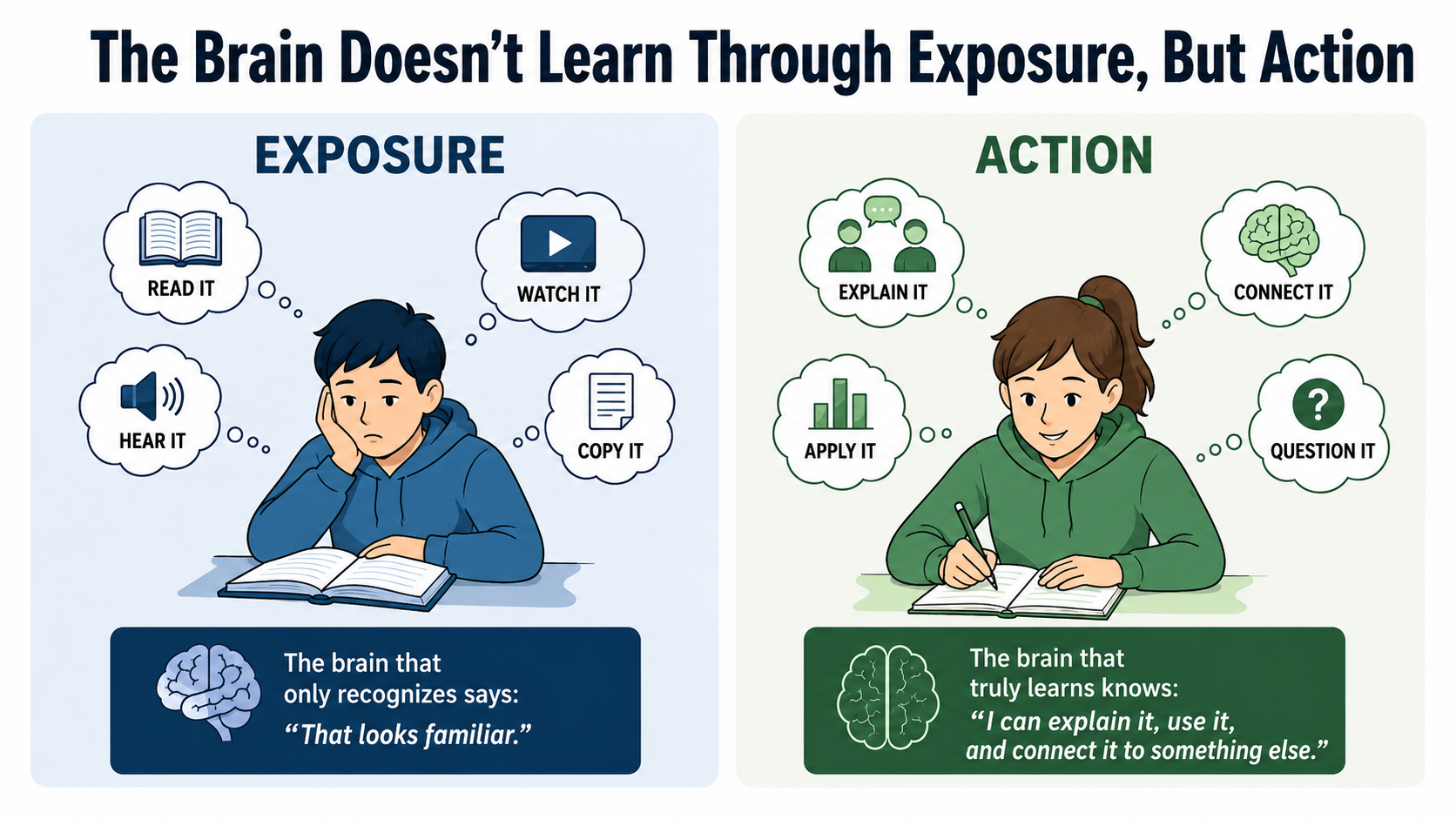
Exposure can make information feel familiar, but lasting learning happens when students explain, connect, question, and apply what they know.
Every new school year begins with a dangerous little teacher lie.
“If I cover it, they’ll learn it.”
We don’t mean to lie, of course, but some of our lesson plans reveal the truth. We introduce the vocabulary, explain the concept, show the diagram, play the video, assign the reading, give the notes, and then hope that enough exposure will somehow become learning.
It won’t.
The Exposure Problem
The brain does not learn deeply just because it is exposed to information. Exposure starts the learning process, but if we stop there, understanding, remembering, or being able to use an idea later just don’t happen.
Students can hear the explanation and not understand it, copy the notes and not remember them, watch the video and not process the concept, read the paragraph and miss the point, and recognize the answer on a worksheet and then freeze when asked to explain it without looking at their notes.
That is what exposure does. It creates the dreaded “illusion of learning.”
This year, I will be teaching Chemistry for the first time in three years. That has me thinking a lot about how to guard against exposing and how to foster real learning.
Because in chem, this shows up all the time. Students can watch me solve a stoichiometry problem and think they get it. They copy the setup, follow the conversions, cross out the units with me, and nod along like everything makes perfect sense.
But then, when the numbers change or the problem looks slightly different, that “understanding” disappears.
It’s nobody’s fault really. It just means watching me do it was not enough.
Chemistry is too abstract for most students to “be good” after being exposed to its ideas. They have to work with them. A lot.
They have to draw the concepts, explain them, predict next steps, correct mistakes, connect different ideas, apply and transfer them. Over and over.
Some version of this is often true in other subjects.
US History students can identify the causes of the American Revolution and still struggle to explain how those causes influenced one another. They can follow the steps of solving a quadratic equation in math and still not understand why the method works. In English, they might be able to identify a theme in a novel and still struggle to connect it to specific evidence, character decisions, and the author’s message.
Exposure is not enough because learning requires action.
Real, Lasting Learning Requires Action
The brain needs to repeatedly retrieve information from memory, connect it to prior knowledge, organize it, explain it, and use it. That is how ideas become stronger and more flexible. When students only hear or see information, they may recognize it later, but recognition is not learning.
The brain that recognizes says, “That looks familiar.”
But the brain that learned knows, “I can explain it, use it, and connect it to something else.”
That’s a huge difference that highlights why the first weeks of school matter so much. Besides content, we are teaching students what learning feels like in our classrooms. If the pattern is mostly sit, listen, copy, complete, and turn in, students quickly learn that school is about being near information long enough to survive the test next week.
But if the pattern is think, retrieve, explain, connect, move, question, and apply, students begin to understand that learning is something they do.
That is the shift we need to strive for.
Instead of assuming exposure will do the work, I am building in more classroom strategies that make students interact with the learning.
Structuring Lessons For Action, Not Exposure
In classrooms, action—the doing of the learning—translates to what education dubs “active learning.” The simplest way to get away from too much exposure and to implement more active learning is to use short, brain-based strategies.
One example is Trust the Process. Students are given a completed example of a newly-learned process, problem solution etc. In small groups, each student explains one step in their own words. Then they identify why each step was necessary. Later, groups compare explanations. Finally, each group explains one step to the class followed by discussion of what was unclear or incomplete. This works because students think and talk through the logic of the newly-learned process, learn from peers, present their findings, and use metacognition to identify the most difficult steps or concepts.
Another example is Draw the Definition. Students take a term or concept and draw what it means without copying a definition. In Chemistry, they might draw their visualization of ionic bonding or conservation of mass. In Human Geography, they might draw population density or urbanization. The drawing does not have to be pretty. It just has to show thinking. If students cannot represent the concept, they probably need more than another definition.
A third example is Wrong Answer Warm-Up. Instead of starting with the right answer, the teacher gives students a believable wrong answer and asks them to find, explain, and fix the mistake. This works because students have to process why something is wrong, not just memorize what is right. In Geometry, that might mean correcting an error in a proof. In 10th-grade English, students may be asked to revise a weak thesis statement or find evidence that does not actually support a claim.
These strategies are short, but they change the learning dramatically. No longer just exposed to information, students are manipulating it.
What Students Need to Really Learn
Students do not need more exposure to information. They need repeated opportunities to process it.
They need better chances to think and more frequent opportunities to retrieve from memory before they look at notes, books, Google.
They need to be asked to explain before they move on, connect before they forget, and apply before the learning disappears.
As the new school year begins, I do not just want to cover more content. I want students to do more with it.
This is my commitment because that’s how learning that works happens.
Not with repeated exposure, but with continuous action.
What are you doing differently this year? Drop me a comment below.
For 100+ ready-to-use activities that help students think, retrieve, connect, and apply, check out my book Spark. Wire. Fire. on Amazon.
If you want faster access to bell ringers, exit tickets, mid-lesson checks, and other active content review strategies my Master Teacher Toolkit app helps you find classroom-ready ideas instantly.
BOOKS & TOOLS
Flashcards are okay but there's a better way. The Memory (or Mind) Palace Method is a powerful learning and memorization technique that when mastered allows a student to remember 10, 20, or even 30 vocabulary words or concepts (definitions included) with ease.
And, they actually remember what they learned using memory palaces! This series of lessons (which can be used as classroom handouts) walks students through creating their first memory palace, filling it with information they need to learn, and using it to train their memories. It also contains short readings, a video lesson, memory palace examples, and practice drills.
Fair Use
Feel free to use with your students. Please do not share it with other parties or use for profit. All rights by crushschool.com.

Equity-Promoting Classroom Poster. What does EQUITY in the classroom look like?
Everyone has a different start and finish line
Quality is more important that quantity
Understanding that diversity makes us stronger
Inclusion despite beliefs, appearances, and circumstances
Thoughtfulness lowers barriers and reduces biases
Yesterday's mistakes are today's learning agenda
You can teach your students about equity and make it a daily classroom practice using this inspirational poster, which also includes images that accompany the equity description. You can discuss each letter characteristic with your students as a way of introducing your inclusive classroom and display it prominently as a reminder that diversity makes the classroom community stronger.

In this classroom Mistakes are Expected, Respected, Inspected, Corrected!
Learned helplessness is a result of years of conditioning that mistakes are bad for learning. Nothing is further from the truth - some of the most powerful life lessons come from making mistakes, reflecting on them, and growing as a result.
This is a PNG Poster you can print and display in your classroom to encourage a culture of risk-taking and learning from mistakes.
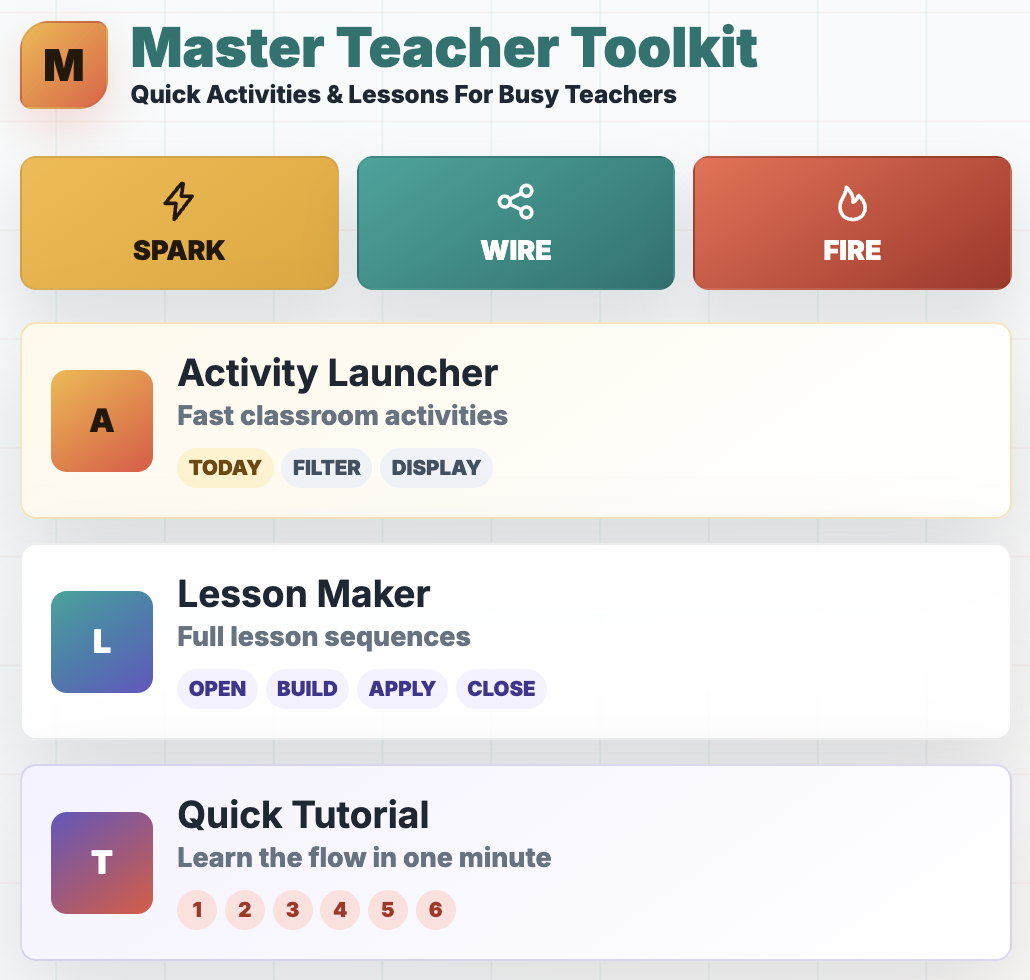
Teaching App
Launch and display engaging, deeper learning activities such as Trust the Process, draw the Definition, and Wrong Answer Warm-Up in seconds.
NEW BOOK
100+ practical activities teachers can use right away with little or no prep.
MTT Next Time FREE Teacher Reflections iPhone App
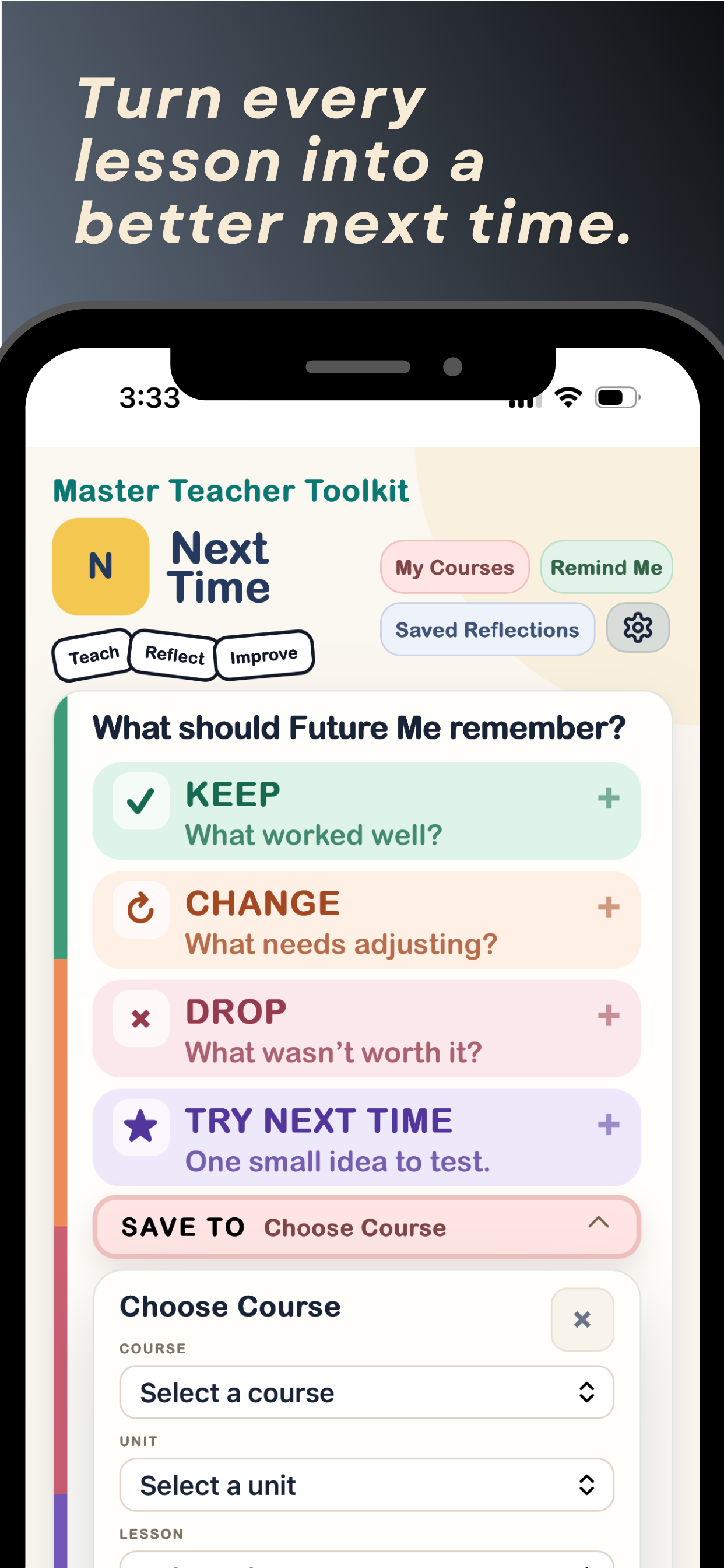
Teach. Reflect. Improve.