The 5 Questions Every Teacher Should Ask Before Summer Break

Before closing the classroom door for summer, take a few minutes to reflect on what worked, what didn't, and what you want more of next year. Small reflections today can lead to better teaching tomorrow.
Before you shut off the lights, stack the chairs, and head into summer, take a few minutes just for yourself.
No grading. No planning. Just reflection.
No formal evaluations or 3-page journal entries. Sometimes the best professional development starts with a few simple questions.
1. What worked really well this year?
Think lessons, routines, activities, and relationships. What consistently brought energy and engagement to your classroom?
Don’t just keep it. Do more of it.
2. What didn't work?
Not every idea deserves a second chance. Which lessons, assignments, or habits caused more stress than learning?
Some need to die and if the change is to last it’s important you’re the killer. Think of it as the mercy, put-it-out-of-its-misery killing.
3. What did students respond to?
Were they most engaged during discussions? Retrieval activities? Labs? Games? Group work?
Enthusiasm leaves clues. Use them wisely.
4. What one thing would make next year easier?
Not six or seven things.
One. Maybe two, but one is easier and more memorable.
And, small changes compound over time.
5. What do I want more of next year?
More curiosity? More discussion? More movement? More active learning?
Your answer points toward your priorities and makes teaching easier too.
Last Thing
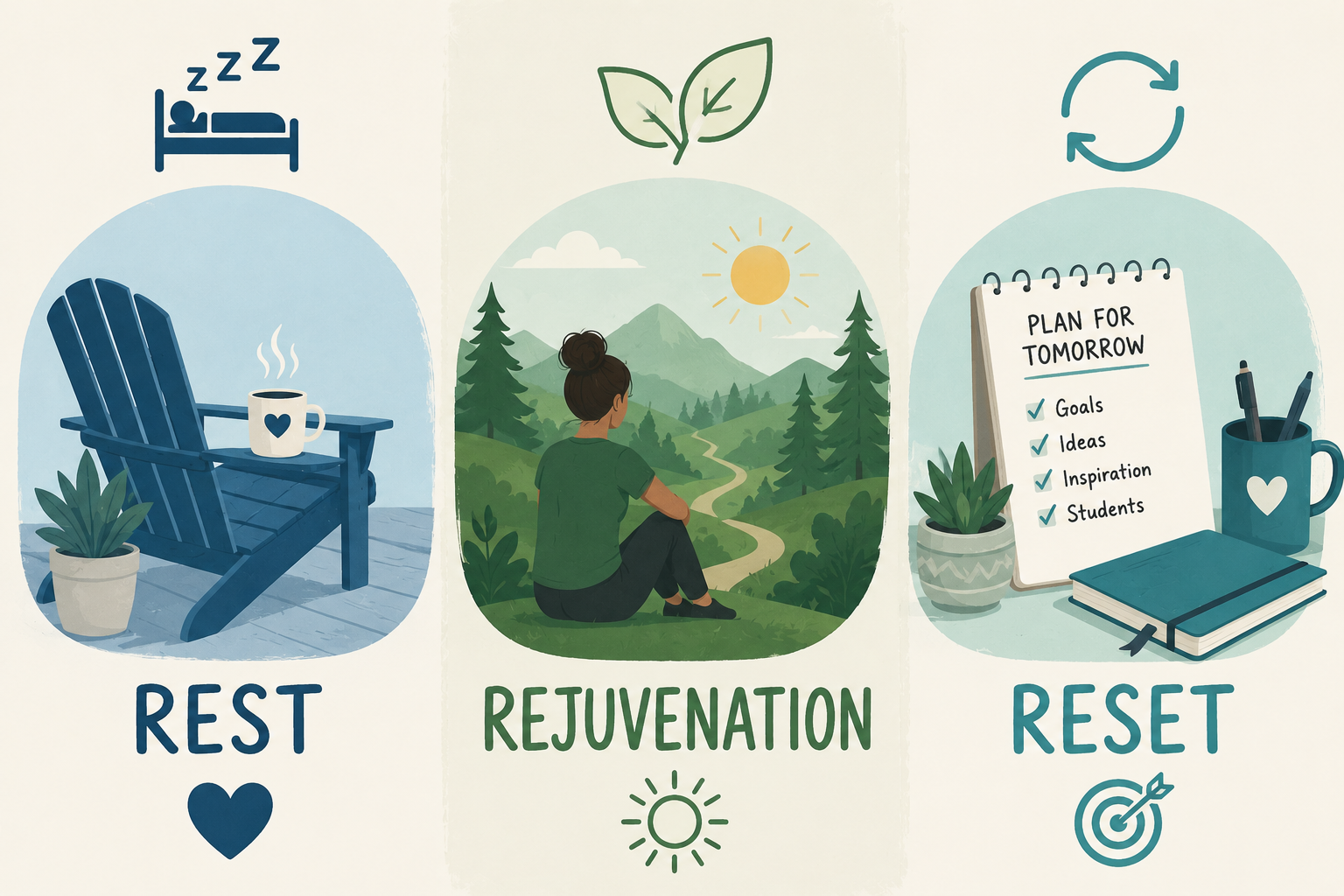
Summer isn't just for rest. It's also a chance to reset.
And sometimes the best reset starts with a few simple questions and a mindful reflection.
Thanks for reading!
Now go rest and relax.
And when your mind goes back to thinking about ways to make your next year more engaging and less exhausting, keep an eye out for my new book:
Spark. Wire. Fire.: 100 Ready-to-Use Classroom Activities That Inspire Curiosity, Strengthen Memory, and Apply Learning.
Available August 1.
I hope it helps you teach smarter, not harder.
BOOKS & TOOLS
Flashcards are okay but there's a better way. The Memory (or Mind) Palace Method is a powerful learning and memorization technique that when mastered allows a student to remember 10, 20, or even 30 vocabulary words or concepts (definitions included) with ease.
And, they actually remember what they learned using memory palaces! This series of lessons (which can be used as classroom handouts) walks students through creating their first memory palace, filling it with information they need to learn, and using it to train their memories. It also contains short readings, a video lesson, memory palace examples, and practice drills.
Fair Use
Feel free to use with your students. Please do not share it with other parties or use for profit. All rights by crushschool.com.

In this classroom Mistakes are Expected, Respected, Inspected, Corrected!
Learned helplessness is a result of years of conditioning that mistakes are bad for learning. Nothing is further from the truth - some of the most powerful life lessons come from making mistakes, reflecting on them, and growing as a result.
This is a PNG Poster you can print and display in your classroom to encourage a culture of risk-taking and learning from mistakes.
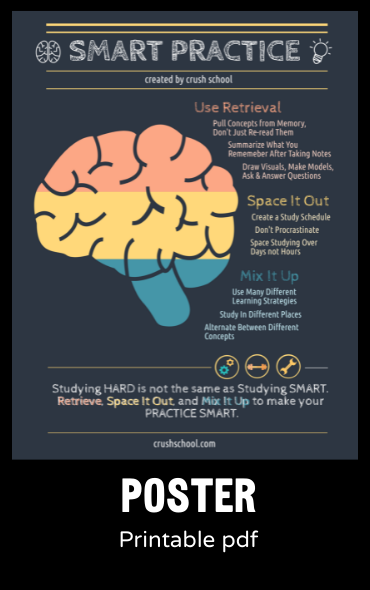
Retrieval Practice, Spaced Practice, and Mixed Practice (Interleaving).
Studying Hard is not the same as Studying Smart. This High Quality printable, digital (PNG) poster is a constant classroom reminder of best practices for teachers and learning the smart way for students.
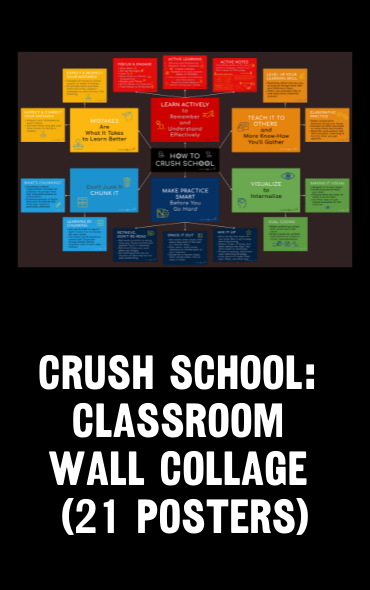
Classroom Wall Collage designed to promote effective, research-based, active learning strategies. Consists of 6 categories:
Learn Actively (Active Learning Strategies to avoid passive learning)
Mistakes Are What It Takes to Learn (Promoting a classroom culture of making and learning from mistakes and why such learning is effective)
Don’t Junk It, Chunk It (How to use the brain chunking technique)
Make Practice Smart (How to use smart and intentional study strategies instead of regurgitating and cramming information)
Visualize to Internalize (Dual Coding Strategy)
Teach It To Others (How to use what you learn to teach others to in turn learn it on a deeper level)
Each category includes 2 or 3 more specific descriptions of how it should be used. And, it rhymes for extra swag and student retention!
A total of 21 posters. Upon payment, you will be directed to a Google Drive link, which gives you 24 hours to copy the folder containing all 21 images to your Google Drive to use for educational purposes only.