CRUSH SCHOOL

I blog on Brain-Based Learning, Metacognition, EdTech, and Social-Emotional Learning. I am the author of the Crush School Series of Books, which help students understand how their brains process information and learn. I also wrote The Power of Three: How to Simplify Your Life to Amplify Your Personal and Professional Success, but be warned that it's meant for adults who want to thrive and are comfortable with four letter words.

The Problem with Review Packets
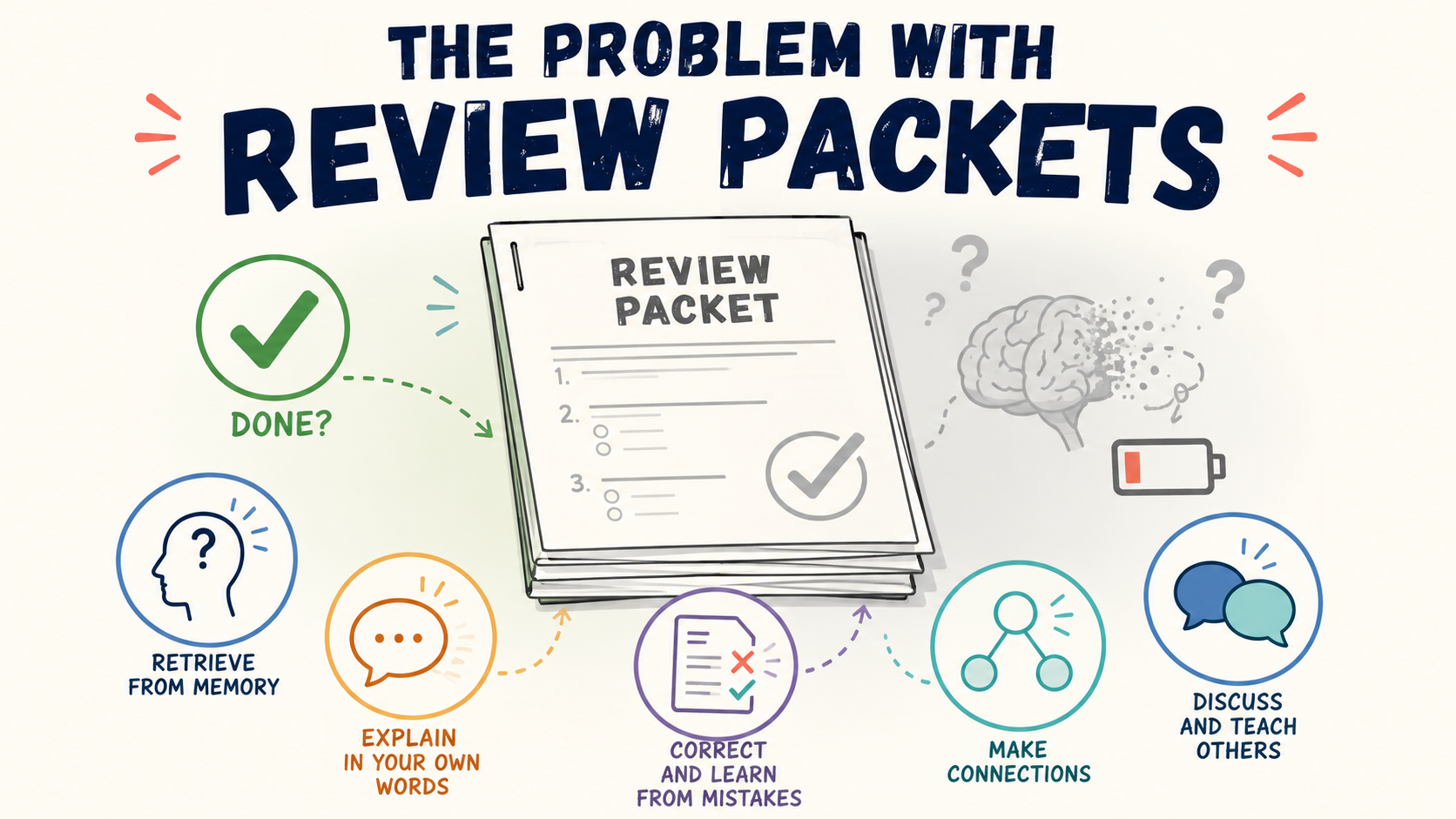
Educational graphic titled “The Problem with Review Packets,” showing a review packet in the center surrounded by icons for retrieving from memory, explaining in your own words, correcting mistakes, making connections, and discussing with others.

Review packets can look productive, but real review should help students retrieve, explain, connect, and use what they know.

Review packets feel responsible.

They look organized. They give students something to do. They create the illusion that we are preparing them for the test in a serious and structured way. There are pages, questions and “Unit Review” in bold that makes it feel important.

But let’s be honest.

A lot of review packets are ineffective.

Not because review is bad. Students need repeated exposure, practice, retrieval, feedback, and opportunities to strengthen memory. The problem is that many review packets do not actually do those things very well.

Instead, students flip through notes, hunt for answers, copy definitions, ask “Is this correct?” twelve times, and try to finish the packet as quickly as possible. Some students do the whole thing and some half. Some wait for the answer key. Many complete it and still have no idea what they know or do not know.

The Review Packet Problem

The packet gets done, but learning does not always get stronger.

This is because review should not be about data entry—moving information from notes to paper.

Review should involve moving information from memory to use. That means students need to retrieve it before they look it up. They need to explain why an answer makes sense. They need to compare similar ideas. They need to correct mistakes. They need to apply concepts to new situations.

A review packet often rewards recognition. Students see a word and think, “Oh yeah, I remember that.” But recognition is not the same as retrieval. Recognition can trick students into thinking they know something because it looks familiar, but when the test comes and notes disappear the idea is gone.

Retrieval Practice: What Real Review Does

Real review should make students pull information from memory.

That is why retrieval practice activities are so powerful. A brain dump, a no-notes explanation, a quick quiz, a wrong answer correction, a partner teach-back, a concept sort, or a two-question challenge can reveal what students actually know. These activities make students work with the material instead of simply finding it.

Review should also include deeper processing. Students should not only answer “What is it?” They should answer “How does it work?” “Why does it matter?” “What connects to this?” “What happens if it changes?” That is how review becomes more than test prep. It becomes learning.

Should Review Packets Be Banned?

Not hardly. After all, review packets tell students what they need to know.

And while a good packet can help organize practice, it should not be the main review strategy. Instead, treat it as one tool of a better review routine.

Have students try sections without notes first. Build in partner explanations. Add mistake analysis. Include concept connections. Ask students to mark confidence levels. Turn some questions into discussion prompts. Use the packet as a launchpad, not a silent worksheet marathon.

Because the goal of review is not to keep students busy until the test.

The goal is to strengthen memory, expose confusion, deepen understanding, and help students use what they know.

A packet alone cannot do that.

Students need to retrieve, explain, connect, apply, fix mistakes, compare ideas, teach each each other, and most importantly, think.

That is what real review looks like.

And yes, it may be a little louder than a packet.

But it is a lot more useful.


For 100+ ready-to-use activities that help students think, retrieve, connect, and apply, check out my book Spark. Wire. Fire. on Amazon.

If you want faster access to bell ringers, exit tickets, mid-lesson checks, and other active content review strategies my Master Teacher Toolkit app helps you find classroom-ready ideas instantly.


BOOKS & TOOLS
 
3 Memory Palace Lessons
$3.00

Flashcards are okay but there's a better way. The Memory (or Mind) Palace Method is a powerful learning and memorization technique that when mastered allows a student to remember 10, 20, or even 30 vocabulary words or concepts (definitions included) with ease.

And, they actually remember what they learned using memory palaces! This series of lessons (which can be used as classroom handouts) walks students through creating their first memory palace, filling it with information they need to learn, and using it to train their memories. It also contains short readings, a video lesson, memory palace examples, and practice drills.

Fair Use

Feel free to use with your students. Please do not share it with other parties or use for profit. All rights by crushschool.com.

 
EQUITY Poster
$1.50

Equity-Promoting Classroom Poster. What does EQUITY in the classroom look like?

  • Everyone has a different start and finish line

  • Quality is more important that quantity

  • Understanding that diversity makes us stronger

  • Inclusion despite beliefs, appearances, and circumstances

  • Thoughtfulness lowers barriers and reduces biases

  • Yesterday's mistakes are today's learning agenda

You can teach your students about equity and make it a daily classroom practice using this inspirational poster, which also includes images that accompany the equity description. You can discuss each letter characteristic with your students as a way of introducing your inclusive classroom and display it prominently as a reminder that diversity makes the classroom community stronger.

 
Mistakes Are... Poster
$3.00

In this classroom Mistakes are Expected, Respected, Inspected, Corrected!

Learned helplessness is a result of years of conditioning that mistakes are bad for learning. Nothing is further from the truth - some of the most powerful life lessons come from making mistakes, reflecting on them, and growing as a result.

This is a PNG Poster you can print and display in your classroom to encourage a culture of risk-taking and learning from mistakes.
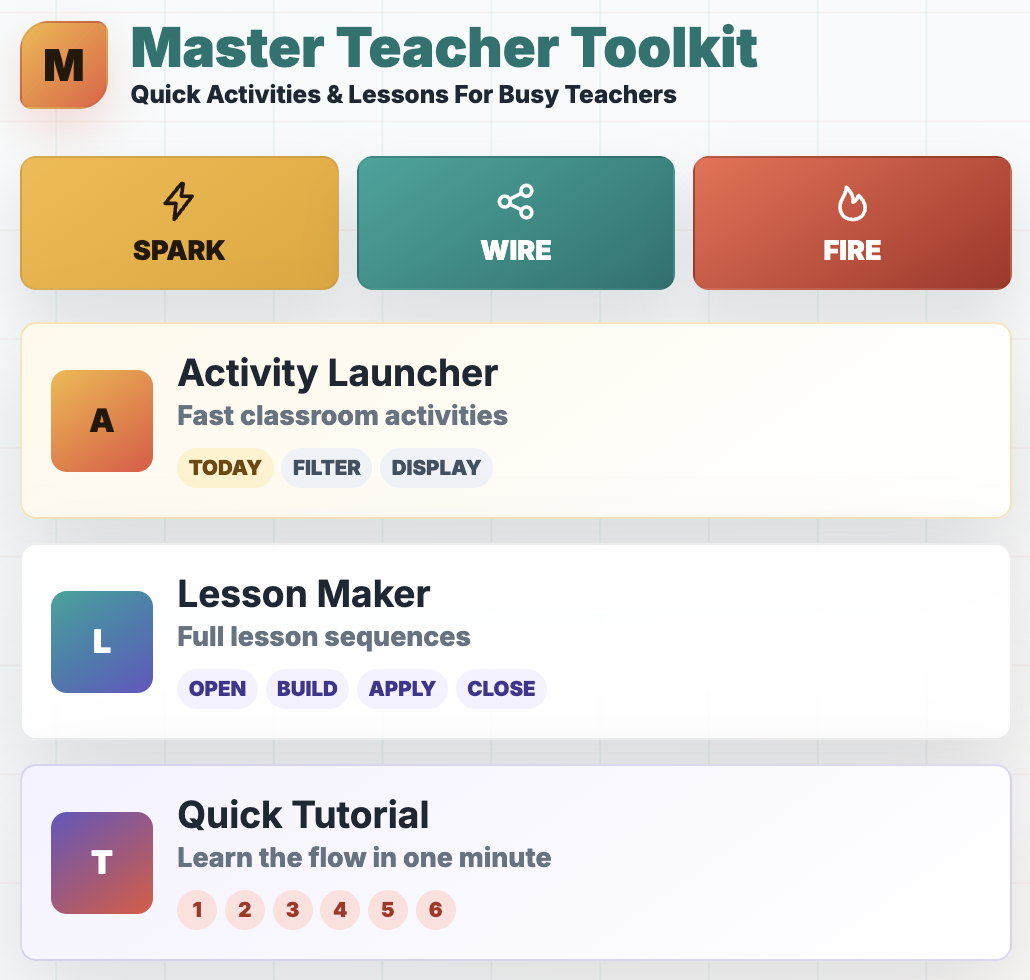
 
Master Teacher Toolkit home screen featuring the Activity Launcher for quick classroom activities and Lesson Maker for building structured 45-, 60-, or 90-minute lesson sequences

Teaching App

Launch engaging, deeper learning activities and lessons in seconds. Then, launch and display them to students instantly.
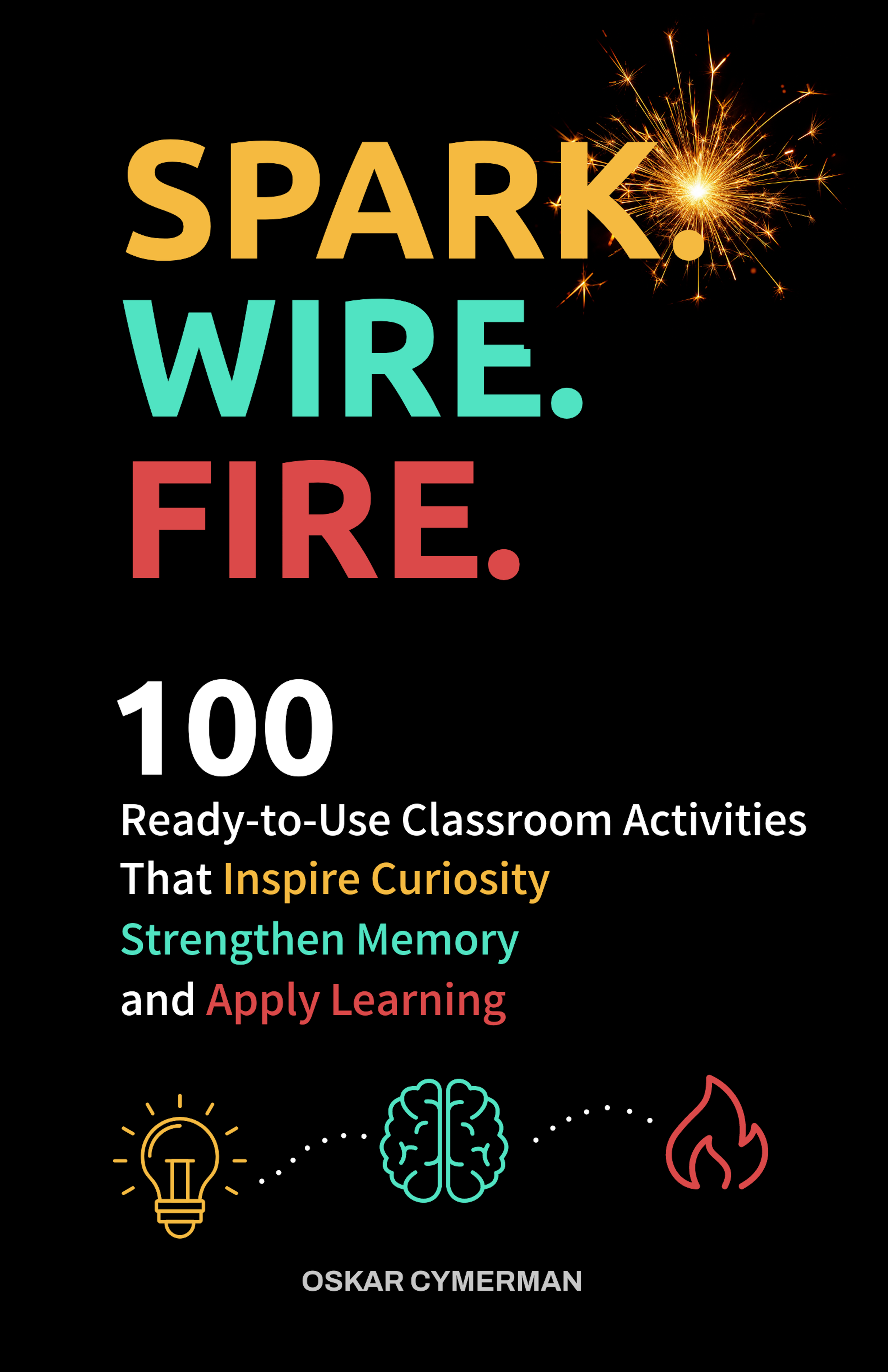
 
Book cover for Spark. Wire. Fire.: 100 Ready-to-Use Classroom Activities That Inspire Curiosity, Strengthen Memory, and Apply Learning, a teacher resource focused on classroom engagement, memory, and active learning strategies.

NEW BOOK

100+ practical activities teachers can use right away with little or no prep.
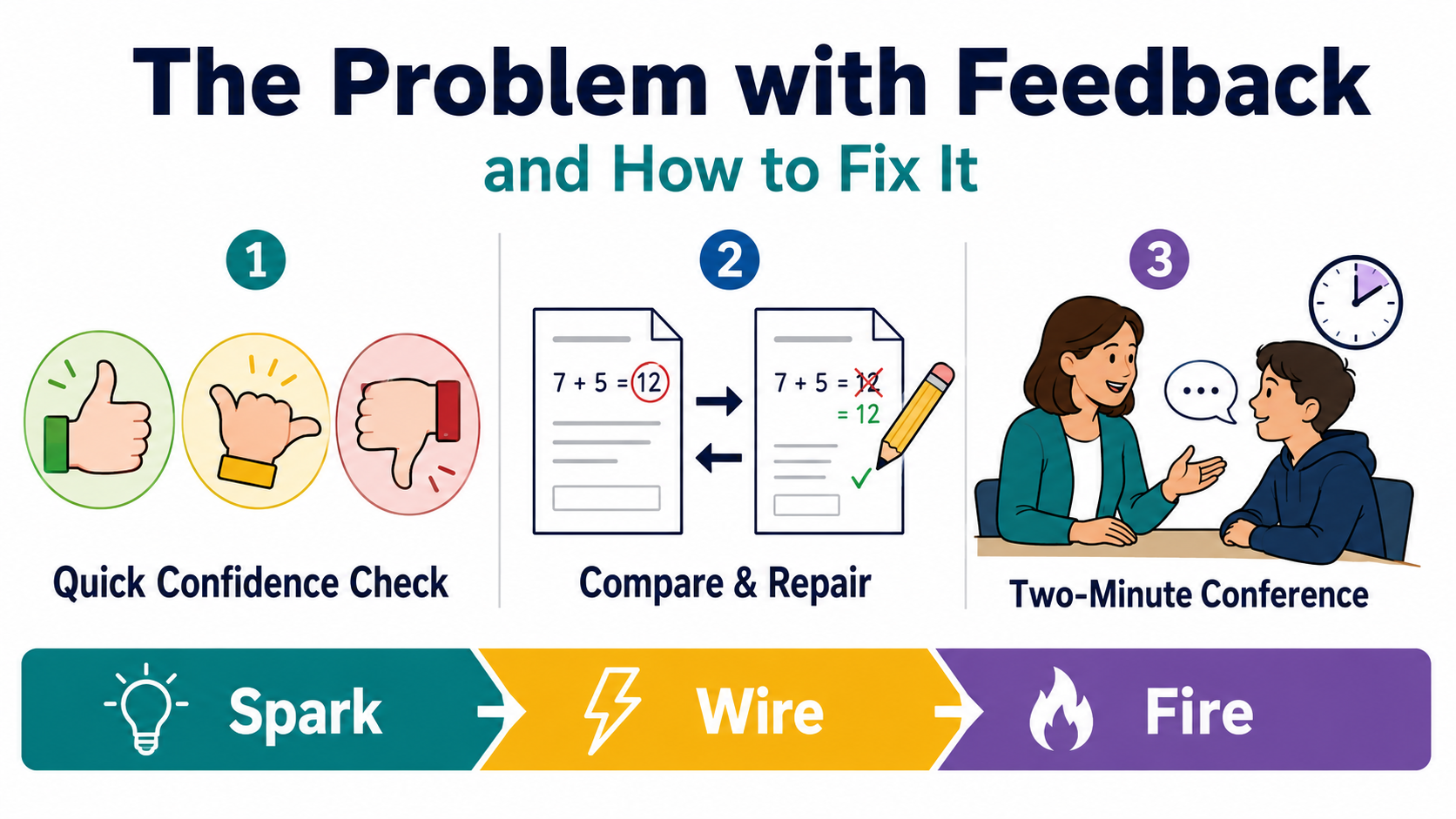
The Problem with Feedback and How to Fix It

Quick Confidence Check, Compare & Repair, and Two-Minute Conference help teachers give faster feedback students can actually use.

Feedback is one of the most important parts of learning.

It is also one of the most frustrating parts of teaching.

Teachers know students need feedback. We know they need to see what they understand, what they missed, where their reasoning went wrong, and how to improve. But we also know the reality.

Feedback takes time.nA lot of time.

You collect the assignment. You bring it home. You stare at the stack with the kind of dread usually reserved for dental work and airport security lines. You start grading. You write comments. You circle mistakes. You leave helpful notes. You try to be specific, encouraging, accurate, and somehow not spend seven minutes on each paper.

Then, days later, students get the work back.

Some read the comments. Some look only at the grade. Some shove it into a folder where papers go to die. Some ask bluntly, “Can I throw this away?”

And just like that, hours of teacher effort produce very little learning.

That’s the feedback problem. It often arrives too late, takes too much teacher time, and comes after students have already moved on mentally.

By the time students get comments back, it’s over. The test is done. The assignment is finished. The grade is entered. The learning moment hasn’t just cooled off—it’s cold.

Because feedback works best when students can use it.

It needs to be timely, clear, and connected to an immediate chance to improve. If students cannot act on the feedback, it becomes more like a report card on the past than a tool for better learning.

This is why we need more real-time feedback built into everyday instruction.

Not more grading, comments, or stacks of notebook paper.

More feedback while student thinking is still happening.

That’s where short classroom strategies can help. Many activities in the Spark. Wire. Fire. book are designed to make student thinking visible right away.

And when thinking becomes visible, feedback becomes faster. Teachers can spot misconceptions, listen to explanations, ask follow-up questions, correct errors, and help students revise before the learning moment disappears.

Here are but a few ways to give and get better feedback.

1. Quick Confidence Check

One simple strategy is Quick Confidence Check.

After students answer a question, solve a problem, write a claim, choose an explanation, or complete a step, they quickly rate their confidence.

Ask them to show 3, 2, 1 fingers (maybe avoiding their middles finger?):

3 = I can explain this.
2 = I think I get it, but I need to check.
1 = I’m not there yet.

This gives the teacher immediate feedback without collecting anything complicated. If half the class has the right answer but most students mark a 1 or 2, that tells you something important. They may have guessed. They may have copied the method. They may have followed the example but not fully understood it.

That is valuable information while there is still time to do something about it.

Students also get feedback from themselves. They have to pause and ask, “Do I actually understand this, or did I just get through it?” That small metacognitive moment matters because students often confuse completion with understanding.

For example, in Social Studies, students might write a cause-and-effect statement about the causes of the American Revolution. Afterward, they show 1, 2, or 3 fingers to rate whether they can explain how that cause contributed to colonial resistance.

It takes less than a minute, but it gives both teacher and student a clearer picture of where the learning actually is.

2. Compare & Repair

Another strategy is Compare & Repair.

Students answer, solve, draw, write, or explain something on their own. Then they compare their response with a partner, a small group, an exemplar, or a teacher-provided answer. Their job is not just to see whether they were right or wrong, but to repair the thinking.

They look for what is missing, unclear, weak, incorrect, incomplete, or unsupported. Then they revise.

This is feedback students can use immediately.

Instead of the teacher writing, “Needs more evidence” three days later, students notice the missing evidence while the idea is still fresh. Instead of circling an error after the assignment is over, the class catches the misconception when students still care about fixing it.

In Chemistry, students might compare two stoichiometry setups and repair the one with the wrong mole ratio. In ELA, students might compare thesis statements and revise the one that is too vague. In social studies, they might compare two explanations of an event and add missing context.

The feedback happens through comparison, discussion, and revision.

That is much more useful than a comment students see after their brain has already checked the assignment as last-week’s news.

3. Two-Minute Conference

A third strategy is Two-Minute Conference.

Students complete a quick response, explanation, problem, sketch, or claim. Then the teacher chooses a few students or groups for a fast conference while the rest of the class continues working.

The goal is not to grade the whole thing, but to ask one actionable question that helps the student improve while the learning is still happening:

“What part are you most confident about?”
“Where did your thinking get stuck?”
“What evidence supports that answer?”
“Can you explain why that step works?”
“What would make this clearer?”
“What is one thing you would change if you had another minute?”

Students get immediate, specific feedback they can actually use. Instead of reading a comment four days later, they hear one targeted question in the moment and have a chance to respond, rethink, and improve.

In Earth and Space Science, I might ask, “What evidence shows that this is a convection current?” In ELA, a teacher might ask, “How does that quote support your claim?” In social studies, a teacher might ask, “Which cause had the biggest impact, and why?”

The Two-Minute Conference also gives the teacher better information. You hear students explaining their thinking, not just looking at their final answer. And when you hear the thinking, you can catch misunderstandings before they become permanent.

Feedback as conversation, not paperwork.

And while nothing eliminates grading except possibly becoming a goat farmer (and even then the goats probably have standards) Two Minute Conferences reduce the amount of feedback that has to happen after the fact. They help teachers catch problems when students still have a chance to adjust their understanding.

Feedback should not only tell students how they did, but help them do better.

Real-time feedback also shifts responsibility to students. Instead of passively receiving a grade, students compare answers, revise explanations, defend reasoning, fix mistakes, and notice gaps in their understanding. This builds metacognition—a fancy way of saying students start thinking about their thinking and learning.

That’s when feedback becomes power.

No longer just “Here is what you got wrong,” but “Here is what you improved and now understand better.”

Grading-heavy feedback systems is not what we need. Most of us are already drowning in those. What we need are small, practical routines that make learning visible and usable during class.

A quick confidence check. A comparison and repair. A two-minute conference.

Tiny changes. huge dividends. Instead of feedback arriving after learning, it becomes part of learning.

That’s the fix. Make thinking visible sooner. Give feedback faster. Let students act on it immediately.

Because feedback is power when we can use it to improve.


For 100+ ready-to-use activities that help students think, retrieve, connect, and apply, check out my book Spark. Wire. Fire. on Amazon.

If you want faster access to bell ringers, exit tickets, mid-lesson checks, and other active content review strategies my Master Teacher Toolkit app helps you find classroom-ready ideas instantly.


BOOKS & TOOLS


MTT Next Time FREE Teacher Reflections iPhone App

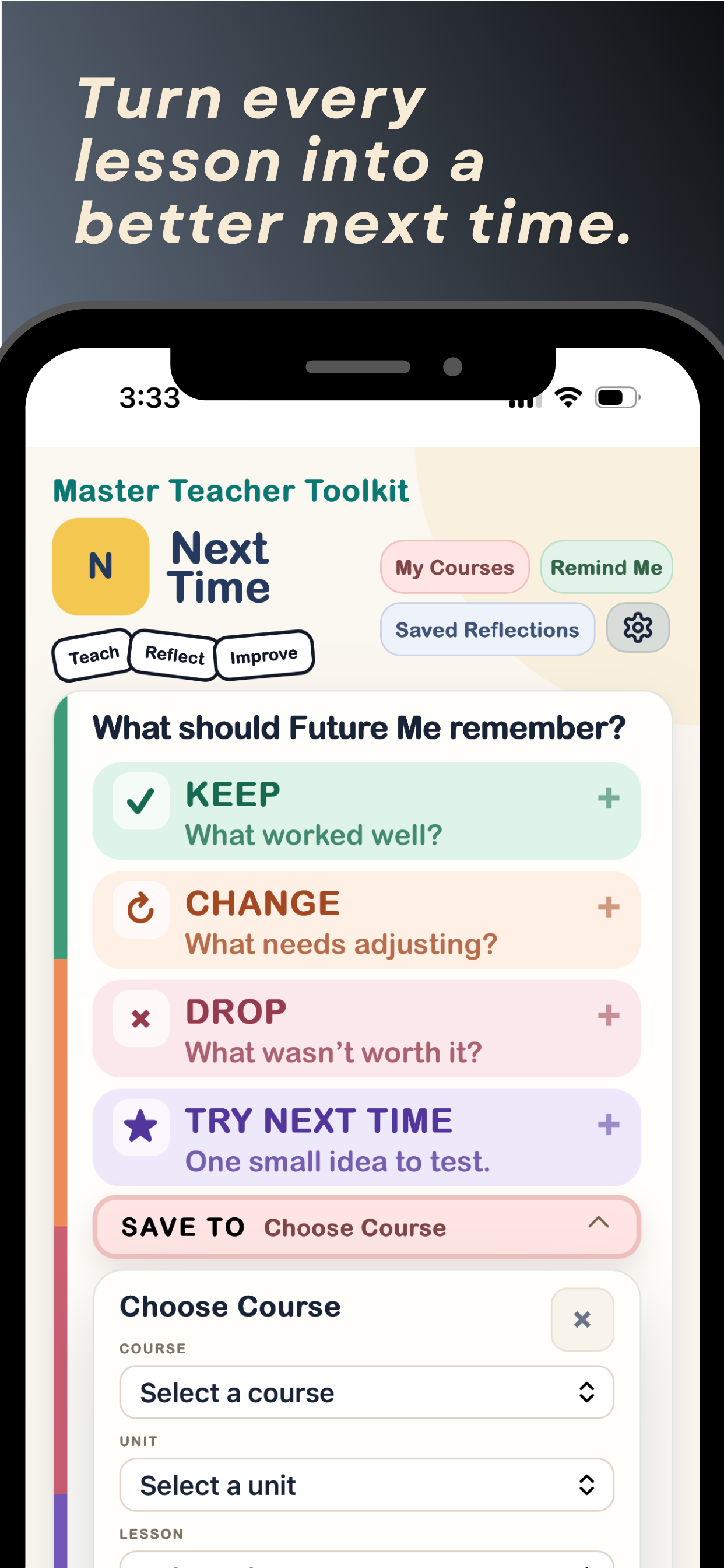
MTT Next Time app screen showing reflection prompts to keep, change, drop, or try next time, with options to save insights to a course, unit, and lesson.

Teach. Reflect. Improve.

 
3 Memory Palace Lessons
$3.00

Flashcards are okay but there's a better way. The Memory (or Mind) Palace Method is a powerful learning and memorization technique that when mastered allows a student to remember 10, 20, or even 30 vocabulary words or concepts (definitions included) with ease.

And, they actually remember what they learned using memory palaces! This series of lessons (which can be used as classroom handouts) walks students through creating their first memory palace, filling it with information they need to learn, and using it to train their memories. It also contains short readings, a video lesson, memory palace examples, and practice drills.

Fair Use

Feel free to use with your students. Please do not share it with other parties or use for profit. All rights by crushschool.com.

 
EQUITY Poster
$1.50

Equity-Promoting Classroom Poster. What does EQUITY in the classroom look like?

  • Everyone has a different start and finish line

  • Quality is more important that quantity

  • Understanding that diversity makes us stronger

  • Inclusion despite beliefs, appearances, and circumstances

  • Thoughtfulness lowers barriers and reduces biases

  • Yesterday's mistakes are today's learning agenda

You can teach your students about equity and make it a daily classroom practice using this inspirational poster, which also includes images that accompany the equity description. You can discuss each letter characteristic with your students as a way of introducing your inclusive classroom and display it prominently as a reminder that diversity makes the classroom community stronger.

 
Mistakes Are... Poster
$3.00

In this classroom Mistakes are Expected, Respected, Inspected, Corrected!

Learned helplessness is a result of years of conditioning that mistakes are bad for learning. Nothing is further from the truth - some of the most powerful life lessons come from making mistakes, reflecting on them, and growing as a result.

This is a PNG Poster you can print and display in your classroom to encourage a culture of risk-taking and learning from mistakes.

 
Master Teacher Toolkit home screen featuring the Activity Launcher for quick classroom activities and Lesson Maker for building structured 45-, 60-, or 90-minute lesson sequences

Teaching App

Launch engaging, deeper learning activities and lessons in seconds. Then, launch and display them to students instantly.

 
Book cover for Spark. Wire. Fire.: 100 Ready-to-Use Classroom Activities That Inspire Curiosity, Strengthen Memory, and Apply Learning, a teacher resource focused on classroom engagement, memory, and active learning strategies.

NEW BOOK

100+ practical activities teachers can use right away with little or no prep.
The Worksheet Problem: Why Passive Learning Fails

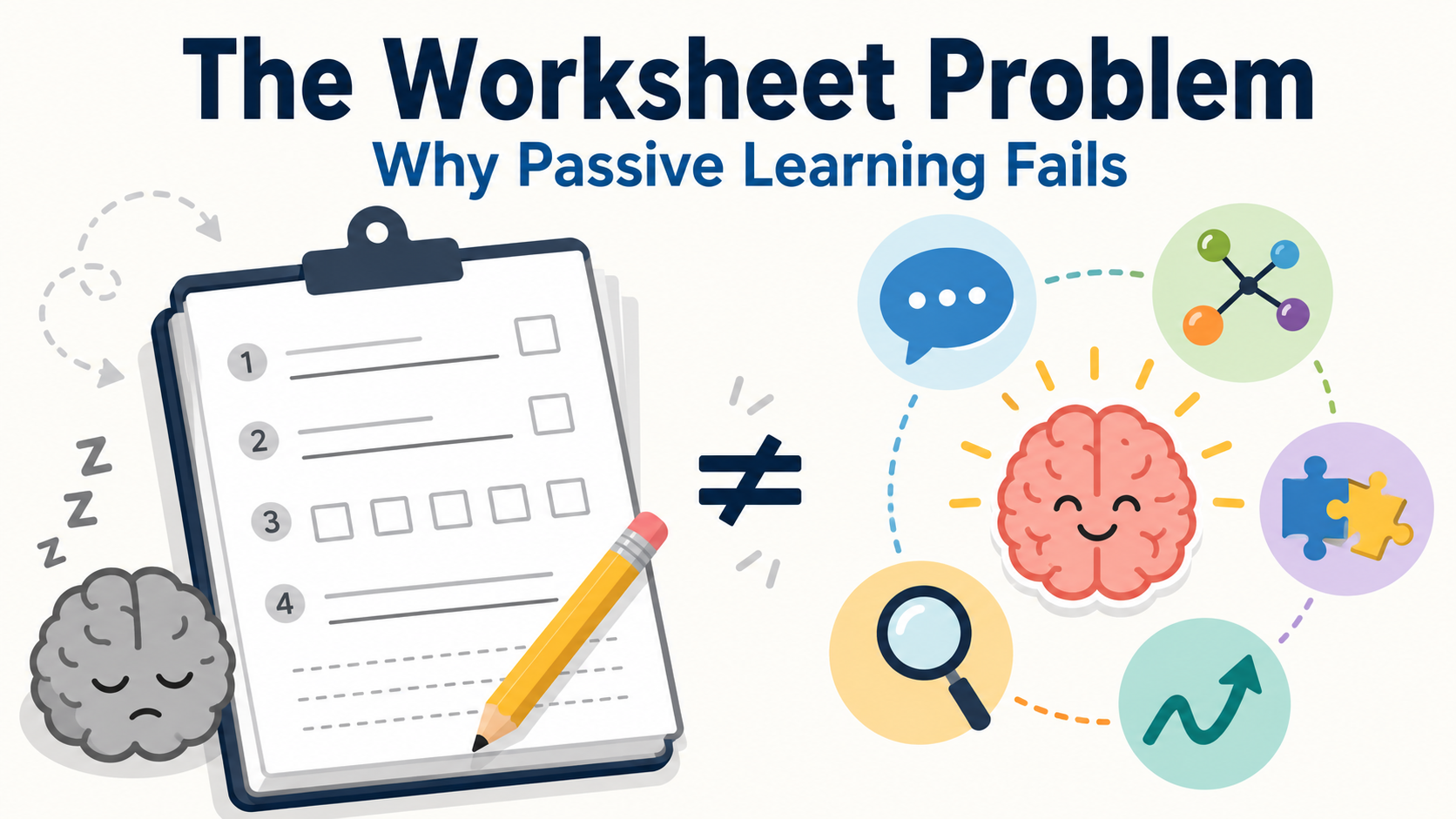
Simple classroom graphic titled “The Worksheet Problem: Why Passive Learning Fails,” showing a worksheet and pencil contrasted with active learning icons such as a brain, speech bubble, magnifying glass, puzzle pieces, and connections.

Worksheets can support learning, but they should not replace thinking. Stronger learning happens when students retrieve, explain, connect, question, and apply what they know.

Worksheets are not evil. Let’s start there.

A good worksheet can give students practice, structure, examples, organization, and a place to think on paper. Sometimes students need quiet practice. Sometimes they need repetition. Sometimes they need to work through problems, answer questions, or organize information.

The problem is not the worksheet.

The problem is that much of the modern classroom learning has become “worksheet time.”

Unfortunately, in many classrooms worksheets have become the default. The filler. The “I need something for them to do” activity. The packet. The page. The thing students complete while we hope learning is happening somewhere underneath the pencil marks and Chromebook clicks.

And sometimes it is.

But a lot of the time, it isn’t.

Students can finish the page, but not understand the concept. They can complete the assignment, but forget it by tomorrow. They can copy the definition, but have no idea what it means. They can answer every question, but not be able to explain one-fourth of them. They can look productive, but their brain is on autopilot.

Busy work—that is the worksheet problem.

Worksheets often create the appearance of learning without requiring much actual thinking. Students can search, copy, match, fill in blanks, follow an example, or guess their way through the page. They may finish the task, earn the points, turn it in, and move on without building much understanding.

When learning turns into data entry it’s beyond passive. It’s dead.

Passive learning happens when students receive, copy, recognize, or complete information without the requirement of deeper processing. They may be busy, but they are not retrieving, explaining, connecting, applying, or questioning the ideas.

But learning is not something students get by being near information.

Learning requires mental work.

Students need to pull information from memory. They need to connect new ideas to what they already know. They need to explain concepts in their own words. They need to make decisions, notice patterns, correct mistakes, compare examples, and use knowledge in different situations.

Worksheets can support that, but only if they are designed to make students think.

But too often, worksheet time rewards completion not understanding.

That is why a student can finish twenty-three vocabulary definitions and still not use the words correctly. A student can solve ten problems by copying a pattern and still freeze when the problem changes slightly. A student can answer reading questions and still miss the main idea. A student can fill in a diagram and still fail to explain how the system works.

The worksheet got done.

The learning? Not so much.

One reason this happens is that recognition feels like learning. When students see a word, formula, definition, or example in front of them, it feels familiar. Familiarity tricks the brain into thinking, “I know this.” But recognizing something on a page is not the same as being able to retrieve it later, explain it clearly, or apply it without help.

That is why students often feel ready before a quiz, then forget everything by next Monday.

They were around the information, but they were not using it enough for it to stick long term..

Another problem is that worksheets can let students avoid struggle. And I do not mean pointless struggle or frustration that makes kids shut down. I mean productive struggle—the kind where students have to think, test an idea, make a mistake, revise, and try again.

That kind of struggle helps learning stick.

But many worksheets remove too much thinking. They tell students exactly what to do, in what order, with examples that look almost identical to the problems. Students follow the path, but they may not understand the terrain.

Then we change the question, remove the notes, or ask them to explain why something works, and suddenly the learning falls apart, because students did not get enough practice doing the thinking themselves.

So what do we do?

Ban worksheets? Burn packets? Spend way too much time planning new lessons?

No. We just need to stop confusing completion with learning.

A worksheet becomes more useful when it includes retrieval before looking things up. Ask students to answer from memory first, then check notes. That small change turns a passive task into retrieval practice.

A worksheet becomes more useful when students explain their reasoning. Not just “What is the answer?” but “How do you know?” or “Why does this make sense?”

A worksheet becomes more useful when students compare ideas. Which example fits best? Which answer is strongest? Which solution has the mistake? Which explanation is clearer?

A worksheet becomes more useful when students apply the concept in a new situation. Not just define the term, but use it. Not just identify the formula, but explain what it means. Not just summarize the event, but connect it to a larger pattern.

Short active learning strategies can also replace or improve worksheet time. You can even change the worksheet prompts and questions into short activities that involve more student thinking and collaboration.

A Wrong Answer Warm-Up gives students a believable mistake and asks them to find, explain, and fix it. That is better than copying the correct answer because students have to process why the answer works.

Draw the Definition asks students to turn a concept into a quick visual without notes. That reveals understanding fast because students have to represent the idea, not just repeat the words.

No Notes, Just Brain asks students to write everything they remember before checking materials. That turns review into retrieval instead of a scavenger hunt.

These strategies do not require lesson overhaul. They simply shift the work from passive completion to active thinking. But that shift is everything.

Because the goal is not for students to finish more pages, but to understand ideas more deeply and apply them more effectively.

Worksheets can have a place in the classroom, but they should not be where thinking goes to die.

If students are copying, filling, matching, and finishing without retrieving, explaining, connecting, or applying, then the worksheet is not helpful. It is just keeping them busy and busy does not equal learning.

True learning requires action. Thinking action. Retrieval action. Explanation action. Connection action. Application action.

Students need to do something meaningful with information. That is the difference between passive work and learning that works.

And once we see that difference, I hope we can stop asking, “Did they finish the work?” and start asking a much better question:

“Did they actually learn?”


For 100+ ready-to-use activities that help students think, retrieve, connect, and apply, check out my book Spark. Wire. Fire. on Amazon.

If you want faster access to bell ringers, exit tickets, mid-lesson checks, and other active content review strategies my Master Teacher Toolkit app helps you find classroom-ready ideas instantly.


BOOKS & TOOLS

 
3 Memory Palace Lessons
$3.00

Flashcards are okay but there's a better way. The Memory (or Mind) Palace Method is a powerful learning and memorization technique that when mastered allows a student to remember 10, 20, or even 30 vocabulary words or concepts (definitions included) with ease.

And, they actually remember what they learned using memory palaces! This series of lessons (which can be used as classroom handouts) walks students through creating their first memory palace, filling it with information they need to learn, and using it to train their memories. It also contains short readings, a video lesson, memory palace examples, and practice drills.

Fair Use

Feel free to use with your students. Please do not share it with other parties or use for profit. All rights by crushschool.com.

 
EQUITY Poster
$1.50

Equity-Promoting Classroom Poster. What does EQUITY in the classroom look like?

  • Everyone has a different start and finish line

  • Quality is more important that quantity

  • Understanding that diversity makes us stronger

  • Inclusion despite beliefs, appearances, and circumstances

  • Thoughtfulness lowers barriers and reduces biases

  • Yesterday's mistakes are today's learning agenda

You can teach your students about equity and make it a daily classroom practice using this inspirational poster, which also includes images that accompany the equity description. You can discuss each letter characteristic with your students as a way of introducing your inclusive classroom and display it prominently as a reminder that diversity makes the classroom community stronger.

 
Mistakes Are... Poster
$3.00

In this classroom Mistakes are Expected, Respected, Inspected, Corrected!

Learned helplessness is a result of years of conditioning that mistakes are bad for learning. Nothing is further from the truth - some of the most powerful life lessons come from making mistakes, reflecting on them, and growing as a result.

This is a PNG Poster you can print and display in your classroom to encourage a culture of risk-taking and learning from mistakes.

 
Master Teacher Toolkit home screen featuring the Activity Launcher for quick classroom activities and Lesson Maker for building structured 45-, 60-, or 90-minute lesson sequences

Teaching App

Launch engaging, deeper learning activities and lessons in seconds. Then, launch and display them to students instantly.

 
Book cover for Spark. Wire. Fire.: 100 Ready-to-Use Classroom Activities That Inspire Curiosity, Strengthen Memory, and Apply Learning, a teacher resource focused on classroom engagement, memory, and active learning strategies.

NEW BOOK

100+ practical activities teachers can use right away with little or no prep.