
Meaningful Learning = Less Consumption + More Thinking
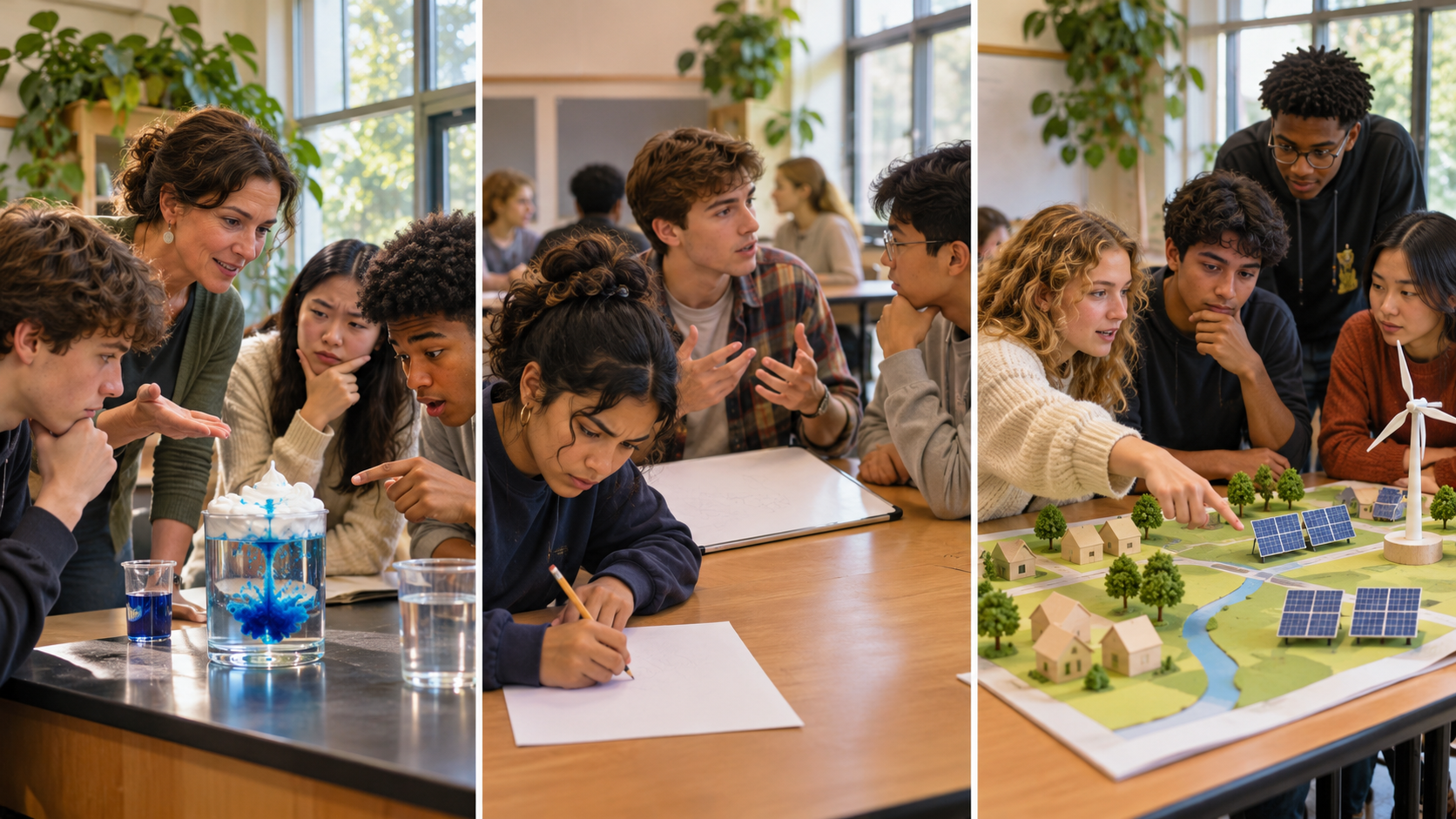
Students engage in prediction, retrieval, and application through hands-on, discussion-based learning.
Students of today have access to more information than any generation before them. Videos, apps, interactive lessons, and AI can give explanations, examples, and answers in seconds.
But access isn't learning.
Just because we have any information we can imagine available within a few strokes of a keyboard doesn’t mean we’re always better for it.
Learning requires doing something with that information—thinking, questioning, connecting, and applying. Here are three ways we can make that happen more often in our classrooms.
1. Prediction Before Explanation
Give students something to ponder first.
Before telling them how this or that works, show them something unexpected or puzzling. Give them a weird scenario, a strange result, or an unfinished ecperiment and ask them to predict and explain what happened, is happening, or will happen before revealing the truth.
This activates prior knowledge, exposes misconceptions, and gives students a reason to pay attention and seek answers during the lesson later.
Tell them to take leaps and not worry about being correct. Discovering they were wrong creates valuable life and learning opportunities such as taking calculated risks, learning through mistakes, and forming stronger memories of the concepts.
As students analyze evidence, practice logical thinking, receive feedback, and explain the “why they thought what they thought,” and identify the gaps in their own thinking, they are given chancea to work out the right answer and deepen their understanding of the concept.
So next class, instead of starting with "Here's what you need to know," start with "What do you think will happen, and why?"
2. Retrieval Instead of Repetition
We often confuse recognizing information with knowing it.
Take my unhappy-with-their-score 9th-graders after their unit 2 test in Earth Science just two days ago.
“The test was nothing like the study materials!” or “The questions were not the same as the Gimkit questions!” are the usual complaints.
“Of course they weren’t. I told you they wouldn’t be,” my standard reply.
I stopped doing Gimkits and other gamified crap that gets kids engrossed in the experience but not the learning. Not in class anyway. I reserve them for the optional home study sessions so students can practice the concepts. Too often I find they click on the answers repeatedly with zero to none processing.
I encourage them to spend time thinking deeply about each question rather than just to click and hope it all magically seeps into their young brains.
“Pause and ask yourself what this concept means,” I say. “Can you give an example, explain it in simple terms, or use it in a different way?”
Because rereading notes, highlighting words, rewatching videos, and playing game-based learning apps ad oblivium until 2 am the night before the test is not the way.
It’s not only unhealthy. It’s dumb work that looks hard.
Everything looks familiar when they do these things, so they assume they have knowledge. But recognizing something when it's right in front of you is very different from recalling it from memory when it counts.
But this is the only way many of them know.
I teach them how to do retrieval practice while they study on their own, but many clearly don’t. It’s like they don’t believe me or don’t want to because they never had to do it that way in the olden days of middle school.
But learning is effortful. There are no shortcuts. Or more specifically, repetition is no shortcut, but a lie students tell themselves to brag about how how they studied.
Then, the test is the first time their brains are asked to recall and many fail to do so because the memories have never formed. Retrieval practice is what tests ask, but too often the test is the first time retrieval is actually attempted by so many.
Students need to bring the information back from their brains before that, and often. We can help them with that. We must do this in class, because old habits die hard in the comforts of their homes.
Ask them to explain a concept without notes, sketch a process from memory, reconstruct a diagram, or teach a partner what they learned yesterday or on Friday if it’s Monday. Constraints are key here. No notes, no book, no Google, just the brain and the struggle to retrieve.
The hidden bonus is that those activities do more than reveal what students remember. Successful retrieval helps strengthen future access to the info, especially when practice is spaced over time and students receive corrective feedback on the stuff they misconceive.
So while we cannot control how our students study at home, we can give them opportunities to dig for the information in their brains in class.
3. Application Instead of Consumption
How often and in how many classrooms of this world does learning end when students can see and repeat someone else’s explanation or identify the right answer?
But the real challenge lies in whether they can use what they have learned.
Let’s instead of having students watch another video about renewable energy ask them to recommend the best energy source for their community.
Let’s instead of answering more questions about persuasive writing have them evaluate competing arguments and defend which one is stronger.
Application requires students to connect ideas, examine evidence, make decisions, and justify their reasoning.
It also reveals whether students genuinely understand something or have simply memorized the right words in the right (so they think) order, which turns scary when we change the order of the words on the test and ask for the same thing in a different way.
So while there’s nothing wrong with asking students what they know, it’s not okay to just stop there. Let’s challenge them to show what they can do with what they know.
Keep It Simple to Be Effective
None of these strategies requires expensive technology, elaborate lesson plans, or another subscription. My school pays for Gimkit, Blooket, and Quizizz for those who wish, but why? To enable teachers to entertain and students while they’re not learning? Hard pass if you ask me.
Yes, thoughtfully-deployed technology can support effective learning, but it isn't what makes learning effective. Teachers are. You are.
What matters is the thinking students are doing with or without the tech.
What matters is not consumption of content by whatever means available but true cognitive engagement with the information.
We don't need more activities that keep students occupied, entertained, and clicking like their lives depend on pounding on the keyboards.
We need activities that make their brains do the work of learning.
For 100+ ready-to-use activities that help students think, retrieve, connect, and apply, check out my book Spark. Wire. Fire. on Amazon.
If you want faster access to bell ringers, exit tickets, mid-lesson checks, and other cognitively-challenging learning strategies my Master Teacher Toolkit app helps you find classroom-ready ideas instantly.
BOOKS & TOOLS
Flashcards are okay but there's a better way. The Memory (or Mind) Palace Method is a powerful learning and memorization technique that when mastered allows a student to remember 10, 20, or even 30 vocabulary words or concepts (definitions included) with ease.
And, they actually remember what they learned using memory palaces! This series of lessons (which can be used as classroom handouts) walks students through creating their first memory palace, filling it with information they need to learn, and using it to train their memories. It also contains short readings, a video lesson, memory palace examples, and practice drills.
Fair Use
Feel free to use with your students. Please do not share it with other parties or use for profit. All rights by crushschool.com.

Equity-Promoting Classroom Poster. What does EQUITY in the classroom look like?
Everyone has a different start and finish line
Quality is more important that quantity
Understanding that diversity makes us stronger
Inclusion despite beliefs, appearances, and circumstances
Thoughtfulness lowers barriers and reduces biases
Yesterday's mistakes are today's learning agenda
You can teach your students about equity and make it a daily classroom practice using this inspirational poster, which also includes images that accompany the equity description. You can discuss each letter characteristic with your students as a way of introducing your inclusive classroom and display it prominently as a reminder that diversity makes the classroom community stronger.
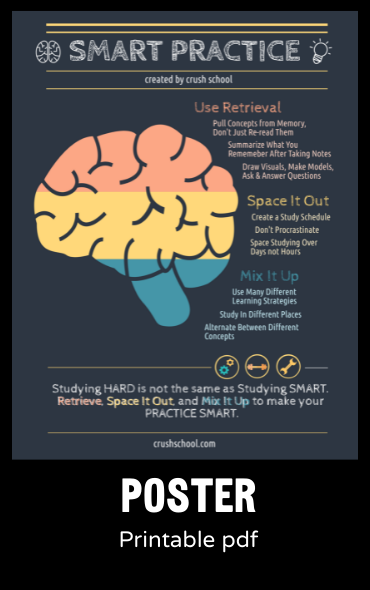
Retrieval Practice, Spaced Practice, and Mixed Practice (Interleaving).
Studying Hard is not the same as Studying Smart. This High Quality printable, digital (PNG) poster is a constant classroom reminder of best practices for teachers and learning the smart way for students.

In this classroom Mistakes are Expected, Respected, Inspected, Corrected!
Learned helplessness is a result of years of conditioning that mistakes are bad for learning. Nothing is further from the truth - some of the most powerful life lessons come from making mistakes, reflecting on them, and growing as a result.
This is a PNG Poster you can print and display in your classroom to encourage a culture of risk-taking and learning from mistakes.
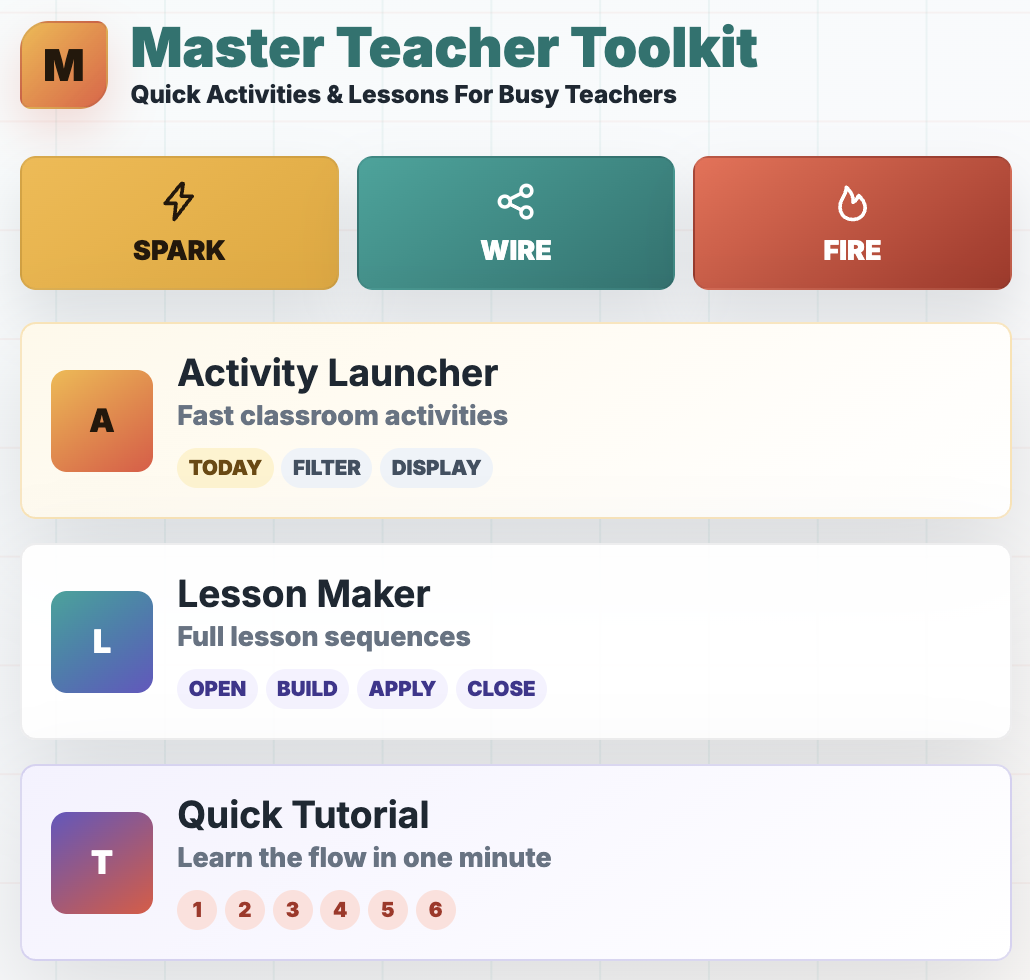
Teaching App
Launch engaging, deeper learning activities and lessons in seconds. Then, launch and display them to students instantly.
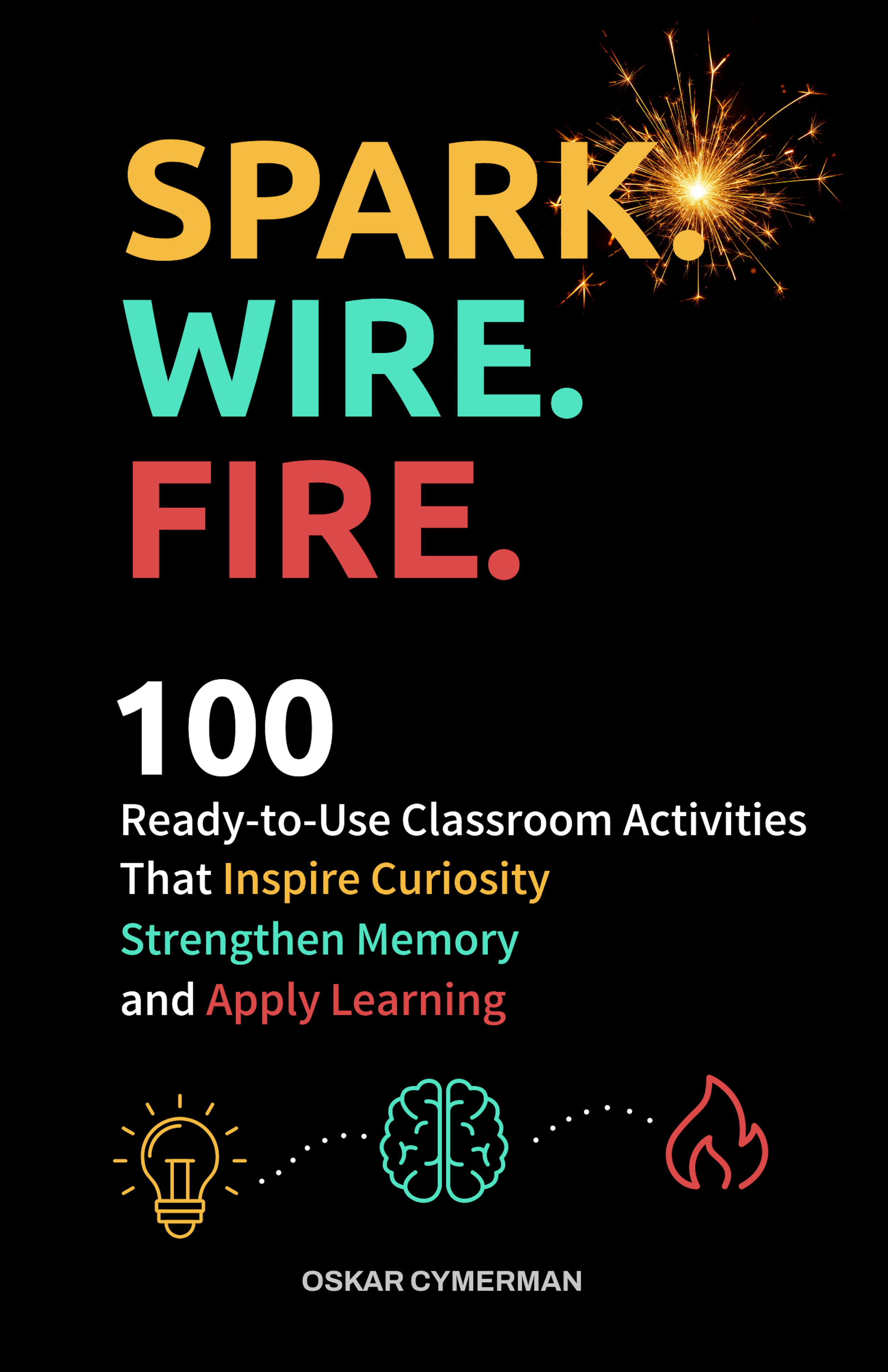
NEW BOOK
100+ practical activities teachers can use right away with little or no prep.