The Most Overrated Teaching Practice
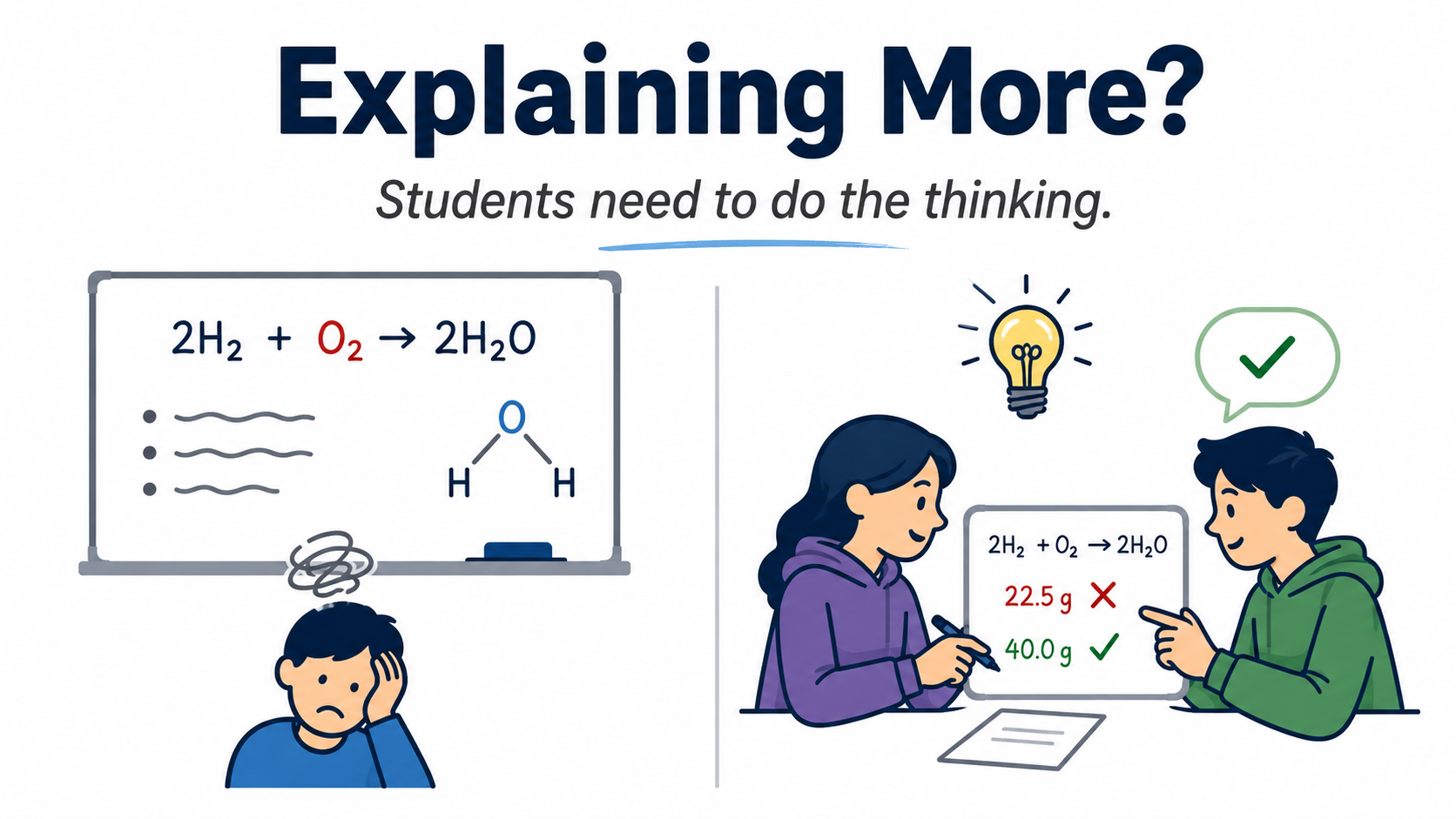
Explaining more is not always the answer. A clear explanation can open the door, but students learn more deeply when they retrieve, question, apply, and struggle through the thinking themselves.
I used to think that if students were confused, the answer was “explain it again.”
Go slower. Be clearer. Give more examples.
Maybe draw another diagram or solve one more problem on the board.
Maybe say the same thing in a slightly different way while silently wondering why my kick-ass explanation had not already changed lives.
Let Students Do Their Own Thinking
Such confusion is real in classes like Chemistry. It’s a subject that has a way of scaring the crap out of high schoolers and making teachers explain concepts over and over because the content is so abstract.
Moles, particles, coefficients, limiting reactants, gas laws, bond energy, equilibrium. It’s all invisible, symbolic, and prone to students faking their way through until the test exposes the truth.
I remember a student struggling with stoichiometry. She could follow me when I did the problem. She nodded at the mole ratio and other conversions. She copied the dimensional analysis setup. She crossed out the units. She even said, “I think I get it now Mr. C!” Then, I erased the problem I just did “with her” and gave her a similar one to try on her own. She did not know where to start….
Nothing. Nada. Nic.
Not because I explained the steps badly or she was a bad student.
The problem was I did all of the thinking.
She watched me do it and she followed the logic. But watching and following is not doing. It is not the same as being able to recall, organize, and use the idea independently.
The Trap of Explaining More
When we explain more, it feels like teaching is happening because the teacher is working hard, the board is full, and the room is quiet.
But the real question is: What are students doing with the information?
I am not arguing against direct instruction. Students need clear explanations, models, and examples. They need our guidance.
The problem rears its ugly head when explanation becomes the whole lesson—when students spend too much time listening, copying, watching, and looking engaged while doing little brain work.
And when later we assign practice for homework, they don’t know what hit them. They thought they understood and perhaps they did, but because they did not get a chance to do it on their own shortly after seeing it they did not learn.
That’s why explaining more is often overrated.
Sometimes, students do not need another explanation.
Alternatives to Explaining More
Students need a chance to think their way through the concept or the problem and, yes, a chance to struggle through it.
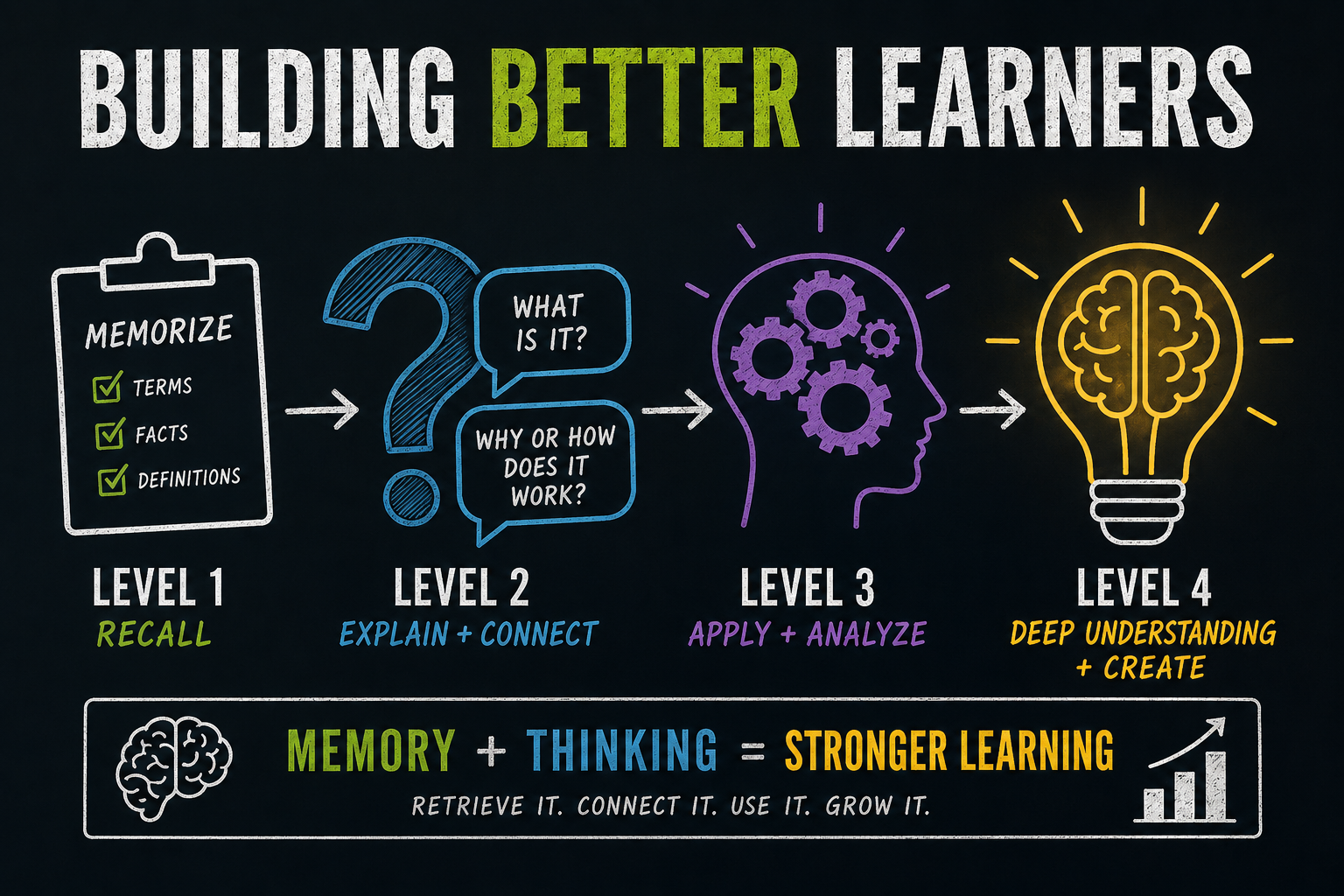
They need to predict, retrieve, draw, explain, compare, argue, sort, teach, connect, and apply. They need to make and correct mistakes.
They need short active learning strategies that force them to move from “I watched the teacher it” to “I can try it, explain it, and make sense of it.”
One simple such strategy is Next Move.
Instead of the teacher continuing with another explanation, problem, or example, students identify their current level of understanding by completing this sentence: "My next move is..."
This prompts metacognition as students judge where they are in their own learning process and choose one specific action to improve their understanding. Examples:
ask the teacher a question (specific, about something that’s unclear etc.)
practice another problem (same, similar, different - student is in charge of judging and guiding their own mastery and progress)
practice step-by-step (cover each step and try to recreate it from memory before looking at the example)
add evidence (look for signs the student is on the right track, improve understanding of the method, concept etc.)
review vocabulary (to improve understanding, connect ideas, retrieve etc.)
study with a partner (to compare approaches, learn from one another etc.)
The key part of the strategy is that students must be allowed to carry out their plan during the next learning opportunity—the sooner, the better.
That small shift makes students actively process the problem or the concept instead of passively watching the teacher perform it.
Helping Students Learn More
My key point is that students learn more when they do more of the thinking.
Explaining more can sometimes help, but only if students then do something meaningful with the explanation. They need to retrieve it. Use it. Question it. Apply it. Make mistakes with it. Fix those mistakes. Connect it to something else.
That’s how deeper learning starts.
Because a great explanation can open the door, but students need to walk through it themselves.
For 100+ ready-to-use activities that help students think, retrieve, connect, and apply, check out my book Spark. Wire. Fire. on Amazon.
If you want faster access to bell ringers, exit tickets, mid-lesson checks, and other active learning strategies my Master Teacher Toolkit app helps you find classroom-ready ideas instantly.
BOOKS & TOOLS
Flashcards are okay but there's a better way. The Memory (or Mind) Palace Method is a powerful learning and memorization technique that when mastered allows a student to remember 10, 20, or even 30 vocabulary words or concepts (definitions included) with ease.
And, they actually remember what they learned using memory palaces! This series of lessons (which can be used as classroom handouts) walks students through creating their first memory palace, filling it with information they need to learn, and using it to train their memories. It also contains short readings, a video lesson, memory palace examples, and practice drills.
Fair Use
Feel free to use with your students. Please do not share it with other parties or use for profit. All rights by crushschool.com.

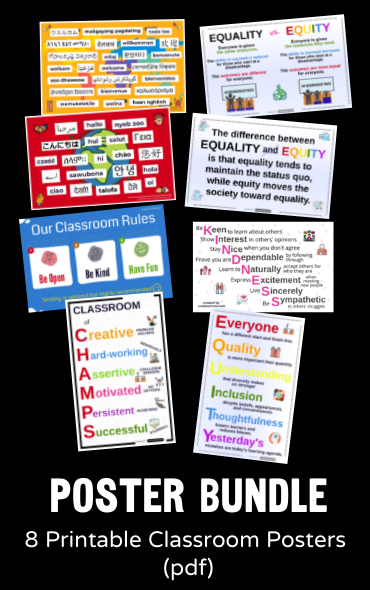
Equity-Promoting Classroom Poster. What does EQUITY in the classroom look like?
Everyone has a different start and finish line
Quality is more important that quantity
Understanding that diversity makes us stronger
Inclusion despite beliefs, appearances, and circumstances
Thoughtfulness lowers barriers and reduces biases
Yesterday's mistakes are today's learning agenda
You can teach your students about equity and make it a daily classroom practice using this inspirational poster, which also includes images that accompany the equity description. You can discuss each letter characteristic with your students as a way of introducing your inclusive classroom and display it prominently as a reminder that diversity makes the classroom community stronger.
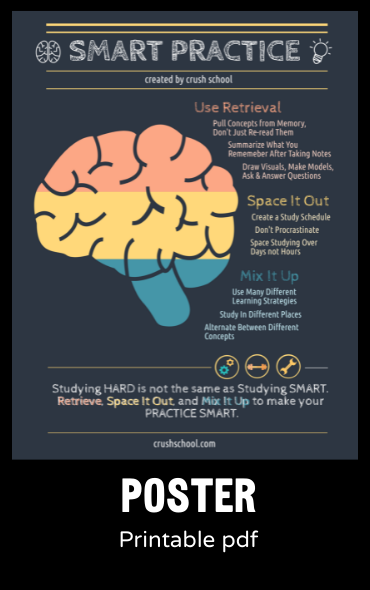
Retrieval Practice, Spaced Practice, and Mixed Practice (Interleaving).
Studying Hard is not the same as Studying Smart. This High Quality printable, digital (PNG) poster is a constant classroom reminder of best practices for teachers and learning the smart way for students.

In this classroom Mistakes are Expected, Respected, Inspected, Corrected!
Learned helplessness is a result of years of conditioning that mistakes are bad for learning. Nothing is further from the truth - some of the most powerful life lessons come from making mistakes, reflecting on them, and growing as a result.
This is a PNG Poster you can print and display in your classroom to encourage a culture of risk-taking and learning from mistakes.
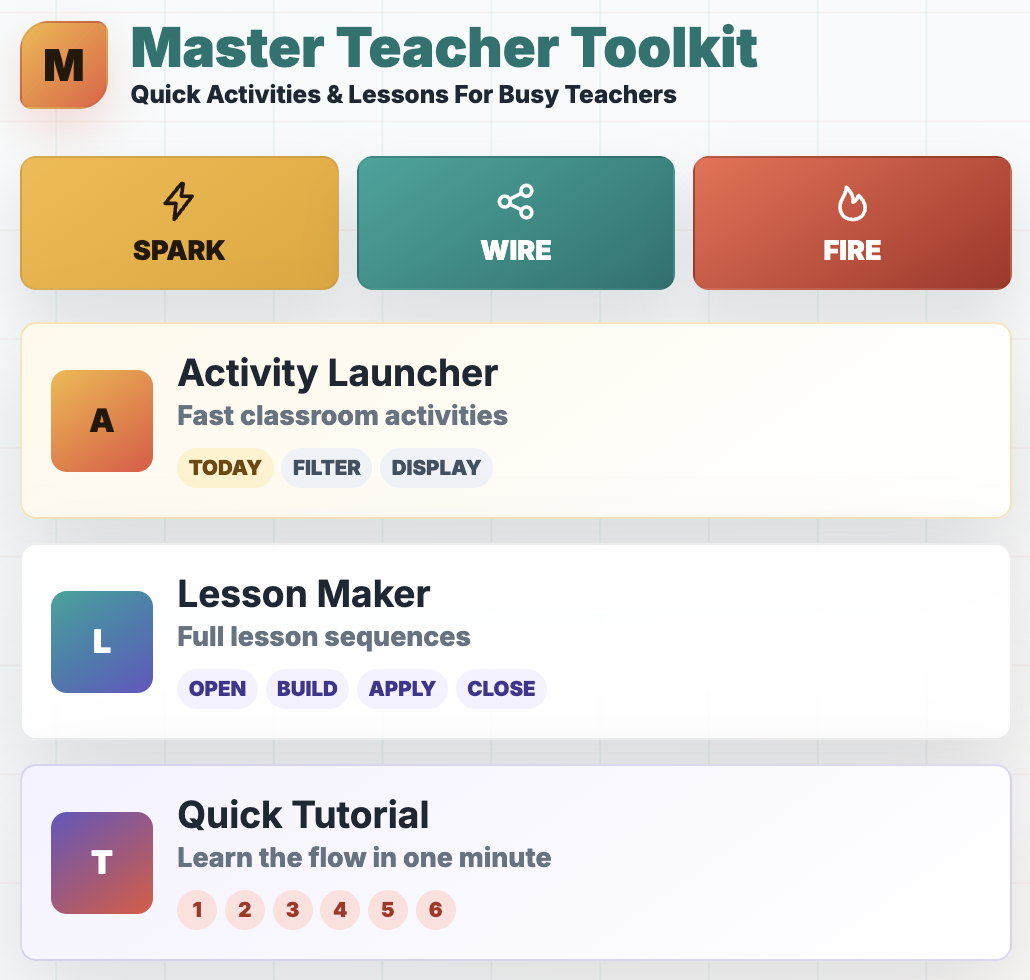
Teaching App
Launch engaging, deeper learning activities and lessons in seconds. Then, launch and display them to students instantly.
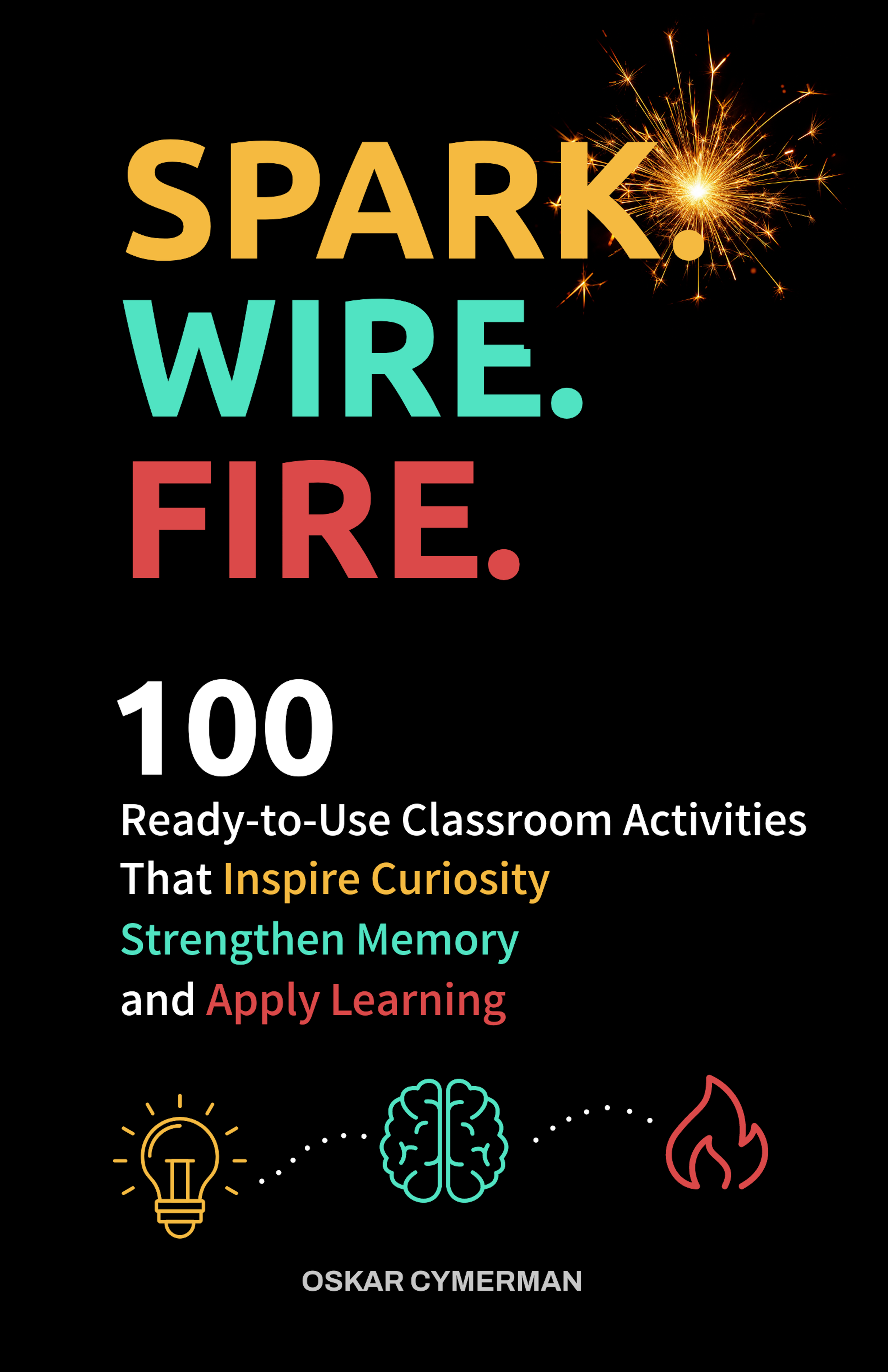
NEW BOOK
100+ practical activities teachers can use right away with little or no prep.